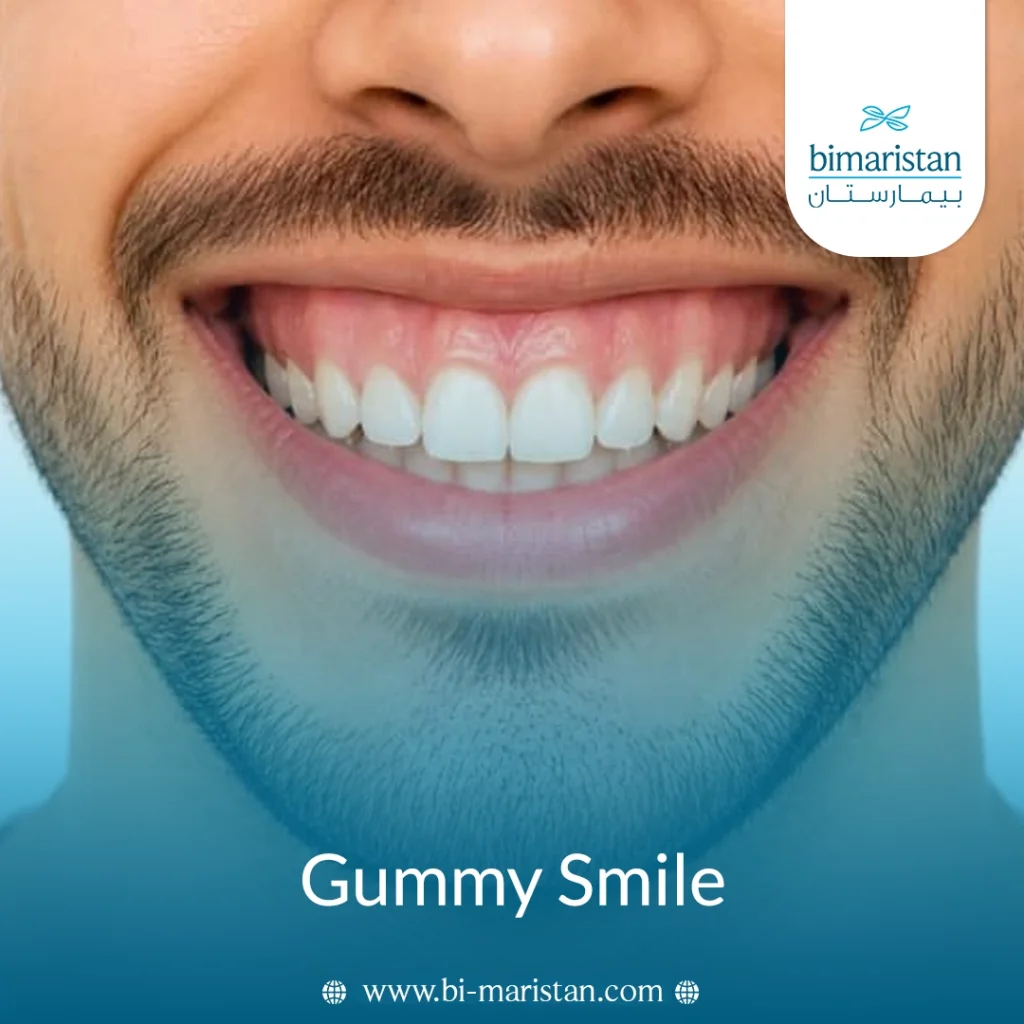
A smile can look healthy and well‑aligned, yet still appear unbalanced when too much gum tissue shows above the upper teeth. This condition, known as a gummy smile, is a common cosmetic concern that affects the harmony of facial aesthetics. It can result from factors related to gum shape, tooth length, upper‑lip movement, or jawbone development, making proper evaluation essential for choosing the right treatment.
There is no one-size-fits-all solution; treatment for a gummy smile depends on accurately identifying the underlying cause. For some people, removing a small portion of the gum may be sufficient, while others may require orthodontic treatment, lip movement correction, or jaw surgery.
What is a gummy smile?
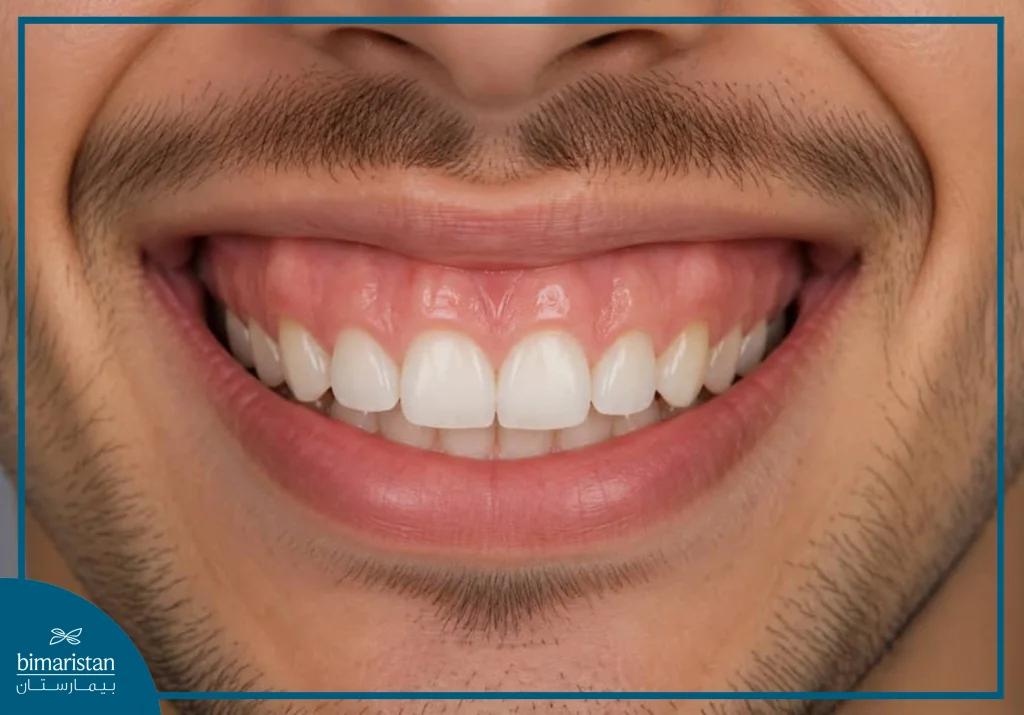
A gummy smile is the visible exposure of a noticeable amount of gum tissue above the upper front teeth when smiling. A gum exposure of more than 2 to 3 millimeters is often used as a clinical indicator, but the assessment of a smile remains relative and is influenced by tooth shape, lip length, facial harmony, and the individual’s own preferences. A gummy smile is not a disease in itself and does not require treatment unless it causes discomfort or is associated with other problems, such as gum enlargement, malocclusion, or inflammation of the tissues surrounding the teeth.
What causes a gummy smile?
A gummy smile may result from a single cause or from a combination of factors; therefore, diagnosis is the most important step before choosing a treatment.
- Short upper lip: The upper lip may be shorter than average, which is why it does not cover the gums and teeth evenly when smiling.
- Small teeth or short crowns: Short teeth or worn-down edges can disrupt the proportion between the teeth and the gums, making the visible portion of the gums appear larger even if the gums are not actually enlarged.
- Excessive eruption of the front teeth: The upper front teeth can move downwards too much, especially in those with a deep bite, causing the gums to move and become more visible when smiling.
- Excessive upper lip movement: In some people, the upper lip rises higher than normal when smiling due to increased activity of the muscles that lift the lip, resulting in a larger area of the gums being exposed, even though the teeth and jaw are healthy.
- Excessive gum tissue: The gums may cover a larger portion of the tooth crowns than normal, making the teeth appear short even though their actual length is normal. This may be related to delayed passive eruption of the gums, gum enlargement due to inflammation, or certain medications.
- Excessive vertical growth of the upper jaw: In this condition, the upper jaw is longer than normal in the vertical direction, and this may be accompanied by an elongated lower third of the face or difficulty closing the lips normally. Advanced cases of vertical overgrowth are considered structural causes that may require surgical intervention.
How is a gummy smile diagnosed?
The diagnosis is not limited to measuring the amount of visible gum tissue; it also involves evaluating the smile, the face, the teeth, and the surrounding tissues. The dentist may do the following:
- Assessment of upper lip length and mobility
- Assessment of occlusion and position of anterior teeth
- Examination of tooth lengths, proportions, and their relationship to the gingiva
- Measurement of periodontal pocket depth and bone margin location
- Measurement of gingival exposure during a normal and full smile
- Photography of the smile from different angles to map the expected outcome
- Organization of radiographs or cephalometric analysis if an osteopathic cause is suspected
This examination helps avoid choosing a treatment that is not appropriate for the underlying cause; for example, gum surgery will not treat a condition primarily caused by an excessively long upper jaw.
Gummy smile treatments
The appropriate method varies depending on the cause, the degree of gum exposure, and the patient’s expected outcome.
| Causes | Common treatments |
|---|---|
| Gum tissue overgrowth | Gum resection or crown lengthening |
| Hyperactive upper lip | Botox injections or lip repositioning surgery |
| Short tooth crowns | Crown lengthening, sometimes followed by cosmetic restorations |
| Excessive tooth eruption or deep bite | Orthodontics |
| Increased vertical growth of the upper jaw | Orthodontics or jaw surgery |
| Multiple combined causes | Multidisciplinary treatment plan |
Laser gum contouring
Laser gum surgery is used to remove excess tissue and redefine the gum line around the teeth. This procedure is suitable for cases where the gums are the primary cause of the problem and there is adequate bone around the teeth. The laser provides good control over bleeding and may reduce discomfort during the recovery period, but it is not a substitute for bone reshaping when the bone margin is too close to the new gum line.
Crown lengthening surgery
Crown lengthening surgery aims to expose a larger portion of the tooth by removing a portion of the gum, and may involve limited modification of the bone surrounding the teeth. This procedure is used when teeth appear short because they are covered by gum tissue or due to delayed eruption. The results are typically long-lasting when cases are carefully selected and gum health is maintained.
Botox injection
Carefully measured doses of Botox can be injected into the muscles that lift the upper lip to reduce excessive lifting of the upper lip when smiling. This option is suitable for some cases of excessive lip movement, and it is a quick procedure that usually does not require surgery. However, the effects of Botox are temporary and must be repeated once they wear off. The injections must also be administered by an experienced physician to avoid an asymmetrical smile or impaired lip movement.
Lip repositioning surgery
This surgery reduces the upward movement of the upper lip by modifying the internal tissue attachment. It can be used for patients with hyperactive lip movement or mild vertical maxillary excess. The procedure can produce noticeable improvement, but the stability of results and the possibility of partial relapse vary from case to case.
Orthodontics
Orthodontics helps treat gummy smile when the cause is related to tooth position, excessive incisor eruption, or a deep bite. Orthodontists may use small anchorage screws (TADs) to intrude the front teeth into their correct position and reduce gum display. This method takes longer than quick cosmetic procedures but addresses the dental cause and improves bite and smile harmony simultaneously.
Jaw surgery
Upper jaw surgery is used in moderate to severe cases resulting from excessive vertical growth of the jaw. During the procedure, the jaw is repositioned to a level that is more harmonious with the rest of the facial features. While this surgery is more complex than other treatments, it can provide a permanent solution for skeletal issues that cannot be corrected with gum reshaping or Botox alone.
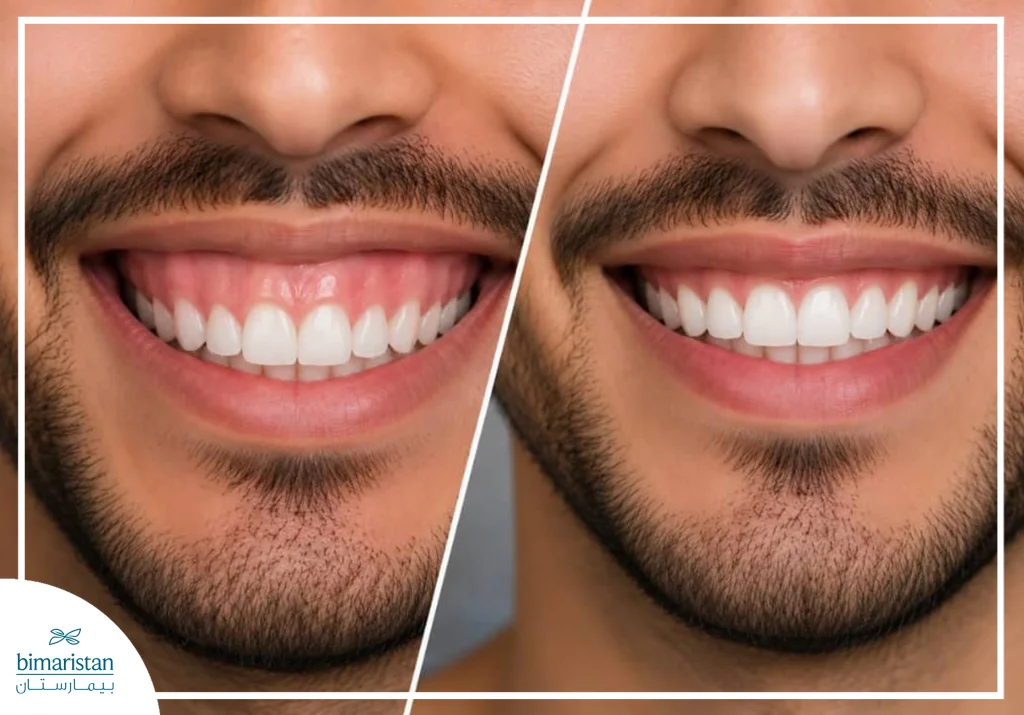
Is treatment for a gummy smile painful?
Most gum treatments are performed under local anesthesia, so the patient usually does not feel any pain during the procedure. After treatment, there may be mild swelling, tenderness, or discomfort, which can be managed with pain relievers and home care instructions. Jaw surgery, on the other hand, requires general anesthesia and a longer recovery period, while Botox injections generally do not require a long recovery period.
Recovery period after gum surgery
The gums begin to heal within the first few days, and most people can quickly resume their normal activities. However, it may take several weeks for the gums to settle into their final shape, especially when crown lengthening is performed in conjunction with bone reshaping. During the recovery period, your dentist will recommend eating soft foods, brushing your teeth gently, avoiding smoking and touching the treated area, and keeping your follow-up appointments.
Who are good candidates for gummy smile treatment?
Treatment for a gummy smile is suitable for individuals who feel aesthetically uncomfortable due to the visibility of their gums when they smile, which can impact their confidence. It is essential to accurately identify the underlying cause of the condition. Before starting any cosmetic procedures, patients should maintain good oral health, ensuring that their gums are free of active inflammation. If there is any inflammation, it should be addressed prior to treatment. Additionally, patients should have realistic expectations about the results and be willing to commit to the treatment plan, including attending regular follow-up appointments as necessary.
After a clinical examination and the necessary imaging, the doctor determines whether the most appropriate treatment is a gum contouring procedure, orthodontics, Botox, lip repositioning surgery, or jaw surgery, depending on the cause and the degree of gum exposure. On the other hand, people who are not bothered by the appearance of their smile or whose gum exposure falls within normal limits may not require any treatment, as a gummy smile is, in many cases, a natural cosmetic variation rather than a health issue requiring intervention.
Are the results of gummy smile treatment permanent?
The longevity of the results depends on the type of treatment:
- The results of Botox injections are temporary and require repeated treatments
- Orthodontic results are stable when patients adhere to their retainers
- Partial retraction may occur after lip repositioning surgery
- Jaw surgery offers long-term results in appropriate structural cases
- Gingival contouring and crown lengthening often have long-lasting results when performed correctly
The cost of treating a gummy smile in Turkey
There is no standard cost for treating a gummy smile in Turkey; the price is determined based on the underlying cause of the problem and the type of procedure required. Simple cases resulting from excessive lip movement may respond to Botox injections, while excess gum tissue may require laser gum contouring or crown lengthening. Cases related to tooth position or overgrowth of the upper jaw may require orthodontic treatment or jaw surgery.
| Treatment method | Approximate cost in Turkey |
|---|---|
| Botox injection | $200–$500 |
| Laser Gum Contouring | $200–$500 |
| Cosmetic Clinical Crown Lengthening | $400–$1,000 |
| Lip Repositioning Surgery | $1,600–$2,500 |
| Orthodontics | $1,500–$4,000 |
| Upper Jaw Surgery | $8,000–$12,000 |
The final cost cannot be determined until a thorough examination of the teeth and gums is conducted, along with an evaluation of lip movement and the relationship between the teeth and jawbones. Choosing an inappropriate treatment for the underlying issue may result in temporary or inconsistent outcomes.
In conclusion, gummy smiles vary from person to person, so the success of treatment depends on accurately diagnosing the underlying cause. Turkey is a leading destination for gummy smile treatment thanks to its availability of specialists in gum aesthetics, orthodontics, and maxillofacial surgery, along with the use of modern technologies and the availability of a comprehensive treatment plan at competitive prices compared to many other countries. Medical centers also provide convenient services for international patients, such as appointment scheduling, consultations, and post-treatment follow-up.
Sources:
- Dym, H., & Pierre, R. (2020). Diagnosis and treatment approaches for a “gummy smile.” Dental Clinics of North America, 64(2), 341–349.
- Inchingolo, A. D., Inchingolo, A. M., Viapiano, F., Netti, A., Ciocia, A. M., Ferrara, I., Mancini, A., Palermo, A., Inchingolo, F., & Dipalma, G. (2024). Effectiveness and personalized approaches in the correction of a gummy smile: A systematic review of orthodontic and surgical treatments. Journal of Clinical Medicine, 13(22), 6843.