

Hemorrhoid banding has become one of the most common treatment procedures in recent years, particularly among patients seeking an effective, rapid solution without resorting to conventional surgery. This procedure has become a preferred option due to its ease of implementation, short recovery time, and low complication rate compared with other treatment methods, making it an important step in improving quality of life for many patients with bothersome symptoms that prevent them from functioning normally in daily life.
This technique has spread widely in many countries, and Turkey, in particular, has emerged as a leading medical destination due to its advanced medical expertise and modern technologies in the field of hemorrhoid treatment. The increasing demand for hemorrhoid banding in Turkish centers is attributable to its rapid results, minimal pain, and the adoption of medical centers equipped with the latest technology and medical teams trained in the most modern treatment protocols in this field.
What are hemorrhoids?
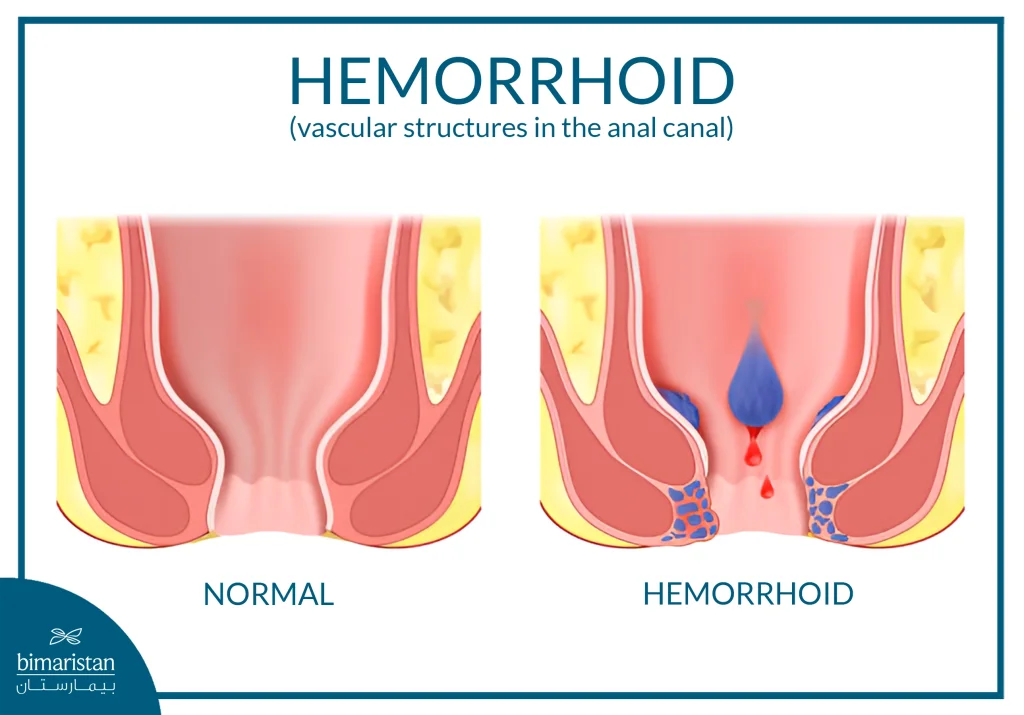
Hemorrhoids are a condition caused by swollen or bulging veins located in the rectum or around the anal area, and may be internal or external depending on their location. It is one of the most common gastrointestinal disorders and can affect people at different stages of life. Still, it is more common in adults, pregnant women, and people who suffer from chronic constipation.
Hemorrhoids can lead to various health problems that may begin mildly but worsen over time. Common symptoms include pain when sitting or during bowel movements, as well as bloating and pressure in the anal area. Some individuals may also experience anal bleeding, which can cause anxiety and negatively impact their quality of life. In more severe cases, hemorrhoids can protrude outside the anus, leading to increased discomfort and difficulties with movement or sitting.
Causes of hemorrhoids
There are several factors that can increase the risk of developing hemorrhoids, the most important of which are:
- Chronic constipation or diarrhea
- Sitting for long periods of time
- Weight gain and obesity
- Repeated heavy weight lifting
- Pregnancy as a result of increased stress
- A low-fiber diet
- Aging and weakening of vessel walls
Hemorrhoid symptoms
Symptoms vary depending on the type and severity of hemorrhoids, but the most common include:
- Itching or irritation in the anal area
- Light bleeding during or after a bowel movement
- Persistent pain or discomfort
- A palpable swelling or lump near the anus
- Difficulty sitting for long periods of time due to pain
What is hemorrhoid banding?
Hemorrhoid banding is a simple, non‑surgical medical procedure used to treat moderate to advanced internal hemorrhoids. A small elastic ring is placed around the base of the hemorrhoid, which then naturally detaches without the need for surgical intervention or suturing. This makes the procedure a comfortable and effective option for patients compared to conventional methods.
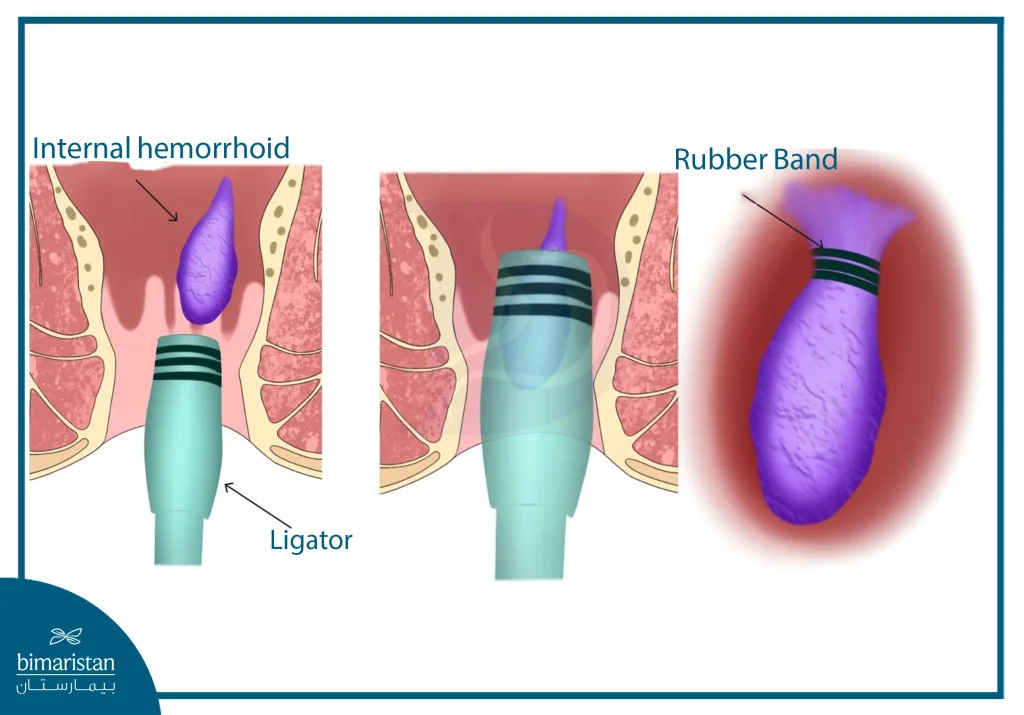
Hemorrhoid banding relies on a straightforward yet effective principle: the physician places a small elastic band around the base of the internal hemorrhoid using a specialized device. The band gradually reduces blood supply to the enlarged tissue, causing it to shrink within a few days and then fall off spontaneously during defecation, often without the patient noticing.
This mechanism allows the body to heal on its own, as healthy new tissue forms in place of the damaged tissue, without the need for surgical excision. Since the procedure does not involve incisions or sutures, the pain is usually significantly less than that experienced with conventional operations.
Hemorrhoid banding procedure steps
Hemorrhoid banding is a simple, non-surgical procedure performed in a clinic or hospital within a short time. The procedure involves several clear stages to ensure effective results and minimize patient discomfort. General anesthesia is usually not required; the doctor typically uses local anesthesia or a mild anesthetic to reduce discomfort. The following are the steps of the hemorrhoid banding procedure:
- The doctor examines the anal area using a small scope to pinpoint the exact location of the internal hemorrhoid
- A special device is inserted to capture the base of the hemorrhoid
- A small rubber ring is placed around the base of the hemorrhoid to cut off blood flow to the hemorrhoid
- The hemorrhoid begins to shrink and dry out within a few days, and then falls off spontaneously during bowel movements with little to no pain
- The procedure may be repeated in a later session if there are multiple or advanced hemorrhoids
The procedure typically takes 10–15 minutes, and the patient leaves the clinic the same day without requiring an overnight hospital stay.
The difference between hemorrhoid banding and other procedures
There are several techniques for treating hemorrhoids, but each differs in its mechanism of action and the degree of medical intervention:
| Type of procedure | How does it work? | Who is it suitable for? |
|---|---|---|
| Hemorrhoid banding | Cutting off the blood supply with a rubber band | Second- and third-degree internal hemorrhoids |
| Embolization or laser | Burning or sealing tissue via directed heat | Bleeding cases or small and medium hemorrhoids |
| Conventional surgery (hemorrhoidectomy) | Complete hemorrhoid removal via incision and surgery | Cases that are very severe or unresponsive to other treatments |
Compared with surgery, banding has the advantages of not requiring general anesthesia, causing less postoperative pain, and allowing a faster return to normal activities.
Why is hemorrhoid banding one of the most popular treatments nowadays?
Hemorrhoid banding has become a widespread technique globally in recent years, due to a number of factors, most notably:
- Highly effective in treating moderate to advanced internal hemorrhoids
- It is a quick, in-office procedure without the need for an overnight hospitalization
- Shorter recovery time compared to conventional surgical methods
- Reduced potential complications such as pain or bleeding after the procedure
- Can be repeated if necessary without affecting the normal anal tissues
This technique has also become particularly popular in medically advanced countries such as Turkey, where it is implemented using state-of-the-art medical equipment and specialized treatment expertise, contributing to higher success rates and improved outcomes, making it a preferred treatment option for patients worldwide.
Advantages of hemorrhoid banding
Banding is considered one of the most effective non-surgical treatments for hemorrhoids, and its benefits include:
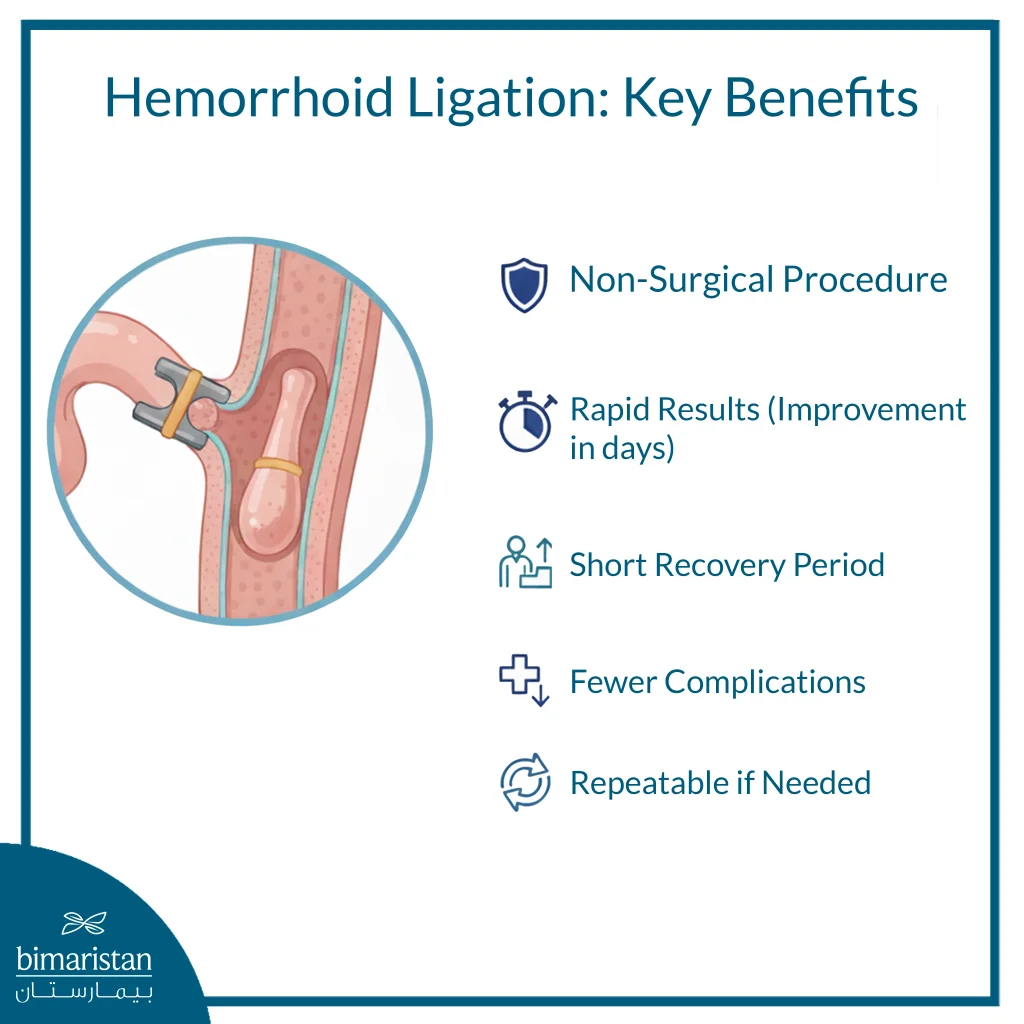
- Non-surgical procedure: Without incision, suturing, or tissue removal.
- Rapid improvement: The patient notices symptom improvement within days.
- Short recovery period: The patient can return to work and regular activity after a short time.
- Fewer complications compared to surgery
- Can be repeated as needed without affecting healthy tissue
Disadvantages and possible complications
Despite its advantages, the procedure may be accompanied by some minor side effects, including:
- Mild pain or pressure in the anal area for the first couple of days
- Minor bleeding during hemorrhoid falling off or after bowel movements in the early days
- Hemorrhoids can recur, particularly if underlying causes like constipation or a low-fiber diet are not addressed
- In rare cases, inflammation or infection may occur and require additional treatment
Recovery period and instructions after hemorrhoid banding
Full recovery typically takes one to two weeks, while the hemorrhoid falls off naturally 3–10 days after the procedure. To ensure the best results, the patient is advised to adhere to the following:
- Avoid straining or sitting for long periods of time in the early days
- Drink enough water and consume a high-fiber diet to avoid constipation
- Using a warm bath to relieve pain and irritation
- Avoid lifting weights or intense exercise for a short period of time
The doctor may prescribe some medications for home care, such as:
- Mild pain relievers
- Laxatives or fiber supplements such as psyllium
- Soothing creams or suppositories, if needed
When does a doctor recommend hemorrhoid banding?
This procedure is not suitable for all cases; it is determined after a thorough examination and assessment of the condition’s progression. A doctor typically recommends hemorrhoid banding in the following situations:
- Second-degree internal hemorrhoids: Bleeding or irritation without persistent prolapse.
- Third-degree internal hemorrhoids: They may come out of the anus but can be manually put back in.
- Failure to respond to drug therapy or lifestyle changes: Such as the use of suppositories, laxatives, or fiber therapy.
- Having bothersome symptoms that affect daily life: Frequent pain, persistent bleeding, or a feeling of pressure.
When is hemorrhoid banding contraindicated?
This procedure may not be suitable for some patients, such as:
- Active inflammatory bowel diseases such as Crohn’s disease or ulcerative colitis
- Large external or mixed hemorrhoids
- Presence of a blood clot within the hemorrhoid
- Infection in the anal region
- Patients taking anticoagulants without the possibility of temporarily discontinuing them
In such cases, the physician may recommend alternative treatment options such as laser therapy, cauterization, or conventional surgery, depending on the patient’s overall health evaluation.
Hemorrhoid banding cost
The cost of hemorrhoid banding varies across countries and medical centers. This depends on several factors determined by assessment of the patient’s condition and the number of hemorrhoids requiring treatment. The main factors that may influence the cost include:
- Doctor and surgeon experience
- Number of binding sessions required
- Type of equipment and tools used
- Medical center or hospital and quality rating
- Additional services such as anesthesia or post-operative follow-up
Some patients may need only a single session, while others may require multiple sessions if hemorrhoids are present in more than one grade or location.
Comparison of hemorrhoid banding costs between countries
| State | Average Cost (USD) |
|---|---|
| Turkey | 400 – 600 USD |
| France | 1,500 – 2,500 USD |
| America | 1,500 – 2,800 USD |
| Germany | 1,200 – 1,900 USD |
Turkey has become a preferred medical destination for patients due to the quality of care, cost-affordability, and advanced expertise in non‑surgical hemorrhoid treatment.
Hemorrhoid banding is one of the most prominent modern treatment options that helps patients eliminate pain and bothersome symptoms without the need for conventional surgery or a long recovery period. With advances in medicine and the widespread adoption of non‑surgical techniques, this procedure now provides effective, rapid results, reduces the risk of complications, and significantly improves patients’ quality of life.
Choosing the appropriate method always depends on the physician’s evaluation of the condition and the hemorrhoid grade. Therefore, it is important not to rely on self‑diagnosis and instead seek medical consultation from experienced specialists. Advanced medical centers, such as the Bimaristan Center in Turkey, now offer this procedure using state-of-the-art technologies under the supervision of qualified medical teams, ensuring effective treatment and a safe, comfortable medical experience.
If you suffer from hemorrhoid symptoms and have not improved with conventional treatments, hemorrhoid banding may be the right step to restore your comfort and return to your normal life confidently and without pain.
Sources:
- Cherney, K. (2018, September 18). Hemorrhoid banding: Preparation, procedure, recovery, and risks. Healthline. Healthline Media
- Savioz D, Roche B, Glauser T, Dobrinov A, Ludwig C, Marti MC. Rubber band ligation of hemorrhoids: relapse as a function of time. Int J Colorectal Dis. 1998;13(4):154-6
- McKeown, D. G., & Goldstein, S. (2024, February 14). Hemorrhoid banding. In StatPearls . StatPearls Publishing
- Komporozos V, Ziozia V, Komporozou A, Stravodimos G, Kolinioti A, Papazoglou A. Rubber band ligation of symptomatic hemorrhoids: an old solution to an everyday problem. Int J Colorectal Dis. 2021 Aug;36(8):1723-1729