
Hearing loss is one of the most common health issues around the world and can significantly affect a patient’s quality of life and ability to communicate and socialize. Although traditional hearing aids are available, they are not effective in some cases, especially when ear canal abnormalities or middle ear issues prevent sound from properly reaching the inner ear.
In recent years, advanced medical techniques have emerged to treat these conditions, most notably the Bone-Auditory Hearing Aid (BAHA), a modern system that delivers sound through the bones of the skull directly to the inner ear, without the need to use the auditory canal or to damage natural bones.
Today, Turkey is one of the leading countries in providing this type of surgery thanks to medical development, the availability of the latest hearing aids, and the great experience of doctors specialized in ear, nose, ear, and throat surgery. With the high success rates of this type of implant, it has become a popular choice for patients looking for a permanent and effective solution to restore hearing in a more natural and clear way.
What are bone conduction implants (BAHA)?
Bone conduction implants or Bone Anchored Hearing Aid (BAHA) is a modern technology used to restore hearing in people with conductive, mixed, or unilateral hearing loss, especially for those who are not suitable for traditional hearing aids. Different from traditional hearing aids that amplify sound through the middle ear, BAHA works on the principle of delivering sound through the bones directly to the inner ear (cochlea), a spiral structure that plays an essential role in hearing.
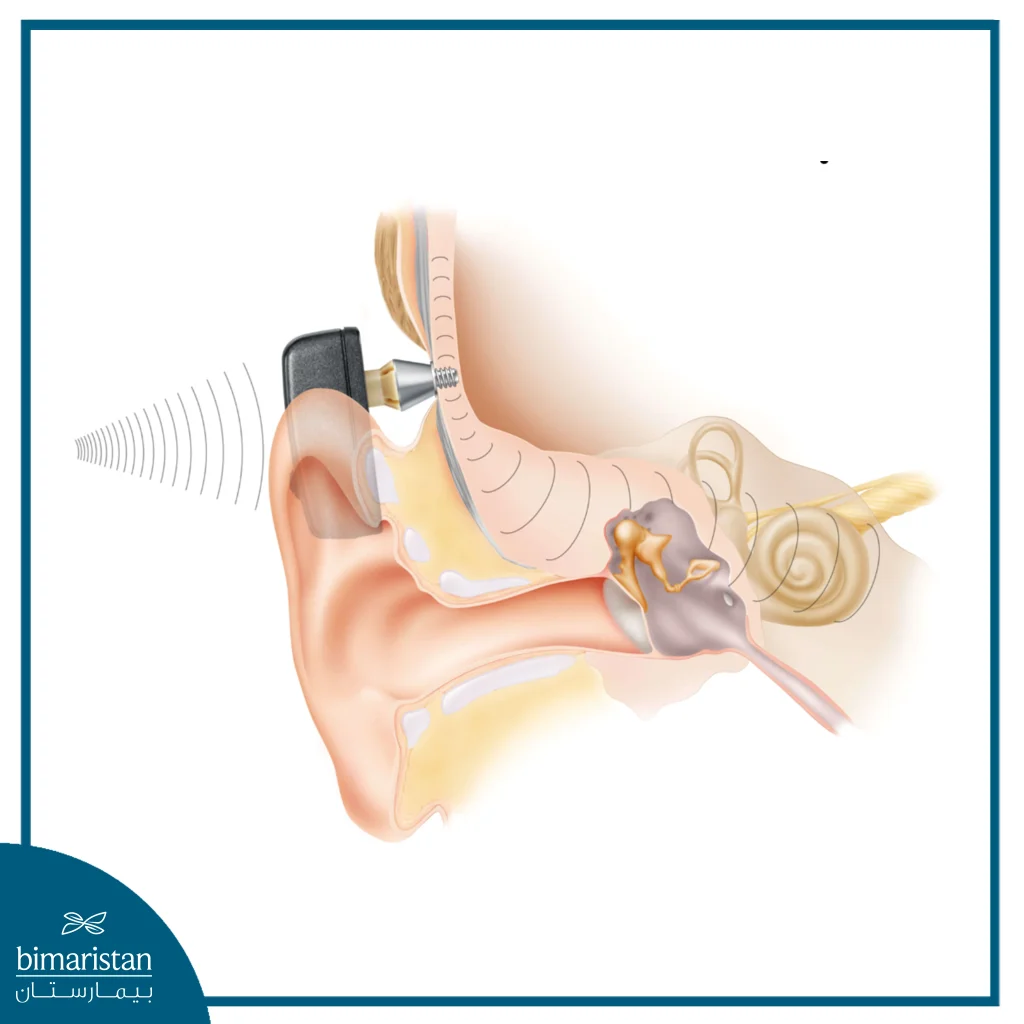
The system involves implanting a small titanium implant into the bone behind the ear, which fuses with the bone biologically and is then connected to an external acoustic processor via an external connector. This processor converts sounds into vibrations that travel through the bones of the skull directly to the cochlea, where they are interpreted as clear, natural sound without the need to use the auditory canal or damaged bones. This device is an effective and advanced option for those who cannot benefit from traditional hearing aids, offering an enhanced and natural hearing experience thanks to direct bone conduction technology.
Types of bone conduction implants
There are two main types of bone conduction hearing aids:
- Bone conduction implants (BAHA): This is the most common type. The surgeon places a small titanium implant in the bone behind your ear. Once the implant has healed, you can connect an external sound processor to restore your hearing. You can remove the processor while you sleep, shower, or have hair treatments.
- Non-surgical bone conduction (BCHA): Healthcare providers typically recommend non-surgical bone conduction hearing aids for children under age 5 and for people who don’t want to undergo surgery. Some bone conduction hearing aids attach directly to the skin with an adhesive, while others are attached to a headband that can be worn as needed.
Your ear, nose, and throat (ENT) specialist and audiologist can help you determine which option is right for you. Eligibility for a bone-anchored hearing aid depends on several factors, including your age, medical history, type of hearing loss, and personal preferences.
How does bone anchored hearing aid (BAHA) work?
Bone conduction implants are based on the principle of transmitting sound through the bones instead of the traditional path through the outer and middle ear. When the device is placed and turned on, an external processor picks up sounds from the environment and converts them into micro-mechanical vibrations. These vibrations are transmitted directly through the implant, which is anchored in the skull bones, to the cochlea in the inner ear without the need for eardrums or hearing aids. In the normal ear, the eardrum and the three bones (malleus, incus, and stapes) transmit sound vibrations to the inner ear.
In cases where these parts are damaged or ineffective, the BAHA system acts as a bridge, allowing sound to travel directly to the cochlea, where it is converted into electrical signals that are sent to the brain to be interpreted as clear, natural sound. Thanks to this clever mechanism, the device provides good hearing even for patients who cannot be helped by conventional devices due to a blocked auditory canal or damaged middle ear.
The difference between traditional hearing aids and BAHA
Traditional hearing aids amplify sound and send it through the auditory canal, past the eardrum and auditory ossicles to the inner ear. This makes them effective only in people with normally functioning outer and middle ear segments. However, in cases where there is a blockage in the auditory canal, damage to the bones, or chronic middle ear infections, traditional hearing aids become ineffective or uncomfortable.
The BAHA device works in a completely different way, as it does not require sound to pass through the outer or middle ear. Instead, the device converts sound into vibrations that travel through the bones of the skull directly to the cochlea in the inner ear. This means it bypasses the damaged part of the ear and delivers the sound directly to the center of hearing, giving the patient a clearer, more natural sound without the need to place a device inside the ear canal. BAHA is an advanced option for people for whom traditional devices are not suitable or do not achieve the desired result.
Who needs acoustic bone implants?
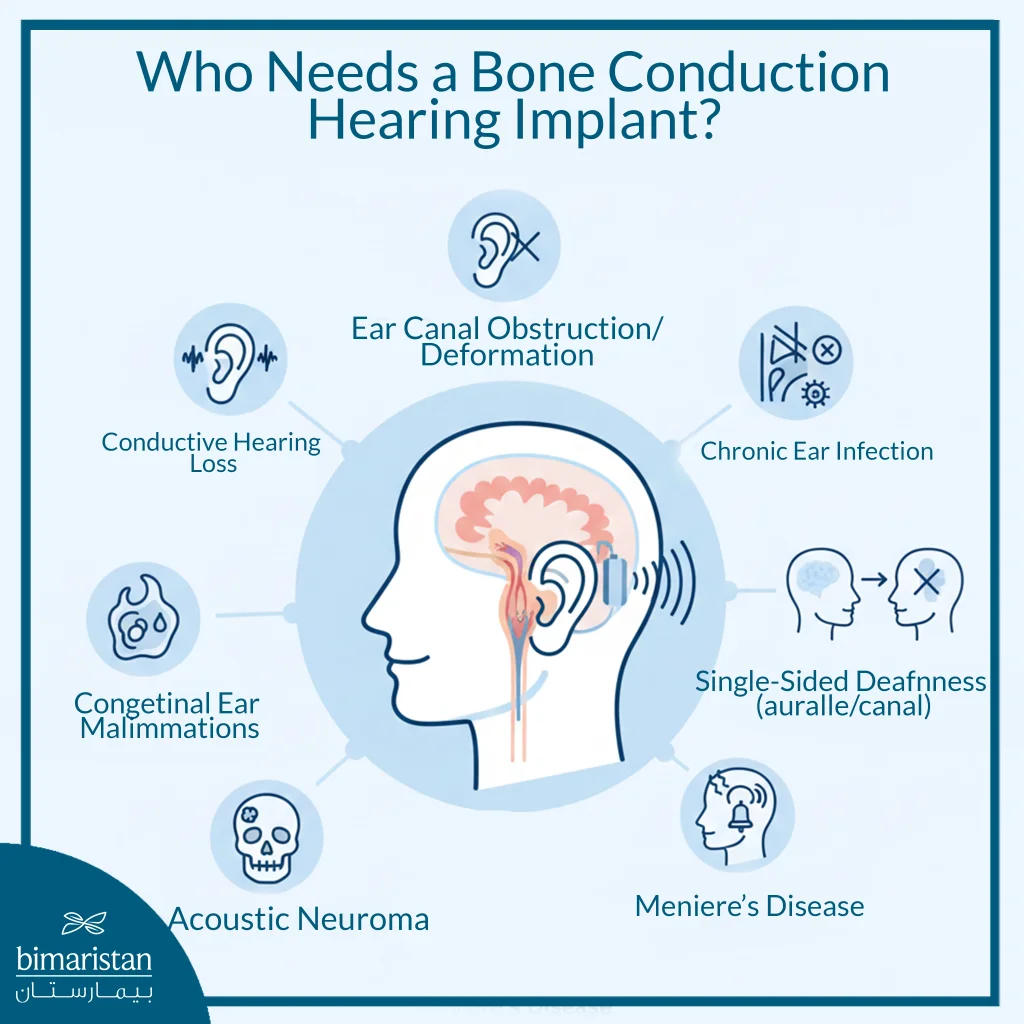
Acoustic bone implants are a suitable option for certain categories of patients with issues that prevent sound from reaching the inner ear naturally. This technology is particularly recommended for those who do not benefit from or have difficulty using traditional hearing aids. BAHA may be appropriate in the following cases:
- Conductive hearing loss: When the issue is in the outer or middle ear, such as damaged or hardened auditory bones.
- Blockage or malformation of the auditory canal: Either congenital or as a result of chronic injuries or infections.
- Chronic ear infections, which make the use of traditional hearing aids not possible or cause permanent irritation.
- Unilateral hearing loss (SSD): BAHA helps to transmit sound from the affected side to the healthy ear.
- Congenital abnormalities in the pinna or ear canal, Such as a small or absent ear canal.
- Cholesteatoma
- Acoustic neuroma
- Meniere’s disease
This option helps patients to effectively restore hearing, especially when traditional methods are impossible or unsuccessful, giving them a better chance to communicate and improve their quality of life.
Steps for bone conduction implants (BAHA)
Hearing bone implants are a relatively simple surgical procedure, usually performed under general or local anesthesia, depending on the patient’s age and health condition, and the procedure usually takes between 30 and 60 minutes, depending on the type of hearing aid used. The procedure aims to ensure that the implant fuses with the skull bones and achieves the best possible hearing result. The procedure is carried out in the following stages
- Preoperative examination and preparation: This includes assessing hearing status using hearing and imaging tests, such as CT scans, to make sure the patient is suitable for this type of implant.
- Anesthesia: The patient is given the appropriate anesthesia to ensure comfort, which may be local or general, depending on the patient’s condition.
- Incision behind the ear: The surgeon makes a small incision in the skin behind the ear to access the cranial bone (mastoid bone).
- Fixing the implant in the bone: The titanium implant is implanted into the bone and is about 3 to 4 millimeters in diameter.
- Placement of the stent or external connector: The outer part of the implant or stent is stabilized, and the skin around it is healed so that it remains slightly visible.
- Close the incision and cover the area: The incision is closed with stitches and covered with a surgical dressing to protect the area as it heals.
- Bone healing and fusion period: It takes several weeks or months for the bone to fully integrate with the implant, which is an essential step before the external acoustic processor is fitted. This period typically ranges from one to three months, depending on the type of device and the body’s capacity to heal.
- Installation and commissioning of the external sound processor: After healing and osseointegration are complete, the external sound processor is fitted and adjusted to the patient’s hearing response for optimal performance.
Advantages of bone conduction implants
Like any medical procedure, Bone Audio Hearing Implants (BAHA) have a range of advantages that make them an excellent choice for many patients. Here are the advantages of bone conduction implants:
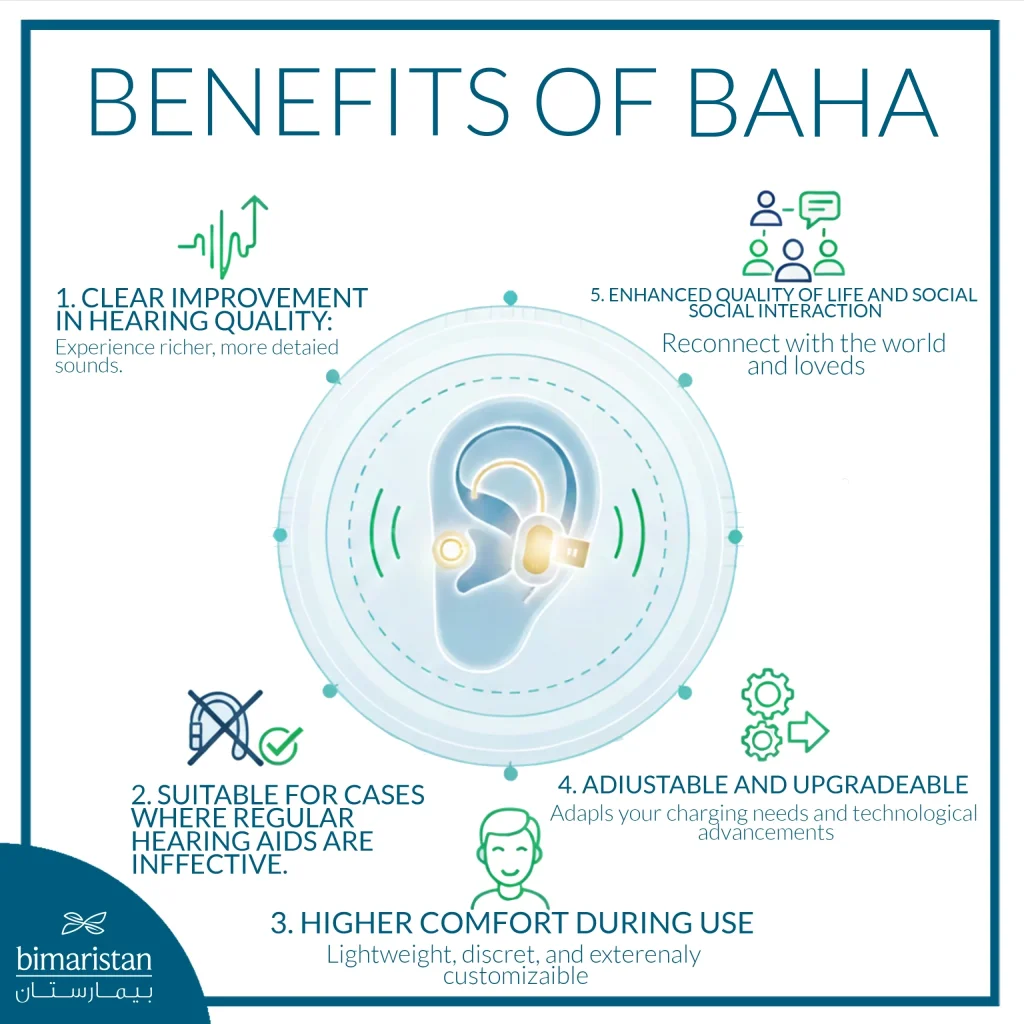
- Significant improvement in hearing quality: The device delivers sound directly to the inner ear, giving the patient clearer and cleaner sound compared to traditional hearing aids, especially in noisy environments.
- Suitable for cases where regular hearing aids don’t work: Such as blocked ear canals, congenital malformations, or chronic ear infections.
- Higher comfort during use: The device is not placed inside the auditory canal, minimizing the sensation of blockage, pressure, or skin sensitivity.
- Upgradable: The external processor can be updated without the need for re-surgery, allowing for future technological advancements.
- Improved quality of life and socialization: Patients feel better able to hear in everyday conversations, reducing social isolation and increasing self-confidence.
Disadvantages of bone conduction implants
Bone conduction implants have some challenges or disadvantages that should be considered before making a final decision. Here are the disadvantages of bone conduction implants:
- The need for a surgical procedure: Some patients may be deterred by the need for a surgical implant in the bones of the skull.
- Possible irritation or inflammation around the implant site: Especially in the first few months after the procedure, this requires regular care and cleaning.
- It is not suitable for all types of hearing loss: BAHA is primarily designed for conductive hearing loss or unilateral hearing loss, and may not be effective for severe sensorineural hearing loss.
- Higher cost compared to traditional devices: Both in terms of device price and surgery costs.
Hearing bone implants are a sophisticated and effective option for those with issues that traditional methods cannot resolve, provided the case is thoroughly evaluated by an audiologist and ear surgeon.
Recovery time after bone conduction implants
After an acoustic bone graft, the recovery period is moderate to short compared to more complex procedures. In the early days, the patient may experience mild swelling or some discomfort around the implant site, but this gradually resolves in about a week. During the weeks following surgery, the bone heals with the implant, which may take 6 to 12 weeks, depending on the individual’s healing speed and bone health. Once the implant is fused, the external sound processor is fitted and adjusted, and the device is usually fully activated within 3 to 4 months of the procedure, depending on the recommendations of the surgeon and audiologist.
Patient Outcomes and Expectations
The results of BAHA are often positive and noticeable in improving hearing in patients with poor conduction, ear canal blockage, or unilateral hearing loss. After turning on and adjusting the external processor, many patients experience a significant improvement in sound clarity, especially in noisy environments or during conversations. Some patients who have previously used conventional hearing aids also notice a difference in comfort and hearing quality when using BAHA.
In terms of quality of life, patients often report a higher ability to socialize, decreased feelings of isolation, and increased self-confidence. Of course, results vary from person to person based on diagnosis, inner ear health, and bone response to the implant, so it’s important to have realistic expectations and adhere to physician reviews.
In conclusion, bone conduction implants (BAHA) are an advanced and effective way to restore hearing to people who are not suitable for traditional hearing aids, whether due to anatomical issues, chronic infections, or unilateral hearing loss. By utilizing direct bone conduction to the inner ear instead of the outer and middle ear, BAHA has been proven to improve hearing and quality of life for people who do not fit traditional hearing aids, whether due to anatomical issues, chronic infections, or unilateral hearing loss.
With the development of medical technologies and the increased expertise of specialized teams, this procedure has become safer, and the results are more stable and reliable. Patients with certain types of hearing loss are advised to check with their ENT doctor and audiologist to see if they are eligible for this treatment option. At Bimarestan Medical Center, we offer a comprehensive case assessment with the latest treatment options and hearing implant techniques, supervised by specialized experts to ensure the best possible results and optimize the patient’s hearing and life experience.
Sources:
- Hagr A. BAHA: Bone-Anchored Hearing Aid. Int J Health Sci (Qassim). 2007 Jul;1(2):265-76
- Bento RF, Kiesewetter A, Ikari LS, Brito R. Bone-anchored hearing aid (BAHA): Indications, functional results, and comparison with reconstructive surgery of the ear. Int Arch Otorhinolaryngol. 2012 Jul;16(3):400-5
- Johns Hopkins Medicine. (n.d.). Bone conduction hearing aids or hearing systems, also called osseointegrated or bone-anchored devices