Esophageal stricture is a condition that restricts the passage of food from the throat to the stomach, leading to swallowing difficulties and a decline in the patient’s quality of life. Esophageal balloon dilation is a safe and effective procedure designed to widen the narrowed segment of the esophagus, aiming to restore normal food flow and alleviate symptoms caused by the stricture.
The procedure involves inserting a specialized balloon through a laparoscope and gradually inflating it within the esophagus to gently stretch the constricted area, thereby avoiding the need for major surgery. This article outlines the underlying causes of esophageal narrowing, details the steps of the esophageal balloon dilation procedure, discusses its benefits and risks, and highlights post-treatment care and follow-up recommendations.
What is an esophageal stricture?
Esophageal stricture is a pathological condition classified as an esophageal disease, marked by abnormal narrowing of its internal passage. The esophagus, a muscular tube responsible for transporting food and fluids from the mouth to the stomach, becomes constricted, reducing its diameter and impeding the smooth passage of food, which leads to clinical symptoms.
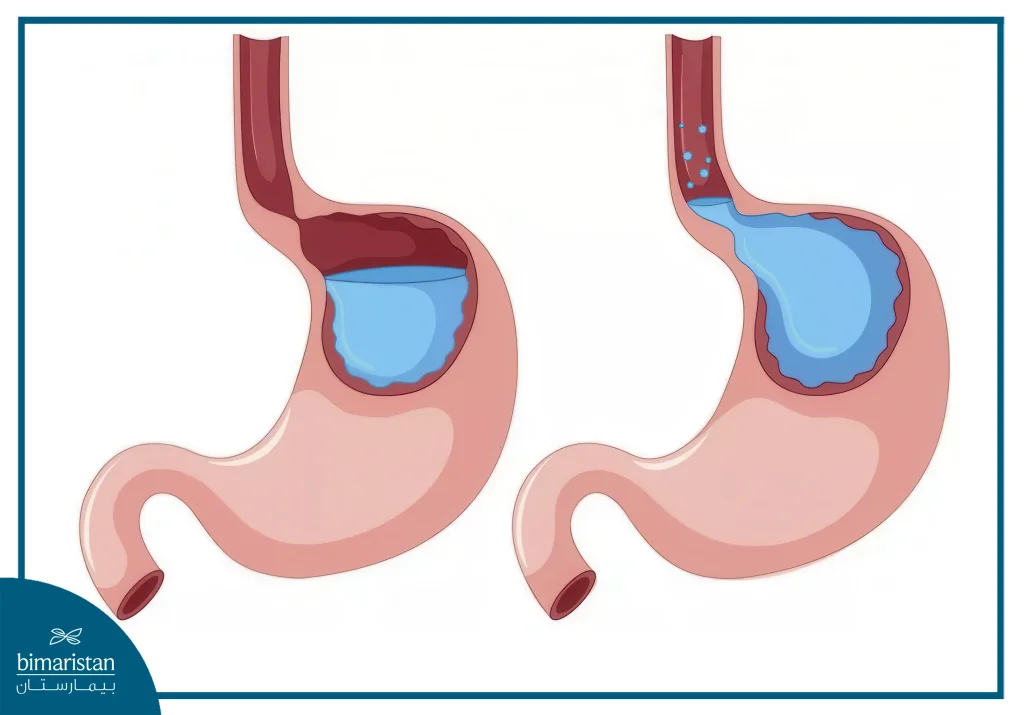
This narrowing, known as esophageal stricture, often results from damage or scarring to the esophageal lining due to prolonged exposure to harmful agents such as gastric acid reflux disease (GERD). Chronic inflammation of the mucosa can trigger tissue fibrosis, ultimately causing the passage to narrow. Other contributing factors include thermal or chemical burns and specific medical interventions like repeated laparoscopies or feeding tube placements, which may similarly induce fibrosis and stenosis.
The stricture may be localized or extend along a specific part of the esophagus, with severity ranging from mild to profound, directly impacting the patient’s ability to swallow. Common symptoms include dysphagia, discomfort or pain during swallowing (primarily solids), and the sensation of food being stuck within the esophagus, often accompanied by retrosternal pain or heartburn. Esophageal balloon dilation is a targeted medical procedure used to treat this narrowing. It involves the laparoscopic insertion of a specialized balloon into the affected area, which is then gradually inflated to stretch the esophageal walls and expand the passage. This technique provides a safe, minimally invasive solution designed to restore normal esophageal function and alleviate symptoms, without the need for major surgical intervention.
Diagnosis of esophageal stricture
Diagnosing esophageal stricture requires a careful evaluation to determine the location and severity of the stricture, using several specialized medical assessments to help choose the optimal treatment.
laparoscopic examinations
Laparoscopy is the primary method of diagnosing esophageal stricture. A thin tube with a camera is inserted through the mouth to examine the esophageal lining directly. This procedure allows for the exact location and size of the stricture to be visualized, and samples (biopsies) can be taken to analyze the tissue and determine the nature of the stricture, whether it is benign or malignant. Laparoscopy is also useful in assessing how the stricture is affecting the passage of food and helps in planning appropriate treatment.
X-rays and barium
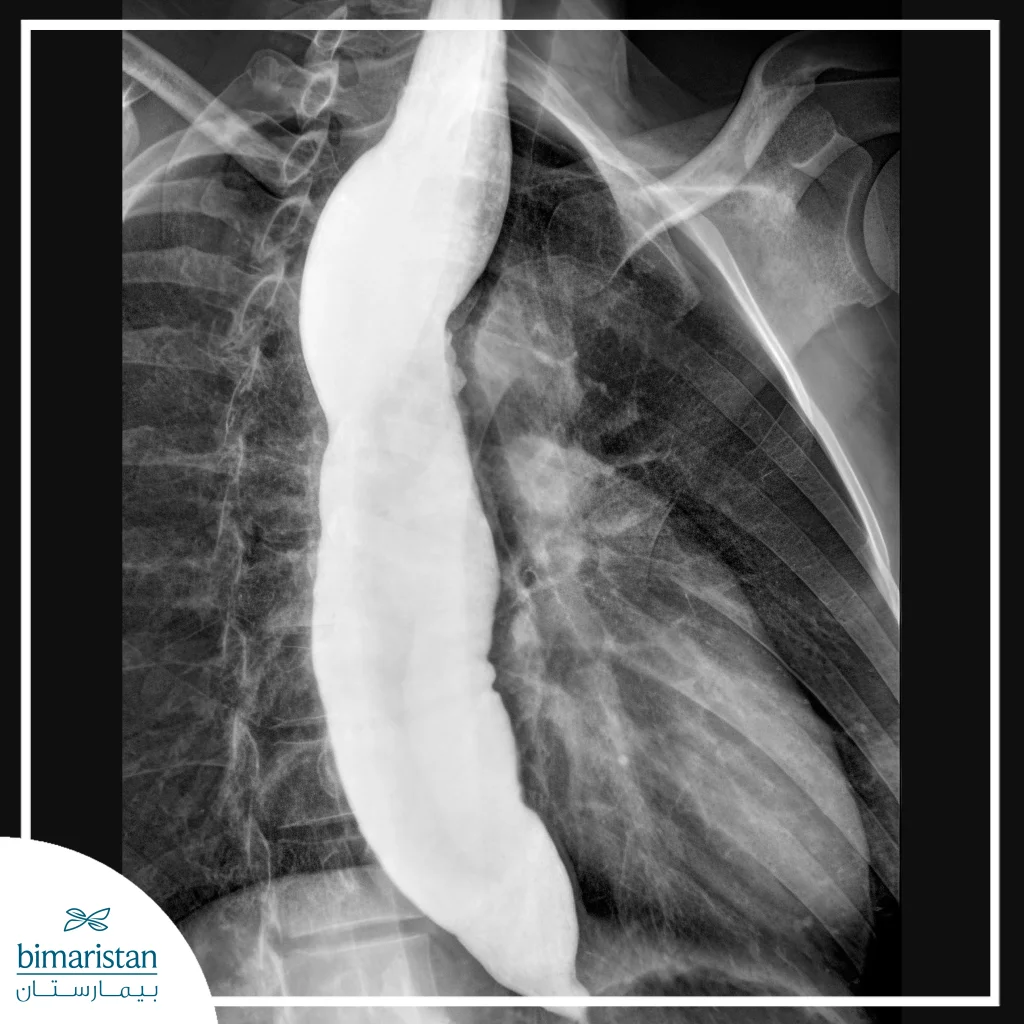
Esophageal balloon dilation is often preceded by imaging tests, such as barium X-rays, to assess the severity of the esophageal stricture. The patient swallows liquid barium, a contrast agent that appears clearly on the X-ray, allowing the shape and location of the esophagus and any stenosis to be monitored. This test is useful for determining the length and severity of the stricture, as well as detecting any abnormalities or disturbances in the movement of the esophagus.
Clinical assessment
Diagnosis always begins with a clinical evaluation, where the doctor collects the patient’s medical history, focusing on symptoms such as dysphagia, pain when swallowing, and weight loss. The clinical examination helps guide the appropriate diagnostic tests and determine the extent to which the stricture is affecting the patient’s overall health status.
What is esophageal balloon dilation?
Esophageal balloon dilation is a minimally invasive procedure designed to treat esophageal narrowing. A deflated medical balloon is introduced via a laparoscope into the stricture site, then gradually inflated to stretch the esophageal walls and restore normal passage for food and liquids. This technique effectively relieves dysphagia and is often preferred over surgical options due to its safety and efficacy.
The difference between esophageal balloon dilation and bougie dilation
There are two main methods of esophageal dilation: Esophageal balloon dilation and dilation using rigid instruments called a bougie.
- Balloon dilation: An inflatable balloon is placed precisely in the area of the stricture, then filled with air or a liquid to gently compress the esophageal walls and gradually open the stricture. It is characterized by precise control over the size of the dilation and minimizes the risk of rupture.
- Bougie dilation: A rigid rod of various sizes inserted through the mouth to stretch the esophagus by constant mechanical pressure. It is easier and faster than a balloon but is less precise and may increase the risk of rupture in some cases.
The choice of method depends on the nature of the stricture, the doctor’s experience, and the patient’s overall health status.
Indications for esophageal balloon dilation
- Benign esophageal stricture caused by chronic gastroesophageal reflux that leads to fibrosis and narrowing of the esophagus
- Esophageal stricture after surgeries or injuries that cause scarring within the esophagus
- Esophageal stricture caused by ingesting chemicals or thermal burns that led to esophageal fibrosis
- Esophageal stricture associated with chronic inflammatory diseases, such as eosinophilic esophagitis
- A stricture caused by therapeutic radiation to the chest or neck area that affects the esophageal wall
- Malignant esophageal stricture, in some cases, to relieve symptoms and improve the passage of food as part of palliative treatment
- Failure of drug therapies and insufficient improvement of stenosis symptoms by conservative means
How is esophageal balloon dilation performed?
- . Preparation for the procedure: Before dilation, the patient undergoes a thorough medical evaluation, including blood tests and imaging, to determine the condition of the esophagus and the extent of the stricture. The patient is asked to fast for a specific period (usually 6-8 hours) before the procedure to minimize the risk of aspiration of stomach contents.
- Anesthesia: Balloon esophageal dilation is usually performed under local anesthesia or light sedation to reduce discomfort, and sometimes under general anesthesia, depending on the patient’s condition and the doctor’s decision.
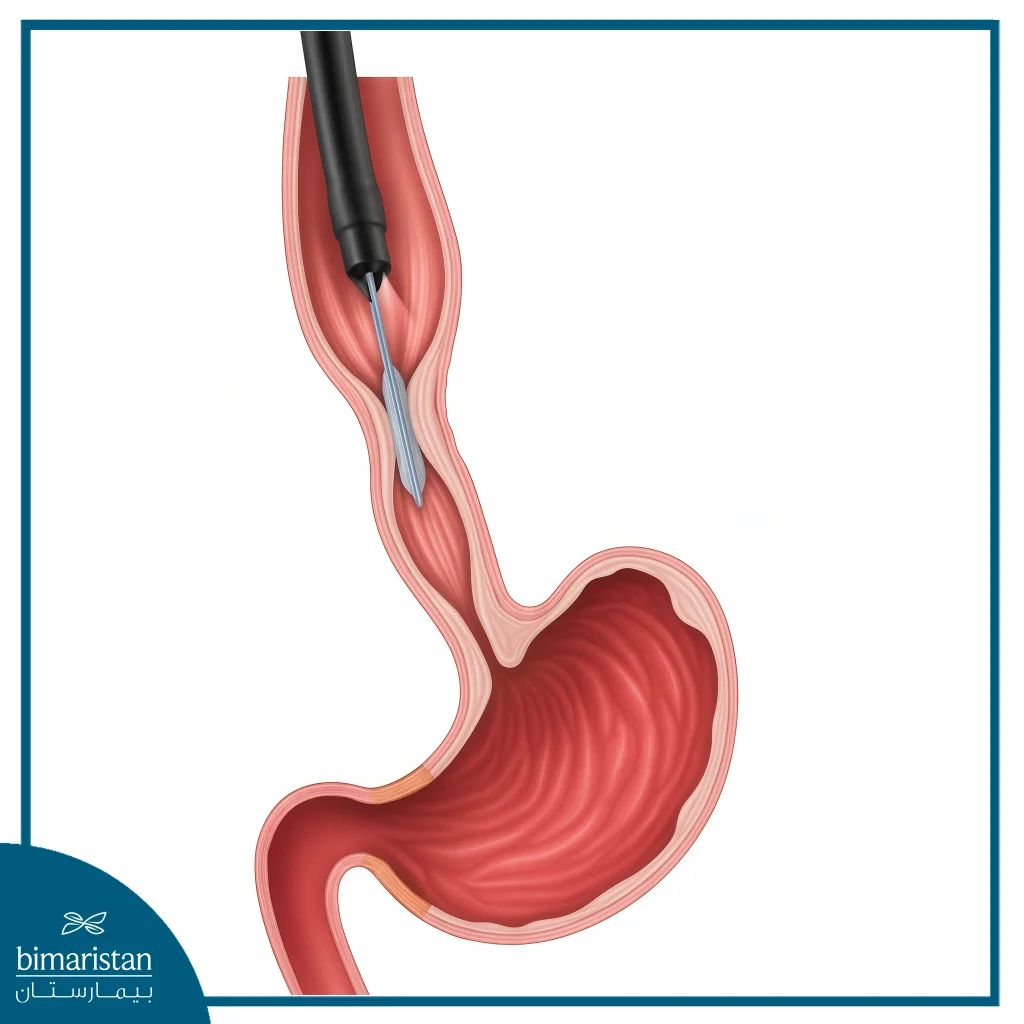
- Laparoscope and balloon insertion: The doctor inserts a thin, flexible scope through the mouth into the esophagus to pinpoint the exact location of the stricture. Then, a small deflated medical balloon is passed through the scope until it reaches the site of the stricture.
- Balloon inflation: The balloon is gradually inflated with saline or air through a tube attached to it, expanding the narrowed walls of the esophagus. The amount of pressure and duration of inflation are carefully controlled to minimize the risk of esophageal rupture.
- Removing the balloon and the laparoscope: After the desired dilation is achieved, the balloon is deflated and slowly removed along with the scope.
- Follow-up after the procedure: The medical team will monitor the patient for a short period to ensure there are no complications, such as severe pain or bleeding. It is advised to avoid eating or drinking for a specific period of time as instructed by the doctor, and follow-up appointments are scheduled.
Benefits of esophageal balloon dilation
Esophageal balloon dilation is an effective procedure for relieving the symptoms of a stricture and improving the patient’s ability to swallow. The benefits vary depending on the time period after the procedure, including both immediate and long-term benefits.
Short-term benefits
- Quickly relieve dysphagia symptoms and improve the passage of food
- Minimize discomfort and pain while swallowing
- You can gradually regain the ability to eat solid foods after the procedure
- Non-surgical procedure offers a safe alternative to major surgery
- Reduce the risk of complications associated with stenosis, such as infections or bleeding from congestion
Long-term results
- Continuous improvement in the quality of life while minimizing the need for pain medications
- Reduces the likelihood of recurrence of stricture with proper follow-up and treatment
- Reduced hospitalization rates due to esophageal stricture complications
- The procedure can be repeated as needed without significantly increasing the risk
- Support the long-term restoration of normal esophageal function with continuous monitoring of the condition
Risks and possible complications
Esophageal balloon dilation is a largely safe procedure, but it may be associated with some side effects and complications that require careful monitoring.
Side effects
Common side effects after esophageal balloon dilation include temporary pain or discomfort in the chest or throat, and temporary congestion or irritation in the lining of the esophagus. Some patients may experience temporary heartburn after the procedure, which is often treated with acid-suppressing medications.
Rare complications
While rare, more serious complications can occur, such as a tear or perforation of the esophageal wall, which requires urgent medical intervention. Internal bleeding or infection can also occur, especially in cases where the patient has severe fibrosis or other disorders of the esophagus. Monitoring the patient after the procedure is essential to detect these complications early and address them promptly to prevent further complications.
Recovery and care after the procedure
After esophageal balloon dilation, recovery requires special attention to diet and medical follow-up to ensure a successful outcome and avoid complications.
Diet after esophageal balloon dilation
Start with clear liquids, such as water and non-acidic juices, for the first 24 hours after the procedure. Then, gradually move to soft and pureed foods to minimize stress on the esophageal wall. It is recommended to avoid hard, spicy, and acidic foods for at least a week as directed by the doctor. Eating small, frequent meals instead of large meals can also help relieve pressure on the esophagus.
Review and follow-up
Regular follow-up appointments are scheduled with your doctor to assess the esophagus’s response to dilation and ensure that the narrowing does not recur. Additional imaging or laparoscopic tests may be required depending on the condition and symptoms. Symptoms such as severe pain, increased difficulty swallowing, or bleeding should be reported to your doctor immediately. In some cases, repeated dilation of the esophagus may be required to ensure that the results are permanent.
Therapeutic alternatives
In the case of esophageal stricture, besides esophageal balloon dilation, other treatment alternatives can be used, depending on the severity and nature of the condition.
Bougie dilation
Bougie dilation is a procedure that uses a rigid, flexible rod inserted through the mouth into the esophagus to expand the narrowed area. This procedure is simpler and faster than balloon dilation, but it is less controlled in terms of the dilation size, which may increase the risk of rupture in some cases. The bougie is widely used in cases where the stricture is short and uncomplicated, and is considered an effective option, especially in centers with high expertise in this field.
Open surgery
Esophageal balloon dilation is typically the first-line treatment for esophageal strictures; however, surgery may be necessary for complex or unresponsive cases that do not respond to conservative dilation methods. Surgical interventions may involve resecting the narrowed segment of the esophagus and reconnecting the healthy ends, or performing surgical dilation to reduce fibrotic scarring. While surgery is more invasive and requires a more extended recovery period, it is considered a definitive solution in certain cases, particularly when the stricture is caused by tumors or extensive fibrosis that cannot be adequately managed with esophageal balloon dilation alone.
Advantages of the esophageal balloon dilation procedure in Turkey
- Provides high medical expertise with gastroenterologists who have many years of training and practice in the field of esophageal balloon dilation
- Advanced laparoscopic techniques and state-of-the-art medical equipment are routinely used to enhance the accuracy and success rate of esophageal balloon dilation procedures, while minimizing potential complications
- Treatment costs for esophageal balloon dilation in Turkey are significantly lower than in Europe or the United States, without compromising the quality of care or adherence to international medical standards
- Integrated treatment packages that include hotel accommodation, transportation to and from the hospital, and translation services for international patients to facilitate communication and ensure patient comfort during Balloon Esophageal Dilatation (BED) treatment
Esophageal balloon dilation is a safe and effective therapeutic procedure designed to improve the quality of life for patients with esophageal stricture. This minimally invasive technique offers rapid symptom relief and serves as a non-surgical alternative to more complex operative interventions. With ongoing advancements in medical technology, esophageal balloon dilation has become a widely preferred option among physicians and patients globally, particularly in Turkey, where specialized expertise and cutting-edge methods are readily available. For optimal outcomes and minimal risks, it is essential to consult a qualified specialist to evaluate the condition and determine the appropriate timing for performing esophageal balloon dilation.
Sources:
- Hassan, M., & Ali, S. (2010). Fluoroscopically guided balloon dilation of the esophagus. Journal of Gastroenterology, 45(3), 123-130.
- MedlinePlus. (2024, October 30). Tightening of the esophagus (benign esophageal stricture). MedlinePlus Medical Encyclopedia. https://medlineplus.gov/ency/article/000207.htm