
Dry eye syndrome is one of the most common eye conditions globally, affecting millions across all age groups. It develops when tears fail to adequately moisten the eyes, either due to reduced tear production or poor tear quality, leading to surface irritation and inflammation.
Patients often experience burning, stinging, or a foreign-body sensation in the eye, with symptoms worsening in dry environments or during prolonged screen use. Timely diagnosis and consistent treatment are crucial to preserving long-term eye comfort and visual clarity.
What is dry eye syndrome?
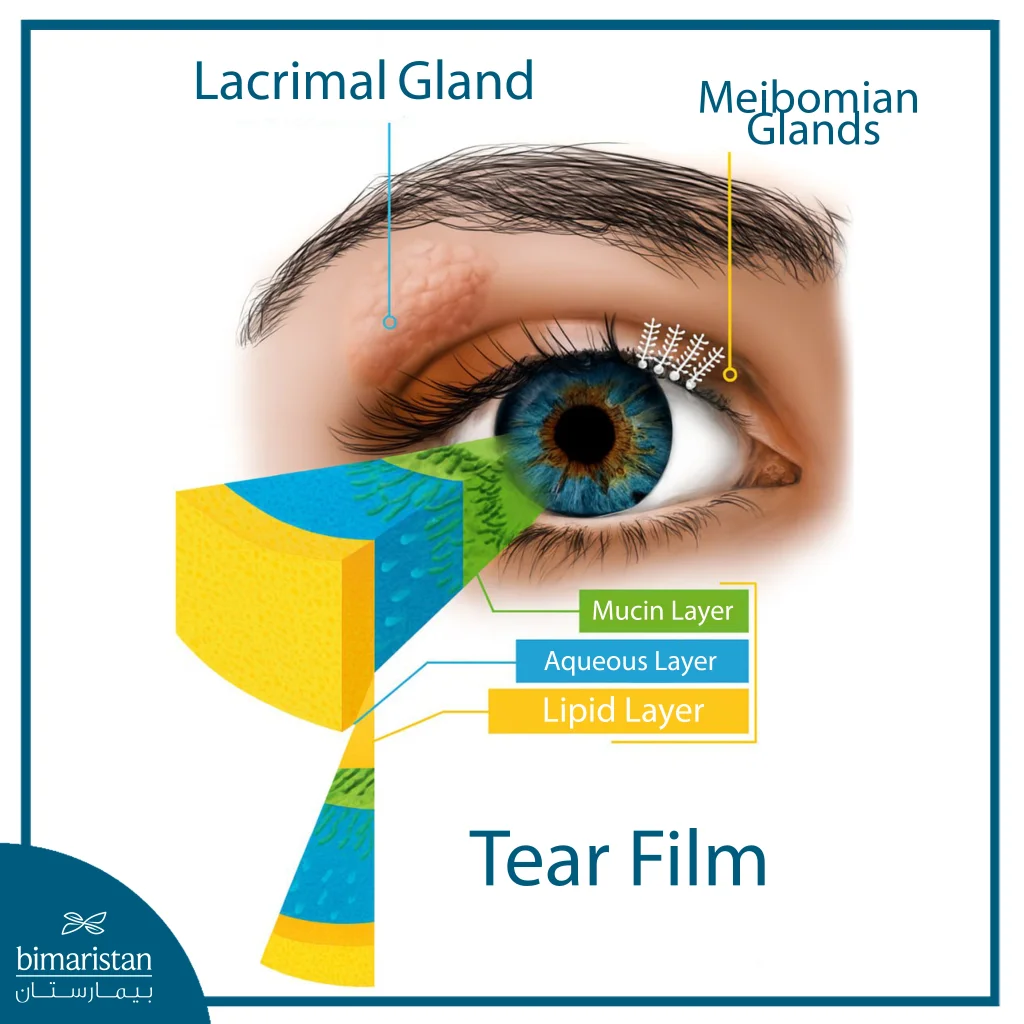
Dry eye syndrome is a chronic disorder of the ocular surface caused by an imbalance in the tear film, which moisturizes and protects the eye. Tears are made up of three main layers:
- The outer lipid layer, secreted by the Meibomian glands, prevents tears from evaporating quickly
- The middle aqueous layer, produced by the lacrimal gland, moistens and nourishes the eye
- The inner mucous layer that helps tears spread evenly over the surface of the cornea
When these layers become unbalanced or less secreted, the surface of the eye becomes unstable, leading to chronic inflammation and painful dryness. Dry eye syndrome is a multifactorial disease associated with tear imbalance, increased tear viscosity, and neurological or inflammatory changes to the ocular surface.
Causes of dry eye syndrome
Dry eye syndrome occurs when the lacrimal glands are unable to produce enough tears or when the tears evaporate quickly before they can fulfill their function of moisturizing the eye. Depending on the type of abnormality, it could be due to underproduction of tears, over-evaporation of tears, or a combination of both.
Causes of decreased tear production
There are many reasons for the lack of tear production, but here are the most important ones:
- Aging: The lacrimal gland secretions decrease with age.
- Thyroid disorders and vitamin A deficiency.
- Immune diseases: Sjogren’s syndrome, rheumatoid arthritis, lupus, or sarcoidosis.
- Impaired corneal sensation: Caused by contact lens use or laser surgery (LASIK), and is usually temporary.
- Use of certain medications: Antidepressants, antihistamines, diuretics, high blood pressure medications, Parkinson’s medications, or post-menopausal hormone therapy.
Causes of increased tear evaporation
Causes of increased tear evaporation include:
- Blockage of the Meibomian glands, which produce the lipid layer that prevents evaporation, is common in individuals with rosacea or blepharitis
- Eyelid issues, such as turning inward or outward, which interfere with tear distribution
- Exposure to environmental factors such as smoke, wind, air conditioning, or dry climate
- Neurological conditions, such as Bell’s palsy or stroke, that affect eyelid closure
- Lack of blinking while using screens, driving, or reading, leading to tears evaporating
Dry eye syndrome is more likely to occur in people over the age of 50, frequent contact lens wearers, or those who work in closed, dry environments.
Symptoms of dry eye syndrome
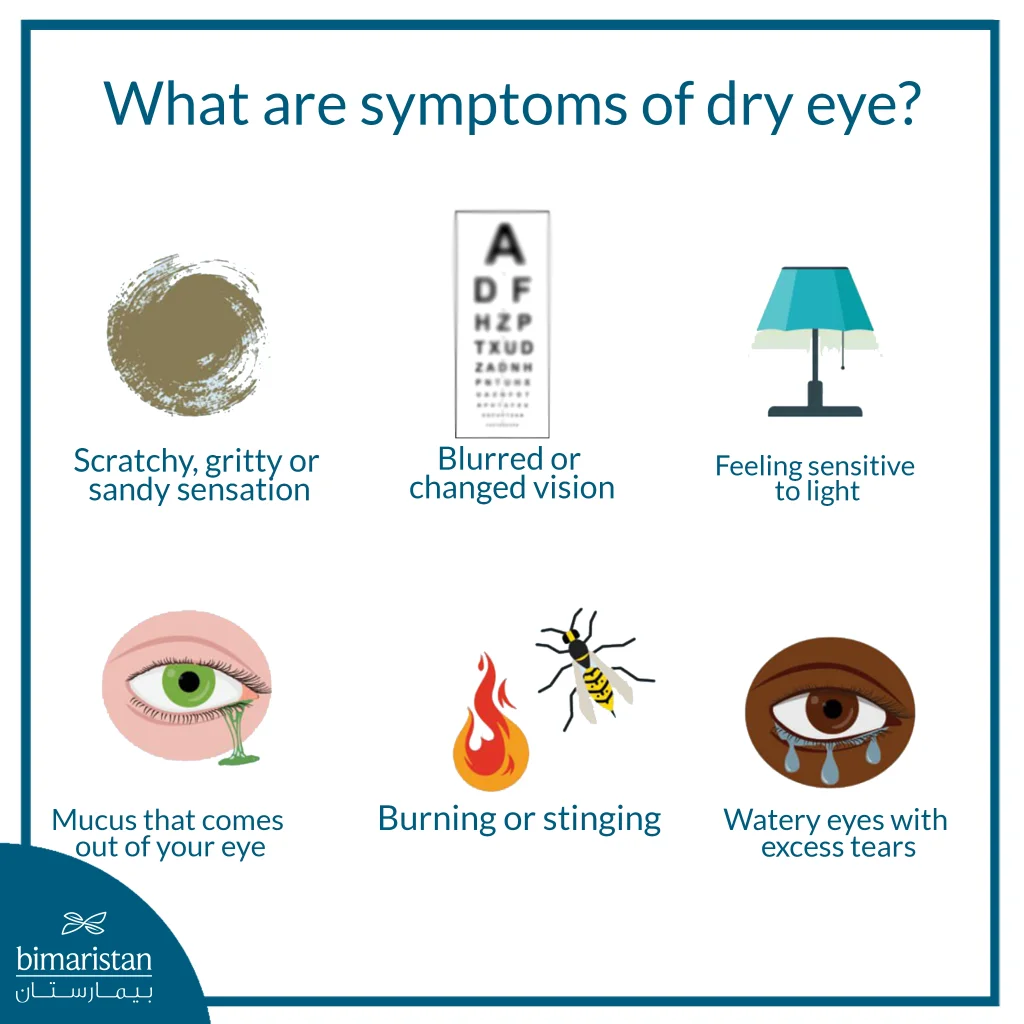
Dry eye syndrome often affects both eyes, with symptoms varying from mild to severe depending on the degree of dryness. Symptoms include:
- Tingling, burning, or foreign body sensation inside the eye
- Itchy or rough (sandy sensation) eyes
- Red eyes and stringy mucus in the eyes
- Hazy or blurry vision that worsens with visual effort
- Excessive sensitivity to light (photophobia)
- Difficulty wearing contact lenses or driving at night
- Increased tears despite dryness, a reflexive reaction from the lacrimal gland to compensate
- Lack of tears when crying in advanced cases
Symptoms are more severe in air-conditioned indoor environments or when exposed to wind or dust, and some patients experience temporary relief when they close their eyes or rest. The persistence of these symptoms indicates dry eye syndrome, which requires careful evaluation by an ophthalmologist to determine the cause and develop an appropriate treatment plan.
Dry eye syndrome diagnosis
The diagnosis of dry eye syndrome is based on a careful evaluation that includes a complete medical history and a comprehensive eye examination to determine the cause and severity of the dryness. The ophthalmologist begins by taking detailed information about the symptoms, their duration, environmental factors that worsen symptoms, and co-morbidities such as dry mouth or autoimmune diseases.
A clinical examination is then performed using a slit lamp, a special microscope that allows the doctor to see the surface of the eye and eyelids in detail. During the examination, a lack of tears at the edge of the eyelid, the presence of mucus strands, or damage to the corneal cells can be observed. A yellow fluorescein dye is often used to precisely identify damaged areas on the surface of the cornea.
Common diagnostic tests
- Schirmer test: A thin strip of paper is placed under the lower eyelid to measure the amount of tears produced in five minutes.
- Analyze a sample of tears: It is used to detect biomarkers, such as elevated MMP-9 or low lactoferrin.
- Tear Osmolarity Test: It measures the concentration of molecules in tears, as dry eye syndrome shows low water and high salinity.
- Tear Break-Up Time (TBUT): A dye is added to the eye to assess the stability of the tear film and measure the time it takes to evaporate; if it dries in less than 10 seconds, it indicates significant dryness.
This comprehensive evaluation helps the doctor categorize the type of dry eye syndrome (hypoevaporation or hyperevaporation) and select the most appropriate treatment for each case.
Dry eye syndrome treatment
Treatment for dry eye syndrome is determined by symptom severity and underlying cause and aims to improve eye moisturization, reduce inflammation, and stabilize the tear film.
Pharmacologic and replacement treatments for dry eye syndrome
- Artificial tears: Over-the-counter drops that moisturize the eye and relieve discomfort, used regularly several times a day.
- Prescribed medicinal eye drops: Such as cyclosporine or Lifitegrast to reduce surface inflammation and improve tear production.
- Nighttime gels and ointments: Used before bedtime to moisturize the eyes throughout the night, but they can cause temporary blurred vision.
- Drops prepared from the patient’s own blood: Used for severe cases that do not respond to other treatments.
- Oral or topical antibiotics: To reduce inflammation of the eyelid margins and stimulate the Meibomian oil glands.
- Nasal spray: A modern way to stimulate the lacrimal glands to produce tears.
Procedural treatments
- Blocking tear ducts: It is used to block the small tear drainage ports in the eyelid, which keeps moisture in for longer. They can be temporary (collagen) or permanent (silicone or thermal).
- Intense Pulsed Light Therapy (IPL): Helps cleanse the glands and improve secretory function in chronic cases.
- Thermotherapy for Meibomian glands: To remove blockages in the sebaceous glands and improve the secretion of the oily layer.
- Special lenses: Used in severe cases to protect the surface of the eye and maintain constant moisture.
Supportive therapies and lifestyle modification
- Use warm compresses daily on the eyelids to optimize the flow of oils
- Avoid air conditioners, smoke, and direct drafts
- Humidify the indoor environment with a humidifier
- Take omega-3 fatty acids or flax oil to support the sebaceous glands
- Take breaks while using screens, reminding yourself to blink regularly
These procedures are aimed at long-term symptom control, as dry eye syndrome is usually chronic and requires ongoing treatment to maintain visual comfort and clarity.
Complications of neglecting dry eye syndrome
Neglecting dry eye syndrome can lead to complications ranging from minor to serious, especially if the dryness persists for a long time without proper medical intervention. The loss of the eye’s natural moisture makes the surface of the cornea more susceptible to damage and inflammation, leading to persistent irritation and discomfort. Common complications include:
- Corneal ulcers, which can lead to severe pain and blurred vision
- Chronic eye irritation and persistent redness as a result of recurrent inflammation
- Corneal scarring due to chronic dryness, which can negatively affect corneal transparency and visual quality
- Increased risk of bacterial or viral infections due to the weakening of the protective barrier provided by tears
- Impaired or partial loss of vision in severe cases, with prolonged absence of treatment
Treating dry eye syndrome early prevents complications and preserves corneal health and vision quality, so it is advisable not to ignore symptoms and to consult an ophthalmologist immediately if dryness, pain, or poor vision persists.
Dry eye syndrome prevention
You can minimize your risk of developing dry eye syndrome or alleviate its symptoms by following these preventive guidelines:
- Avoid direct exposure to air conditioners or heaters and dry winds
- Avoid areas with smoke, dust, or industrial pollutants.
- Remind yourself to blink frequently to maintain natural eye moisture
- Clean your eyelids regularly to keep your Meibomian sebaceous glands healthy
- Use an indoor humidifier, especially in winter
- Drink enough water daily to maintain body fluid balance
- Take regular breaks while working on screens or reading for extended periods
- A diet rich in omega-3 fatty acids, such as fish oil and flaxseed
- Consult your doctor when taking medications that may affect tear production, such as antidepressants or antihistamines
- Regular checkups with an ophthalmologist for early detection and treatment of any tear film disorder before it develops
When should I see a doctor?
It is advisable to see an ophthalmologist for persistent symptoms of dry eye syndrome, such as burning, tingling, or a foreign body sensation in the eye, especially if they do not improve with artificial tears or rest. Seek medical advice immediately in case of severe redness, sudden pain, or decreased visual acuity, as these signs may indicate inflammation or ulceration of the cornea.
People with chronic diseases such as diabetes or immune diseases, or those taking medications that affect tear production, should undergo regular eye examinations even in the absence of symptoms. Early diagnosis can help avoid complications and maintain eye comfort and vision health.
Dry eye syndrome is among the most prevalent eye disorders today, driven by increased screen time and evolving lifestyle habits. Although the condition is often mild, untreated cases can lead to chronic inflammation and decreased visual quality. Timely diagnosis, effective treatment, and preventive care are key to maintaining long-term eye comfort and health. At Bimaristan Medical Center, we provide advanced diagnostic and therapeutic solutions for dry eye syndrome, led by expert ophthalmologists to restore your eyes’ natural moisture and ensure optimal outcomes.
Sources: