
Stroke Rehabilitation is a vital phase in the recovery process, enabling patients to restore motor and cognitive abilities impaired by cerebral ischemia. Research shows that over 30% of stroke survivors need comprehensive rehabilitation programs to enhance independence and overall quality of life. Stroke Rehabilitation focuses on muscle strengthening, speech improvement, and psychosocial adaptation, making it an essential cornerstone of post‑stroke care.
What is stroke rehabilitation?
Stroke rehabilitation is a process that helps patients regain as much of their motor, cognitive, and speech functions as possible, which may have been affected by a stroke. The primary goal of stroke rehabilitation is to:
- Restore motor function: It is achieved by strengthening muscles, improving balance and walking ability, and increasing joint range of motion.
- Restore cognitive function: Improve memory and concentration, and restore the ability to solve problems.
- Restore speech and communication skills: Through exercises to strengthen the muscles of the mouth and tongue.
- Restore the ability to perform daily tasks: Such as eating, dressing, bathing, standing, and walking
- Psychological and emotional support: Helping the patient cope with the frustration, anxiety, or depression that may result from a stroke.
Rehabilitation usually begins as soon as the patient’s medical condition is stabilized after the stroke. It is preferable to start the rehabilitation program within 24 to 48 hours after the stroke, in order to achieve the best possible results from the process before the patient’s condition deteriorates further.
Stages of stroke rehabilitation
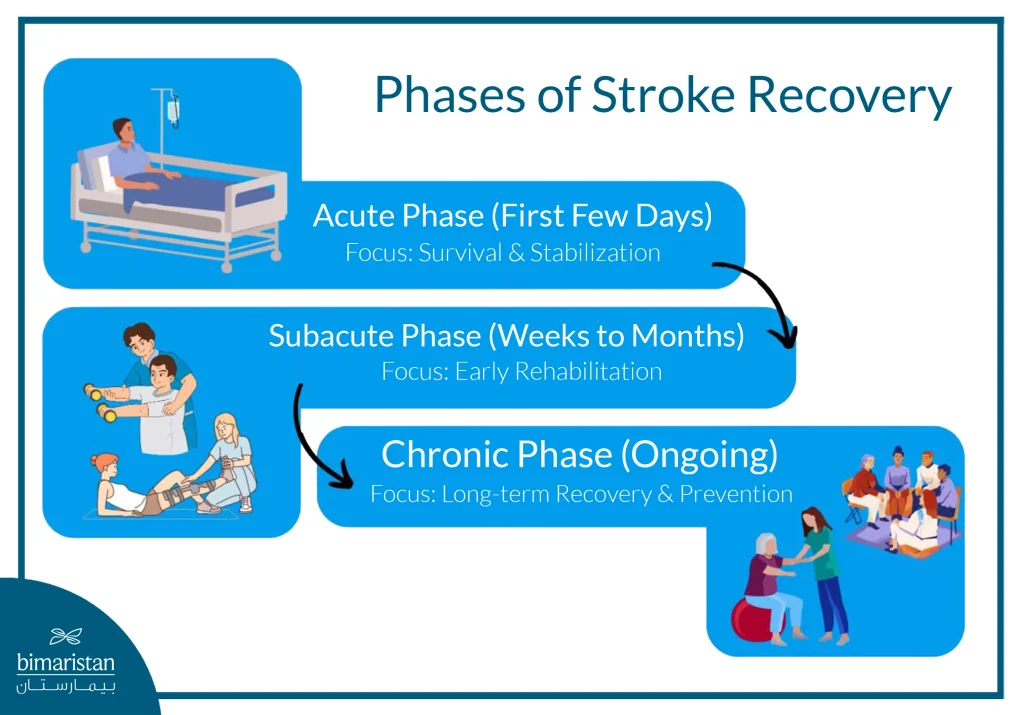
The rehabilitation process after a stroke consists of three main stages. It begins with the hospitalization stage, followed by the intensive rehabilitation stage, and finally, the follow-up stage. Each of these stages plays a crucial role in achieving full or nearly full recovery after a stroke.
Acute phase (hospitalized)
This phase begins immediately after the patient’s condition is stabilized after the stroke, and it mainly aims to restore basic neurological functions and maintain vital body functions as much as possible:
- Assessing the patient’s condition
- Develop an initial treatment plan
- May include bedtime exercises to prevent muscle and joint stiffness
Treatment of symptoms is usually started immediately after a stroke, such as swallowing and speech issues.
Intensive Rehabilitation Phase
This phase typically occurs in specialized rehabilitation centers after the patient is discharged from the hospital. Its main goals are to restore motor and functional skills, as well as to regain the ability to perform daily activities.
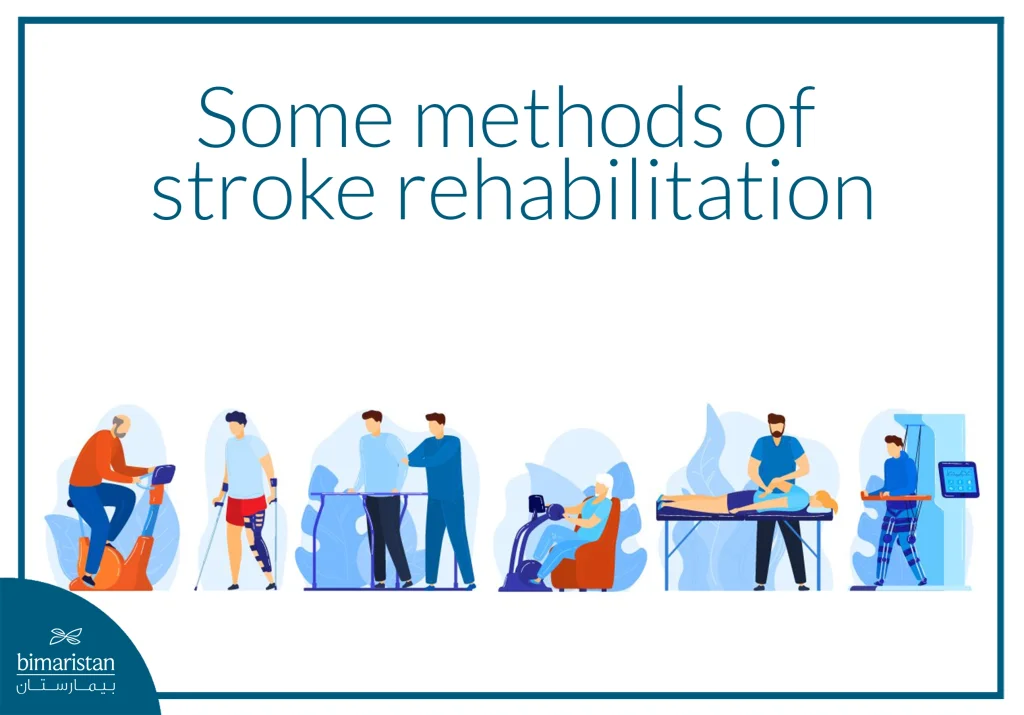
- Physiotherapy: To strengthen muscles, improve balance, and restore the ability to walk.
- Occupational therapy: To help the patient learn skills needed for daily living, such as dressing, cooking, and using a computer.
- Speech and language therapy: To help improve the ability to speak and communicate.
- Cognitive therapy: To improve memory and attention and restore the ability to solve problems.
- Psychotherapy: To provide emotional support and deal with the psychological effects of stroke.
This stage lasts until the patient is able to rely on himself/herself in matters of daily living.
Home-based rehabilitation and long-term follow-up
This stage occurs after the patient returns home and focuses on maintaining the progress achieved, while continuing the journey toward recovery. It includes:
- Doing some regular home exercises
- Visiting the rehabilitation center periodically to follow up and provide ongoing support
- Continuing to adopt positive lifestyle changes, such as quitting smoking and consuming a healthy diet, to protect against recurrent strokes
- Establishing realistic goals and monitoring the patient’s progress
These stages are the basic path a stroke patient must take to regain as much motor and cognitive function as possible.
Types of Stroke Rehabilitation
| Type of rehabilitation | Description | The main goal | Basic benefits | Devices or technologies used |
|---|---|---|---|---|
| Physiotherapy | Focuses on improving mobility, balance, and muscle strength after a stroke | Regain the ability to walk, sit, and perform daily activities | Improve fitness and reduce muscle spasms | Motorized treadmills, resistance training, and electrotherapy |
| Occupational therapy | Helps the patient learn or regain daily living skills such as dressing and eating | Enhanced independence and improved job performance | improve the quality of life and enable the patient to return to work or study | Limb aids, cognitive training techniques |
| Speech and swallowing therapy | Treats speech or swallowing difficulties caused by brain injury | Improved speech and communication, and avoid choking or malnutrition issues | Restore the ability to communicate effectively and eat safely | Facial and tongue muscle stimulation devices, speech training |
| Psychotherapy and behavioral support | Focuses on treating post-stroke depression, anxiety, and mood disorders | Supporting mental health and strengthening the patient’s willpower | Boosting morale and improving adherence to the stroke rehabilitation program | Cognitive behavioral therapy (CBT) sessions, group therapy |
| Robotic therapy and neurostimulation | It relies on advanced devices to stimulate nerves and move limbs in a programmed manner | Accelerate recovery and stimulate neural plasticity | Up to 40% more effective sessions according to recent studies | Rehabilitation robots, Functional Electrical Stimulation (FES) |
The importance of early stroke rehabilitation in improving the chances of recovery
Early stroke rehabilitation is a key factor in determining the speed and quality of recovery. Studies show that patients who begin rehabilitation programs within the first few days after their medical condition stabilizes achieve significant improvements in mobility, speech, and independence compared to those who delay treatment. The success of stroke rehabilitation depends on the brain’s ability to reorganize itself through what is known as neural plasticity, a process that allows healthy neurons to compensate for damaged areas.
Early intervention with mobility exercises and occupational therapy helps stimulate this vital process, reducing the risk of complications such as joint stiffness or loss of balance and increasing the likelihood that the patient will regain normal abilities faster and more effectively.
Assisted Rehabilitation Therapies
Stroke rehabilitation methods have evolved significantly in recent years, thanks to the introduction of adjunctive therapeutic techniques that enhance the effectiveness of conventional treatment. These adjunctive therapies are used to support the restoration of neurological functions and accelerate the patient’s motor and psychological improvement:
- Electrotherapy: Stimulates weak muscles and nerves to improve motor control.
- Robotic therapy: This method uses intelligent devices to help the patient perform precise movements in a safe, repetitive manner to stimulate neural plasticity.
- Virtual reality: A recent innovation that simulates everyday activities in an interactive environment, encouraging the brain to relearn.
- Music therapy and magnetic stimulation: This method can improve mood and motor function.
- Functional electrical stimulation (FES) techniques: It helps re-energize injured limbs.
Studies confirm that combining these methods with conventional physical and occupational therapy programs doubles the speed of recovery and improves a patient’s chances of regaining their abilities after a stroke.
Factors that determine the duration of stroke rehabilitation
The duration of stroke rehabilitation varies significantly from one patient to another, as it depends on multiple medical and personal factors that influence the body’s response to treatment. The location and size of the brain injury are among the most critical determinants, since strokes affecting movement or speech centers often require longer rehabilitation periods compared to milder cases. Patient age also plays a vital role, as younger individuals generally have a greater capacity to regenerate neural connections.
Moreover, the severity of initial symptoms and the degree of motor or speech impairment directly impact the length of the rehabilitation process, with complex cases demanding intensive programs that may extend for several months. Family support and psychological motivation are essential to successful stroke rehabilitation, as patients who receive consistent encouragement achieve faster, more sustainable progress. Finally, the treatment environment and availability of technologies are decisive, with advanced centers in Turkey utilizing robotic devices and modern rehabilitation methods to accelerate recovery and restore independence.
Stroke Rehabilitation represents a patient’s pathway to reclaiming a normal life, especially when integrated into a comprehensive treatment plan overseen by a multidisciplinary team. In Turkey, leading institutions such as Bimaristan Medical Center deliver specialized neurorehabilitation programs that combine cutting‑edge medical technology with attentive human care to secure the best recovery outcomes.
Sources: