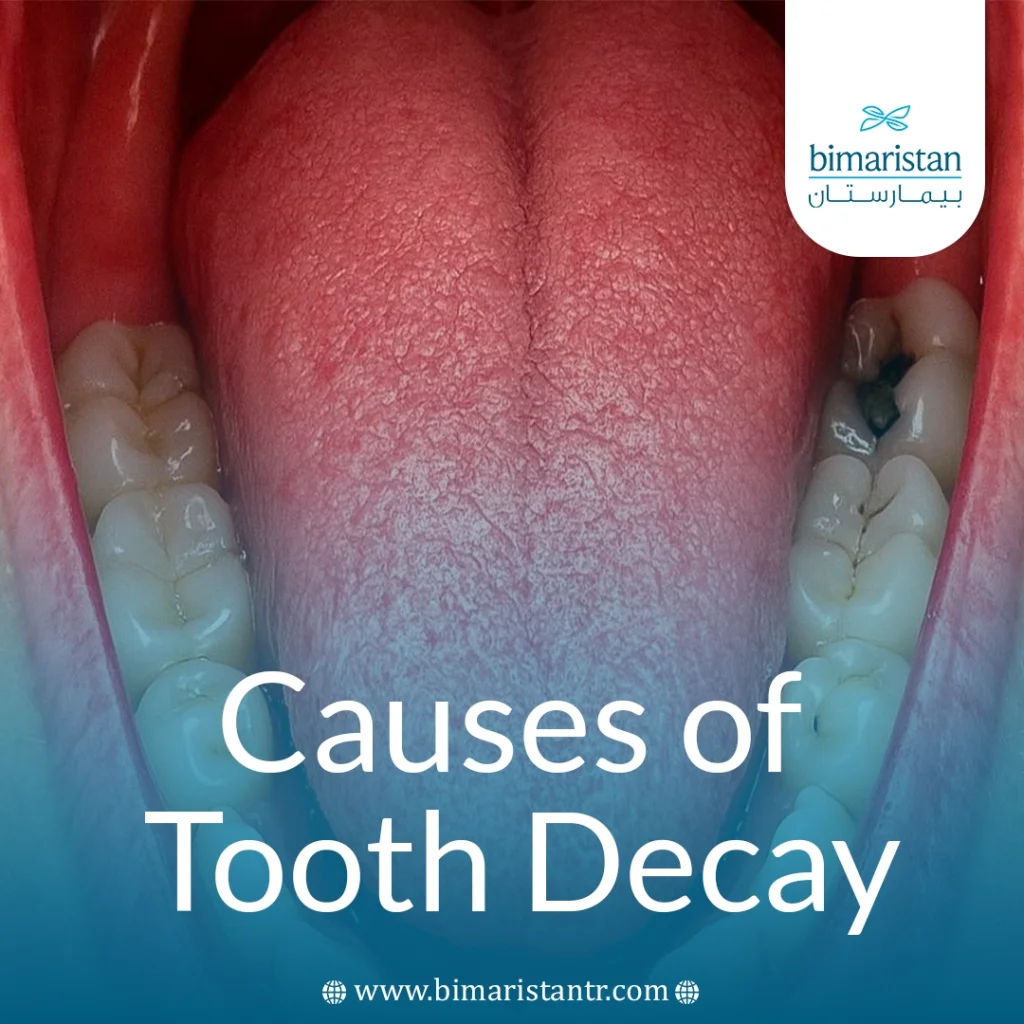
The causes of tooth decay are one of the most common topics people look for when they experience pain or poor oral health. It is estimated that more than two billion people worldwide have cavities in their permanent teeth, while half a billion children have cavities in their baby teeth. This is due to multiple factors such as high exposure to sugars, low exposure to fluoride, and poor oral hygiene. All of these factors contribute to the formation of acids that attack tooth enamel and open the way for cavities to form. To understand this phenomenon in depth, it’s important to look at the underlying factors that lead to tooth decay.
What is tooth decay?
Tooth decay is progressive damage to the enamel, the hard outer layer that protects the tooth, as bacteria in the mouth react with food debris, especially sugary and starchy foods, to produce acids that attack the enamel, creating holes or cavities in the tooth. If left untreated in its early stages, decay can spread to deeper layers of the tooth causing pain, nerve inflammation, and even tooth loss in advanced cases.
How Tooth Decay Occurs
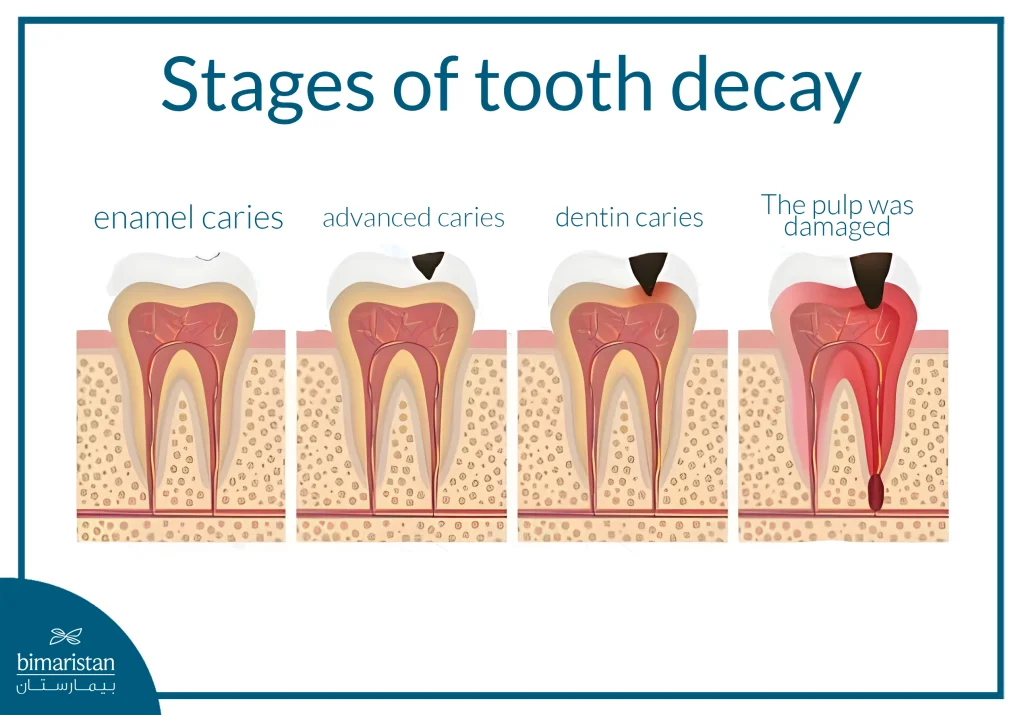
The stages of tooth decay are as follows:
- Plaque formation: Plaque is a thin, sticky, translucent layer covering the teeth that forms as a result of eating large amounts of sugars and starches and not cleaning the teeth properly. When food debris and sugars are not removed, bacteria begin to feed on them and form plaque. Over time, the plaque hardens on the teeth and turns into tartar that forms above or below the gum line, making it harder to remove and creating a shield that protects the bacteria. Removing this tartar requires the intervention of a dentist, and plaque is the number one cause of tooth decay.
- Plaque attack: Bacteria in plaque produce acids that dissolve minerals in the hard outer layer of the tooth (enamel), causing tiny holes that are the first stage of decay. As the enamel erodes, bacteria and acids reach the next layer of the tooth (dentin), which is weaker than enamel and more sensitive to acids, leading to more sensitive teeth.
- Continued damage: As decay progresses, bacteria and acids penetrate the layers of the tooth and reach the pulp, which contains nerves and blood vessels. This leads to swelling and irritation of the pulp, and since the tooth doesn’t have enough room to expand, the resulting pressure causes severe pain. In some cases, the damage and pain can extend to the bone surrounding the tooth, causing bone loss or affecting neighboring teeth, which is one of the most serious stages of tooth decay.
Types of tooth decay
Tooth decay can start on any surface of the tooth, and the causes of tooth decay are varied. Here are the most common types and where they can be found:
- Caries of smooth surfaces: This is a slow-growing type that gradually dissolves the enamel. This type can be prevented or even reversed with good oral hygiene. It often affects people in their twenties and appears between the teeth.
- Pit and fissure caries: This type of decay forms on the upper surface of the teeth (occlusal surface) used for chewing, and can also affect the front of the back teeth. This type usually starts in adolescence and progresses very quickly.
- Root caries: More common among adults with receding gums, this exposes the roots of the teeth to plaque and acids. This type is difficult to prevent or treat, so people with receding gums are advised to see a periodontist for an evaluation and treatment plan.
Stages of tooth decay
Tooth decay can affect all layers of the tooth, and this leads to different causes of tooth decay, and it goes through five main stages as follows:
- . Demineralization: In this stage, small chalky white spots appear on the surface of the tooth, a sign of demineralization of the outer enamel layer.
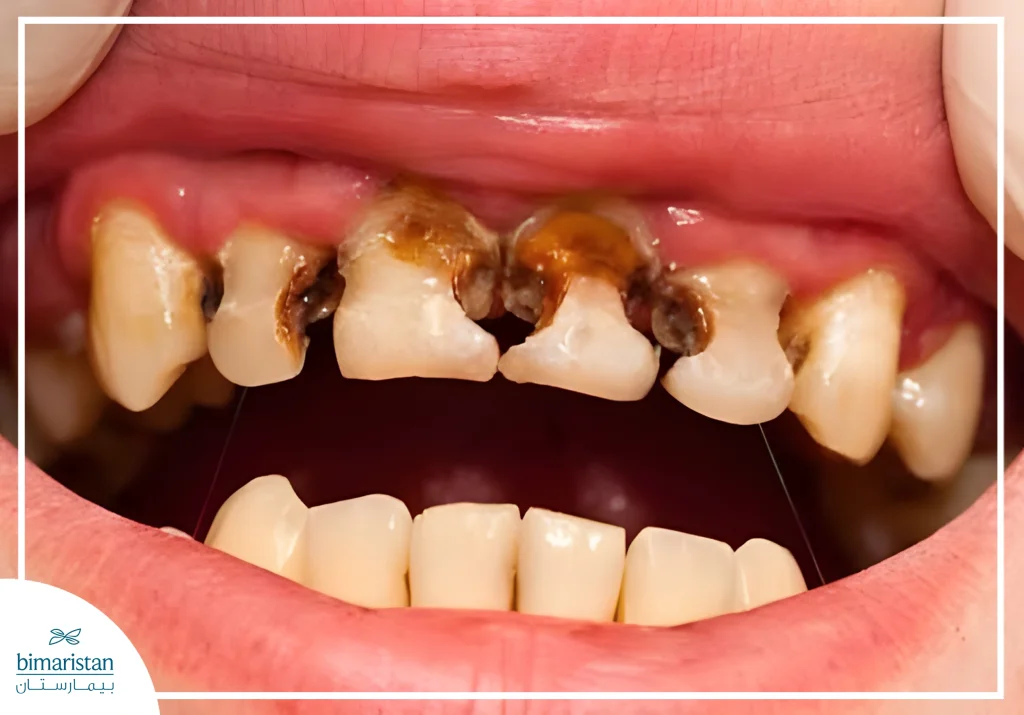
- Enamel decay: When decay is left untreated, the enamel continues to gradually erode, and small holes (cavities) may begin to appear, at which point the white spots turn a light brown color.
- Dentin caries: Dentin is the layer that lies just below the enamel and is softer than it. When bacteria and plaque reach this layer, cavities develop more quickly. At this stage, the person may feel sensitivity in the teeth, and the stains turn a dark brown color.
- Damage to the pulp: The pulp is the deepest part of the tooth and contains the nerves and blood vessels that nourish the tooth and keep it alive. When decay reaches the pulp, pain begins to appear, and you may notice redness or swelling in the gums surrounding the tooth. The spots turn dark brown or black in color.
- Tooth abscess: If left untreated, deep decay can develop into a bacterial infection that results in a pocket of pus (abscess) at the root of the tooth. Symptoms may include pain radiating to the jaw or face, swelling of the face, and swollen lymph nodes in the neck.
In rare cases, the infection can spread to neighboring tissues or to the brain or bloodstream (sepsis), which can be life-threatening.
Symptoms of tooth decay
Tooth decay may not cause any pain at first, but if a cavity develops, the following symptoms of tooth decay may occur:
- Bad breath
- Pus around the tooth
- Swollen and bleeding gums
- Unpleasant taste in the mouth
- Gray, brown, or black spots on the teeth
- Toothache, which may be a constant pain that prevents sleep or a sharp, intermittent pain with no apparent cause
- Tooth sensitivity, where the patient may experience pain or discomfort when consuming hot, cold, or sweet foods or beverages
Causes of tooth decay
The causes of tooth decay are many and varied, including the following:
Receding gums
When the gums recede, more parts of the teeth, including the roots, are exposed, increasing the susceptibility of the teeth to decay.
Genetic factors
Some people are genetically more prone to tooth decay. You can’t change this factor, but you can increase attention to oral hygiene to minimize the issue.
Dry mouth
Saliva contains the enzyme lysozyme, which naturally limits the growth of plaque. Excessive dry mouth reduces this protective enzyme, increasing the risk of tooth decay.
Brushing too vigorously
Brushing too hard or using a brush that is too rough can erode the enamel, making teeth more susceptible to decay. Brushing gently and slowly is recommended to avoid damaging the enamel.
Deep cracks in the teeth and enamel issues
Teeth with naturally weak enamel are more susceptible to damage. Teeth with deep cracks are also harder to clean, allowing plaque to grow more easily.
Bruxism (teeth grinding)
Many people don’t realize that they grind their teeth, especially while sleeping. Grinding your teeth removes enamel, making your teeth more susceptible to decay. Your dentist may suggest an overnight mouth guard if necessary.
Avoiding the dentist
Avoiding dental visits prevents him from detecting cavities early or noticing behaviors that may lead to cavities. It is recommended to visit the dentist every six months for a routine checkup and deep cleaning, where the dentist can discuss the causes of tooth decay and prevent it from worsening.
Changing the daily routine
Any lifestyle change, such as diet, stress, a new job, a new home, or starting school, can affect your oral hygiene habits. Immune responses affect the entire body and may cause dry mouth, increased sugar cravings, or gingivitis.
Poor oral hygiene
The fastest way to get cavities is to neglect your dental care. Not brushing or flossing regularly, not using mouthwash, or cleaning your tongue makes your teeth more susceptible to cavities. Brushing for less than two minutes at a time can lead to the formation of cavities.
Unhealthy diet
What you eat has a direct impact on your dental health and is one of the causes of tooth decay. Eating too many sugary foods and drinks or a diet high in carbohydrates provides bacteria with the sugar they need to thrive, and very acidic foods contribute to tooth decay by weakening the enamel.
Causes of tooth decay in babies and children
Tooth decay in children is caused by bacteria and other factors. It can occur when foods containing carbohydrates (sugars and starches) remain on the teeth. These foods include milk, soft drinks, raisins, candy, cookies, cakes, fruit juices, cereals, and bread. The bacteria that naturally live in the mouth break down these foods and convert them into acids. The combination of bacteria, food, acid, and saliva forms a sticky substance known as plaque that adheres to the teeth.
Over time, acids produced by bacteria erode tooth enamel, causing cavities to form in the teeth. The causes of infant tooth decay are known as “bottle decay,” “infant feeding decay,” or “baby bottle decay.” These names are used because studies suggest that early childhood caries may occur when infants or young children are left to sleep with a bottle of milk or formula (or other sweetened drinks) in their mouths.
Milk collects in the mouth, and lactose (milk sugar) feeds cavity-causing bacteria while a child sleeps. Since saliva flow is low during sleep, teeth don’t get enough protection from damaging acids. Early childhood caries can also occur when young children drink sweetened beverages such as fruit juices, sodas, or smoothies, so it is advisable to avoid sugary foods and drinks, especially between meals.
Causes of tooth decay in pregnant women
Dental treatment for expectant mothers can be dangerous, and the stage of pregnancy must be taken into account when deciding on any procedure. Expectant mothers are advised to postpone non-emergency treatments until after delivery, especially teeth cleaning (scaling) or tooth extraction, as these procedures can cause heavy bleeding. During pregnancy, most moms have an increased appetite and eat more, which makes sugar and food debris more likely to stick between the teeth and increases the risk of tooth decay.
Many mothers also suffer from morning sickness and vomiting, which causes stomach acid and partially digested food particles to return to the mouth, where they stick to the teeth and cause tooth decay. Meanwhile, the high level of the hormone progesterone during pregnancy leads to inflamed and easily bleeding gums, making it painful and scary for moms to brush their teeth, which in turn increases the risk of cavities. Expectant mothers should visit the dentist regularly, as ignoring issues such as swollen gums or tooth decay can exacerbate the causes of tooth decay.
This makes it difficult or impossible to treat during the fourth through sixth months of pregnancy, when dental treatment is relatively safe. If teeth need to be cleaned or extracted, procedures that can cause serious and excessive bleeding, the dentist may postpone treatment until after delivery. The dentist decides which cases require urgent treatment based on an individualized assessment, because blood vessels dilate during pregnancy to increase blood flow, making the gums full of blood and more prone to bleeding.
Pregnant women may notice bleeding gums even when brushing gently, so the doctor recommends using a soft brush and gentle cleaning. Therefore, it is important that pregnant women start taking care of their oral health early to protect themselves from various causes of tooth decay, and inform the dentist that they are pregnant before any treatment. If X-rays are needed, the doctor will take into account the level of radiation that is safe for pregnancy, and pregnant women should use protective lead shields, making sure that all medications used are safe during pregnancy.
How to diagnose tooth decay
Regular visits to the dentist twice a year are the best way to catch cavities in their early stages before they get worse or bigger. The dentist uses a range of instruments to examine the teeth, as a tooth with decay is softer when examined with a probe. The dentist may also take dental X-rays, which show the presence of decay before it becomes visible to the naked eye.
How to treat the causes of tooth decay
There are several ways to treat the causes of tooth decay without having to extract them. Many people are so afraid of visiting the dentist that they leave treatable teeth until they are beyond saving. But there are alternatives to tooth extraction to consider if you’re worried about tooth decay.
The use of fluoride
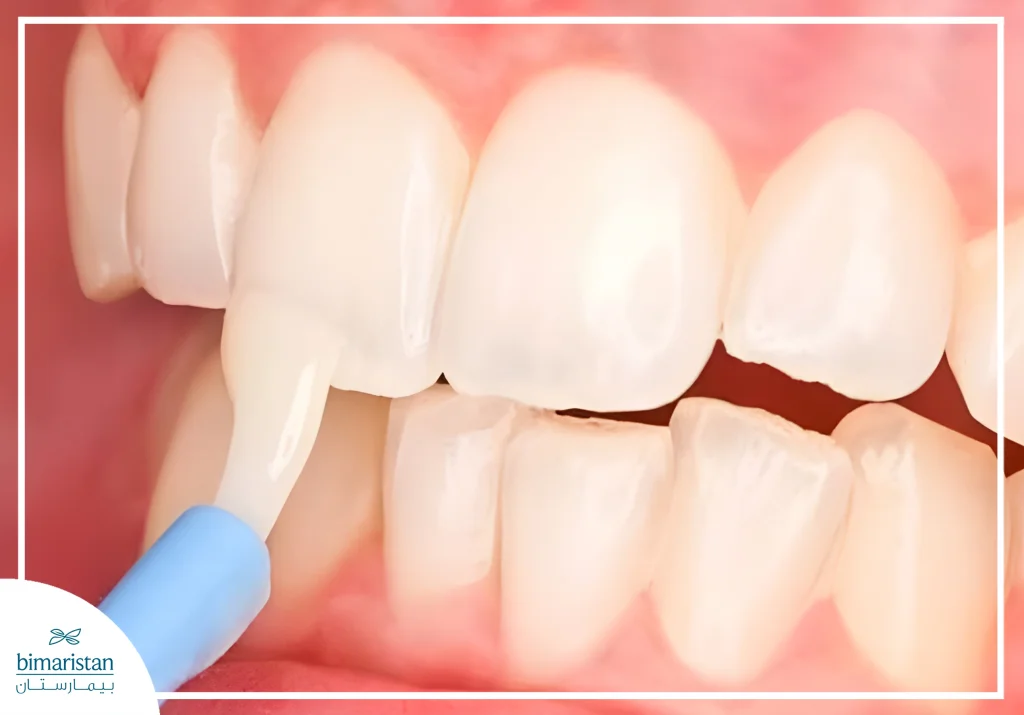
Fluoride is a mineral that can prevent tooth decay from progressing and can even stop or reverse decay in its early stages. Fluoride protects teeth by preventing the loss of minerals from tooth enamel and replacing lost minerals, reducing the ability of bacteria to produce acids.
Filling
Filling a decayed tooth is one of the easiest dental treatments. If the decay is relatively minor, the dentist can remove the decayed portion and place a filling material, often porcelain, where the decay was removed. This helps protect the nerve from exposure and restores the ability to eat as normally as before the decay and filling.
Bridges
Bridges are an alternative to extractions when you have one or more missing teeth. They preserve neighboring teeth by anchoring a specially designed dental piece that attaches to neighboring teeth to cover the space created by the missing tooth. The bridge is molded to look like a natural tooth, allowing you to smile and eat as if all your teeth were intact.
Root canal treatment
Root canal therapy is a way to treat a decayed tooth without having to extract it. The doctor usually uses a local anesthetic to numb the mouth, so you may feel some pressure during the procedure, but the procedure itself is painless after minor numbing pricks. The procedure usually ends with a temporary filling to prevent infection in the drilled area, and a permanent crown is later fitted to protect the tooth.
Crowns
A crown, sometimes known as a “cap,” is a protective shell placed over a damaged tooth. If the decay is too large to repair the cosmetic appearance of the tooth, or if a large portion of the decayed tooth must be removed, a crown can be placed to protect it. In addition to its aesthetic benefit, a crown also provides protection from pain caused by heat or cold exposure to the nerve.
A relatively recent treatment for children who have the potential for decayed baby teeth is to place crowns on the teeth instead of filling or extracting them. Some types of tooth decay are hereditary and cannot be prevented even with early care. Crowns help children keep their baby teeth in place so that the jaw and occlusion remain in the correct position until the permanent teeth emerge.
When the causes of tooth decay are properly understood and early preventive measures are taken, the risks can be significantly reduced, and long-term oral health can be improved. Healthy eating habits, the use of fluoride-containing products, and regular dental visits are the keys to protection. At Bimaristan Medical Center, we strive to provide accurate consultations and cutting-edge treatments based on the latest research in dental health. Let us help you maintain a healthy smile that lasts.
Sources:
- WHO. (2025). Sugars and dental caries.
- CDC. (2024, May 15). About cavities (tooth decay).
- Heng, C. C. et al. (2016). Tooth Decay Is the Most Prevalent Disease. PMC.
- Tafere, Y., Chanie, S., Dessie, T., & Gedamu, H. (2018). Assessment of prevalence of dental caries and the associated factors among patients attending dental clinic in Debre Tabor general hospital. BMC Oral Health.
- Mohanty, S. et al. (2024). Prevalence, risk factors, and parental perspectives of dental caries. ScienceDirect.