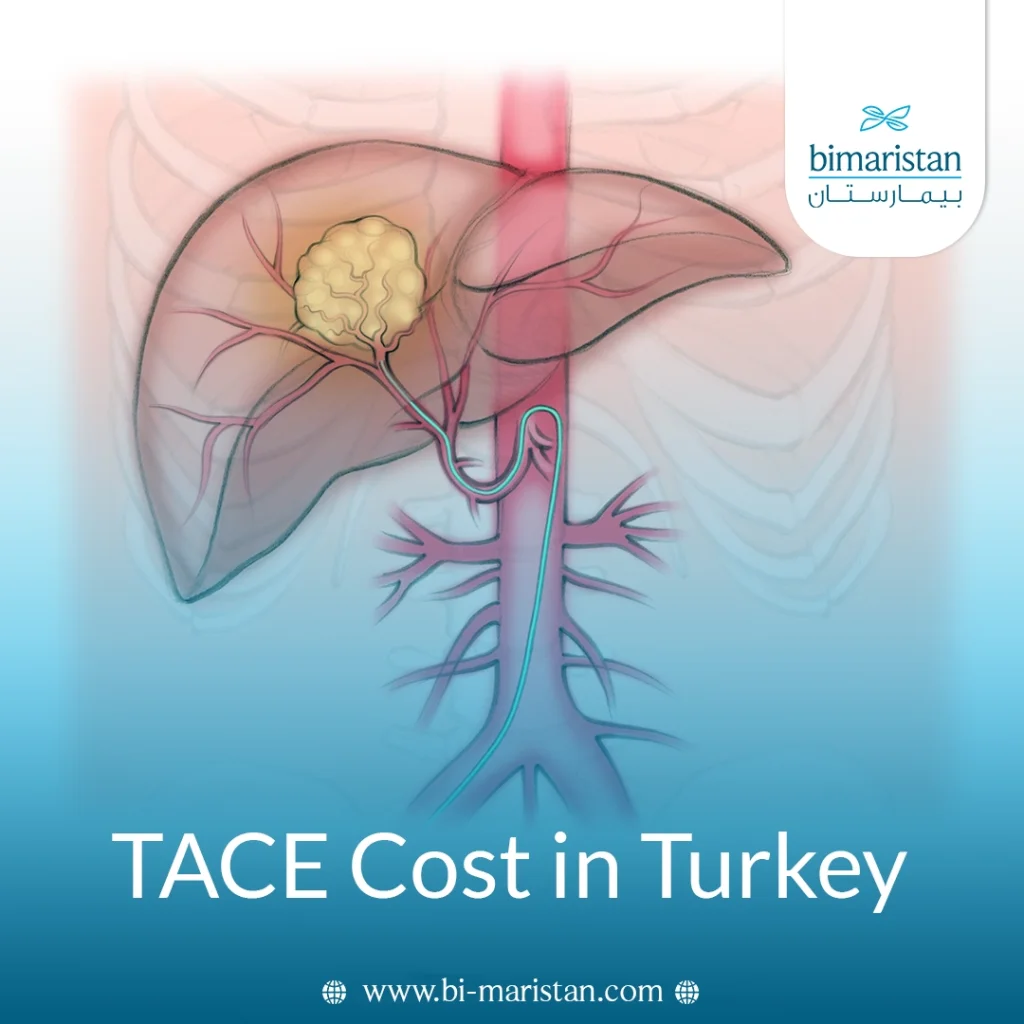
Transarterial chemoembolization (TACE) is one of the most advanced treatment options for liver cancer patients who cannot undergo surgery or resection, as it directly targets the tumor without harming healthy liver tissue. With the remarkable progress in interventional radiology in Turkey in recent years, this technique has become a leading solution that attracts patients from across the globe and is performed in specialized centers equipped with the latest technology and supervised by doctors with international expertise in treating liver tumors.
TACE cost in Turkey varies depending on the type of tumor and the number of sessions required, yet it remains significantly lower than treatment costs in European or American countries, while maintaining international medical standards and achieving results that surpass many regional centers.
What is Transarterial Chemoembolization (TACE)?
Transarterial chemoembolization (TACE) is a cancer treatment that blocks the blood supply to tumors. This procedure combines the direct delivery of chemotherapy into the blood vessel that supplies the tumor with an embolic agent. This agent is placed inside the blood vessel to keep the chemotherapy in place and effectively cut off the tumor’s blood supply.
How does TACE work?
TACE attacks cancer in two ways:
- Delivery of a high concentration of chemotherapy directly to the tumor: A mixture of chemotherapeutic agents that inhibit the growth of abnormal cells is injected, together with embolic materials such as oil or small plastic particles that keep the chemotherapy localized at the site.
- Cutting off the blood supply to the tumor: Blood flow in the feeding artery is halted after embolization, while healthy liver tissue continues to receive blood through the portal vein.
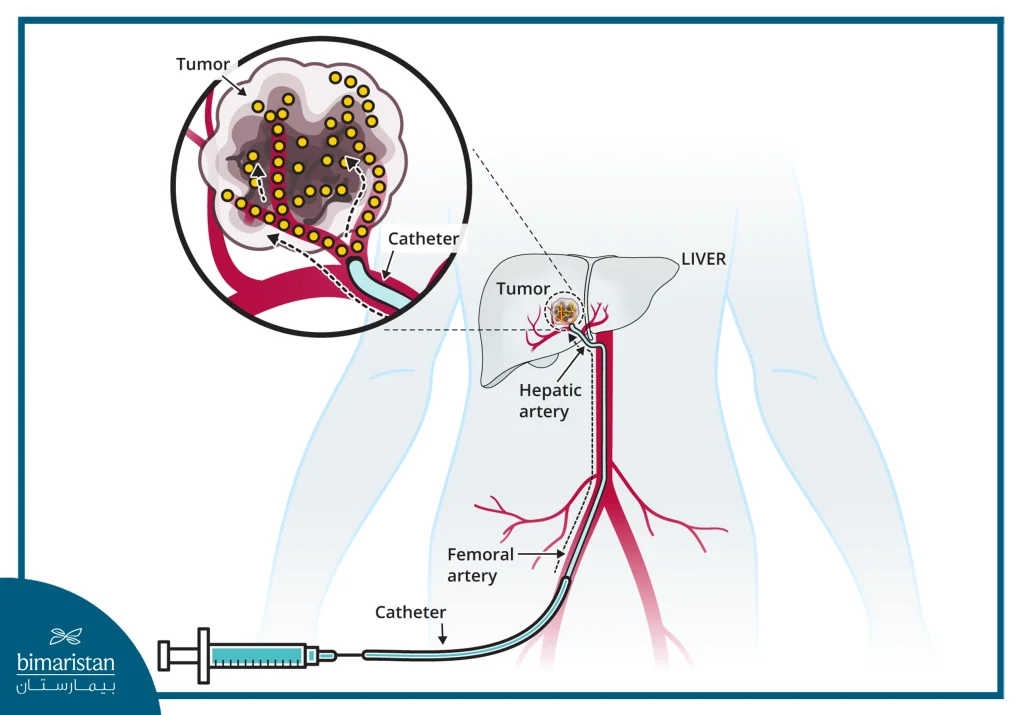
A tumor in the liver gets most of its blood supply from the hepatic artery, so blockage of this artery deprives the tumor of blood with little or no effect on liver function
Who is TACE suitable for?
TACE is used for adults and children with:
- Liver cancer (hepatocellular carcinoma), especially when the tumors are too large to be surgically removed
- Intrahepatic cholangiocarcinoma
- Cancers that have spread to the liver (metastases), such as:
- Breast cancer
- Colon cancer
- Carcinomas
- Neuroendocrine tumors
- Ocular melanoma
- Sarcoma
- It may also be used when the disease is confined to the liver and surgery or other treatments are not an option
Steps of the TACE procedure
TACE is performed through the following steps:
- Preparation before treatment: Before the procedure, you may need to undergo blood tests, CT scans, or MRI scans. You may also be given antibiotics or medications to reduce nausea. Additionally, a drug called allopurinol may be administered to help protect your kidneys from chemotherapy and from substances produced by the treatment.
- The patient lies on the procedure table, monitors are attached to monitor heart rate, blood pressure, oxygen level, and pulse, and an intravenous line is inserted to administer the sedative. Mild sedation may be used without the need for a breathing tube, but some patients may require general anesthesia.
- Catheterization and arteriography: The interventional radiologist makes a small incision in a blood vessel near the wrist or groin, inserts a catheter, and uses fluoroscopy to inject a special dye to see details of the tumor and its feeding vessels.
- Injecting chemotherapy into the artery supplying the tumor: A combination of anti-cancer drugs and an embolic agent is injected directly into this blood vessel. This method allows a high concentration of chemotherapy to reach the tumor directly without systemic spread, minimizing impact on healthy liver tissue. The presence of the embolic agent with the drug ensures that the chemotherapy remains confined to the tumor area for as long as possible.
- Blocking the artery with special materials: Embolic agents may be oil or small plastic particles, and are injected into the same blood vessel that feeds the tumor, where they block the artery and stop its blood flow, depriving the tumor of the oxygen and nutrients it normally receives from the hepatic artery, at the same time, trapping the chemotherapy inside the tumor so that the drug stays in place and its effect lasts longer, achieving the double effect of stopping the tumor’s blood supply and prolonging the effect of the chemotherapy inside the tumor tissue.
The procedure typically takes approximately 90 minutes, and the patient may need to remain in the hospital overnight. After the procedure, many experience pain, nausea, vomiting, and low-grade fever, known as post-embolization syndrome, and most patients return to regular activity within a week.
TACE cost in Turkey
TACE cost in Turkey for 2026 is estimated to average around $7000-$9000 per panel in specialized centers. This price usually includes:
- Medical consultation
- Imaging (CT or MRI)
- Drugs and embolic agents used inside the catheter
- Interventional radiology team fees
- Overnight hospitalization if needed
- Follow-up after the procedure
This cost is very competitive compared to European and American countries while maintaining high medical quality and advanced safety standards.
Comparing TACE cost in Turkey and other countries
The following table shows a comparison of TACE cost in Turkey and other countries:
| State | Approximate cost per session |
|---|---|
| Canada | 35,000 USD |
| Turkey (Istanbul) | 7,000 – 9,000 USD |
| Germany | 8,500 – 9,500 USD |
| United States | 35,000 USD |
Why is Turkey the best option for TACE treatment?
Turkey has become one of the most important destinations in the world for the treatment of liver tumors using interventional radiology techniques, for the following reasons:
- The significant development in interventional radiology centers in Turkey, where modern devices such as advanced catheter systems, digital fluoroscopy, and 3D imaging techniques are used during catheterization, allows doctors to target the tumor with high precision and control the distribution of treatment within the artery feeding the tumor more safely and effectively.
- Doctors in Turkey have extensive expertise in managing liver cancer through chemoembolization, radioembolization (Y90), thermal cautery, and adjuvant therapies before liver transplantation, making the country a leading destination for patients who are not candidates for surgery due to its highly specialized skills and advanced treatment options.
- Globally accredited Turkish hospitals feature European‑standard infrastructure, including state‑of‑the‑art catheterization rooms and complete medical teams of interventional radiologists, hepatologists, anesthesiologists, and nursing staff trained in interventional oncology procedures, ensuring maximum safety and accuracy during treatment.
- Turkey provides customized programs for international patients that include translation services, airport pickup, hospital and hotel transfers, and careful follow‑up after the procedure, ensuring that the treatment plan runs smoothly and that patients from abroad remain entirely comfortable.
- Cities such as Istanbul and Antalya combine medical treatment with tourism, offering a relaxing environment and recreational opportunities, which attract many patients from the Gulf and Europe seeking effective therapy alongside a unique travel experience.
- With TACE cost in Turkey up to 70% lower than in European countries, centers are able to deliver the same level of European and American quality at a fraction of the price, making TACE an excellent choice for patients both regionally and internationally.
How to choose the best TACE center in Turkey
To ensure a safe and effective therapeutic outcome, it is advisable to focus on the following criteria:
- Doctor’s experience: It is recommended that the physician has extensive experience in treating thousands of liver cancer patients and is skilled in advanced procedures such as TACE, TARE (Y90), RFA, and microwave therapy, which increases the chances of achieving the best treatment outcomes.
- A clear treatment plan: The center should provide a transparent treatment plan that begins with the initial examination and continues through follow‑up after each session, detailing the expected number of sessions, anticipated response, alternative strategies if required, and a precise schedule for periodic imaging.
- State‑of‑the‑art interventional radiology department: Select a center equipped with modern catheter systems, real‑time imaging technology, and a specialized team experienced in TACE procedures to ensure that treatment is performed with maximum accuracy and safety.
- Integrated international services: Comprehensive international services, including airport pickup, translation support, accommodation arrangements, and medical escorts, are essential to ensure a smooth and comfortable treatment experience for patients traveling from abroad.
- Read patient experiences: Reviewing patient testimonials and experiences is essential for evaluating the quality of care and satisfaction levels regarding services and outcomes, which are crucial in making informed treatment decisions.
- Hospital accreditation: It is advisable to choose a hospital accredited by the Turkish Ministry of Health or recognized European accreditation bodies to ensure adherence to sterilization, safety, and quality standards during interventional procedures.
Transarterial chemoembolization (TACE) is one of the most advanced treatments for managing liver cancer in patients who are not candidates for surgery, proven effective in reducing tumor size and improving quality of life. With Turkey’s excellence in interventional radiology and specialized centers offering top expertise and modern technologies, TACE cost in Turkey has become an ideal option that combines European‑level quality with affordability. For those considering this treatment, Bimaristan Medical Center provides comprehensive consultation and evaluation to help patients make the best decision with confidence and safety.
Sources:
- Young, M., & John, S. (2025, June 2). Hepatic chemoembolization.
- Guan, Y. S., (2012). Transcatheter arterial chemoembolization: History for more than 30 years. World Journal of Radiology, 4(4), 156-164.