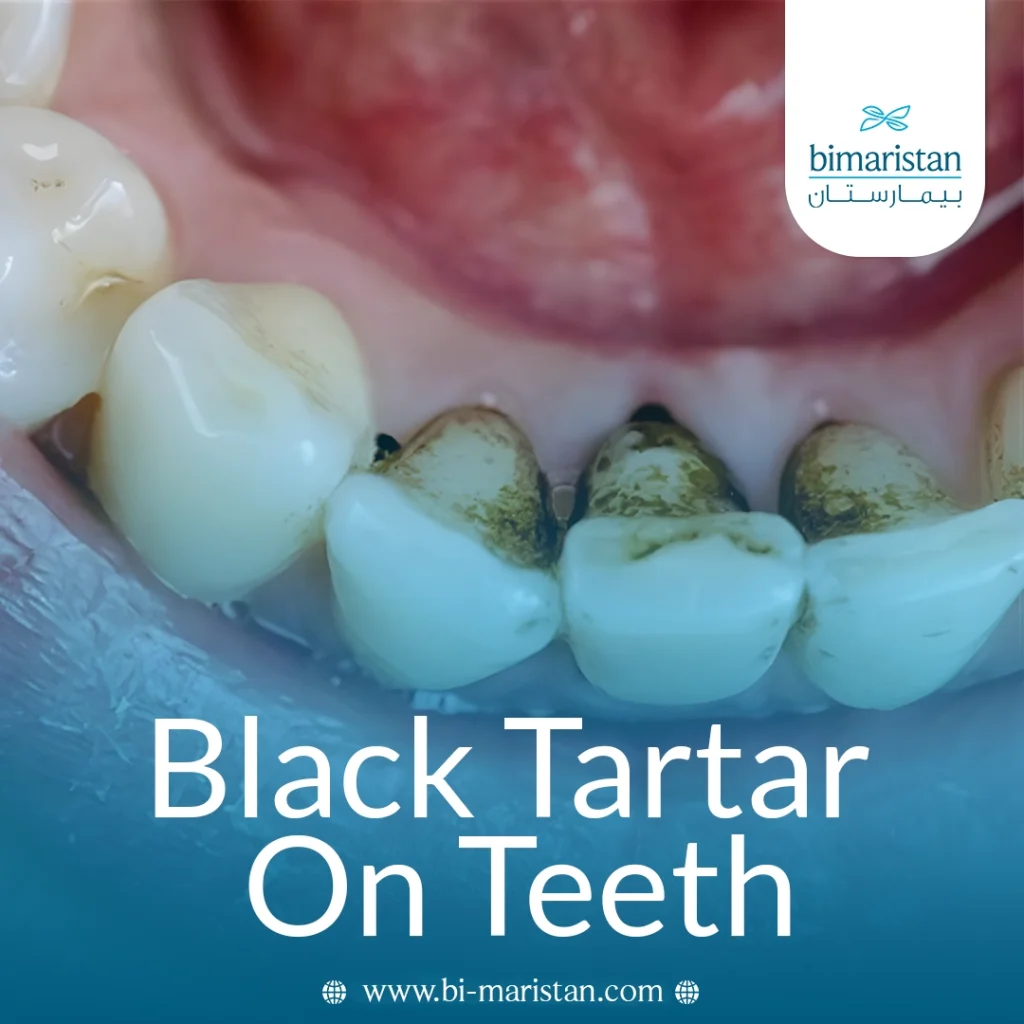
Black tartar is one of the most common oral issues affecting the appearance of your smile and gum health. Statistics show that more than 70% of adults suffer from varying degrees of tartar buildup, which can form in just 24 to 72 hours if plaque is not removed regularly, and can turn black as a result of smoking, drinking colored drinks, or neglecting daily hygiene. Tartar buildup not only causes yellowing of the teeth but also increases the risk of gum infections and bad breath, requiring specialized medical intervention to remove it in a safe and effective manner.
What is black tartar?
When plaque builds up on teeth and is not removed properly, it hardens into a substance known as tartar. Initially, tartar above the gum line is whitish-yellow in color, but if neglected, it turns green, brown, or black. Tartar that forms below the gum line is black in color.
Symptoms of black tartar
The most obvious symptom is black spots on the teeth, usually as a result of pigments produced by bacteria trapped within the tartar. Signs of black tartar include:
- Dark pigmentation on the surface of the teeth
- Bad breath: Bacteria in tartar release toxins and bad odors.
- Loose and loose teeth: In severe cases, the weakening of the supporting bones caused by gum disease can lead to loose teeth.
- The presence of hardened deposits on the teeth: Unlike soft plaque, tartar hardens over time due to the minerals in saliva.
- Red, swollen, or bleeding gums: Severe gum disease can cause damage to the bone and tissue supporting your teeth, making chewing painful.
- Tooth sensitivity: Tartar buildup near the gum line can expose sensitive tooth roots, making it painful to drink hot and cold beverages or be exposed to cold air.
Causes of black tartar
Poor oral hygiene is the main cause of tartar formation. When tartar turns black or forms below the gum line, it is often due to poor brushing and flossing. Other factors contribute to the rapid buildup of tartar and its blackening, including the following.
- Smoking and tobacco use: Nicotine, tar, and other tobacco products can cause stubborn black spots on teeth.
- Bleeding gums: Iron from the breakdown of red blood cells can oxidize, forming black spots on the tartar.
- Use of certain medications: Some medications containing iron or chlorhexidine may cause black pigmentation when they interact with plaque.
- Genetics and saliva composition: Some people have a saliva composition that facilitates faster and darker-colored mineral deposition and tartar formation.
- Poor oral care and plaque buildup: Plaque is a sticky layer of bacteria that forms on the teeth. If not removed, it hardens into tartar, which can turn black over time, especially under the gum line.
- Diet Iron-rich foods and supplements: Certain vegetables, fruits, dairy products, and iron-rich supplements can react with bacterial waste to form black spots on teeth, affecting children who take iron supplements or iron-fortified foods, and adults who eat an iron-rich diet.
- Colored bacteria: It is the most common cause, as colored bacteria produce pigments that lead to black spots on the teeth, especially in children. These bacteria react with iron in saliva or gum fluid to form insoluble iron salts such as iron sulfide, and appear as black lines or dots near the gums. Children are most commonly affected, but it can also occur in adults, and black spots on children’s teeth are often the result of these bacteria.
How is black tartar treated?
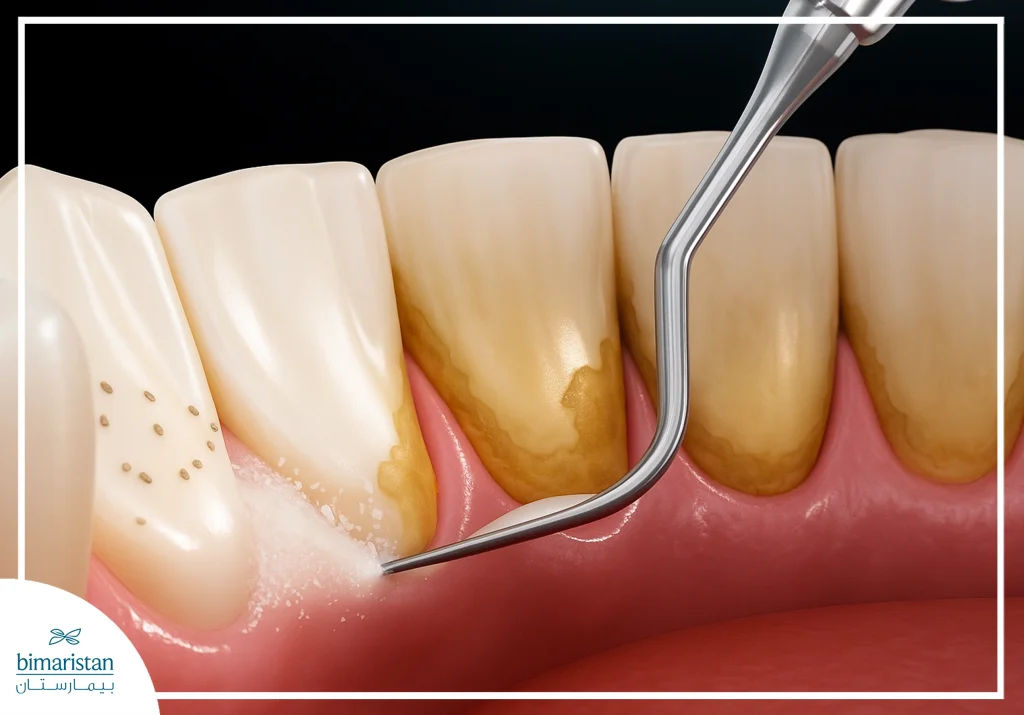
Black tartar cannot be removed with home brushing and requires professional cleaning at the dentist through a procedure:
- Tooth polishing restores the natural color of teeth and prevents rapid discoloration after cleaning.
- Deep cleaning using ultrasonic devices to break up tartar and remove surface pigmentation.
- In advanced cases, gum treatment may be recommended if the tartar has caused inflammation or receding gums.
How is black tartar prevented?
Keeping your mouth healthy starts with prevention. You can prevent tartar buildup by:
- Use dental floss or an interdental brush to clean the narrow spaces between the teeth
- Drink enough water after meals to minimize the adhesion of plaque and acid on the surface of the teeth
- Limit smoking and colored beverages like coffee and tea, as they are the main causes of tartar.
- Brush twice daily with a fluoride toothpaste to remove plaque before it turns into hardened tartar
- Visit your dentist every 6 months for a professional cleaning and to remove any hardened plaque before it affects your gums or causes bad breath
Dealing with black tartar doesn’t have to be limited to at-home cleaning; professional treatment is the best way to maintain healthy gums and beautiful teeth. At Bimaristan Medical Center in Turkey, the latest dental cleaning and tartar removal techniques are offered using advanced equipment and specialized doctors to ensure long-lasting results. Regular oral care and medical follow-up are the secrets to a healthy, bright smile that lasts.
Sources:
- American Dental Association. (2023). Tartar (calculus) buildup and prevention.
- National Institute of Dental and Craniofacial Research. (2023). Oral hygiene and plaque control.