The topic of how to clean your teeth has received a lot of attention in recent times and is considered essential for maintaining oral health and preventing oral health-related diseases. Studies show that 80% of interdental plaque can be effectively removed by flossing. Brushing twice a day for two minutes with a fluoride toothpaste is recommended. In addition, flossing once a day is recommended to remove food debris and plaque from between the teeth. Following these habits is an essential part of your oral care routine to keep your teeth and gums healthy.
The concept of teeth cleaning
Many patients understand that what they need to do is remove food debris, and this is only partially true, it is much more important to remove bacteria from the teeth, the concept of how to clean teeth is not based on removing food debris only, these bacteria and other microorganisms grow in every person’s mouth, and form a sticky layer known as plaque, consisting of about 700 different types of bacteria, the second most microbially diverse area in the body after the intestines, in addition to types of fungi and viruses, as well as fungi and viruses.
These microbes live in a sticky layer on the teeth and soft tissues as well, and cannot be easily removed with water or lotion, but need effective manual cleaning, and the most important place to remove them is not the surface of the teeth itself, but the gum line, where microbes can penetrate into the tissues and cause infections and diseases such as periodontitis, so how to clean teeth is an essential concept.
Teeth cleaning methods:
How to clean teeth varies, and there are many ways:
- Using a toothbrush
- flossing
- Using mouthwash
Brushing your teeth
Thorough and regular brushing is a necessary step in understanding how to clean your teeth and an important step in keeping your gums and teeth healthy and preventing tooth decay.
- The brush removes bacteria that cause cavities and plaque that leads to gum disease
- It is best to brush your teeth after every meal because the bacterial attack starts minutes after eating
- At least once a day and always before bedtime, brushing your teeth is not complicated, but it does require proper technique
How to brush your teeth
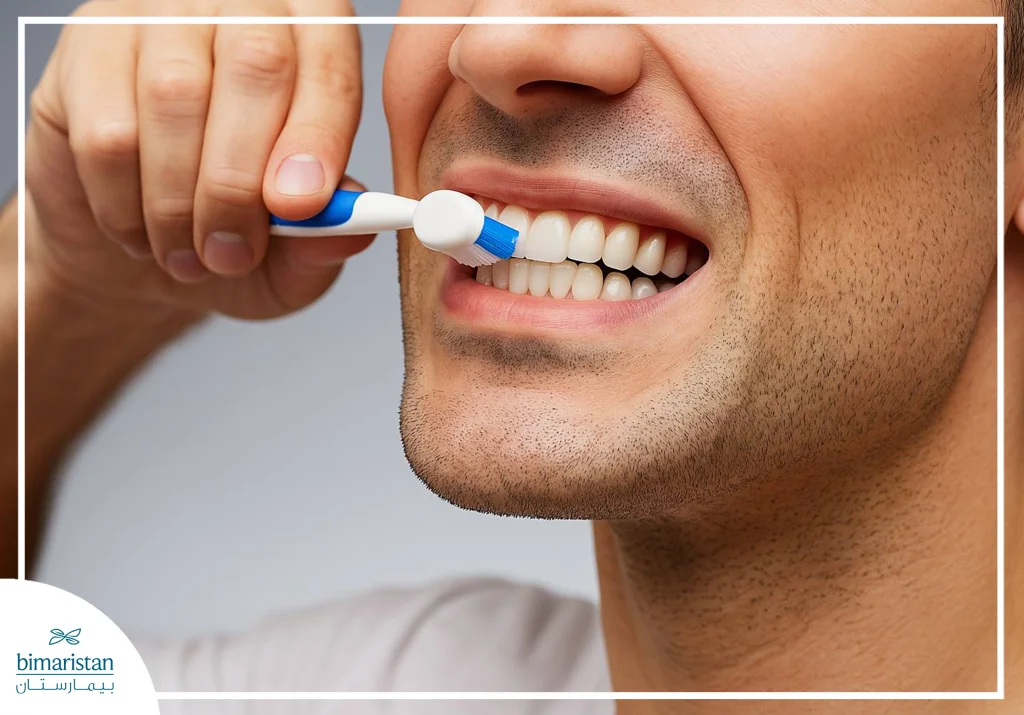
- Position the brush at a 45-degree angle to the teeth, with the bristles pointing toward where the teeth meet the gums. Use a gentle, circular, upward and downward motion, without aggressively rubbing the gums, which are often outwardly receding as a result of years of intense scrubbing.
- Each surface of each tooth should be cleaned: the chewing surfaces, the side facing the cheek, and the side facing the tongue.
- Do not rush while cleaning. Careful cleaning should take at least two to three minutes.
- Change your brushing routine: Most people brush their teeth the same way all the time, which means they miss the same places all the time. Try reversing the usual pattern for better brushing and use a soft brush with rounded bristles.
- The right toothbrush cleans teeth better. Choose a size and shape that allows you to reach the back teeth easily.
- The Canadian Dental Association (CDA) recommends changing your toothbrush every three months.
Advantages and disadvantages of brushing techniques
| Method | Posture and movement | Advantages/Disadvantages |
|---|---|---|
| Roll method (Fonce) | Wide, regular circular motions on closed teeth, holding the toothbrush at a perpendicular angle to the surface | Easy to learn. Does not remove plaque under the gum. Recommended for children |
| The “horizontal scrub” method | The bristles are placed perpendicular to the surface of the closed teeth | Easy to learn, ineffective, recommended for young children |
| Bass method | Vibratory movement of the bristles placed in the gingival furrow with light pressure and at a 45° angle to the tooth surface | Effective in removing plaque above and below the gums – May cause gum injury – Recommended for people with healthy gums |
| Modified Bass Method | Same as Bass but with a light sweeping motion | Just as effective as BASS – the sweeping motion increases the efficiency of interdental plaque removal |
| Stillman’s method | The bristles are placed on the gum and tooth surface in the same position as the Bass method | Gum stimulation – effective in removing subgingival plaque – recommended for patients with advanced gingival recession |
| Modified Stillman’s method | Same as Stillman but with a light sweeping motion | Same advantages as the Stillman method – the sweeping motion increases the efficiency of interdental plaque removal |
| Charters method | Position the bristles towards the occlusion surface at a 45° angle and activate with a back-and-forth vibrating motion. | Effective in cleaning interdental areas – Difficult to apply – Recommended for patients after periodontal surgery during the recovery period |
Flossing
Plaque, the main cause of gum disease, is an invisible bacterial layer that forms on the teeth every day. Within 24 to 36 hours, plaque turns into tartar or calculus, and can only be removed with a professional cleaning. Flossing is an important part of how to clean teeth:
- Flossing removes plaque and bacteria that brushes can’t reach
- If flossing is not used, the patient loses more than one-third of the tooth surface
- Flossing at least once a day prevents plaque from turning into tartar
- Committing to daily care is easier when flossing while watching TV or listening to music, for example
How to floss your teeth
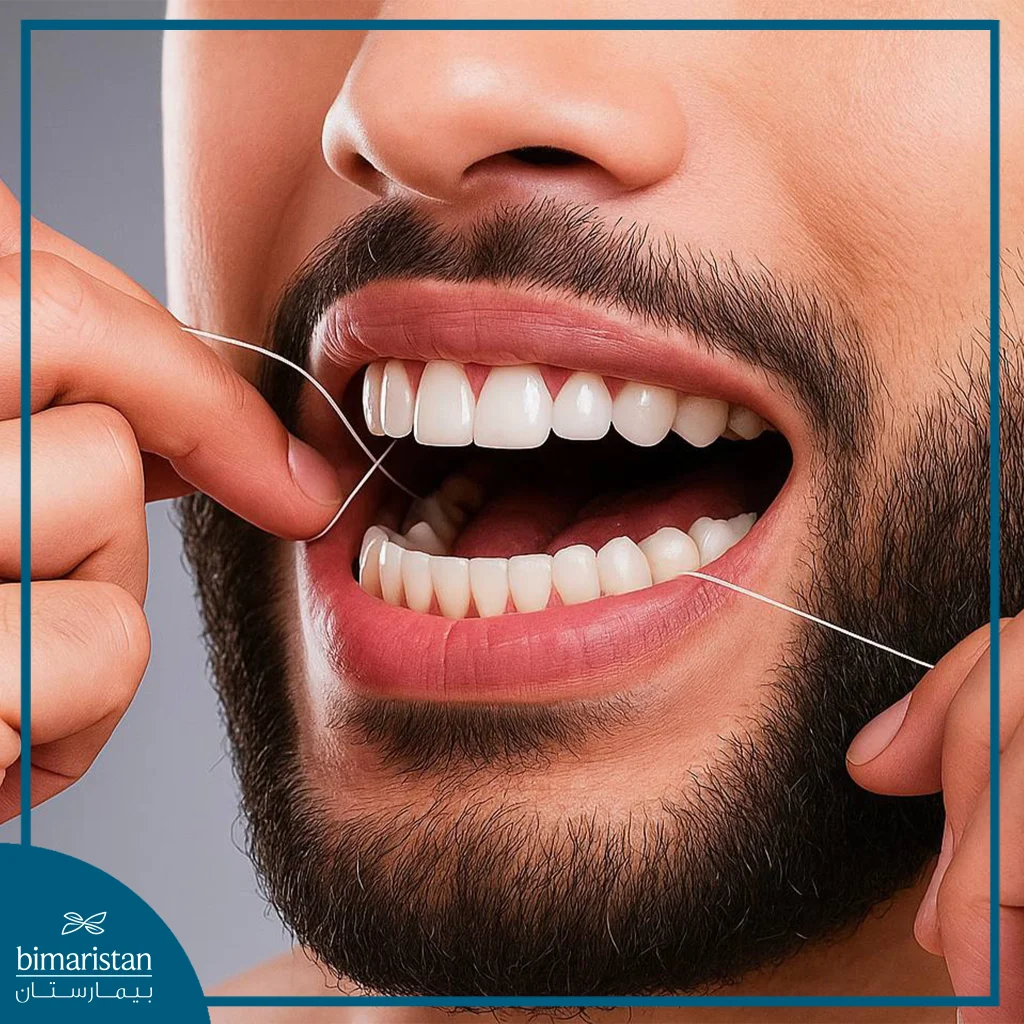
- Take a piece of string about the distance between your hand and shoulder, and wrap the string around your index and middle fingers, leaving about 5 centimeters between your hands
- Insert the floss between the teeth and wrap it in a C-shape around the base of the tooth, gently under the gum line, wiping the tooth from the base to the top two or three times
- Make sure to clean both sides of each tooth, and don’t forget the back surfaces of the last grinds. Move on to a new section of floss when it becomes dirty or filled with food debris. When you’re done, roll the floss into a small ball and throw it in the garbage
- Brushing after flossing is more effective in preventing cavities and gum disease.
Flossing Problems and Solutions
Your gums may bleed at first, and the bleeding usually stops after a few days. If it doesn’t stop, see your dentist. The floss may tear if it gets caught on an old fitting or a chipped tooth edge. Try another type of floss or dental tape, or consult your dentist or oral hygienist. If it continues to tear, see your dentist.
How to clean your teeth with mouthwash
Fluoride mouthwash can be beneficial to oral health, and should not be overused. Most mouthwash manufacturers recommend using it twice a day. Be sure to follow the manufacturer’s instructions to adhere to its safe limits. According to studies, overuse of chlorhexidine mouthwash can cause prolonged tooth discoloration, but there are some things to keep in mind to take full advantage of how to clean your teeth with the rinse:
- Should not be used immediately after brushing your teeth
- All mouthwashes should be alcohol-free
- If possible, it is best to brush your teeth with fluoride paste after a mid-day meal
- It can be used in the middle of the day, for example, after lunch, with no food or drink for 30 minutes after use
How to clean teeth in special cases
- With metal or clear braces, if you have clear braces, you can remove them and brush and floss as you normally would, but with metal braces, there may be difficulty in cleaning the teeth because of the metal wires. In this case, you can use a special toothbrush that cleans between the teeth to move between the wires and brackets and maintain good oral hygiene.
- Pregnant women should understand how to clean their teeth by brushing at least twice a day and flossing daily to keep all tooth surfaces clean. If you suffer from frequent morning sickness or vomiting, your doctor may recommend using an antibacterial mouthwash in addition to a toothbrush to monitor plaque formation and a mildly flavored toothpaste so as not to trigger a gag reflex.
- An electric toothbrush can also be used in the elderly with limited mobility, which is very useful for people with special needs and helps them understand how to brush their teeth, and makes it easier to maintain oral and gum hygiene.
In conclusion, how to properly brush your teeth is an essential part of your personal care routine. By following the right steps and using the right tools, oral health can be maintained, and many health issues can be prevented. If you are looking for excellent dental care, visit Bimaristan Medical Center, which offers high-quality medical services aimed at improving your oral and dental health.
Sources:
- World Health Organization. (2025). Oral health.
- National Institute of Dental and Craniofacial Research. (2022). Oral Health in America – April 2022 Bulletin.
- American Dental Association. (2024). Home Oral Care.
- Centers for Disease Control and Prevention. (2024). Oral Health Facts.