
The post-esophageal surgery phase is one of the most critical periods requiring special medical care and continuous follow-up to ensure proper patient recovery. After the procedure, the patient remains under close observation to monitor the stability of vital body functions and to prevent complications such as fluid leakage from the surgical site or infections. During this stage, the patient typically begins with liquid intake, gradually transitioning to pureed foods under strict medical supervision to minimize risks related to swallowing difficulties or impaired wound healing.
Medical care during the post-esophageal surgery phase emphasizes pain control, infection surveillance, adherence to rest protocols, and the avoidance of strenuous activities. Following the physician’s instructions after esophageal surgery plays a vital role in promoting a smooth recovery and reducing the likelihood of postoperative complications.
What is esophageal surgery?
Esophageal surgery is a medical procedure used to treat various diseases affecting the esophagus, such as cancer, hiatal hernia, and severe gastroesophageal reflux disease. In these procedures, a portion of the esophagus is removed or repaired to enhance swallowing function and prevent complications. The primary reasons for undergoing esophageal surgery:
- Esophageal cancer that requires the removal of the affected area
- Diaphragmatic hernia causing chronic reflux and swallowing difficulties
- Gastroesophageal reflux disease (GERD) resistant to drug therapy
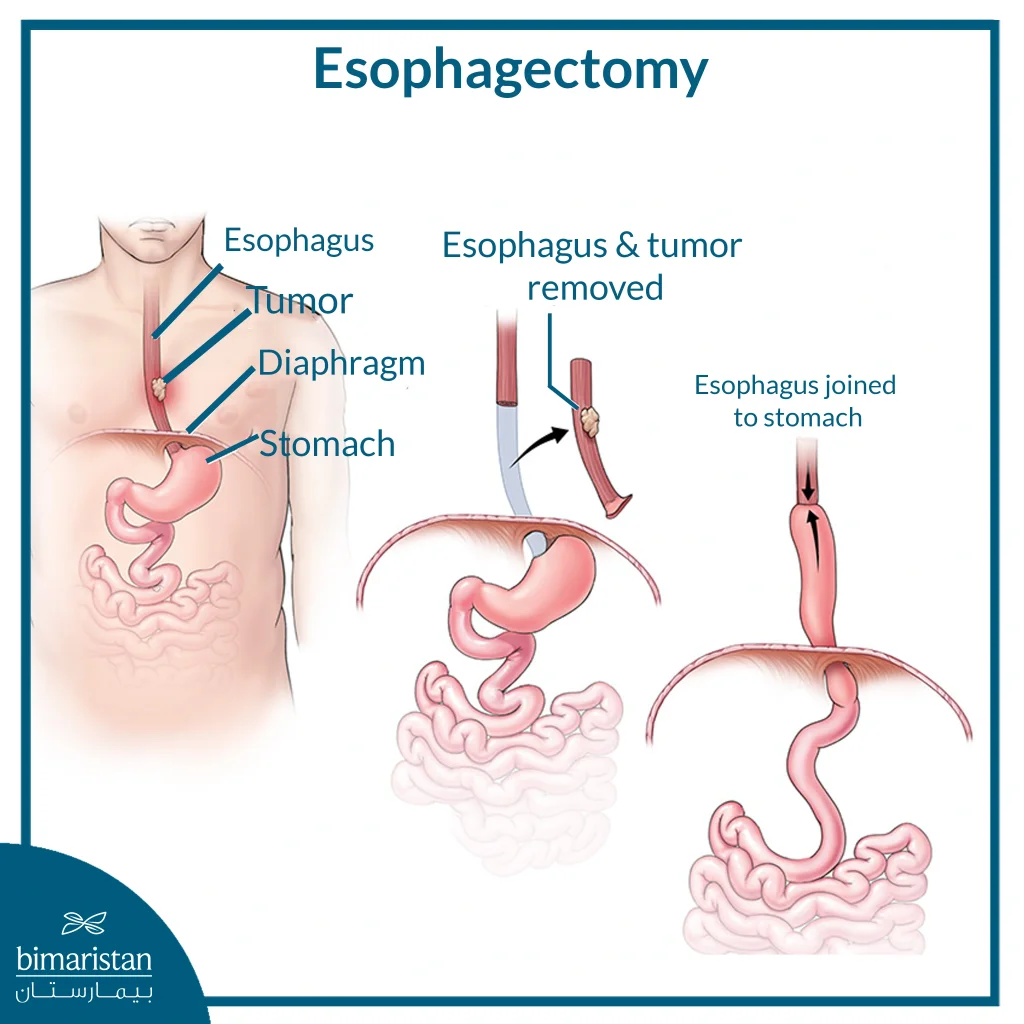
Most common types of esophageal surgery
- Esophagectomy: Removing part or all of the esophagus and reconnecting the stomach or intestines to the remaining esophagus.
- Anti-reflux surgery: Nissen surgery strengthens the valve between the stomach and esophagus to prevent acid reflux.
- Hiatal hernia repair: Repositioning the stomach and correcting the diaphragm hernia.
The length of hospitalization varies depending on the type of operation and the patient’s condition, and is typically 7 to 14 days to monitor recovery and potential complications.
Basic instructions in the first week of the post-esophageal surgery phase
The post-esophageal surgery phase begins with a challenging period that demands special attention to ensure proper healing and reduce the risk of complications. The first week is especially critical, as care focuses on rest, pain control, and close coordination with the medical team. These are the most essential instructions during the initial recovery phase:
Comfort and limited movement
During the early post-esophageal surgery phase, it is crucial for the patient to get adequate rest for the first few days, as rest reduces pressure on the surgical site and helps the tissues heal. However, it is recommended to walk slowly at home to stimulate blood circulation and prevent the formation of clots, while strenuous activities and heavy lifting should be strictly avoided for several weeks.
Follow up with the medical team
Following up with the surgeon and treating physician during the post-esophageal surgery phase is essential to monitor healing and address any complications that may arise, such as infection or fluid leakage. During these follow-ups, the condition of the wound, esophageal function, and pain level are assessed, and may include imaging tests to confirm proper tissue healing.
Pain Management
Pain is a common symptom in the post-esophageal surgery phase and should be managed using prescribed painkillers. Regular use of these medications reduces discomfort, improves breathing, and facilitates mobility, all of which are key factors in preventing complications such as pneumonia.
Wound care
The wound site should be cleaned daily with warm water and mild soap. Avoid using alcohol or hydrogen peroxide, as they may delay healing. Keep the wound dry and clean, change dressings as instructed by the medical team, and watch for signs of infection such as redness, swelling, or discharge. Contact your doctor immediately if any of these symptoms appear.
Post-esophageal surgery diet
Nutrition plays a vital role in recovery during the post-esophageal surgery phase. The diet begins with clear liquids, such as water and light broth, to ease digestion and prevent straining the esophagus. Gradually, patients transition to soft foods, such as yogurt, mashed potatoes, and pureed meals, which are easier to swallow and digest. As healing progresses, normal foods may be reintroduced with careful chewing.
Patients are advised to eat small, frequent meals to reduce esophageal pressure and support digestion. Avoid spicy, fatty foods and carbonated drinks, which may irritate the esophagus or trigger acid reflux. Hard foods should also be avoided to prevent swallowing difficulties or obstruction. Following these dietary guidelines during the post-esophageal surgery phase is essential for promoting healing, enhancing post-surgical quality of life, and minimizing risks such as esophagitis or blockage.
Managing common symptoms in post-esophageal surgery phase
During post-esophageal surgery phase, it is common for patients to experience certain symptoms that may last for a short time following the procedure. Understanding these symptoms and how to manage them is essential for ensuring a proper recovery and minimizing the risk of complications.
- Dysphagia (temporary difficulty swallowing): Patients may experience temporary difficulty swallowing after surgery due to swelling or changes in the esophagus, which often improves over time.
- Mild acid reflux or heartburn: After esophageal modification or resection, patients may experience mild acid reflux or heartburn due to the altered function of the valve between the stomach and esophagus.
- Loss of Appetite and Weight Loss: Loss of Appetite and weight loss are among the most common symptoms following surgery, resulting from the impact on the digestive system and requiring careful monitoring and nutritional support.
- Fatigue and general weakness: General fatigue and muscle weakness are prevalent after surgery. Proper rest and nutrition are essential for promoting healing.
- Respiratory Infections: Because the esophagus is close to the lungs, respiratory infections or coughing may occur and should be carefully monitored.
- Wound Swelling: The presence of redness or swelling in the wound area may indicate inflammation and needs prompt medical evaluation.
The patient should seek medical attention immediately if they experience any of the following symptoms: severe difficulty swallowing that prevents them from drinking fluids, intense chest pain, a high fever accompanied by chills, pus or a foul odor coming from a wound, or any signs of bleeding or blockage in the esophagus.
Post-esophageal surgery lifestyle
During the post-esophageal surgery phase, patients must adopt a healthy and cautious lifestyle to ensure proper healing and reduce the risk of complications. The following recommendations are crucial:
- Sleep with your head elevated: Elevating the head of the bed by 30 to 45 degrees using a specialized pillow or raising the bed itself can help prevent acid reflux and make it easier to breathe during sleep.
- Refrain from smoking and alcohol: Smoking and alcohol are negatively affecting factors on the healing process, as they slow down wound healing and increase the risk of infections. The patient is advised to quit smoking and alcohol before and after the procedure.
- Avoid heavy lifting or excessive exertion: The patient should avoid heavy lifting or strenuous physical activities for 4 to 6 weeks after surgery. The patient can lift no more than 10 pounds (about 4.5 kg). This will help prevent pressure on the surgical area and speed up recovery.
Adhering to these recommendations goes a long way in speeding up the healing process and returning to a normal life after surgery.
Long-term medical follow-up after esophageal surgery
Post-operative medical follow-up after esophageal surgery is crucial for ensuring full recovery and early detection of potential complications. This follow-up involves regular examinations, assessing surgical outcomes, and monitoring for long-term issues.
Periodic examinations
Regular checkups after esophageal surgery include:
- Endoscopy: It is used to monitor and assess the condition of the esophagus and stomach after surgery, helping to detect inflammation, narrowing, or any other abnormal changes.
- Barium Swallow X-ray: Helps assess the passage of food through the esophagus and make sure there is no leakage or obstruction.
- Computerized tomography (CT Scan): This is done to examine the areas around the esophagus and detect any changes that may indicate complications.
- Lung and heart function tests: To monitor any possible effects on the respiratory or cardiac system after surgery.
Evaluating the results of surgery
Evaluating the results of surgery aims to:
- Monitor wound healing: Ensure there are no infections or complications at the surgical site.
- Evaluate esophageal function: Monitor the ability of the esophagus to transport food after surgery effectively.
- Review the diet: Assess the patient’s ability to eat and drink normally.
Possible long-term complications
Possible long-term complications after esophageal surgery may include:
- Gastroesophageal reflux disease (GERD): Some patients may experience heartburn or acid reflux after surgery.
- Dysphagia: You may have difficulty swallowing food or liquids.
- Dumping Syndrome: Nausea, sweating, and diarrhea after eating.
- Malnutrition: It can be challenging to get adequate amounts of nutrients.
- Issues related to the connective tissue: Including narrowing or blockage in the tissue that has been remodeled after surgery.
Post-esophageal surgery care plays a vital role in ensuring a smooth recovery and minimizing the risk of complications. It highlights the key elements patients must follow, from rest and medical monitoring during the first week, to gradual dietary adjustments and symptom management, and finally to lifestyle changes and long-term follow-up. Every step in the post-esophageal surgery phase is a crucial part of the overall treatment strategy. Consistent communication with the healthcare team and strict adherence to medical instructions are strongly recommended during this process. By understanding what to expect after esophageal surgery, patients and their families can make informed choices that actively support their healing journey.
Sources:
- Shah, R. D., & Cassano, A. D. (2023). Esophagectomy. In StatPearls. StatPearls Publishing.
- MedlinePlus. (2022). Esophagectomy – discharge. U.S. National Library of Medicine.