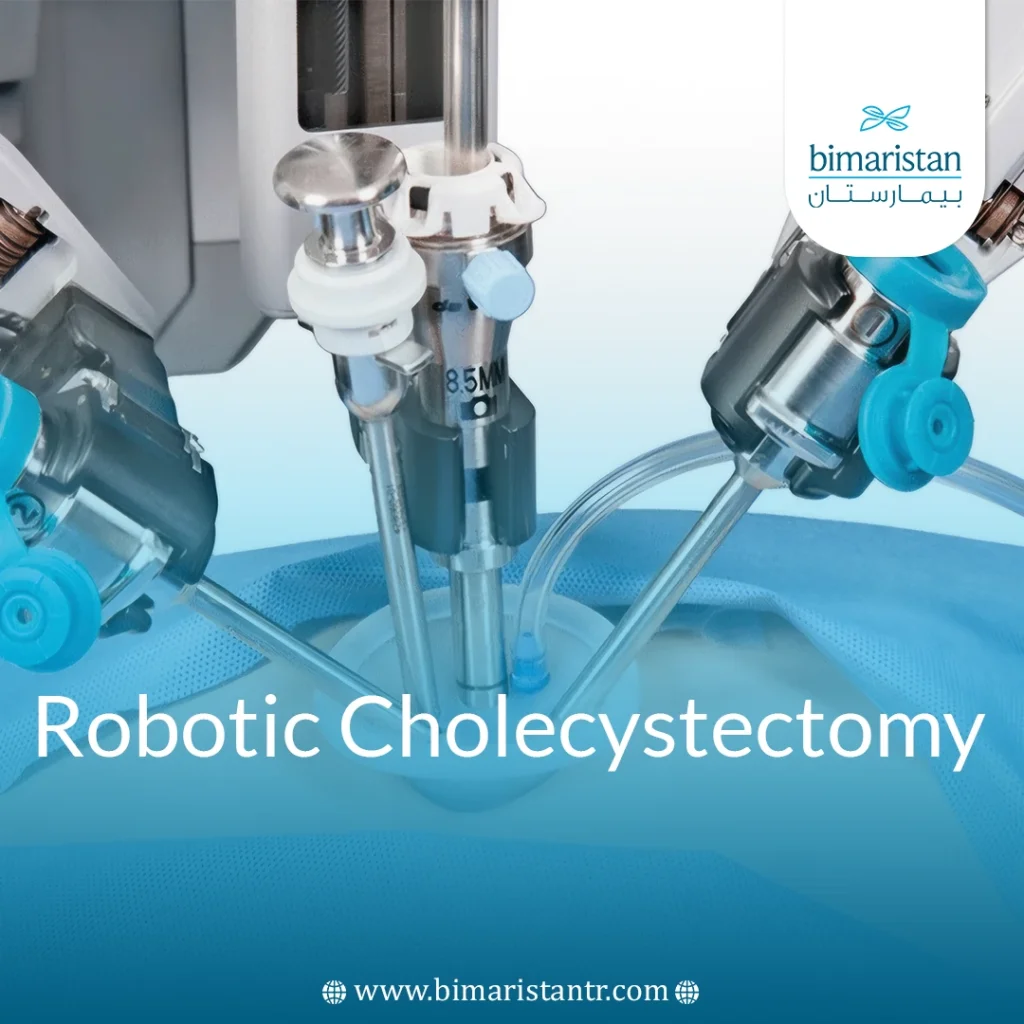

Cholecystectomy is a surgical procedure used to treat common gallbladder issues such as chronic inflammation or painful stones. In recent years, this type of surgery has evolved thanks to the adoption of advanced technologies, most notably robotic surgery. The da Vinci system is a state-of-the-art medical technology that enables the surgeon to perform the procedure with high precision and control, and robotic cholecystectomy has become an advanced option that combines the safety of surgery with the precision and speed of recovery.
What is robotic cholecystectomy using the da Vinci system?
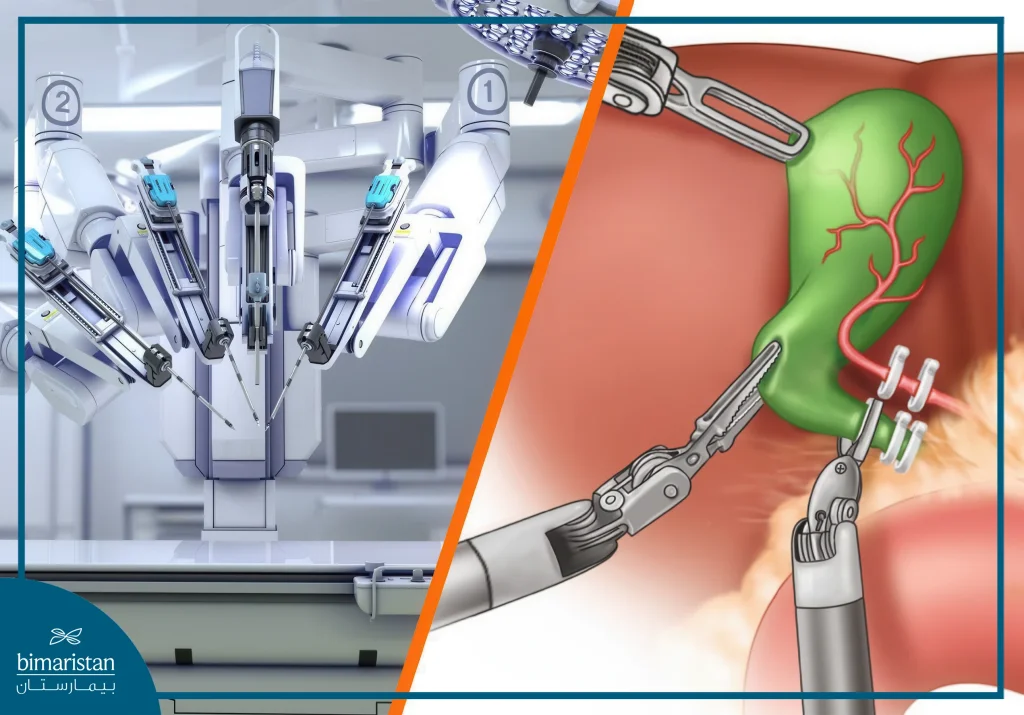
Robotic cholecystectomy is a modern method of removing the gallbladder using a sophisticated robotic device that helps the surgeon perform the procedure with greater precision and through smaller incisions. Unlike open surgery, which requires a large opening in the abdomen, or laparoscopic surgery, which is performed with long instruments and a camera, this type of surgery uses robotic arms that move under the direct control of the surgeon sitting at a console next to the patient. The da Vinci system translates the surgeon’s hand movements into precise movements inside the body, giving them better vision and control, and helping minimize the impact on healthy tissues.
Why is the da Vinci system used for cholecystectomy?
The da Vinci system is used in cholecystectomy because it provides high precision and control in a complex surgical environment. This system translates the surgeon’s hand movements into precise movements inside the body, allowing the gallbladder to be removed with minimal damage to neighboring tissues. It also reduces the risk of human error, thanks to the stability of the robotic arms and the absence of any tremor. Flexible tools make it easier to reach angles that are difficult to reach with traditional tools, and the high-resolution, magnified 3D camera is one of its most prominent features, giving the surgeon an immersive and detailed view of the gallbladder and its surrounding structures.
In addition, the system utilizes a special imaging technique known as Firefly, which uses a dye injected into the body that glows under a special light, allowing the bile ducts and tiny structures to be seen more clearly than the human eye can see. Single-Site technology allows surgeons to perform the procedure through a single small incision near the navel, giving patients virtually scar-free cosmetic results.
Suitable candidates for robotic cholecystectomy
Robotic cholecystectomy is a suitable option for patients with gallstones, recurrent infections, or gallbladder dysfunction, provided they are in good general health, and the procedure is often recommended for those looking for a minimally invasive procedure with minimal impact on the body.
However, this type of surgery, especially if performed through a single incision using the Single-Site technique, is not suitable for all patients. Factors such as body mass index (BMI), history of previous abdominal surgeries, severity of cholecystitis, or complexity of the condition are taken into consideration. Patients who are obese or have had previous major abdominal operations may not be ideal candidates for this technique, and severe or complex cases may require a different surgical approach.
Therefore, each case is evaluated individually based on medical history, clinical examinations, and radiographs to determine if robotic cholecystectomy is the best option for the patient.
Process steps using the Da Vinci robot
The da Vinci robotic cholecystectomy procedure goes through several delicate steps, starting with the patient being fully anesthetized to ensure their comfort during the procedure. The surgeon then makes a small incision in the abdomen or a single incision in the navel (if Single-Site technology is used) to pass the surgical instruments and camera. The surgeon then sits at a console next to the patient and starts moving the robotic arms equipped with highly precise instruments, which translate his movements in real time and with high accuracy inside the patient’s body. The enlarged 3D camera displays a detailed image of the surgical site, allowing the surgeon to safely and precisely manipulate the gallbladder and surrounding structures.
The gallbladder is carefully removed from its location using robotic arms, then removed through the same small incision, before the surgeon carefully closes the small wounds, often without the need for visible stitches, minimizing the cosmetic impact of the operation.
Advantages of robotic cholecystectomy over other methods
Robotic cholecystectomy is an advanced step in the field of surgery and offers many advantages over traditional methods, such as open surgery or laparoscopic cholecystectomy. Some of these advantages include:
- Less scarring and better cosmetic results: In most cases, the procedure is performed through a single small incision hidden inside the navel, leaving an almost invisible scar, unlike laparoscopy, which leaves several small incisions, and open surgery, which leaves a large scar.
- Less pain after the procedure: Smaller incisions and less tissue interference result in less pain and shorter painkiller use.
- Faster recovery and a quicker return to activity: Most patients go home the same day and return to normal activity in just two weeks, compared to 4-6 weeks after open surgery.
- Superior precision and control: The system provides up to 10x magnified 3D vision and gives the surgeon a greater range of motion than the human hand, helping to avoid injury to delicate tissues.
- Lower complication rate: Studies show that robotic surgery is associated with a lower rate of serious complications, such as infection, bleeding, or the need for re-intervention.
- Shorter hospital stay: In uncomplicated cases, the patient can leave the hospital within hours, while open surgery requires a stay of up to 5 days.
Are there any risks or complications?
Although robotic cholecystectomy is one of the safest methods, like any surgical procedure, it is not completely without risk. Possible complications include:
- Infection at the incision site or inside the abdomen
- Bleeding during or after surgery
- Bile leakage from the bile ducts
- Damage to the bile ducts or neighboring organs, although this is rare
- Deep vein thrombosis or anesthesia issues in some cases
However, thanks to the high precision of the da Vinci system, these complications are less frequent compared to traditional surgery and comparable to laparoscopic surgery. The use of precise instruments and stable control minimizes the risk of human error and contributes to the overall safety of the procedure.
What’s next? Tips for a speedy recovery
After robotic cholecystectomy, most patients leave the hospital on the same day and begin a recovery phase that is usually faster and less disruptive than other methods, and if guidelines are followed, the patient can resume daily activities within a short period of time, often without the need for a long recovery period or additional support. In the early days, it is recommended to follow a light diet and avoid fatty foods that may strain the digestive system, and to avoid heavy physical exertion such as lifting weights or vigorous exercise until the incisions are fully healed, which usually happens within two weeks.
Taking care of surgical incisions is important, and you must adhere to taking prescribed medications, whether they are painkillers or antibiotics. If you develop unusual symptoms such as a high fever or increased pain, see your doctor immediately. Medical follow-up is essential to check on the progress of recovery, including checking the wounds and watching for any signs of complications, and light walking is encouraged during the first few days to improve blood circulation and reduce the risk of blood clots.
Is robotic cholecystectomy expensive?
Although robotic cholecystectomy is often the most expensive of the surgical options, many patients consider it a worthwhile investment due to its tangible benefits. The following table outlines the key differences between the three types of cholecystectomy:
| Type of surgery | Cost | Length of hospitalization | Recovery period | pain and scars | Accuracy and control |
|---|---|---|---|---|---|
| Open surgery | Less often | 3-5 days | 4-6 weeks | More pain and a large scar | Relatively limited |
| Laparoscopic surgery | Medium | Often one day | One to two weeks | Less pain and small scars | Good accuracy |
| Robotic surgery | Often the highest | Same-day discharge | About two weeks | Mild pain and almost invisible scars | Superior accuracy and control |
In conclusion, robotic cholecystectomy represents a paradigm shift in the field of gallbladder surgery, combining high precision, reduced pain, and rapid recovery. This technique offers 3D visualization and precise instruments that ensure the safety of the surrounding tissues. Despite its advantages, a specialist’s assessment is necessary to choose the most appropriate method for each case. Specialized consultation helps ensure the best health and surgical outcomes, making robotic cholecystectomy a promising option for the future.
Sources:
- Ghnimi, S., Ghnimi, S., & Ghnimi, S. (2019). Date palm (Phoenix dactylifera L.) fruit as a potential antioxidant and antimicrobial agent. Journal of Pharmacy & Bioallied Sciences, 11(1), 1-11.
- Kalata, S., Thumma, J. R., Norton, E. C., Dimick, J. B., & Sheetz, K. H. (2023). Comparative safety of robotic-assisted vs laparoscopic cholecystectomy. JAMA Surgery, 158(12), 1303-1310.