
The insulin pump is a major advancement in the management of insulin-dependent diabetes, representing a paradigm shift from traditional daily injections to a smart electronic system that delivers precise, calculated doses of insulin throughout the day. This technology allows for continuous control of blood glucose levels, minimizing fluctuations between high and low and bringing the patient closer to a normal physiological pattern of insulin secretion. Today, the insulin pump is seen as one of the most important tools that has improved the quality of life and long-term control for diabetics of all ages.
What is an insulin pump?
An insulin pump is a small, programmable electronic device that attaches to the body to deliver continuous doses of fast-acting insulin (such as aspart or lispro) under the skin via a tiny cannula. It aims to mimic the natural function of the pancreas, which secretes insulin continuously (basal dose) and spikes after meals (bolus dose). The pump is based on precise programming that takes into account multiple factors such as the patient’s weight, insulin sensitivity, daily activity, carbohydrate intake, and sleep pattern.
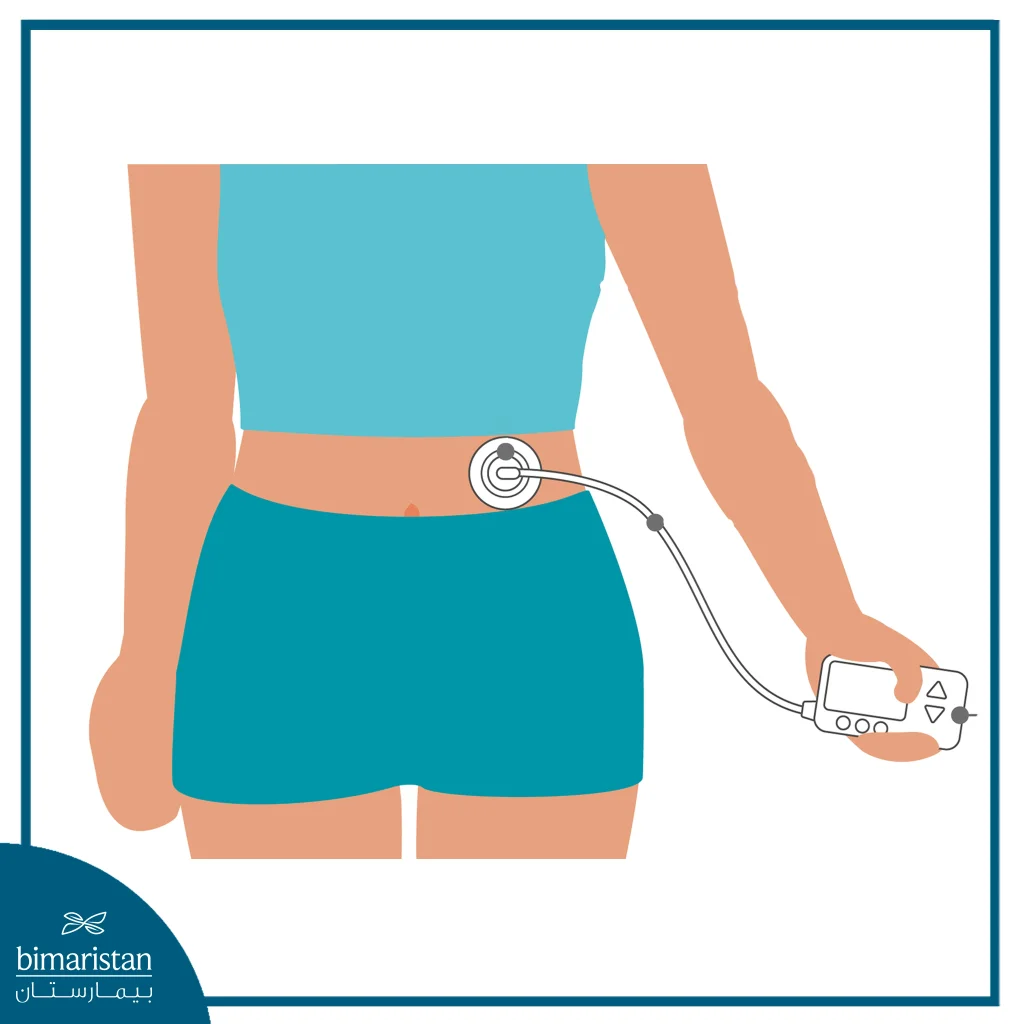
Insulin pump components
The insulin pump includes the following sections:
- The main pump unit: Contains the electronic processor, dosing controller, battery, and display or touchscreen interface. Some types have a wireless connection that connects it to a smartphone or blood glucose monitor.
- Insulin tank: A small tube that is filled with fast-acting insulin, usually enough to last 2 to 3 days.
- Delivery tube: A flexible tube that transports insulin from the reservoir to the cannula under the skin.
- Cannula: A tiny plastic or metal needle implanted under the skin, usually in the abdominal wall, thigh, or back arm.
- Control device or app: Used to adjust settings, send dosing orders, and review daily data from the pump or glucometers.
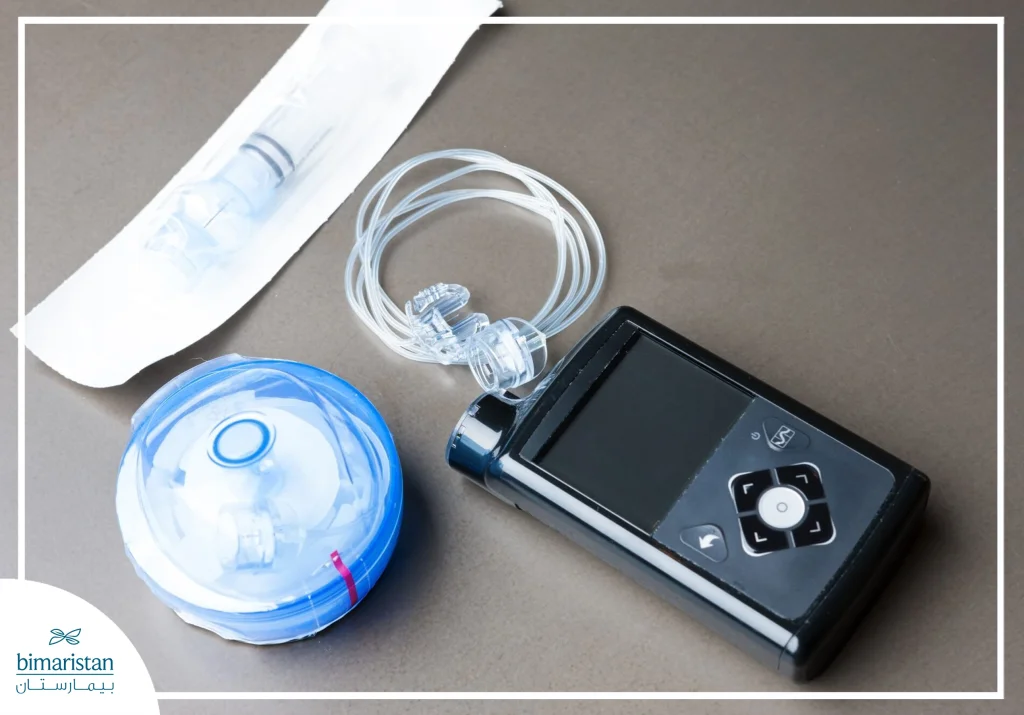
Insulin Pump Types
There are several types of insulin pumps:
- Traditional pump: This is the most commonly used pump, which is connected to the patient’s body through a thin tube and is carried on a belt or pocket.
- Wireless or adhesive pump: Applies directly to the skin without a tube and is controlled via a device or app.
- Closed hybrid systems: Known as a partial artificial pancreas, the pump is connected to a continuous glucose monitor and automatically adjusts doses according to the measured values.
- Fully closed systems: a generation under development that is expected to operate completely autonomously without any manual intervention from the patient.
Reasons to use an insulin pump
An insulin pump is recommended in the following cases:
- Pregnancy with diabetes (before and during pregnancy)
- Frequent or occasional episodes of low sugar
- Significant variation in daily glucose levels
- Unable to control sugar with multiple injections despite adherence
- Type 1 diabetes in children, teens or adults
- Patients with type 2 diabetes who require high accuracy in dosing
Pediatric insulin pump
A pump is the best option for children with type 1 because:
- Reduces the fear and distress associated with daily injections
- Provides very precise doses that are optimized for a child’s weight and sensitivity
- Allows parents to remotely monitor and control the device in some newer models
However, there must be constant supervision and adequate parental training to ensure safe use.
Benefits of the insulin pump
An insulin pump offers several advantages over traditional injections, such as:
- Flexibility in eating and physical activity
- Fine-tuned programmability to fit the patient’s rhythm of life
- Improve sleep quality and mood and reduce sugar anxiety
- Long-term low HbA1c
- Reduced number of daily injections from 4-6 to once every few days
- Precise glucose control: Minimizes fluctuation between high and low.
How the insulin pump works
The insulin pump relies on two basic pumping systems:
- Basal pumping:
- Continuous delivery of small amounts of insulin over a 24-hour period to cover metabolic needs in a fasted or resting state. The basal rate can be adjusted during the day, depending on the activity; for example, the dose may be reduced during sleep or exercise.
- Swallowing pumping:
- Additional doses are given before meals, and the amount is determined based on the number of carbohydrates in the meal and the current sugar level
- Corrective doses:
- Used to modify unexpected spikes in glucose
These doses are calculated through precise calculations based on patient input data, such as the sensitivity factor and carbohydrate-to-insulin ratio.
Preparing for insulin pump installation
Your doctor performs a thorough evaluation before installing the pump, including:
- Carbohydrate counting training
- Choosing a suitable location for the needle (usually the abdomen)
- Ensure that the patient is psychologically and technically prepared
- Teaching the patient to manage the pump and deal with failures
- Define the initial settings: Base Rate, Carbohydrate Ratio, and Correction Factor.
The cannula is placed under the skin using a sterile insertion tool and is repositioned every 2-3 days to avoid infection or blockage.
Risks and downsides of the insulin pump
Although highly effective, the pump has some drawbacks and potential complications, such as:
- Relatively high cost compared to injections
- The need for careful and frequent monitoring of sugar levels
- Technical malfunctions, such as a dead battery or a programming glitch
- Skin infections: Due to the cannula remaining in place for a long time
- Increased risk of ketoacidosis when refills are forgotten or the device malfunctions
- Blockage of the cannula or tube: Leads to interruption of insulin and severe hyperglycemia or ketoacidosis
Real-world challenges of the insulin pump
There are some challenges that some patients face after using the pump for a period of time, such as:
- The need for extensive patient and physician training
- Hardware malfunctions or the complexity of programming in some systems
- Difficulty in adhering to new techniques in some patients
- Some patients refuse to wear the device for aesthetic or psychological reasons
Regular monitoring and care of your insulin pump
- Checking glucose several times a day
- Switch the infusion set every 2-3 days
- Calibrate the continuous monitoring device if there is one
- Keep a traditional insulin syringe on hand for emergencies
- Clean the insertion site with medical alcohol and replace it to avoid skin irritation
- See your doctor or diabetes specialist every 3 months to adjust settings and assess overall control
Insulin pump installation cost
Turkey Bimaristan Center provides insulin pump installation and follow-up services with high clinical quality and competitive prices compared to some expensive European countries, with packages that include installation, training, and post-installation follow-up. The following table provides a quick comparison (approximate price ranges) between Turkey and some European countries:
| State | Pump Price ($) | Approximate annual cost of consumables (tanks/cannulas/sensors) | Notes |
|---|---|---|---|
| Turkey | $2,000 | 800-1,000$ | European quality at a lower cost, medical support available through Bimarstan |
| Germany | 5,500 | $1,200-1,500 | Health insurance that covers a large portion of the costs |
| France | $5,000 | $1,000-1,300 | Hardware is available from international companies with excellent maintenance |
| Switzerland | 6,000 | $1,400-1,600 | One of the most expensive countries, but the after-sales service is excellent |
| Sweden | $5,200 | $1,000-1,400 | Modern devices are available with partial insurance coverage |
| United Kingdom | $3,500 | $900-1,200 | State-of-the-art pumps, but limited access for the uninsured |
| United States | 6,500 | $1,500-2,000 | The world’s most expensive market, prices vary by company and insurance |
Today, the insulin pump represents the pinnacle of sophistication in diabetes management, combining technical precision with daily convenience, giving patients greater freedom in their lifestyle without sacrificing glucose control. Despite the challenges associated with cost and technical follow-up, clinical results show its clear superiority over traditional injections in reducing complications and improving quality of life. As the evolution towards smart closed systems continues, in the near future, a diabetic patient may not even need to think about taking their dose, as their pump will intelligently do it for them.
Sources:
- American Diabetes Association. (n.d.). Insulin pumps: Relief and choice. Retrieved October 28, 2025,
- Breakthrough T1D. (n.d.). Guide to insulin pumps Australia 2025. Retrieved October 28, 2025
- Diabetes UK. (2025, October 2). What are insulin pumps?. Retrieved October 28, 2025
