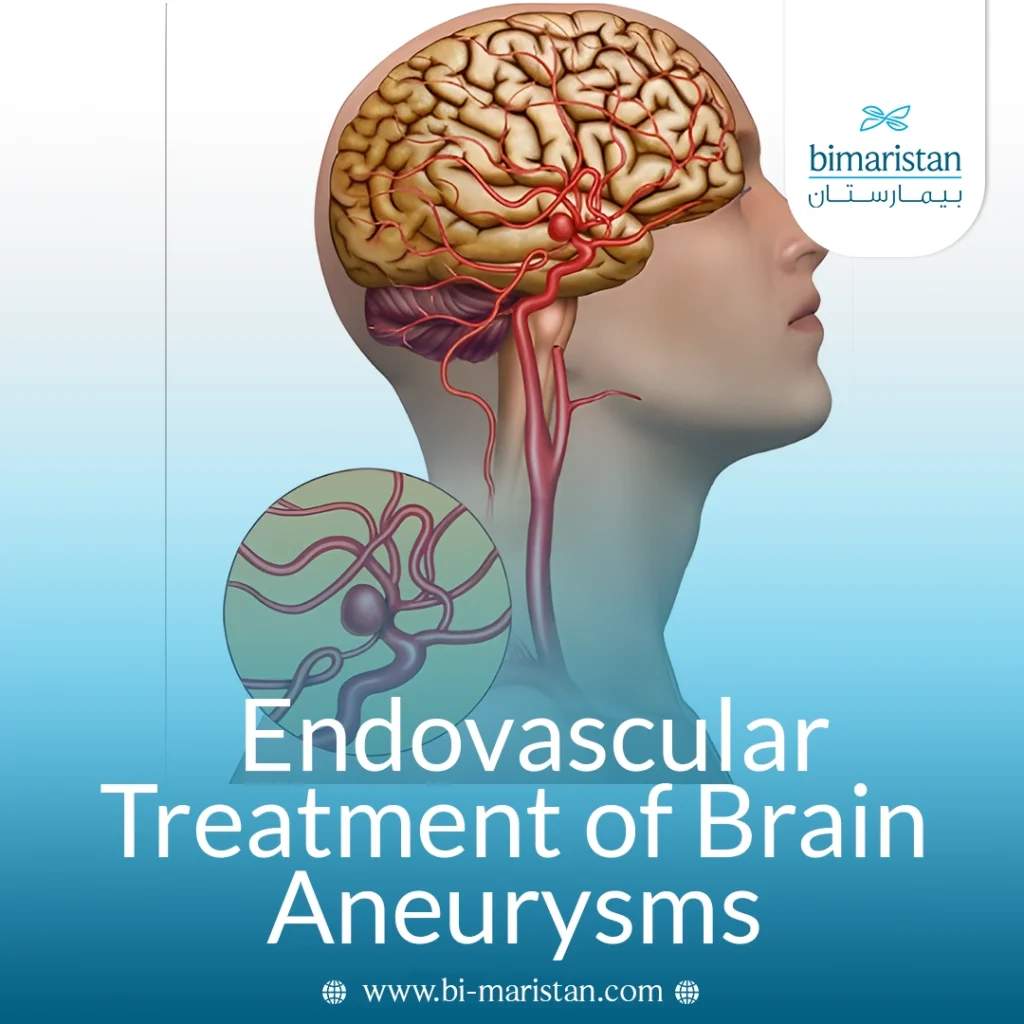

In recent years, global interest in interventional cerebral artery aneurysm treatment has increased, especially after studies have shown that it is highly effective in saving lives and minimizing the complications of traditional surgery. Cerebral artery aneurysms are estimated to affect 3-5% of the world’s population and are often discovered incidentally during neuroimaging examinations.
Today, Turkey is emerging as one of the leading countries in the field of neurointerventional therapy, thanks to its reliance on the latest technologies and specialized doctors with international experience. Therefore, it has become a favorite destination for patients from the Middle East and Europe seeking interventional treatment for cerebral artery aneurysms with the highest standards of accuracy and safety.
What is a cerebral artery aneurysm?
A cerebral artery aneurysm, also known as a cerebral aneurysm, is a bulge in a weak area of an artery in or around the brain. The constant pressure of blood flow pushes the weakened portion of the artery wall outward, forming a bubble-like bulge. As blood flows into the bulge, it expands further and further, similar to a balloon that becomes thinner and more prone to bursting as it fills with air.
Cerebral artery aneurysms can occur in any area of the brain, but are most commonly seen in the large arteries located at the base of the skull. About 10% to 30% of people with a brain artery aneurysm have more than one aneurysm. Most of these aneurysms are small and do not cause symptoms.
Symptoms may occur when the aneurysm presses on nearby nerves or brain tissue. If the aneurysm leaks or completely bursts, intracerebral hemorrhage occurs, a potentially life-threatening emergency that requires immediate treatment. The longer the medical intervention is delayed, the greater the likelihood of death or permanent disability.
Causes of cerebral artery aneurysms
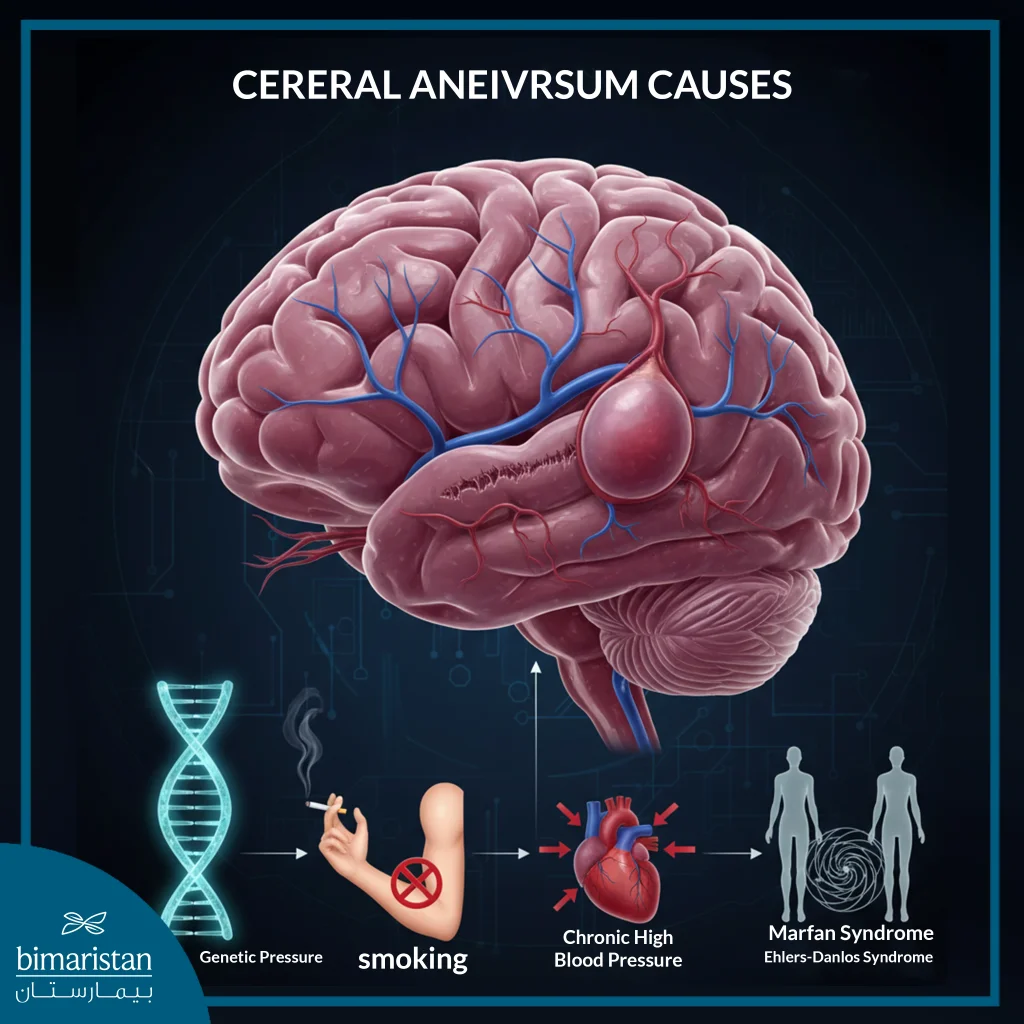
- Congenital or acquired weakness in the artery wall
- Smoking that impairs the elasticity of blood vessels
- Genetic factors, as the condition can recur in the same family
- Chronic high blood pressure causes constant strain on the walls of the vessels
- Some rare diseases that affect connective tissue, such as Marfan syndrome or Ehlers-Danlos syndrome
Types of cerebral artery aneurysms
- Cystic dilation: This is the most common form, appearing as a small, rounded bulge that looks like a bag or bubble, often forming where arteries branch.
- Fusiform dilation: Characterized by an even bulge along the artery wall, it usually occurs in the large arteries at the base of the skull.
Understanding the type and causes of cerebral artery aneurysms is an essential step in determining the most appropriate method of treatment, especially with the development of modern interventional techniques that provide a safe alternative to open surgery.
Cerebral artery aneurysm symptoms
The symptoms of a cerebral artery aneurysm vary depending on whether the aneurysm is unruptured or has already burst. Bursting is an emergency (acute cerebral hemorrhage) that requires immediate hospitalization. Symptoms include:
- Sudden, severe headache
- Blurred or double vision
- nausea and vomiting
- sensitivity to light
- Stiff neck
- Confusion or loss of consciousness
- Pain behind or above the eye
- Eyelid drooping or dilated pupils
- Weakness or numbness in a limb
An unruptured dilation often doesn’t cause any symptoms, but if it gets larger and causes compression of nerves or brain tissue, some signs may appear, such as:
- frequent headaches
- Change in vision
- Dilated pupils
- Pain behind or above the eye
- Numbness or tingling in the face or head
- Seizures in some cases
Early detection of a cerebral artery aneurysm helps to prevent a blast before it happens, as the doctor can determine the exact size and location of the aneurysm and develop an appropriate treatment plan, whether with periodic monitoring or with modern interventional technology. The earlier the diagnosis is made, the higher the chances of successful treatment and the lower the risk of cerebral bleeding and neurological complications.
How is a cerebral artery aneurysm diagnosed?
Cerebral artery aneurysms are diagnosed using a series of precise imaging tests that help reveal the location, size, and shape of the aneurysm:
- Computerized tomography (CT) scan: Helps detect cerebral hemorrhage caused by a burst aneurysm and is used as an initial test in emergency situations.
- Magnetic resonance imaging (MRI): Shows fine details of blood vessels and surrounding tissue, and is used to evaluate small or unruptured aneurysms.
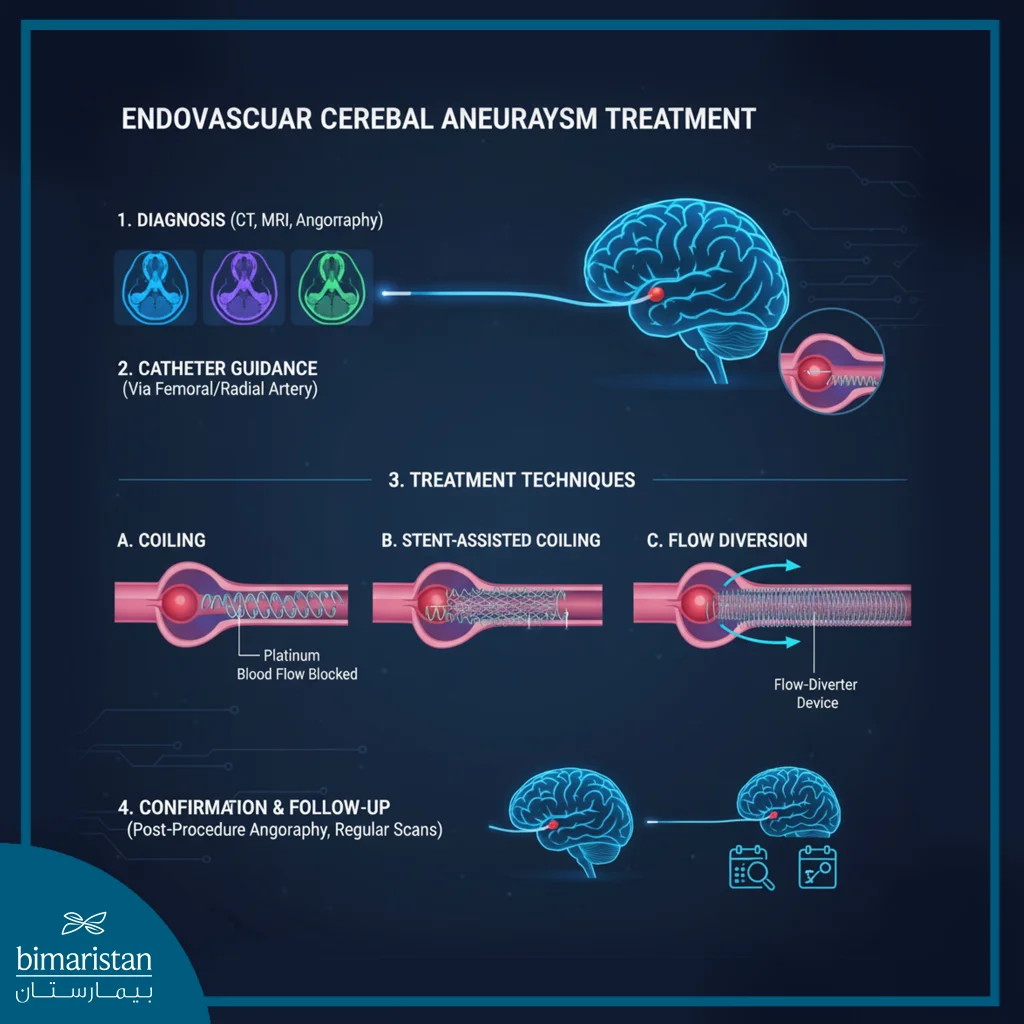
- Diagnostic cerebral catheterization (DSA): Considered the most accurate way to diagnose a cerebral artery aneurysm, it shows a three-dimensional image of the blood vessels and helps the doctor determine the type of interventional technique best suited for treatment, such as coils, stents, or flow diverters.
What is an interventional technique for treating cerebral artery aneurysms?
Interventional radiology is a modern and safe approach to treating a cerebral artery aneurysm without the need for open head surgery. It involves accessing the aneurysm through a tiny catheter, usually inserted from the groin or wrist, and then carefully guiding it to the site of the aneurysm under digital radiation. This allows the doctor to see the cerebral artery with high precision and have full control over the location of the catheter during the procedure.
The basic idea of interventional therapy is to close the aneurysm from the inside or redirect blood flow away from it, preventing it from bursting or shrinking and minimizing the risk of cerebral bleeding. This technique is much less invasive than traditional surgery and allows the patient to recover more quickly with fewer complications.
In addition, interventional therapy allows for an accurate assessment of the size, shape, and nature of the aneurysm, an important factor in determining the most appropriate method for each case, whether using platinum coils, adjunctive stents, or shunt stents. The doctor can also use this technique to treat large or complex aneurysms that are difficult to reach with traditional surgery.
Types of Interventional Cerebral Artery Aneurysm Treatment
Interventional treatments for cerebral artery aneurysms vary depending on the size and shape of the aneurysm. They include options such as platinum coils, adjunctive stents, and shunt stents, allowing the doctor to safely and effectively choose the most appropriate one for each case.
- Platinum coil: A tiny metal coil is inserted into the aneurysm to seal it and prevent blood flow. Often used for small or medium-sized dilation, it is safe and effective with high success rates.
- Coil auxiliary supports: Used when the neck of the aneurysm is too wide for the platinum coil to fully close on its own. The stent supports the artery wall and prevents the coils from coming out.
- Closed or shunt stents: Used for large or complex cases. They direct blood flow away from the aneurysm, helping to gradually close it without putting pressure on the original artery.
Steps to Interventional Cerebral Artery Aneurysm Treatment
Interventional treatment usually begins with an accurate diagnosis of the aneurysm using CT, MRI, or diagnostic catheterization to determine its exact location and size. Then, a fine catheter is inserted from the thigh or wrist and carefully guided to the site of the aneurysm under digital imaging to monitor its progress. If the treatment is based on platinum coils, small metal coils are inserted into the aneurysm to fill it and block blood flow, with complete closure confirmed by digital imaging.
In cases where the neck of the aneurysm is wide, a combination of stent and coil is used, where the stent is first placed to support the artery wall, and then the coils are filled inside the aneurysm. In cases of large or complex aneurysms, bypass stents are used to redirect blood flow away from the aneurysm, allowing it to gradually close without putting pressure on the original artery.
After the procedure is completed, the doctor performs imaging to confirm the success of the treatment, and the patient is followed up in the hospital for a short period of time to monitor vital signs and brain function, with regular checkups arranged to ensure that the aneurysm does not return or a new one appears.
Advantages of interventional technology over open surgery
Interventional Cerebral Artery Aneurysm Treatment is a safe and effective alternative to traditional surgery, minimizing surgical risks and facilitating recovery. This method offers many advantages that make it the preferred choice in most cases, both in terms of safety and speed of return to normal life.
- No need for a surgical incision in the head
- Lower risk of bleeding or infection compared to traditional surgery
- Better cosmetic results, as the procedure leaves no major scars
- Recovery time is shorter, with most patients returning to normal life within a few days
With these advantages, the interventional technique has become the first choice for most cerebral artery aneurysms in advanced centers.
Possible complications after interventional treatment of cerebral artery aneurysm
Despite the relative safety of interventional cerebral artery aneurysm treatment, some rare complications may occur that require attention and immediate medical attention. It is important for patients to monitor their condition after the procedure and report any abnormal symptoms to avoid serious complications. The most important complications that require immediate medical attention:
- Sudden, severe headaches, which may indicate new bleeding or brain complications
- Vision or speech disorders, such as blurred vision, double vision, or difficulty speaking
- Severe pain or swelling at the catheter site, usually in the groin or wrist, or any bleeding from the insertion site
- Lethargy, sudden weakness, or numbness in the limbs, which may indicate an impact on the cerebral nerves
- Sudden loss of consciousness or convulsions, which are medical emergencies
If you experience any of these symptoms, you should immediately go to the nearest medical center or call your doctor to ensure that the condition is evaluated and the necessary measures are taken.
Recovery time and care after interventional treatment of cerebral artery aneurysm
Interventional treatment for cerebral artery aneurysms is less invasive than traditional surgery, which is reflected in the short recovery time and ease of post-operative care. Typically, the patient needs to stay two to four days under observation in the hospital. During this time, the doctor monitors vital signs and brain function, and imaging is performed to confirm the success of the procedure.
After discharge from the hospital, doctors recommend resting and avoiding heavy exertion for a few weeks, and following up with the doctor and regular checkups are necessary to ensure that the stretch does not return or cause complications. Usually, the patient can return to light daily activities within a few days, while strenuous activities require some additional time depending on each person’s condition.
Is Interventional Cerebral Artery Aneurysm Treatment suitable for all cases?
Although interventional cerebral artery aneurysm treatment has become the first choice for most cerebral artery aneurysms, it is not suitable for all patients. Here are some suitable cases:
- Small or medium-sized stretches
- Stretches with a narrow neck that can be closed with metal coils
- Conditions that can be easily accessed through catheterized blood vessels
Traditional surgical intervention is preferred for large or complex aneurysms, aneurysms that cannot be reached by catheterization due to the shape or location of the artery, as well as in cases of severe bursting with extensive cerebral hemorrhage requiring urgent surgical intervention.
Expectations after interventional cerebral artery aneurysm treatment and success rates
Recent studies show that success rates for interventional treatment of cerebral artery aneurysms exceed 90% in specialized centers, especially in leading countries such as Turkey, where the latest medical devices and high-level medical expertise are available. This type of treatment provides a great opportunity to restore the patient’s neurological functions more quickly compared to traditional surgery, while minimizing the complications and risks associated with cerebral hemorrhage.
Despite the high success rates, regular follow-up with accurate imaging tests is critical to make sure that there is no recurrence or new stretching in the future. Typically, patients can return to light daily activities within a few days, while strenuous activities may take weeks, depending on the individual patient’s condition. This continuous follow-up provides additional assurance of safety and the continued effectiveness of the treatment, making the interventional technique a preferred option for many patients seeking safe and effective treatment in advanced centers like Turkey.
Preventing brain aneurysms
There’s no surefire way to prevent an aneurysm, but there are some controllable factors that may help reduce your risk, such as:
- Maintain a healthy weight: Being overweight increases the risk of cardiovascular disease.
- Cholesterol control: Keep cholesterol levels within normal limits.
- Quit smoking: Smoking increases the risk of developing an aneurysm.
- Blood pressure control: Maintain a healthy blood pressure.
Today, interventional cerebral artery aneurysm treatment is one of the safest and most effective ways to treat this delicate and complex condition, combining high precision, rapid recovery, and fewer complications than open surgery. With advances in technology, most brain aneurysms can now be treated safely and successfully, with careful follow-up to ensure that the condition does not recur or a new aneurysm develops.
Bimaristan Medical Center in Turkey offers the latest interventional therapy techniques and a specialized medical team with international experience, ensuring patients the best possible results and peace of mind during and after treatment.
Sources:
- Yue W. Endovascular treatment of unruptured intracranial aneurysms. Interv Neuroradiol. 2011 Dec;17(4):420-4
- Bocanegra-Becerra JE, Kersting K, Blega AM, Brown N, Oliveira LB, Alajarmeh R, Batista S, Wellington J, Acha Sánchez JL, Bertani R. Endovascular treatment of brain aneurysms under conscious sedation: a systematic review of procedural feasibility and safety. Neurosurg Rev. 2024 Jan 12;47(1):42
- Thompson, B. G., Brown, R. D. Jr., Amin-Hanjani, S., Broderick, J. P., Cockroft, K. M., Connolly, E. S. Jr., Duckwiler, G, Harris, C. C., Howard, V. J., Johnston, S. C., Meyers, P. M., Molyneux, A., Ogilvy, C. S., Ringer, A. J., & Torner, J. (2015). Guidelines for the management of patients with unruptured intracranial aneurysms: A guideline for healthcare professionals from the American Heart Association/American Stroke Association. Stroke, 46(8), 2368-2400