Stroke prevention is a top public health priority. Studies show that about 90% of stroke cases are related to modifiable factors, and the latest global guidelines emphasize that lowering blood pressure and eating a diet rich in vegetables and fish can significantly reduce the risk of stroke. By adopting a healthy lifestyle and controlling causative factors, individuals can achieve effective results in stroke prevention.
What is a stroke, and how does it happen?
There are two main types of stroke: ischemic stroke and hemorrhagic stroke, each with its own cause:
- Ischemic stroke: It occurs when the blood supply to a part of the brain is cut off, preventing the brain tissues from getting nutrients and oxygen, and this condition can occur due to the blockage of a cerebral artery or for any other reason, and brain cells begin to die within a few minutes of the interruption of perfusion.
- Hemorrhagic stroke: A hemorrhagic stroke occurs when a brain vessel leaks or ruptures, causing severe bleeding and forming pools of blood that pressurize and damage the brain.
Both of these types are dangerous and deadly and must be treated as soon as possible.

Causes of Stroke
The causes of stroke are varied and include:
- Untreated high blood pressure: It can weaken the blood vessels in the brain over time, making them more prone to rupture.
- Arteriovenous malformations: These are congenital abnormalities where the blood vessels are thin-walled and more prone to rupture.
- Blood-thinning medications: Taking an overdose of blood thinners can cause a stroke.
- Aneurysms: These are bulges in the wall of a blood vessel that can rupture and lead to bleeding.
- A buildup of proteins in the walls of blood vessels: This weakens them and makes them more susceptible to damage.
- Head injuries: Such as those that occur in automobile accidents.
Most causes of stroke are caused by a brain vascular disease, so when one of these diseases is present, it must be treated and treated, and not left untreated.
Stroke Symptoms
The main symptoms of a stroke include:
- Sudden, severe headaches: The patient describes it as the worst headache they have ever experienced.
- Loss of balance and difficulty walking: A patient with a stroke may stumble or lose their balance.
- Vision disorders in one or both eyes: One or both of the patient’s eyes may suddenly begin to blur or dim, or they may see double objects.
- Numbness or paralysis of the face, arm, and leg: These symptoms often occur in one half of the body, with one side of the mouth drooping in the half of the body that is numb.
- Difficulty speaking and understanding others: The patient stutters and loses the ability to understand the speech around them.
Having one or more of these symptoms could be a sign of a stroke, so if you feel any of these symptoms, you should go to an ambulance urgently before it’s too late.
Risk factors that increase the likelihood of stroke
Although strokes are often random and unknown, there are some risk factors that predispose to stroke, the most important of which are:
- Cigarette smoking or exposure to secondhand smoke
- High cholesterol level
- High blood pressure
- Diabetes
- Obstructive sleep apnea
- Family history or personal history of strokes, heart attack, or TIA
- Cardiovascular disease, including heart failure, heart defects, heart infection, or heart rhythm disorders, such as atrial fibrillation
There are other uncontrollable factors, such as age, gender, and race, but pathologic factors remain the primary risk factors for stroke.
Stroke prevention through lifestyle
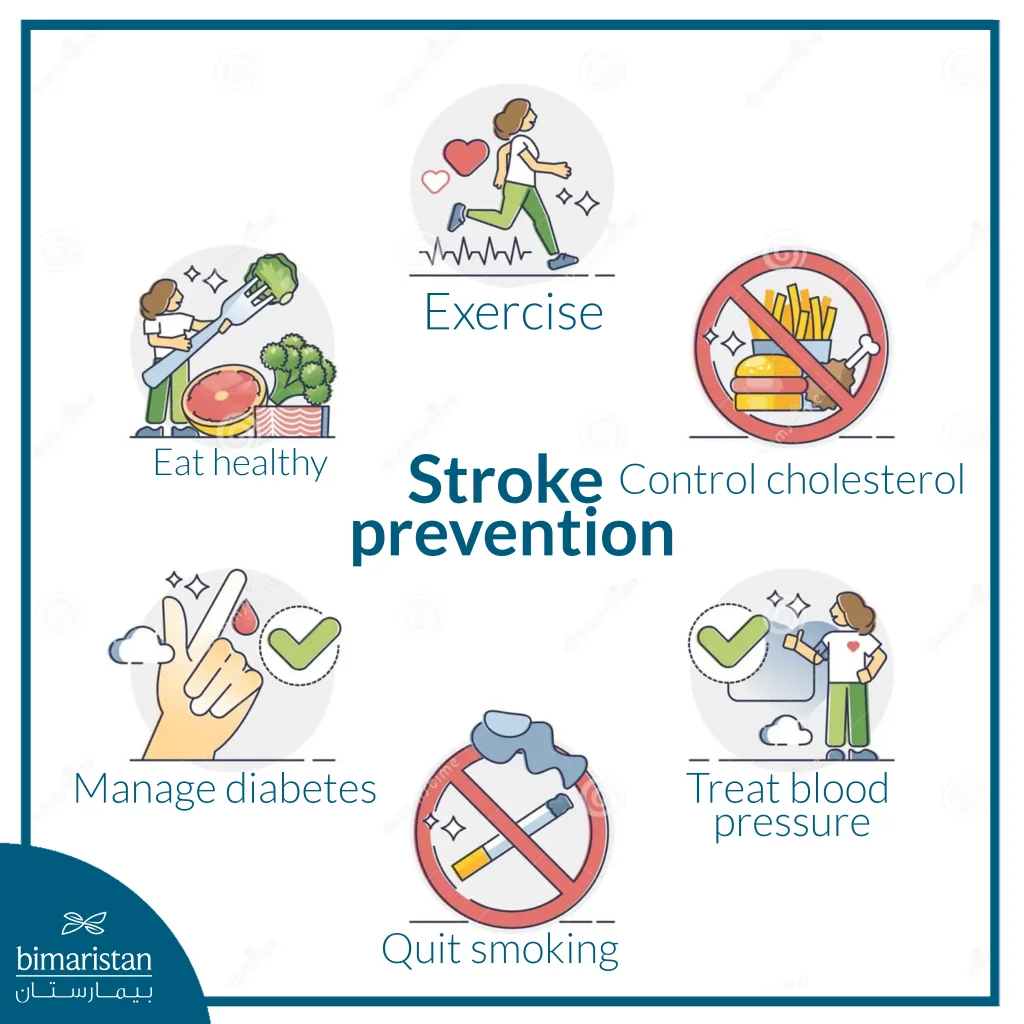
Stroke prevention through lifestyle is the cornerstone of protecting the brain from permanent damage. Simple daily choices can make a big difference in reducing the risk of injury, as statistics show that more than 80% of stroke cases can be prevented by adhering to healthy habits, and maintaining normal blood pressure is the most important step, as it is the factor most associated with injury.
Eating a balanced diet rich in vegetables, fruits, and whole grains, while limiting saturated fats and sugars, helps protect blood vessels from narrowing and hardening, thus reducing the likelihood of stroke.
Regular physical activity is also important. Taking a brisk walk or swimming for half an hour a day helps improve blood circulation and weight management, and quitting smoking and abstaining from alcohol are two of the most important steps in stroke prevention, as they significantly increase the risk of stroke. Adopting these healthy practices in daily life is not just a step in stroke prevention; it is a long-term investment in both heart and brain health.
Stroke prevention in patients with chronic diseases
The importance of stroke prevention increases in patients with chronic diseases because this particular group is more prone to the occurrence of narrowing of the arteries or the formation of clots, as hypertensive patients, for example, need careful follow-up and permanent control of pressure values, as high blood pressure is considered the main cause of cerebrovascular diseases and is the most prominent factor causing stroke, and these patients are advised to adhere to the prescribed medications, and modify the diet to be rich in vegetables and low in sodium.
People with diabetes must keep their blood sugar levels balanced to avoid damage to the tiny vessels inside the brain, and a balanced diet and regular HbA1c monitoring can help cut the risk of stroke by almost half, according to statistics. Patients with heart and rhythm disorders, especially atrial fibrillation, are recommended to use blood thinners or antiplatelet drugs under the supervision of a doctor to avoid the formation of clots that can travel to the brain and block one of its vessels, causing an ischemic stroke.
The importance of screening and early detection in stroke prevention
Screening and early detection are essential steps in stroke prevention, helping to detect risk factors before they cause permanent brain damage:
- Measure your blood pressure regularly: High blood pressure is the most serious risk factor for stroke, and controlling it significantly reduces your risk.
- Periodic sugar and lipid analysis: Checking fasting sugar, triglycerides, and cholesterol helps to assess vascular status and correct abnormalities early.
- Carotid ultrasound: Used to check for narrowing of the arteries feeding the brain, especially in people with dizziness or temporary weakness in a limb.
- Monitor for transient ischemic attacks (TIA): Temporary symptoms such as loss of speech or limb weakness warrant emergency evaluation because they may precede a stroke.
- See your doctor for regular reassessment: Regular check-ups allow your doctor to monitor your blood pressure and blood sugar and adjust treatment as needed, which promotes stroke prevention.
Early detection and regular follow-up reduces the risk of stroke by up to 70%, making preventive screening a true investment in brain health.
recurrent stroke prevention (secondary prevention)
Preventing a second stroke is a critical step in preventing recurrence, as the risk of a new stroke is much higher in those who have had a previous stroke. Secondary prevention relies on a combination of medication, close follow-up, and lifestyle modification, and includes the following actions:
- Adhere to prescribed medications: Antiplatelets (aspirin or clopidogrel) or blood thinners in the presence of atrial fibrillation to prevent new clots from forming.
- Control blood pressure and lipids: Maintaining blood pressure values below 130/80 mmHg and using lipid-lowering medications (statins) significantly reduces the likelihood of stroke recurrence.
- Diabetes control: Maintaining stable sugar levels prevents damage to the microvessels within the brain and minimizes neurological complications.
- Lifestyle modification: This includes not smoking, eating a balanced diet, regular exercise, and avoiding alcohol.
- Regular follow-up with your doctor: Seeing your neurologist or cardiologist on a regular basis is essential to assess the effectiveness of your treatment and manage new risk factors.
Adhering to these preventive steps reduces the risk of recurrent stroke by more than 75% and is a key factor in maintaining brain function and quality of life in the long term.
When should you see a doctor immediately?
Quick action is crucial in minimizing the damage of a stroke, as every minute of delay can cause the patient to lose thousands of nerve cells, so it is advisable to head to the emergency department as soon as you notice any of the following signs:
- Sudden weakness or numbness in the face or a limb, especially if it is on one side of the body.
- Difficulty speaking or understanding: Sudden stuttering or an inability to express words clearly.
- A vision disorder: Partial or complete loss of vision in one or both eyes.
- Dizziness or loss of balance: Sudden dizziness or inability to walk steadily.
- A sudden severe headache with no apparent cause: This could be an indication of a cerebral hemorrhage and requires immediate intervention.
If you experience any of these symptoms, do not wait or try to fix it at home, but call the emergency services immediately, as every minute can mean the difference between a full recovery and permanent disability.
Stroke prevention is key to maintaining quality of life and brain health, and adopting healthy daily habits, such as regular physical activity, blood pressure control, and smoking cessation, opens the door to a safer and more active life. Bimaristan Medical Center offers a full range of preventive screenings, specialized consultations, and awareness programs tailored to your individual needs, ensuring your overall health and well-being. Don’t wait, make health a priority today and start your smart prevention journey.
Sources:
- Bushnell, C., Kernan, W. N., Sharrief, A. Z., Chaturvedi, S., Cole, J. W., Cornwell, W. K., … Whelton, P. K. (2024). 2024 Guideline for the Primary Prevention of Stroke: A Guideline From the American Heart Association/American Stroke Association.
- Sacco, R. L., Kasner, S. E., Broderick, J. P., Caplan, L. R., Connors, J. J., Culebras, A., … Zubkov, A. P. (2021). 2021 Guideline for the Prevention of Stroke in Patients With Stroke and Transient Ischemic Attack: A Guideline From the American Heart Association/American Stroke Association.