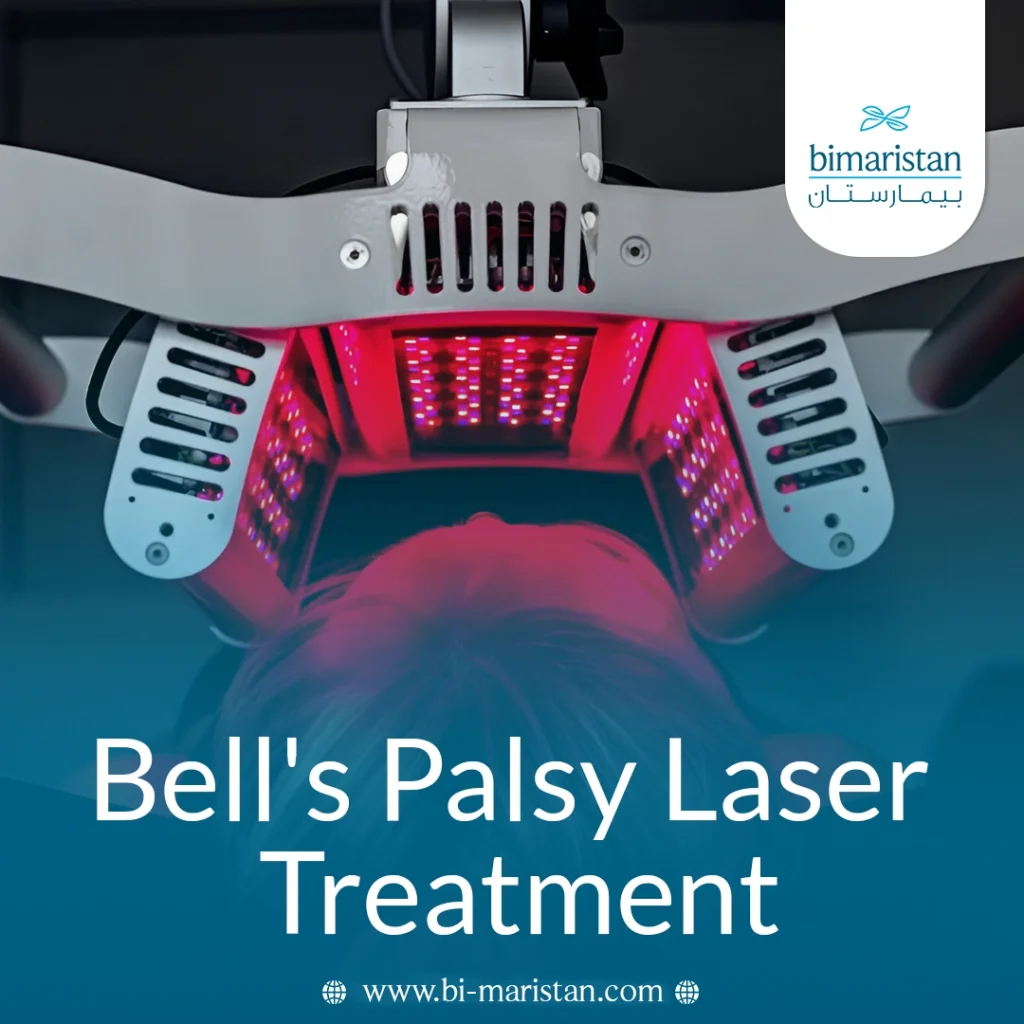

Bell’s palsy is one of the most common causes of facial muscle weakness, affecting about 20 to 30 people out of every 100,000 annually. With the development of regenerative medicine and physical therapy,Bell’s palsy laser treatment has emerged as a safe and non-invasive option that stimulates nerves and improves blood flow to the affected muscles, as recent studies have shown that low-intensity laser treatment accelerates healing and significantly reduces pain in patients.
What is Bell’s palsy?
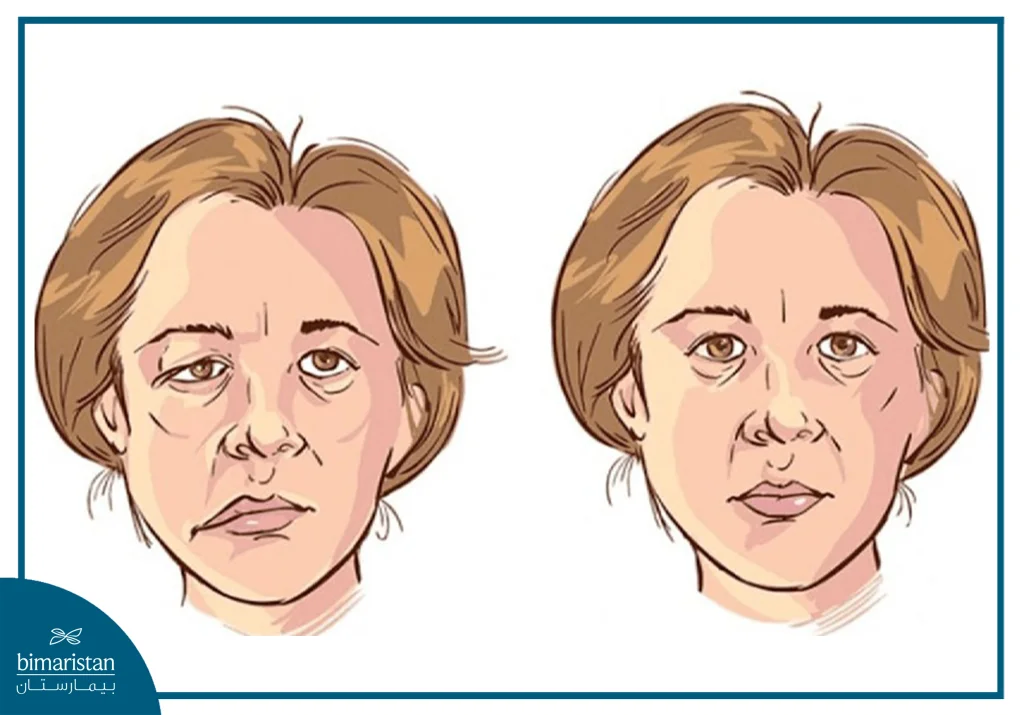
Bell’s palsy (or facial nerve palsy) is a condition caused by sudden weakness or paralysis of the muscles on one side of the face, resulting in drooping of the affected half of the face, with difficulty in smiling or closing the eyes, due to dysfunction of the seventh cranial nerve (facial nerve), as this nerve works to move the muscles of the face and stimulate the salivary and tear glands to secrete their secretions, as well as the sense of taste in the front two-thirds of the tongue and controls the muscles that play a role in the sense of hearing.
How does Bell’s palsy occur?
The exact cause of Bell’s palsy is unknown, but it is thought to be related to inflammation of the facial nerve due to a viral infection:
- Herpes simplex virus: Causes cold sores or genital herpes.
- Varicella zoster virus: Causes chickenpox and shingles.
- Epstein-Barr virus: Causes infectious mononucleosis.
- Adenovirus: Causes respiratory diseases.
- Coxsackie virus: Causes hand, foot, and mouth disease.
- Mumps virus.
In addition to viral infection, there are a number of risk factors for Bell’s palsy, including:
- Pregnancy and childbirth: Especially during the third trimester or the first week after delivery.
- Chronic diseases, Such as diabetes and high blood pressure.
- Head or facial injuries: May cause damage to the facial nerve.
- Stress: May be a contributing factor.
- Obesity: Increases the chances of infection.
- Family history: Genetics may play a role in some cases.
These factors are among the leading causes of Bell’s palsy, but the presence of one or all of them does not necessarily mean you have the disease.
Common symptoms of Bell’s palsy
The symptoms of Bell’s palsy affect everything innervated by the seventh nerve, including:
- Inability to fully close the eye on the affected side
- Pain behind the ear or in the jaw before the onset of muscle weakness
- Changes in facial expressions, such as difficulty smiling or frowning
- Reduced sense of taste in part of the tongue
- One side of the face is drooping and difficult to move
- Lack of tears or saliva at times
- Increased sensitivity to sounds (hyperacusis) in the ear on the affected side
These symptoms usually appear suddenly and peak within 48 hours, and their severity varies from person to person.
What is the laser treatment of Bell’s palsy?
Laser treatment of Bell’s palsy is a non-surgical treatment used as a complement to drug therapy, which is performed by exposing certain areas of the facial nerve pathway and facial muscles to low-dose red or near-red laser light (without heating or burning), with the aim of stimulating nerve healing, reducing inflammation, and improving muscle function in the facial area.
How does Bell’s palsy laser treatment work?
The effectiveness of lasers in treating Bell’s palsy depends on:
- Activation of mitochondria: The absorption of light in the 600-1100 nanometer range (red or near-red laser) stimulates Cytochrome-c oxidase, which increases cellular energy production (ATP).
- Improved blood flow and nitric oxide (NO): Light releases NO that is temporarily immobilized on the enzyme, improving perfusion and reducing inflammation.
- Modulation of oxidative stress and cellular signaling: Transient elevation in oxygen species followed by activation of anti-inflammatory pathways and improved neural tissue repair.
The effectiveness of laser treatment of Bell’s palsy according to recent studies
Recent studies indicate that low-intensity laser treatment of Bell’s palsy significantly accelerates the recovery of Bell’s palsy when used alongside conventional treatment. Research has shown that regular laser sessions improve facial muscle movement, reduce weakness and swelling, and restore symmetry between the two sides of the face more quickly than with medication alone, and results show that most patients begin to notice significant improvement within a few weeks of starting the sessions, with an excellent safety record and no significant side effects.
Bell’s palsy laser treatment steps
The Bell’s palsy laser treatment session goes through several precise steps to safely and painlessly stimulate the facial nerve, which can be summarized as follows:
- Pre-session assessment: The doctor or physical therapist will assess the degree of paralysis, identify the affected areas of the face, and determine the appropriate number of sessions based on the severity of symptoms and the duration of the injury.
- Patient preparation: The patient is asked to sit in a comfortable position, remove any cosmetics or creams from the face, and wear goggles to protect the eyes from the laser beams.
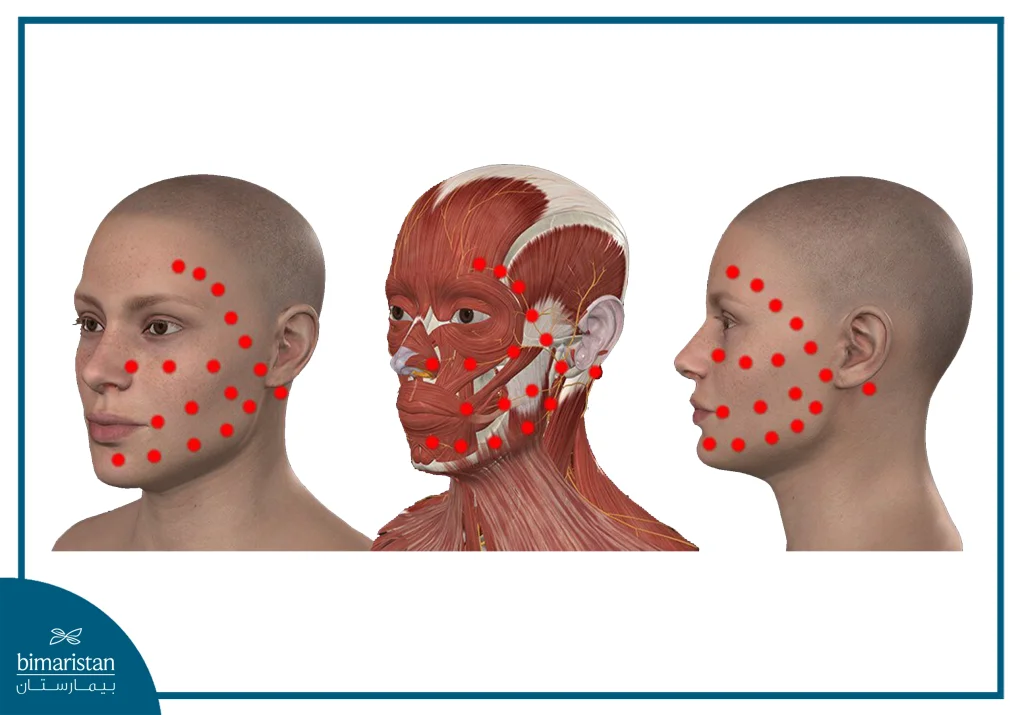
- Identify application points: The therapist determines the course of the facial nerve and the positioning points of the affected muscles, such as the area around the mouth, eye, cheek, and forehead, to precisely direct the laser to them.
- Low-intensity laser application: The cold laser light is shone on the specific points without directly touching the skin or with a slight tilt, and is applied for 10 to 20 minutes depending on the protocol used, and the patient does not feel any heat or pain during the session, and may only notice a slight sensation of warmth or numbness.
- End the session and evaluate the response: After the session, the doctor assesses changes in muscle movement or spasm relief, and it is recommended to repeat the treatment 3 to 5 times a week for several weeks until nerve function gradually improves.
- Integration of treatment with motor rehabilitation: Patients are often advised special exercises to move the facial muscles after each session, which enhances the effect of the laser and accelerates the restoration of muscle coordination.
In general, the session is painless, safe, requires no anesthesia or recovery time, and the patient can return to their daily activities immediately afterward.
Advantages of Bell’s Palsy laser Treatment
Laser treatment of Bell’s palsy has a number of advantages that make it a promising and safe treatment option:
- Non-invasive and completely safe: It does not require any surgical intervention or the use of needles, minimizing the risk of infection or complications.
- Pain-free and heat-free: It relies on low-intensity cold light that does not cause pain or burning sensation, so it is very comfortable for the patient during the session.
- Helps speed up healing: The laser stimulates nerve and tissue regeneration, which speeds up the restoration of facial muscle movement and reduces recovery time.
- Reduces inflammation and swelling: Helps reduce irritation and edema around the facial nerve, relieving pressure and improving blood flow.
- Improves facial motor coordination: Helps to restore balance between the two sides of the face and minimize spasms or abnormal movements after recovery.
- Tangible results within a short period of time: Most patients notice a significant improvement in facial mobility within a few weeks of starting regular sessions.
- Can be easily combined with drug and physical therapy: Maximizes the effectiveness of medications and accompanying exercises without any drug interference or additional side effects.
- Excellent safety record: Studies have shown that low-intensity laser therapy is completely safe when used at recommended doses and does not cause any damage to tissue or skin.
In short, this treatment combines safety, comfort and effectiveness, making it a preferred choice to support the natural recovery of Bell’s palsy patients and improve their quality of life quickly and safely.
In conclusion, laser treatment of Bell’s palsy has proven to be an effective treatment option to help restore facial movement and minimize the unpleasant symptoms caused by facial nerve injury, and with the development of modern laser devices in Turkey, faster and less painful results can be achieved. At Bimaristan Medical Center, a team of neurologists and physiotherapists uses the latest laser technology to accelerate recovery and restore your smile with confidence and safety.
Sources:
- American Academy of Neurology (AAN). (2023). Evidence-based guideline update: Steroids and antivirals for Bell’s palsy.
- Khullar, V., et al. (2023). Efficacy of low-level laser therapy in Bell’s palsy: A systematic review and meta-analysis.