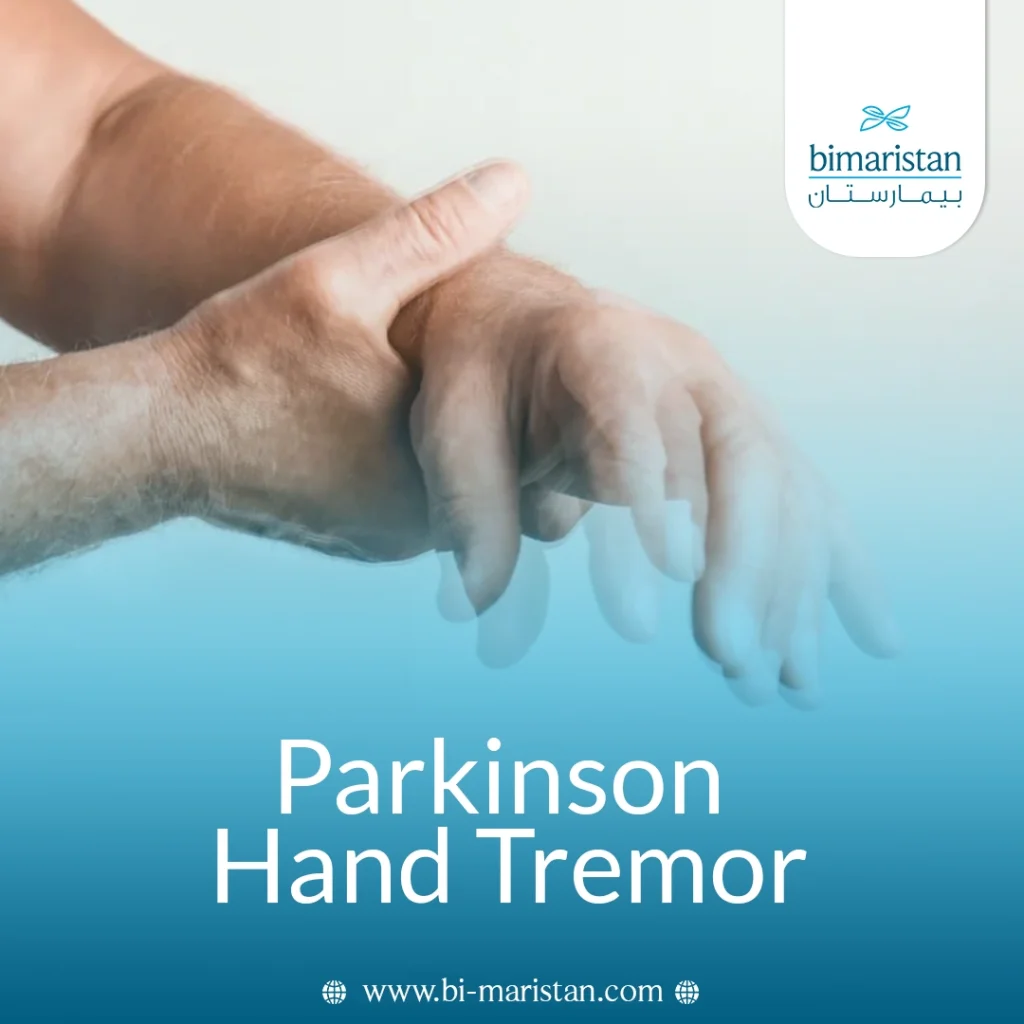


Parkinson’s hand tremor is one of the most common signs and symptoms in patients, affecting about 70-75% of them at some stage of the disease. It often starts in the hand and is evident at rest, and is known as the classic “epithelial” tremor. This condition is a major motor symptom that leads to difficulties in performing daily activities such as writing or grasping objects.
It can be severe enough to affect quality of life, and studies show that early recognition and careful assessment of tremor help doctors distinguish Parkinson’s from other disorders with similar symptoms. Understanding the tremor and its causes helps in choosing an appropriate treatment plan to minimize its impact.
What is Parkinson’s hand tremor?
Parkinson’s hand tremor is a common motor symptom characterized by an involuntary tremor of the hand, which often appears when the hand is at rest and diminishes or disappears when movement begins, and this tremor is one of the characteristic signs of the disease, and it often begins on one side of the body before gradually extending to the other side as the condition progresses.
Hand tremor is caused by a disturbance in the movement centers within the brain due to a lack of dopamine, an essential substance for regulating fine movements, and although tremor is the most noticeable symptom, it is not the only symptom, as it may be accompanied by other symptoms such as slow movement, muscle stiffness, and balance disorder.
Why does hand tremor occur in Parkinson’s patients?
Parkinson’s hand tremor is caused by a malfunction in the brain’s movement control mechanisms, mainly due to a lack of dopamine. This chemical plays a pivotal role in regulating voluntary movements and preventing unwanted movements, and when it is reduced, the delicate balance between motor stimulation and inhibition centers is disrupted.
This dysfunction is associated with affecting deep areas of the brain known as the basal ganglia, which are responsible for coordinating the smoothness and stability of movement, and as the function of these areas declines, irregular nerve signals appear that lead to tremors, especially during rest, and factors such as psychological stress or fatigue can increase the visibility of tremors without being the primary cause of their occurrence.
Characteristics of Parkinson’s hand tremor
Parkinson’s hand tremor is characterized by several clinical features that help distinguish it from other types of tremor, and these features are important in diagnosis and follow-up, the most prominent of which are that it appears mostly during rest, i.e., when the hand is not being used, and decreases significantly when voluntary movement is initiated or when grasping objects.
The tremor often begins in one hand or in one side of the body, then may gradually move to the opposite side as the disease progresses, as it is characterized by a regular rhythm and relatively slow, and may be accompanied by a movement similar to rubbing the thumb with the index finger, and the intensity of the tremor increases in cases of psychological stress, anxiety or fatigue, while it may decrease during concentration or sleep, which reflects its neurological nature associated with a motor control disorder in the brain.
The difference between Parkinson’s tremor and other types of tremor
Distinguishing Parkinson’s tremor from other types of tremor is essential for an accurate diagnosis and treatment plan, as Parkinson’s tremor differs in its characteristics and causes from other forms of tremor.
Parkinson’s tremor often appears at rest and subsides when you start moving, tends to be rhythmic and slow, and usually starts on one side of the body before spreading later, in contrast, essential tremor is the most common type of tremor, appears during movement or when fixing a certain position, often affects both hands symmetrically, and is not related to a neurodegenerative disorder.
As for the tremor caused by anxiety, stress or fatigue, it is temporary and irregular, and improves when the psychological or physical cause disappears, and is not usually associated with other neurological symptoms, and pharmacological or metabolic tremor differs in terms of its association with taking certain medications or hormonal disorders, making medical history and clinical examination crucial elements in differentiating between these conditions.
Is hand tremor seen in all Parkinson’s patients?
No, hand tremor is not seen in all Parkinson’s patients, although it is one of the most common and obvious symptoms. A percentage of patients develop Parkinson’s disease without tremor as their main symptom, and instead have slowness of movement, muscle stiffness, or a more pronounced balance disorder.
Clinical observations indicate that some forms of Parkinson’s are known as the so-called “non-tremor type”, where other motor symptoms are dominant. The absence of tremor does not rule out a diagnosis, nor does its presence or severity necessarily reflect the degree of progression, so diagnosis is always based on a complete clinical picture and regular medical follow-up.
How is hand tremor diagnosed in Parkinson’s disease?
The diagnosis of Parkinson’s hand tremor is mainly based on clinical assessment, as there is no single laboratory test that confirms the diagnosis definitively, and the doctor begins by taking a detailed medical history, focusing on the nature of the tremor, the time of onset, whether it occurs during rest or movement, in addition to the presence of other accompanying motor symptoms.
In some cases, imaging tests or ancillary tests may be used to rule out other causes of tremor or to support the diagnosis, but clinical judgment and medical expertise remain the basis for an accurate diagnosis. The diagnosis is largely based on neurological examination, where the doctor assesses the pattern of tremor, slowness of movement, muscle stiffness, and balance disturbance.
When is hand tremor a worrying sign?
Hand tremor is a worrying sign when it appears suddenly or worsens rapidly over a short period of time, especially if it is accompanied by other unusual neurological symptoms, and if the severity of the tremor increases to the point of clearly affecting daily activities, such as difficulty writing or eating, it indicates the need for medical evaluation and should not be ignored.
Tremor becomes a cause for concern if it appears at a young age, is clearly asymmetrical, or does not improve with standard treatments. The presence of accompanying symptoms such as muscle weakness, speech disturbance, severe loss of balance, or altered consciousness requires urgent medical review, as this may indicate a cause other than Parkinson’s disease and requires rapid specialized intervention.
How to treat Parkinson’s hand tremor via Bimaristan Center
Bimaristan Medical Center offers all internationally approved treatment options for hand tremor in Parkinson’s disease, and the appropriate treatment is chosen for each patient after a thorough evaluation of his/her condition:
Drug therapy
It relies on medications that aim to compensate for dopamine deficiency or improve the balance of neurotransmitters in the brain, and includes basic Parkinson’s medications that are used to relieve tremors and improve motor control, with doses adjusted according to the patient’s response.
Physical therapy and neurological rehabilitation
It includes specialized treatment programs to improve balance, strengthen muscles, and enhance movement control, helping to reduce the impact of tremors on daily activities and improve functional independence.
Functional therapy and motor support
It aims to help the patient adapt to tremor in daily life through hands-on training in hand use and modification of methods for performing basic activities.
Lifestyle modification and psychological support
This includes stress management, sleep regulation, and psychological monitoring when needed, as psychological factors can increase the severity of shaking.
Advanced Interventional Therapies
Deep brain stimulation (DBS) is an effective option for cases that do not respond adequately to pharmacological treatment and is applied after careful evaluation by a specialized neurological and surgical team.
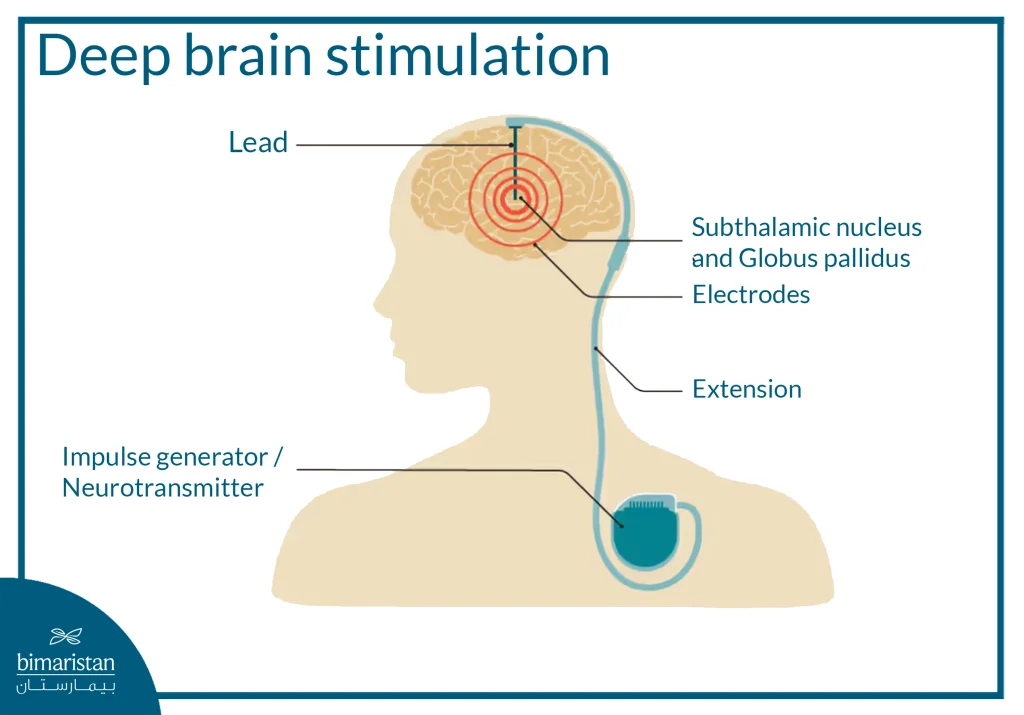
This integration of pharmacological, rehabilitative, and interventional therapies is what characterizes the treatment approach at Bimarestan, where the ultimate goal is to control the tremor and improve the patient’s quality of life in the long term.
Parkinson’s hand tremor is an important sign of disease progression and may require specialized medical intervention to alleviate it and improve daily functioning. The specialized care at Bimaristan Medical Center offers a holistic approach to accurately assess the condition and develop a comprehensive treatment plan based on the latest scientific evidence. With advanced treatment strategies and a multidisciplinary team, the patient can receive effective support to manage their tremor. Ultimately, the goal is to enhance the ability to participate in daily activities and continue to lead an active and independent life.
Sources:
- Abusrair, A. H., et al. (2022). Tremor in Parkinson’s Disease: From Pathophysiology to Advanced Therapies. Tremor and Other Hyperkinetic Movements.
- Pasquini, J., et al. (2023). The Clinical Profile of Tremor in Parkinson’s Disease.