Hair transplant is one of the most effective modern treatments for hair loss and baldness, offering restored confidence and a natural look. However, the success of the procedure relies not only on the surgeon’s expertise or the technique used, but also on the patient’s commitment to proper post-hair transplant care, as this phase plays a crucial role in speeding recovery, stimulating new follicle growth, and securing optimal, long-lasting results.
Why is post-hair transplant care essential?
Post-hair transplant care for women and men is a pivotal part of the procedure’s success, as proper care helps stabilize the transplanted follicles and promotes healthy growth.
- The impact of good post-hair transplant care on the growth of transplanted hair: The post-transplant period is very sensitive, as the new grafts need a clean and stable environment to ensure their survival and normal growth. Adhering to post-hair transplant care steps, such as proper washing and avoiding direct sun exposure or pressure on the scalp, minimizes the risk of losing grafts and improves the chances of obtaining lasting results.
- The importance of following your doctor’s instructions: The instructions after a hair transplant are crucial, as they help protect the new grafts, minimize the risk of infection or swelling, and ensure normal hair growth. Adhering to medical instructions increases the success rate of the procedure and helps achieve the expected results in a timely manner.
Essential steps to achieve post-hair transplant care
There are a few basic steps to follow to achieve the post-hair transplant care
The first few days after surgery
In the first few days after the operation, hair follicles are particularly sensitive. It’s important to avoid rubbing the area and to protect it from even light contact. Although the wound is small, care must be taken to prevent germs and infection. This period is often accompanied by typical side effects of hair transplant, including scalp and transplant area puffiness and swelling, as well as redness, itching, and some pain. To ensure proper post-hair transplant care, it is essential to follow a number of instructions, including:
- Managing these symptoms through the use of pain-relieving medications and cold compresses or ice packs
- Sleeping in a proper position to avoid pressure on the scalp
- Instructions on how to properly wash your hair
- Avoid direct sun exposure
First week after surgery
At this stage, the side effects of the operation begin to decrease, while the itching persists. A number of instructions must be adhered to in order to achieve post-hair transplant care, including:
- The patient should avoid scratching the scalp to protect it from damage
- Adhere to taking medications prescribed by your doctor (such as antibiotics or painkillers)
- Avoid touching your scalp to avoid damaging the newly implanted follicles
- At this stage, the bandages are removed from the transplant area under the supervision of the doctor
Weeks after the procedure
The transplanted hair follicles begin to acclimatize in their new place, and the transplanted hair begins to fall out, which is expected and natural. This is a temporary condition that resolves within a period of time, allowing hair to start growing again. The new hair needs a period to grow again, and a number of instructions must be adhered to to achieve care after hair transplant, including:
- The patient should not worry, as this stage is unsettling or uncomfortable for the patient due to hair loss
- Observe hair loss as a natural phase before new hair growth
- Avoid violent sports
Months after the operation
The transplanted hair begins to grow longer and become denser. The improvement is gradually noticed until the final results are achieved in about 6-12 months, and a number of instructions must be adhered to to achieve post-hair transplant care, including:
- Monitor hair growth and communicate with your doctor when needed
- Continuing to use the right products to keep the hair healthy
- Attend regular check-ups with your doctor to assess hair growth progress and ensure proper results
- Continue to use recommended medicated shampoos and products to maintain a healthy scalp and transplanted hair
Tips for achieving hair transplant care
After hair transplant, the patient should follow some post-hair transplant care tips to speed up the healing process and get the best results:
Protecting the hair transplant area
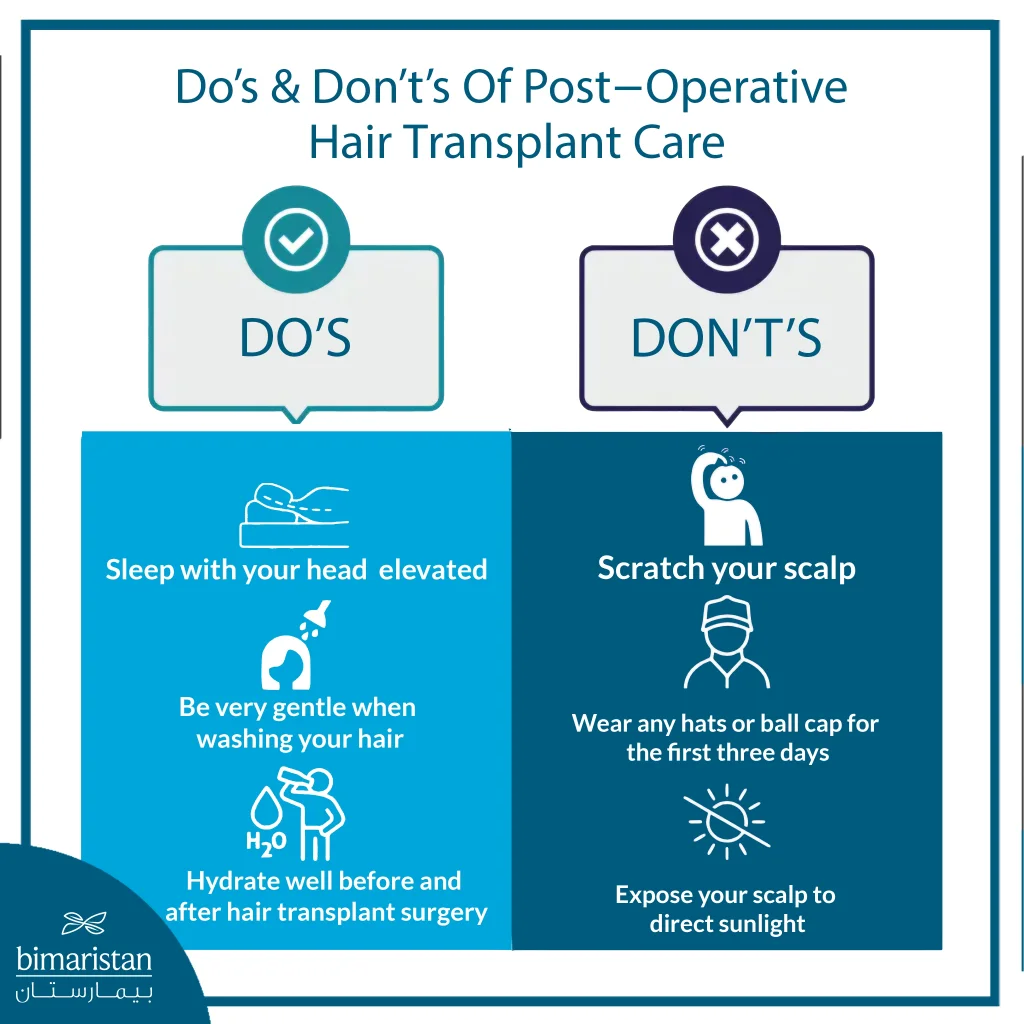
It is essential to protect the transplanted hair from damage, dust, dirt, and excessive heat by avoiding strong friction, scratching, or scalp rubbing. It is also recommended to use a soft pillow and avoid pressing on the transplanted area during sleep, as the hair follicles have been placed in new, specially created small cavities, but the tissue is not fully healed.
- Do not scratch the transplanted area
- Avoid activities that can harm the hair
- The head must be protected from all kinds of blows
- Hair styling is prohibited 45 days after the transplant
- If you wear a hat, make sure it is not too tight
- Do not use perfume or deodorant, as they can get into the head area
- The patient should refrain from wetting the area, as this can increase the chances of contracting scabies
- Having hair follicles in clean environments also reduces the risk of damaging the transplant environment. However, after 45 days, dyeing, shaving, or perming can be performed, except for brushing.
Washing after hair transplant
After a hair transplant, it is crucial to take special care of the transplant area. Avoid touching it with water or rubbing it with foam as you normally would. Do not use hot water and avoid using conditioners, shampoos, or other products that could damage hair in the weeks following the procedure. Additionally, protect the transplanted area from rain and excessive heat.
The scales that appear after hair transplant must be separated from the hair follicles by applying conditioner minutes before the washing process, allowing the hair follicles to breathe comfortably after the first wash. In addition, the patient must learn, with expert guidance, how to wash his hair for the first time after the procedure, as he must be able to clean his hair carefully and accurately on his own for the next one or two months. Towels are not used after the first and subsequent washes following the procedure. The hair is dried with a hair dryer at a low temperature and at a distance from the scalp.
Sleeping in an upright position
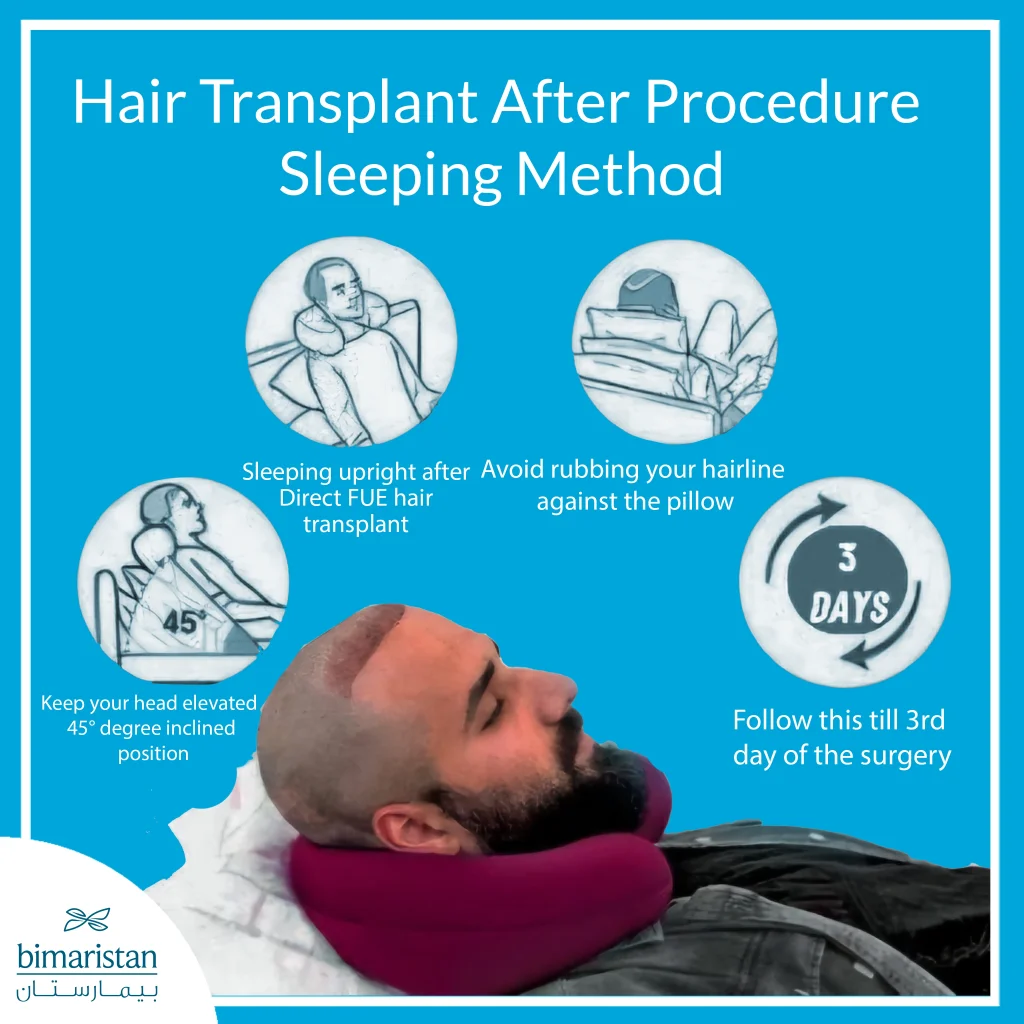
Another important consideration to achieve post-hair transplant care is that while lying down, the transplanted area should not touch the pillow. The hair follicles should not touch the pillow and duvet, as the roots should not be damaged while sleeping. It is okay to lie on your back or on the nape of your neck, using a small, firm pillow for support.
You should lie in a supine position and avoid involuntary or voluntary contact with the roots; otherwise, the roots will be damaged and fall off. For at least two weeks after the procedure, avoid wearing clothes that are put on or taken off over the head. It is best to choose garments that open in the front or have a wide neck area to prevent any contact with the surgical site.
Pressure on the bleeding area
Sometimes a person may experience bleeding in the surgical area, especially when washing the hair. In this case, to achieve post-hair transplant care, you should apply pressure to the affected area using a clean wet cloth or gauze for 5 to 10 minutes.
Take medications as prescribed by your doctor
You must take any prescribed medications after a hair transplant, usually prescribed by your doctor, to minimize irritation in the area or to promote hair growth:
- Finasteride: In some cases, it is used to support the growth of transplanted hair and to treat hereditary hair loss. It works by inhibiting the enzyme that converts the male hormone testosterone into dihydrotestosterone, which causes hair loss. You should consult a doctor before using it, as it cannot be used without a prescription.
- Minoxidil: It is the most commonly used medication because it promotes hair growth and increases blood flow to the scalp, helping transplanted hair grow and maintain its density. It can be used topically on the scalp, with minimal side effects and no discomfort for the patient.
- Nutritional supplements: If the patient is deficient in a particular nutrient, the doctor may prescribe supplements such as Fish oil, vitamins, and mineral supplements.
- Anti-dandruff shampoo: Prescribed by a doctor when some people experience dandruff after a hair transplant.
It is not recommended to use aspirin, herbal teas, herbal-enriched vitamins, products containing vitamin E, ginseng, zinc, and all kinds of blood thinners in the first week after hair transplant to avoid any bleeding.
Avoid strenuous activities and stress
As part of post-hair transplant care, patients should avoid all forms of physical or strenuous activities that could elevate their heart rate above resting levels during the first week of the recovery period. This includes activities such as running, cycling, and similar forms of exercise. Additionally, both emotional and psychological stress can impact recovery, so it is important to steer clear of strenuous activities and stressful situations. Smoking is prohibited on the day of the operation and the day after, while alcohol consumption should be avoided for one month following the procedure.
Protection from the sun and heat
In the context of post-hair transplant care, it is extremely important to protect the hair transplant area from the sun, as extreme heat and cold can damage hair follicles and prevent them from stabilizing. Sauna, solarium, Turkish bath, intensive steam environments, swimming, and sports activities are prohibited for two weeks after hair transplant.
A diet rich in all the elements necessary for hair growth and health
After a hair transplant, it is necessary to rely on a diet rich in all the elements necessary for hair growth and health, which mainly includes vitamins, especially B vitamins, minerals, most importantly zinc, iron, and calcium, as well as proteins, amino acids, and healthy fats.
You should eat enough foods rich in omega-3 fatty acids, such as nuts, fatty fish, avocados, and olive oil. In addition, a variety of fruits and vegetables should be included in the diet after hair transplant due to their richness in vitamins and minerals, as well as their antioxidant and anti-inflammatory properties.
The following elements are important:
- Proteins (fish, eggs, poultry) to support hair building
- Iron (spinach, lentils, liver) to reduce the risk of hair loss
- Zinc and biotin (nuts, legumes, eggs) to boost hair strength
- Vitamin C (citrus fruits, strawberries) to support iron absorption and stimulate collagen
Avoid unhealthy foods and those lacking nutritional value, such as hydrogenated and trans fats, vegetable oils, fast food, foods high in added sugar, and carbonated beverages.
Finally, post hair-transplant care stands as the most crucial factor in determining the success of the procedure and achieving natural, lasting results. The patient’s adherence to medical instructions accelerates recovery, safeguards the transplanted follicles, and supports healthy hair growth. Therefore, this delicate phase must not be overlooked, but rather regarded as an essential continuation of the surgical achievement.
Sources:
- National Center for Biotechnology Information. (2024). Hair transplant aftercare and related aspects. PMC.
- MedlinePlus. (n.d.). Hair transplant. U.S. National Library of Medicine.