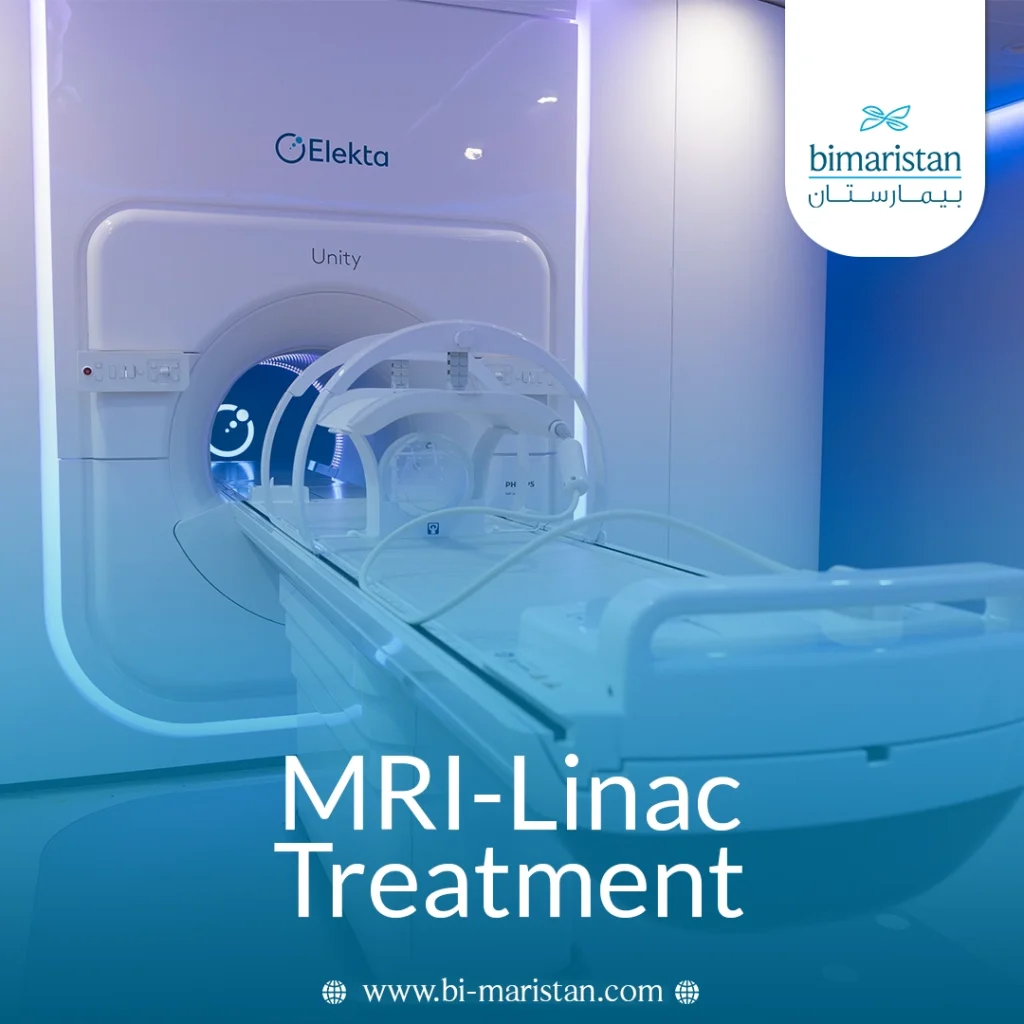
MRI-Linac is one of the most important recent innovations in oncology because it combines the precision of MRI with the high-dose radiation delivery capability of the Linac linear accelerator. This unique combination allows for real-time visualization of the tumor and soft tissues during the session, adjusting treatment in real time to every movement of the patient or their internal organs.
Unlike traditional machines that rely on outdated images and add wide safety margins to compensate for motion, MRI-Linac delivers radiation therapy that is more precise, safer, and better able to protect healthy organs, making it a paradigm shift in the treatment of moving or complex tumors.
What is MRI-Linac technology?
MRI-Linac is a treatment technology that, for the first time, combines the power of high-resolution MRI with the ability of a Linac linear accelerator to produce high-energy X-ray beams in a single machine, allowing doctors to see the tumor and surrounding tissue with diagnostic accuracy and in real time during the treatment session itself, rather than relying solely on previous images. MRI provides continuous images of soft tissue, tracking tumor movement caused by breathing, organ filling, or postural changes, while Linac delivers radiation and shapes the beam in real time to match the shape and location of the tumor with millimeter accuracy.
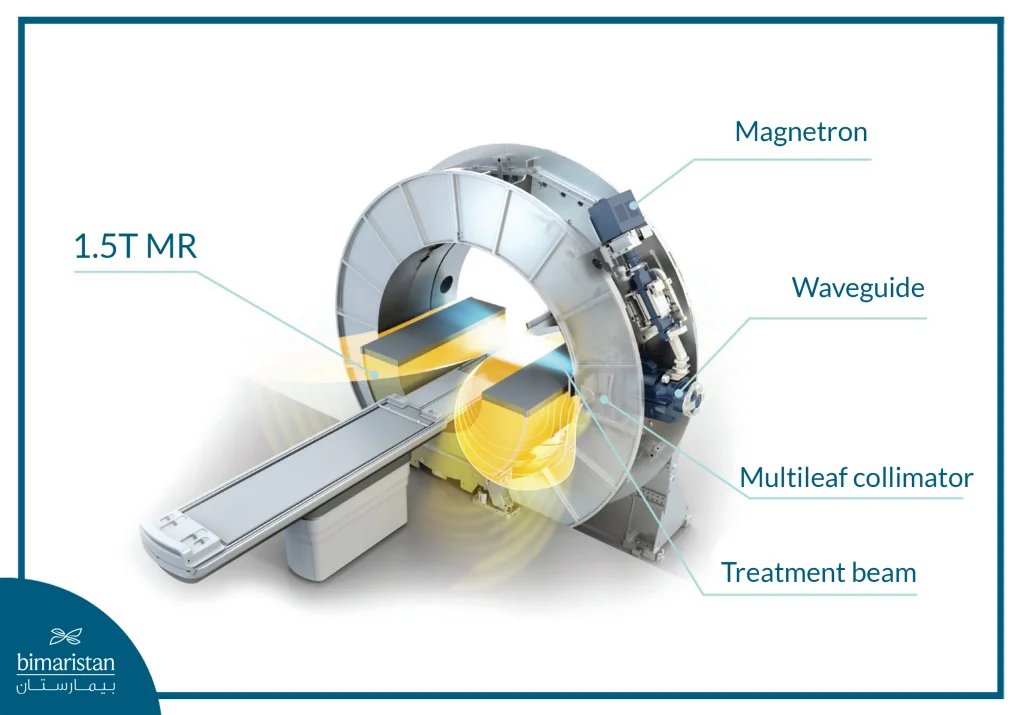
This real-time monitoring and real-time adjustment capability allows for daily adaptive radiation therapy, where the plan is readjusted before each session based on changes in the size, shape, or position of the tumor, improving targeting accuracy and reducing the amount of healthy tissue exposed to radiation. As a result, MRI-Linac allows for higher, more effective doses with fewer side effects, and is an important option for treating tumors that are mobile or surrounded by sensitive organs such as the lung, prostate, pancreas, and liver.
How does MRI-Linac differ from traditional radiation therapy?
MRI-Linac differs from traditional radiation therapy as shown in the following table:
| Comparison | MRI-Linac | Conventional radiation therapy (IMRT/VMAT/Linac) |
|---|---|---|
| Image quality | – Utilizes high-resolution MRI, which is able to show soft tissues with diagnostic clarity. – Provides real-time images during the session. – Detects changes in the size or shape of the tumor in each session. | It relies on pre-existing axial images such as CT scans or low-resolution soft tissue X-rays. There is no clear visualization of the tumor during treatment. |
| Precision in targeting the tumor | – Highly accurate because the device sees the tumor in real time. – Daily adjustment of the plan according to the actual tumor location. – Precise beam shaping using MLC with real-time correction during treatment. | – The tumor is targeted based on images taken days or weeks earlier. – A large “safety margin” is added to compensate for potential errors, exposing healthy tissue to radiation. |
| Dealing with tumor movement during treatment (lung, bowel, bladder) | – Tracking the movement of the tumor. – Stopping the beam when the tumor moves out of the target area (Gating). – Immediately adjust radiation to compensate for respiratory or organ movement. | – Large margin of safety increases exposure of sensitive organs to radiation. – Higher risk of delayed toxicity (e.g., urethral stricture, proctitis, bladder damage). – Dose cannot be easily increased due to the risk of injury to neighboring organs. |
| Protecting healthy tissue and minimizing toxicity | – Because the device sees the tumor accurately and adjusts the beam in real time, a lower dose is delivered to healthy tissue. – Allows higher doses to be safely administered to the tumor (Escalation). – Fewer side effects such as: Proctitis, cystitis, trouble urinating, diarrhea | – Large margin of safety increases exposure of sensitive organs to radiation. – Higher risk of delayed toxicity (e.g. urethral stricture, proctitis, bladder damage). – Dose cannot be easily increased due to the risk of injury to neighboring organs. |
What types of cancers does MRI-Linac treat?
There are several types of MRI-Linac technology, including:
- Prostate cancer: One of the most common cancers to benefit from real-time imaging because the location of the prostate changes as the bladder fills and the bowel moves.
- Pancreatic cancer: A highly mobile and difficult-to-target tumor, MRI-Linac is one of the best options for treating it accurately and safely.
- Head and neck cancers: MRI’s high spatial resolution helps visualize the tumor boundaries and adjacent delicate tissues, superior to conventional imaging.
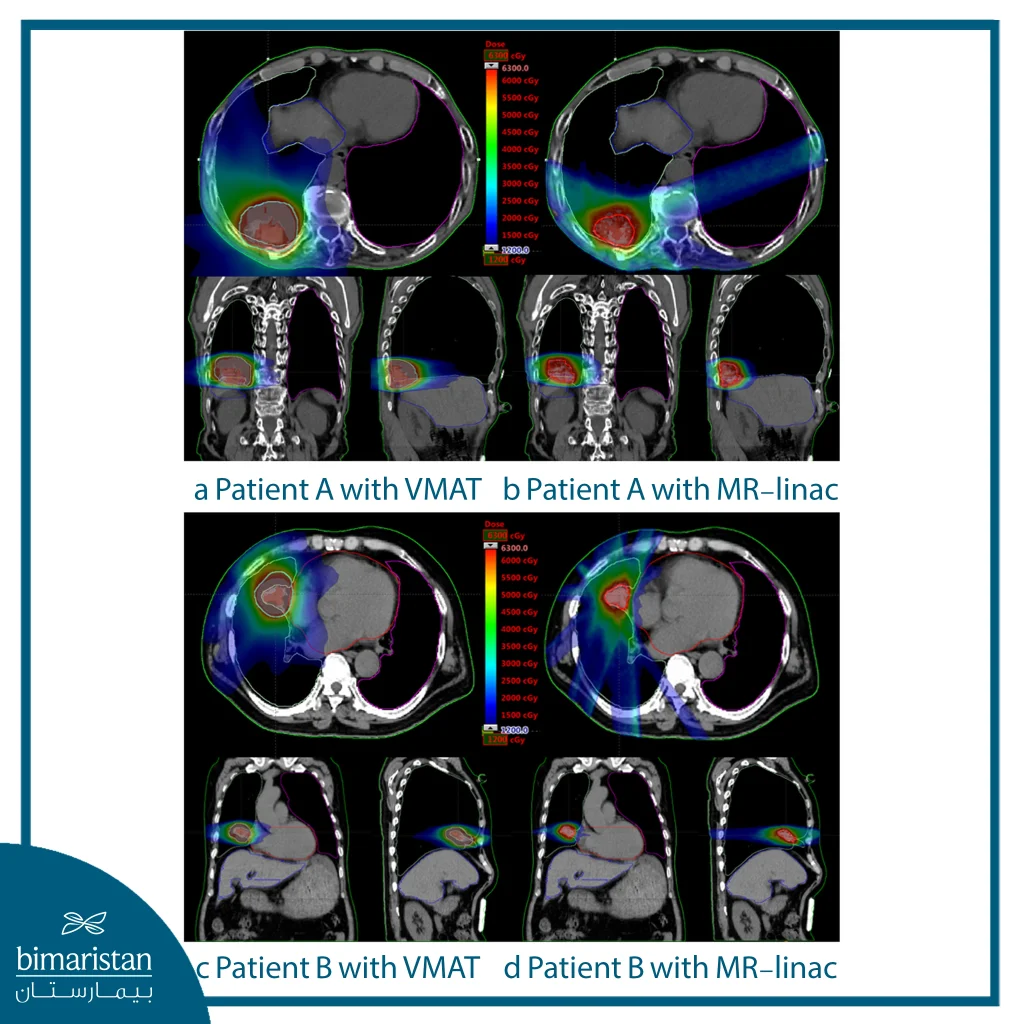
- Lung cancer: The movement of the tumor continuously changes with breathing, and the device is able to track this movement in real time.
- Breast cancer: Its ability to monitor tissue movement in real time allows it to minimize radiation exposure to the heart and lungs.
- Liver cancer: The liver moves visibly during breathing, making real-time tracking necessary to accurately direct the radiation.
- Bladder cancer: Its size and location are constantly changing, making real-time guidance a big advantage.
- Kidney cancer: You benefit from the ability to adjust the treatment plan daily as the tumor changes.
- Spinal tumors: require very high precision to avoid spinal cord injury.
- Brain and CNS cancer: Benefits from high-contrast soft-tissue MRI imaging.
- Tumors that are mobile or close to sensitive organs: Abdominal and pelvic tumors that move with breathing, requiring millimeter precision to protect nearby organs.
Benefits of MRI-Linac
MRI-Linac offers a wide range of benefits that make it one of the most advanced radiation therapy technologies in modern times. It allows doctors to see the tumor and surrounding tissues in high resolution during the same session, resulting in better radiation guidance and fewer side effects compared to conventional treatment:
- Safely deliver a higher dose: By protecting healthy tissue, higher doses can be delivered in fewer sessions, while maintaining treatment safety and minimizing toxicity.
- Ability to see the tumor while the beam is being fired: The device can track the movement of the tumor in real time and stop or adjust the beam when the location changes, which enhances the accuracy of the treatment.
- Higher accuracy in targeting the tumor: MRI displays very clear images of soft tissue and the tumor in real time, allowing radiation to be delivered with millimeter precision.
- The ability to adjust the treatment plan on a daily basis: Before each session, new MRI images are taken, and the medical team immediately updates the treatment plan based on any change in the size or location of the tumor.
- Minimizing complications: Because the device reduces the dose of radiation that reaches healthy tissue, symptoms such as proctitis, cystitis, or gastrointestinal issues are less likely to occur.
- Track tumor movement during breathing or organ movement: Organs within the abdomen and chest are constantly moving, and the location of the tumor may change significantly during the session. MRI-Linac is able to track and compensate for movement in real time, unlike traditional techniques that rely on a priori estimates.
- Improved treatment planning through better visualization of soft tissues: MRI provides higher resolution images than CT or X-ray, especially in tumors located in soft organs (e.g., bladder, prostate, pancreas, liver), as this allows for precise delineation of tumor boundaries and avoids misidentification of safety margins.
- Reduced safety margin around the tumor: Because MRI-Linac can see the tumor in real time and accurately track its movement, the doctor no longer needs to add a large safety margin around the tumor to compensate for movement, reducing the area of radiation to healthy tissue and minimizing potential toxicity, while allowing for higher doses within the tumor itself for more effective and safer treatment.
- Monitoring the tumor’s response to treatment during sessions: Real-time MRI images allow the behavior of the tumor to be monitored from session to session, providing real-time information about tumor shrinkage, shape changes, and tissue density changes, and based on these changes, the treatment plan for each session can be precisely adjusted.
- The possibility of replacing X-ray simulation with MRI simulation: The texts mentioned the future of technology that relies on generating artificial CT (sCT) using artificial intelligence, allowing MRI-only treatment simulation without the need for CT.
MRI-LINAC patient treatment steps
Patients are treated with MRI-Linac through a series of precise steps that ensure safety and precision in directing the radiation:
- Assessment of the condition: Treatment begins with a consultation with a radiation oncologist to discuss treatment options, understand the benefits and side effects, and ensure the patient is able to undergo an MRI scan.
- Radiation planning: The medical team uses advanced software to determine the appropriate dose and number of sessions, designing a personalized treatment plan for each patient.
- MRI simulation session: The patient is placed on a treatment table and a CT and/or MRI scan is performed to determine the location of the tumor, its shape, and its relationship to critical organs.
- Real-time tumor identification: Before each session, a new MRI is performed, and the images are immediately compared to the original treatment plan to adjust for any change in tumor location.
- Firing beams while monitoring movement: During the session, the device tracks the movement of the tumor and surrounding tissue, adjusting the dose or stopping the beam when needed, while a linear accelerator directs the radiation with high precision.
- Follow-up after the session: After treatment is complete, the patient can leave immediately with follow-up instructions, with subsequent visits scheduled for up to five years to monitor response and late effects.
Who are candidates for MRI-Linac therapy?
MRI-Linac therapy is an ideal option for certain categories of patients, especially those whose tumors require high targeting accuracy or real-time monitoring during treatment. Candidates for this technology include:
- Patients with mobile tumors: Tumors of the lung, pancreas, liver, bladder, or any tumor that changes location with breathing or organ movement.
- Patients who need high-dose radiation safely: The technology allows high doses to be delivered thanks to its ability to protect healthy tissue.
- Cases where conventional radiologic techniques have failed: When motion control is difficult or when the resolution of CT or X-ray is insufficient to see the tumor clearly.
- Tumors near sensitive organs: Tumors near the intestines, heart, spinal cord, or nerves, where even a small deviation in radiation can be dangerous.
Risks and possible side effects of MRI-Linac
Like any type of radiation therapy, MRI-Linac therapy may cause some temporary side effects, but they are often less severe compared to traditional radiation therapy, thanks to the higher targeting accuracy and lower radiation dose reaching healthy tissues.
- Fatigue: Fatigue (generalized tiredness) is one of the most common side effects of radiation treatments and may also occur with MRI-Linac. The patient feels a lack of energy or a greater need for rest, due to the effect of radiation on the body as a whole, as well as the psychological stress associated with treatment.
- Skin effects: Some patients may experience mild skin effects in the treatment area, such as mild redness, itching, or localized dryness and peeling. These changes are usually limited to the radiation area and do not last long, gradually improving after the end of the sessions.
- Localized irritation and gastrointestinal or urinary symptoms: Depending on the location of the tumor and the area treated, some localized symptoms may occur, such as
These symptoms are usually milder and less frequent with MRI-Linac than with conventional treatment, thanks to the device’s ability to protect healthy organs.
Success rate and effectiveness of MRI-Linac
MRI-Linac is one of the most advanced and effective radiotherapy techniques, especially for tumors that are mobile or near sensitive organs, due to its ability to improve dose distribution within the tumor and reduce radiation exposure to healthy tissues, allowing higher doses to be delivered in fewer sessions with low toxicity. Early clinical results from advanced global centers indicate improved local tumor control rates compared to some conventional techniques, but long-term data is still being accumulated, making MRI-Linac a promising and effective technology, but evaluation of its ultimate long-term outcomes is still evolving.
MRI-Linac Treatment Cost
MRI-Linac treatment is an advanced treatment that is more expensive compared to traditional radiation therapy, because the machine itself represents a huge investment for medical infrastructure, with the average price for MRI-Linac treatment in Turkey around the range of approximately $8,000 to $12,000.
Finally, MRI-Linac represents a step forward in cancer treatment thanks to its ability to integrate high-resolution MRI and radiation therapy in a single device, allowing a clear view of the tumor during the session and directing the radiation with millimeter precision. This technology allows for reduced safety margins, reduces the radiation dose to sensitive organs, and delivers higher treatment doses more safely than conventional devices. Recent studies from advanced centers around the world indicate that MRI-LINAC improves treatment efficacy, increases tumor control rates, and reduces toxicity and side effects. While long-term data is still being accumulated, the technology looks very promising, especially in tumors that are mobile or close to vital organs.
Therefore, patients with complex or mobile tumors are advised to visit a specialized center that has this technology to get an accurate assessment and know the suitability of the treatment for their case, not as a marketing call, but as a scientific medical step to ensure that the best possible treatment method is chosen.
Sources:
- Ng, J., Gregucci, F., Pennell, R. T., Nagar, H., Golden, E. B., Knisely, J. P. S., Sanfilippo, N. J., & Formenti, S. C. (2023). MRI-LINAC: A transformative technology in radiation oncology. Frontiers in Oncology, 13, 1117874.
- University of Miami Miller School of Medicine-Sylvester Cancer Center. (n.d.). Adaptive Radiation Therapy with the MRIdian Linac System for the Treatment of Human Papillomavirus Positive Oropharyngeal Cancer (Clinical Trial NCI-2023-06538). National Cancer Institute.