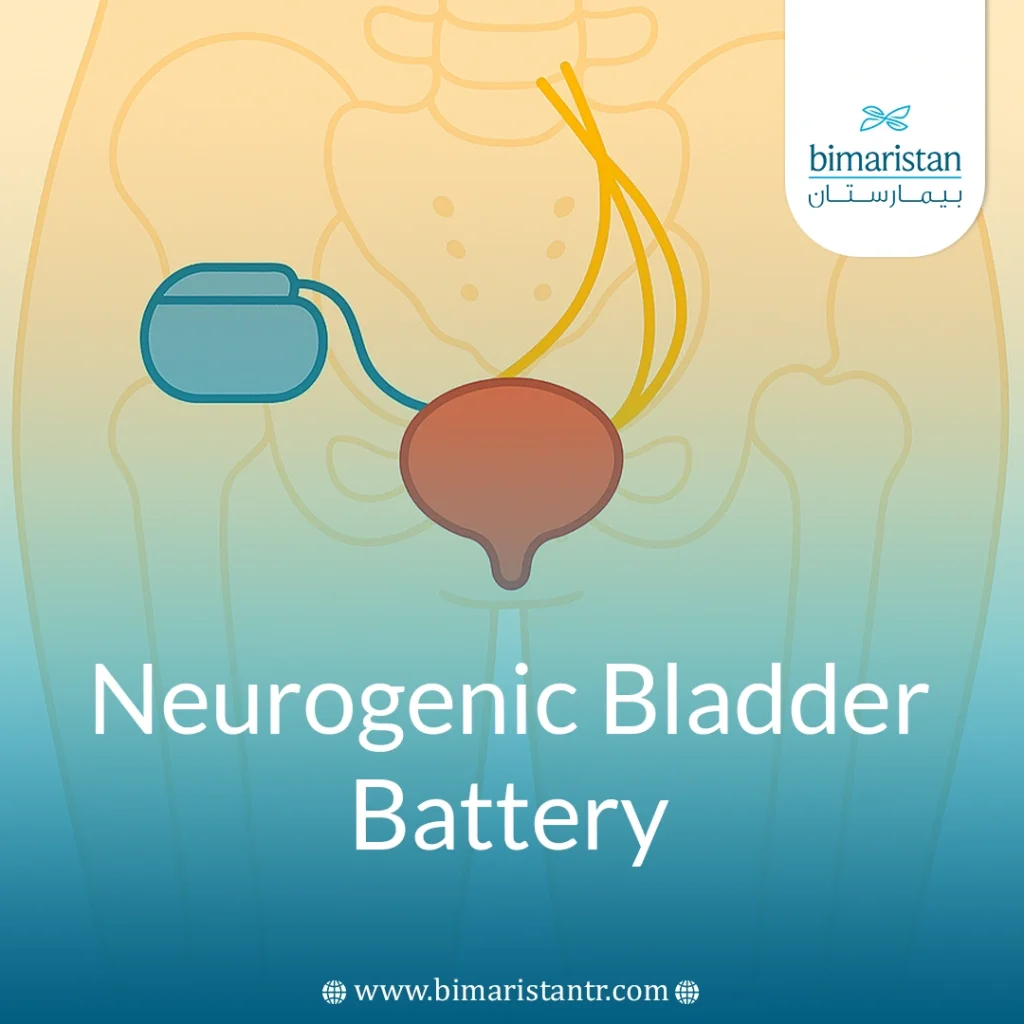
The neurogenic bladder battery represents a cutting-edge advancement in managing chronic neurogenic bladder conditions. Recent technological advancements have enabled the development of targeted solutions that enhance patient outcomes and reduce reliance on conventional surgical interventions. Neurogenic bladder arises when nerve dysfunction disrupts normal bladder control, leading to complications such as urinary incontinence, retention, or overactivity. This dysfunction often stems from neurological disorders or injuries, including stroke, multiple sclerosis, or spinal cord trauma.
Turkey has become a prominent hub for neurogenic bladder battery treatment, offering expert medical care, state-of-the-art technologies, and cost-effective options. Its reputation attracts international patients seeking reliable, advanced therapies for persistent urinary issues and bladder control disorders.
What is a neurogenic bladder battery?
Sacral nerve stimulation is an advanced, minimally invasive medical procedure used to treat some bladder and bowel issues that are refractory to conventional drug therapy. The surgeon places a battery-powered device under the skin near the back of the tumor, connected to a wire that the surgeon places near the sacral nerves, which are connected to the smaller muscles and nerves that control urination and defecation. The device is connected to a wire that the surgeon places near the sacral nerves, which are connected to the muscles and smaller nerves that control urination and defecation. The device delivers mild electrical signals to the sacral nerves, which help stimulate them and improve bladder function..
Features and benefits of using a neurogenic bladder battery
The neurogenic bladder battery (sacral neuromodulator) is one of the most significant innovations in the field, offering a long-term solution and significant improvement in symptoms without the need for continued reliance on medication. Here are the highlights of this treatment:
- Improve urinary control: It treats urinary issues such as incontinence and frequent urination.
- Treats urinary retention: Helps improve the bladder’s ability to empty completely, reducing the need for constant catheterization.
- Avoiding medications: This reduces the risk of side effects from medications.
- Minimally Invasive Procedure: Neurobladder battery surgery is not considered major surgery, has a short recovery period, and does not require a hospital stay.
- Trialability before final installation: The device is first tried for a short period of time, and if it does not show a clear improvement, it can be easily undone without any damage
- Improves quality of life: It gives patients freedom in their daily lives and reduces the stress and embarrassment of chronic bladder issues.
- Adjustable as needed
- Long-term solution
Pre-operative tests and analyses
Before undergoing a neurogenic bladder battery implant, your doctor will request a series of tests and evaluations to confirm your safety and determine whether this treatment is the most suitable option for your condition. These typically include blood and urine analyses to identify any infections or issues in the kidneys or urinary tract that could interfere with the procedure’s success.
Additionally, specialized diagnostics such as bladder function studies or urography may be conducted to assess how your bladder operates and how the underlying neurological disorder impacts it. The primary aim of this step is to ensure that your overall health supports a safe implantation process and to enhance the likelihood of a successful outcome. These assessments also enable the physician to tailor the neurogenic bladder battery procedure to your specific medical profile.
Neurogenic bladder battery implantation procedure steps
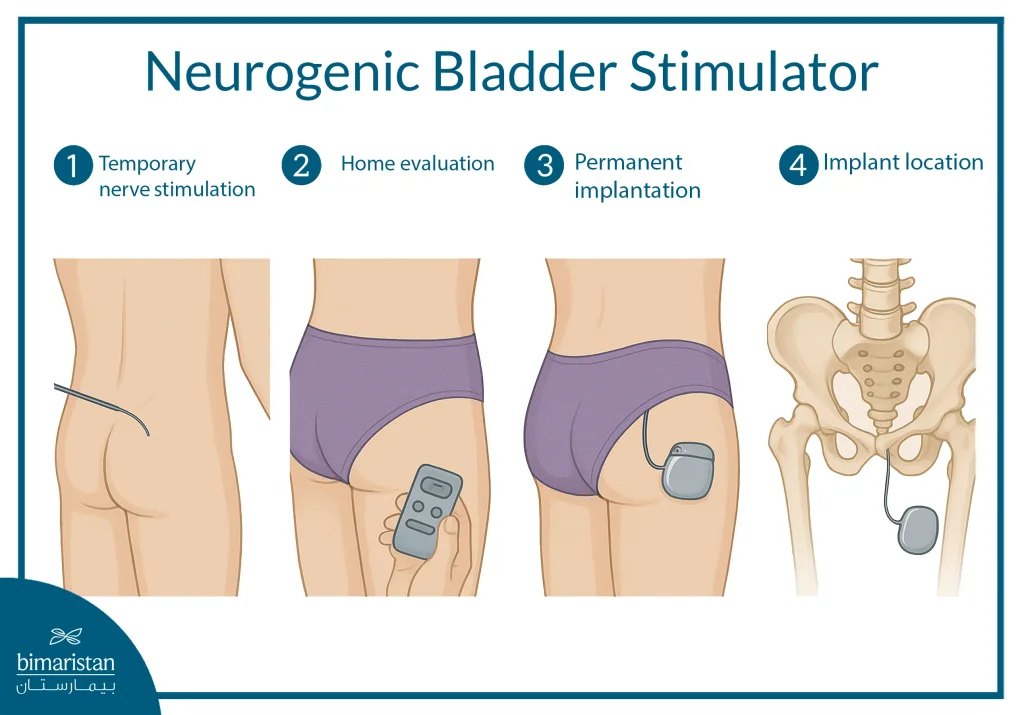
To treat neurogenic bladder, these procedures begin by temporarily stimulating the sacral nerves to evaluate whether the neurogenic bladder battery can positively influence bladder function. If the initial test yields promising results, a stimulation device is implanted in the buttocks and connected to a targeted electrode.
The process consists of two stages. In the first stage, a thin wire is positioned near the third sacral nerve through a minimally invasive, scintigraphy-guided technique. This wire is linked to an external battery, known as a “pulse generator,” which offers adjustable settings to deliver optimal bladder stimulation tailored to each patient’s needs.
The second stage involves testing the neurogenic bladder battery system at home for one to two weeks. If the patient experiences significant symptom relief and improved bladder control, the permanent electrode and battery are implanted. If not, the test lead is removed. As a minimally invasive procedure, it typically lasts 30–60 minutes, allowing for rapid recovery with minimal discomfort.
Recovery and post-operative care
Recovery from a neurogenic bladder battery implantation is usually quick and easy. Most patients can return to their daily lives after a few days, avoiding some vigorous exertion at first. Your doctor will monitor your condition after the procedure and adjust the device according to your response, to ensure the best possible outcome. Wound care is simple with clear instructions to help the wound heal quickly and safely.
Possible risks and complications
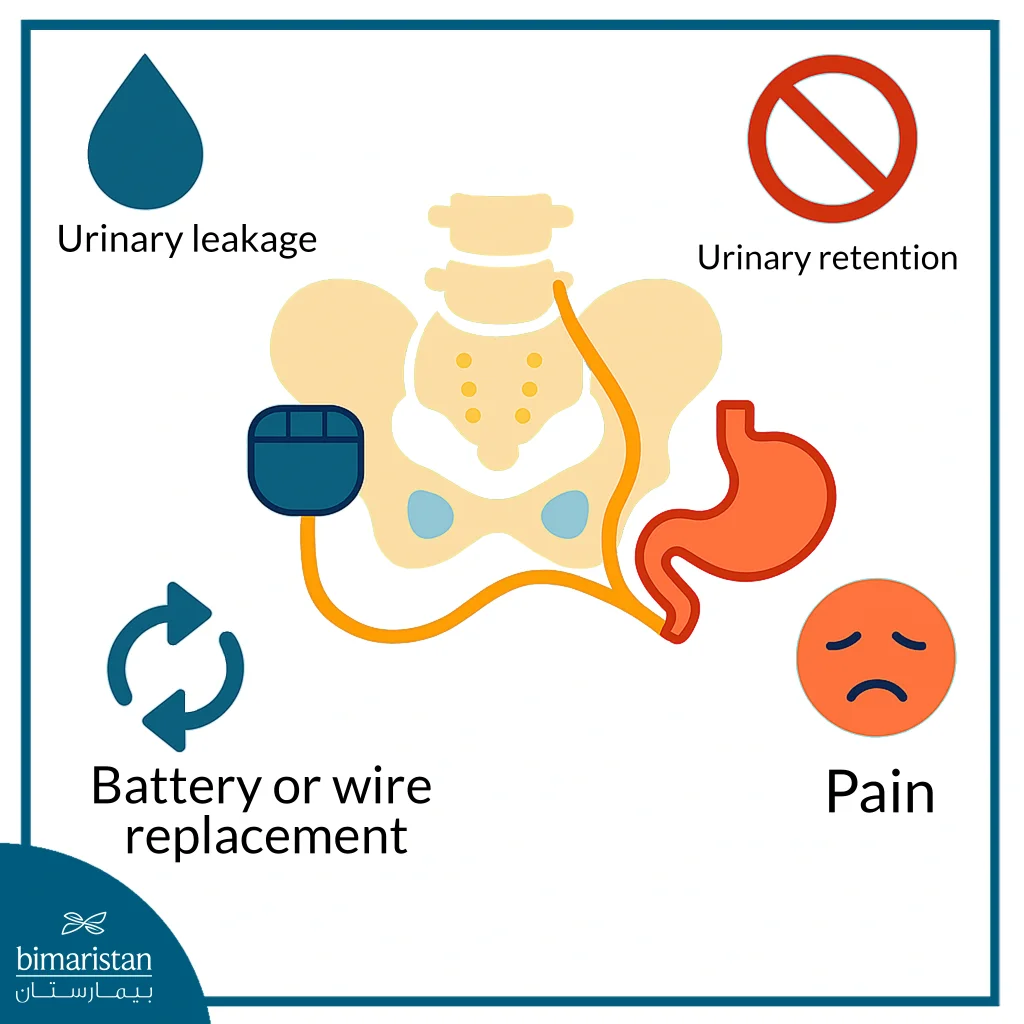
Although a neurogenic bladder battery is a safe and effective procedure for most patients, like any medical intervention, it may come with some risks or side effects. The patient needs to be aware of these potential complications and discuss them with the doctor before making a final decision about implantation:
- Urinary incontinence
- Urinary retention
- pain
- Inability to urinate requiring bladder catheterization
- Inflammation of wounds
- Damage to the tiny blood vessels in the kidneys
- Replacing, moving, or removing the battery
- Replace, relocate, or remove the wire
- Urinary tract infections in men and women
- Rare negative impact on bowel function
Post-procedure tips to maintain your results
Your surgeon may advise you to avoid certain activities while your wound is healing. You will continue to keep track of how often you feel the urge to urinate, have a bowel movement, or need to use the bathroom.
How much does a neurogenic bladder battery cost in Turkey?
The cost of a neurogenic bladder battery in Turkey is about 8,000-13,000 US dollars, which is much lower compared to European, Arab, and American countries, where the cost may reach from 15,000 to 45,000 US dollars.
Comparison of neurogenic bladder battery prices in Turkey and other countries
| State | Average Cost (USD) |
| Turkey | 8,000 – 13,000 |
| United States of America | 20,000 – 40,000 |
| Germany | 15,000 – 45,000 |
| Saudi Arabia | 13,000 – 30,000 |
| Emirates | 13,000 – 30,000 |
Factors that affect the cost of a neurogenic bladder battery in Turkey
- Type of technology: The cost of batteries and devices varies depending on the brand, the technology used, and how advanced it is.
- Doctor’s experience: Doctors with experience and higher specialization may have higher wages, and this affects the overall cost.
- Length of hospital stay: Some procedures require the patient to stay longer, which increases the cost of the stay.
- Place of procedure within Turkey: Major cities such as Istanbul, Ankara, and Izmir may have different costs than smaller cities.
- Additional services: Such as special care and post-operative follow-up.
- Medical tests and analyses performed before and after the procedure
Why is a neurogenic bladder battery implantation in Turkey an ideal choice?
- Turkey is distinguished from other countries by the special prices it offers
- It has the best modern medical technology to ensure the best natural results
- It has internationally experienced medical staff in the field of Urology and Urological surgery
- Packages that include transportation, tourism, accommodation, and medical consultations
How to choose the best hospital for a neurogenic bladder battery implantation in Turkey?
- Check reviews and previous patient experiences
- Make sure that the medical center is licensed and accredited by the Turkish Ministry of Health, in addition to checking the hospital’s reputation
- Choose a doctor with extensive experience in orthopedic and joint surgery
- Make sure there is a physiotherapy department for post-operative rehabilitation
- Make sure the hospital has modern equipment, international medical technology, and cleanliness
- Contact the center and inquire about all details before booking
Why Bimaristan?
- Consultations with leading physicians
- Personalized treatment plan
- Translation and Medical Accompaniment Services
- Convenient hotel reservations and transportation
Finally, the neurogenic bladder battery provides a modern and reliable solution for individuals dealing with chronic neurogenic bladder disorders, significantly improving quality of life and reducing dependence on conventional treatment methods. With ongoing advancements in medical technology across Turkey, Bimaristan Medical Center has distinguished itself as a top-tier provider of specialized care in this domain, supported by an expert medical team utilizing cutting-edge equipment and techniques to deliver optimal outcomes for both local and international patients.
Sources:
- Cambridge University Hospitals NHS Foundation Trust. (2025, July 6). Sacral nerve stimulation (neuromodulation)
- Bladder & Bowel UK. (n.d.). Sacral nerve stimulation
- U.S. National Library of Medicine. (2024, June 13). Neurogenic bladder. MedlinePlus