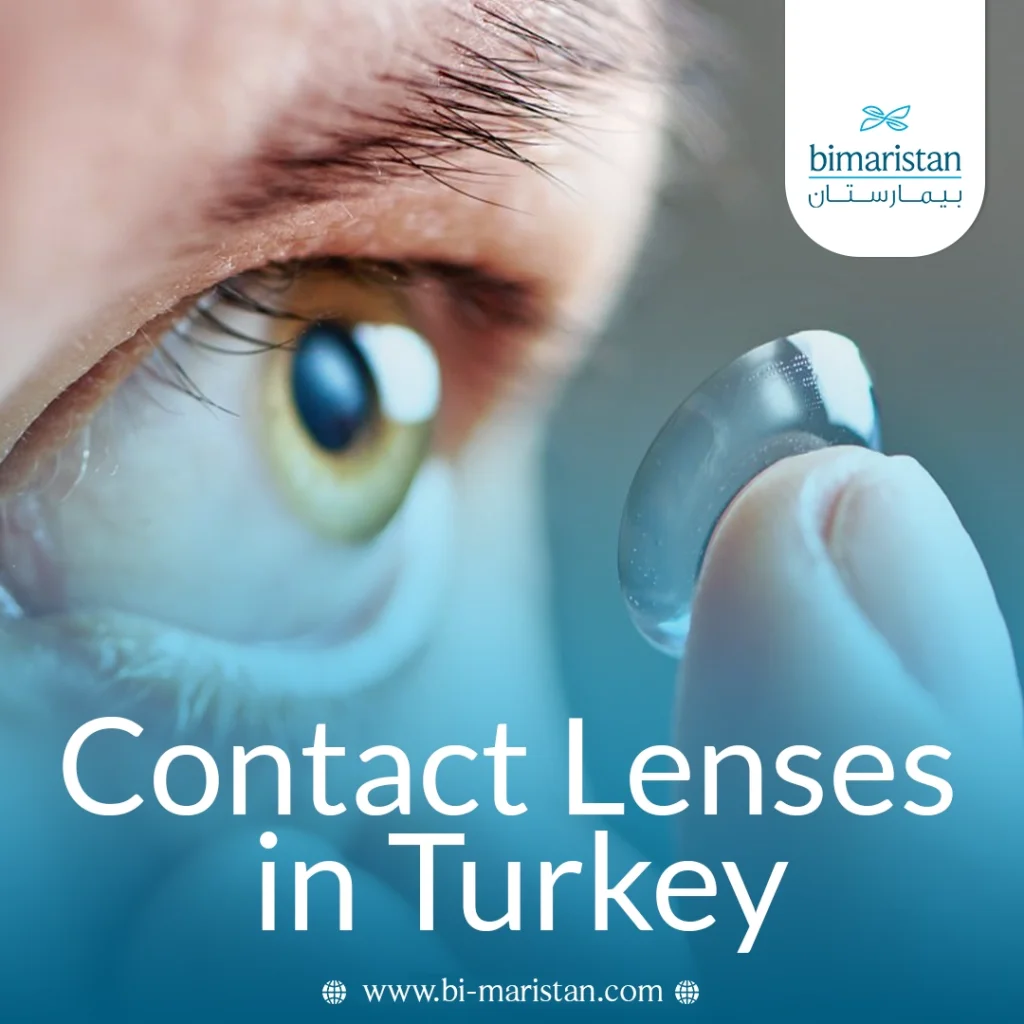
Contact lenses are one of the most important modern solutions for vision correction. They are placed directly on the surface of the eye to enhance visual acuity and correct refractive errors that prevent light from reaching the retina properly. Millions of people worldwide use them as a practical alternative to glasses, offering sharper vision and greater freedom of movement without affecting appearance.
The wearing and replacement schedules for contact lenses vary by type, making medical follow-up essential to prevent complications. Thanks to advances in materials and technology, contact lenses have become a safe and effective option for a wide range of patients.
What are contact lenses, and when are they used?
Contact lenses are thin, round lenses that fit on the front surface of the eye to correct vision by compensating for the eye’s changing shape, which blurs the vision. These lenses function similarly to glasses but offer higher resolution and natural eye movement, making them a popular choice for many people.
Contact lenses are used to correct several types of refractive errors, such as nearsightedness, farsightedness, astigmatism, and age-related farsightedness. They are also an effective tool for patients with corneal irregularities or who require corneal surface compensation. With increasing sophistication in design and materials, their use has expanded to include therapeutic, preventive, and cosmetic purposes.
Before prescribing lenses, the ophthalmologist assesses the patient’s eye health, daily needs, and medical history to determine the most appropriate type, and then writes a precise prescription that matches the corneal shape and the eye’s visual needs.
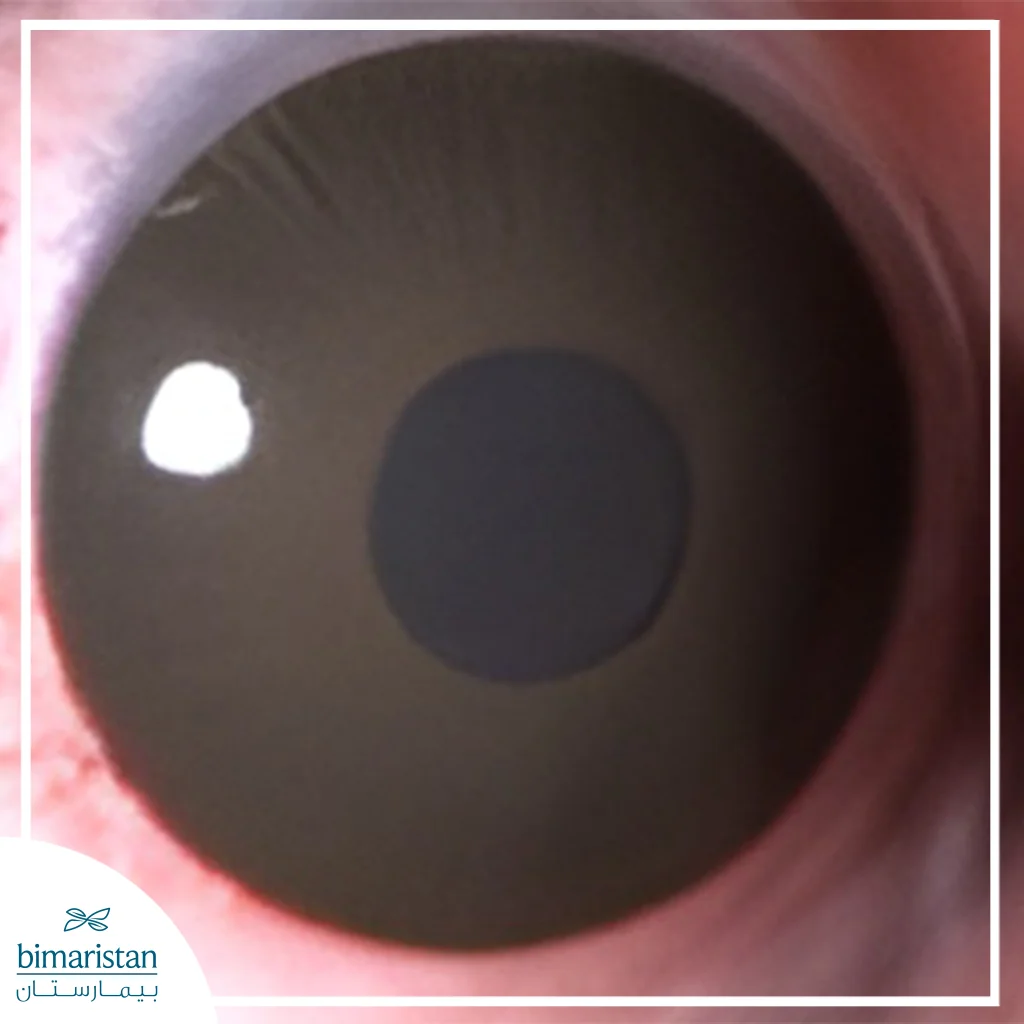
Types of contact lenses
I. In terms of lens material
1. Soft lenses
Soft lenses are made of flexible materials that allow for easy adaptation over a short period of time. Most patients find them comfortable; however, these lenses can absorb contaminants from hands and the environment, which can cause eye irritation if not used properly. Although they are easy to handle, they are more prone to tearing than other lenses.
2. Gas-permeable lenses
Known as Rigid Gas Permeable (RGP) lenses, they are stiffer but allow oxygen to pass through more efficiently than soft lenses. These lenses retain their shape on the eye, thereby providing clearer vision in conditions such as corneal irregularities. They take longer to adjust, but are more stable and optically superior.
3. Impermeable scleral lenses
Made from solid materials such as polymethyl methacrylate, they are highly stable but less comfortable and less oxygen-permeable. They are less common today due to the availability of safer, more effective alternatives.
II. In terms of anatomical location
1. Corneal lenses
It covers only the cornea and is the most commonly used type for correcting everyday refractive errors.
2. Scleral lenses
It covers the cornea, sclera, and conjunctiva and is often used in cases involving irregular corneas or keratoconus.
3. Semi-scleral lenses
It covers the cornea and extends across the limbus to reach the conjunctiva, providing a balance between comfort and stability in the eye.
III. In terms of water content
- Low water content(0-40%): Harder and longer-lasting lenses, but less oxygen-permeable.
- Medium water content(40-55%): A blend that balances flexibility, comfort, and permeability.
- High water content (>55%): Very comfortable lenses, but need more care as they are more prone to drying out and tearing.
IV. In terms of wear time
- Lenses for daily use: Remove at the end of the day and do not use while sleeping.
- Lenses for extended wear: These lenses can be worn for extended periods and may be worn during sleep, as recommended by your doctor.
- Lenses for periodic replacement: Daily, weekly, biweekly, and monthly, depending on the manufacturer’s design.
V. In terms of design
1. Single-cut lenses
It consists of a single-curved anterior surface and a posterior surface with a primary and a peripheral curve. It provides stable vision and is used for conventional refractive errors.
2. Lenticular lenses
It includes a central optical zone and a thinner peripheral mount, which makes it more comfortable and stable, particularly for patients with atypical corneal curvatures.
VI. In terms of clinical use
1. Daily or monthly soft lenses
These are the most common and are suitable for routine use to correct nearsightedness and farsightedness.
2. Rigid Gas-Permeable (RGP) lenses
Specialized for cases that require high-precision vision or when there is an abnormal cornea, such as keratoconus.
3. Toric lenses
Specifically manufactured to correct astigmatism, available in standard models or custom‑made designs.
4. Multifocal lenses
It is used to correct refractive errors at different distances and is useful in cases of age-related farsightedness or to control the progression of myopia in children.
5. Orthokeratology (overnight) lenses
It is worn during sleep and temporarily reshapes the cornea, allowing the patient to see clearly during the day without lenses.
6. Scleral lenses
Indicated for patients with corneal surface disorders or severe dryness, as they are positioned on the sclera and provide a protective layer over the cornea.
Advantages of contact lenses over glasses
- In terms of comfort: Contact lenses move smoothly as the eye moves, making vision natural without any lateral distortion, unlike some glasses that may cause distortions on the periphery. Many patients feel that contact lenses give them greater freedom while reading, driving, or engaging in sports, as they do not slip or react to weather conditions such as fog or steam.
- In terms of aesthetics: Many patients prefer lenses because they do not alter the appearance of the face, do not obscure facial features, and are ideal for those who do not want to wear glasses all the time.
- In terms of visual acuity: Lenses provide a more precise vision because they are fixed directly to the eye and offer a wider vision field than glasses, which restricts vision to the front lenses. Gas-permeable lenses are an excellent choice when high precision is required, particularly for patients with irregular corneas.
- In terms of medical use: Lenses are also used for therapeutic purposes such as moisturizing the cornea, protecting the surface of the eye, or improving vision in conditions such as keratoconus, severe dryness, or after operations.
How to choose the right contact lens
- Eye examination: Before selecting a lens type, an ophthalmologist assesses refraction and evaluates the corneal surface, tear film, and conjunctival health to ensure a safe and durable fit.
- Assessment of corneal curvature and diameter: Corneal thickness, curvature, and diameter are accurately measured, because a mismatch can lead to pain, blurred vision, or excessive lens movement.
- Allergies and eye conditions: The physician determines whether the patient has dry eye, blepharitis, meibomian gland dysfunction, or seasonal allergies, as these conditions may affect the type of lens and the patient’s ability to wear it safely.
- The patient’s lifestyle: Consider the patient’s daily activities, working hours, screen time, and exercise; some patients are fine with daily wear, whereas others require therapeutic or gas-permeable lenses.
Risks and complications of contact lenses
- Infections: Infections are among the main risks associated with lenses, especially when lenses are not cleaned or worn while sleeping without a medical recommendation. Lenses can destabilize the ocular surface and increase susceptibility to infection.
- Allergies and irritation: Soft lenses may absorb environmental contaminants, leading to redness, irritation, or a burning sensation.
- Hypoxia: Lenses with low water content or high thickness may reduce oxygen diffusion to the cornea, affecting corneal comfort and health.
- Ocular surface disorders: Studies suggest that wearing contact lenses may affect corneal nerves and contribute to dryness or meibomian gland dysfunction in some users.
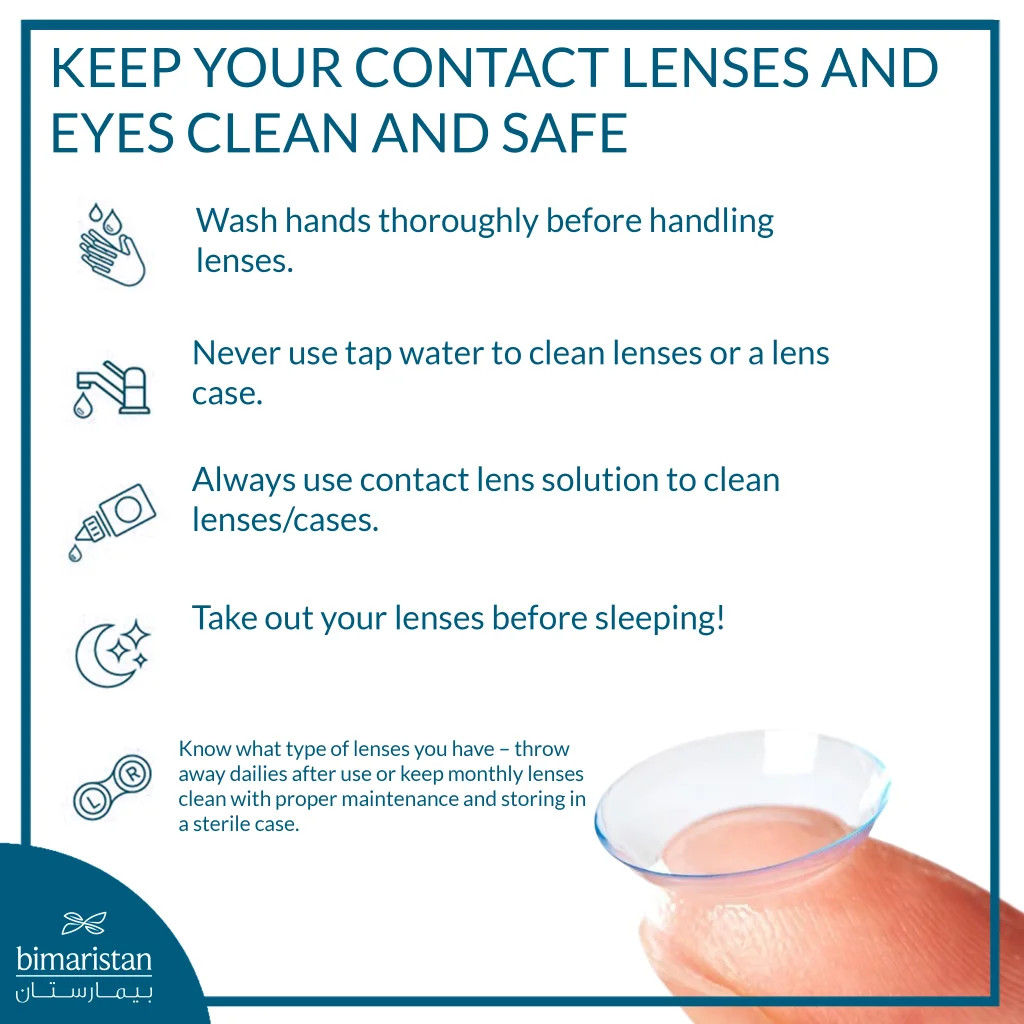
Contact lens care tips
- Replace the lens on time: You must adhere to the replacement schedule (daily, weekly, or monthly), as using lenses beyond their duration may cause infections or loss of transparency.
- Avoid sleeping with a lens without a prescription: Wearing lenses while sleeping increases the risk of infection by a high percentage, unless the lens is designed for this purpose and under medical supervision.
- Adherence to wearing duration: Do not exceed the duration recommended by your physician, whether daily or extended wear, to prevent hypoxia and the accumulation of deposits.
- Proper daily sterilization: Contact lenses must be cleaned with a specialized solution and gently rubbed before storage to reduce bacterial contamination and associated risks.
- Hand washing before handling contact lenses: Avoid touching contact lenses with hands that are contaminated or damp with soap, lotions, or creams.
Why is Turkey a leading destination for obtaining contact lenses?
Turkey is among the most advanced countries in ophthalmology, with specialized centers that employ state-of-the-art technology for precise corneal measurement and ocular surface examination. Turkish hospitals offer a wide range of soft, scleral, rigid gas-permeable, and orthokeratology lenses, along with advanced devices to adjust lenses to the proper size with microscopic precision.
The cost of care in Turkey is lower than in the United States and Europe while maintaining world-class medical standards, making it an ideal destination for medical tourists. The ease of appointments, the expertise of ophthalmologists, and strict sterilization standards are some of the main reasons why patients trust Turkish services in this field.
Comparison of prices of contact lenses in Turkey, Europe, and America
| Contact Lens Type | Price in Turkey (annual) | Price in Europe (annual) | Price in America (annual) | Notes |
|---|---|---|---|---|
| Monthly soft lenses | 120 – 220 dollars | 240 – 360 dollars | 360 – 600 dollars | Most Popular |
| Daily lenses | 280 – 450 dollars | 365 – 730 dollars | 365 – 912 dollars | High comfort |
| Toric lenses for astigmatism | 200 – 350 dollars | 350 – 600 dollars | 420 – 780 dollars | To correct the axis |
| Multifocal lenses | 300 – 500 dollars | 450 – 850 dollars | 550 – $1,000 | For multiple distances |
| Rigid Gas-Permeable (RGP) lenses | 250 – 400 dollars | 300 – 500 dollars | 450 – 800 dollars | High-resolution vision |
| Scleral lenses | 350 – 600 dollars | 800 – $1,200 | $1,200 – $2,000 | For keratoconus and dryness |
| Orthokeratology (overnight) lenses | 700 – $1,200 | $1,200 – $2,000 | $1,600 – $2,800 | Worn at night to shape the cornea |
Contact lenses have become an advanced and effective solution for improving vision across a wide range of visual conditions. Given the diversity of types, materials, and designs available, patients can select the most suitable contact lens for their individual needs. Turkey provides an ideal opportunity to access the latest medical technologies at competitive prices and world‑class standards, particularly through advanced centers such as Bimaristan Medical Center, which guide patients step by step to ensure a safe and comfortable treatment experience.
Sources:
- Optometrists.org. (2023). What Are Contact Lenses? – Guide to Contact Lenses.
- Kumar, M., & Parker, J. (2023). Contact Lens. StatPearls Publishing.
- Ng, A., Tan, X. W., & Loke, W. (2024). Impact of Contact Lens Wear on Neurosensory Health of the Ocular Surface: A Narrative Review. Clinical and Experimental Optometry.