
Breast cancer radiation therapy is one of the most essential modern pillars in combating this widespread disease, as it targets remaining cancer cells after surgery and helps lower the chances of tumor recurrence. With continuous advances in radiation techniques, it is now possible to achieve strong therapeutic outcomes while reducing harm to surrounding healthy tissues. In this article, we explore the main types of breast cancer radiation therapy, how it works, and the key benefits and potential risks associated with it.
What is breast cancer radiation therapy?
Breast cancer radiation therapy uses high-energy X-rays or special particles to damage the DNA in cancer cells. When the DNA inside a cancer cell is damaged, it loses its ability to divide and eventually dies. Although radiation affects both healthy and cancerous cells, cancer cells are more susceptible because they grow and divide more rapidly and are less able to repair damage than normal cells, which can usually recover from the effects of radiation.
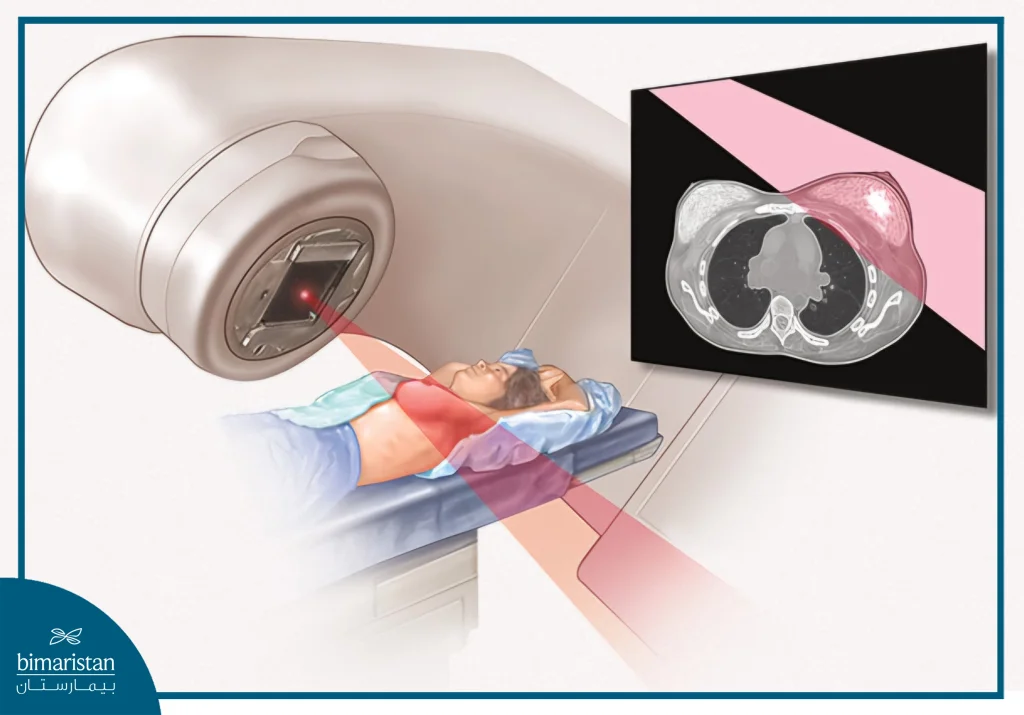
The treatment area may include the breast, nearby lymph nodes, or other parts of the body if the cancer has spread. Radiation therapy is carefully planned to ensure maximum benefit with minimal side effects.
When is breast cancer radiation therapy used?
Radiation can be used for all stages of breast cancer, and the timing of treatment depends on each patient’s complete treatment plan. Typically, radiation is given after surgery, and if chemotherapy is scheduled to be given after surgery, radiation comes afterward.
Intraoperative breast cancer radiation therapy
This type is applied in the operating room immediately after the tumor has been removed and before the wound is closed.
- High-dose radiation is delivered to the tumor bed only in one session
- Minimizes the need for multiple sessions after the procedure
- Usually used in low-risk early cancer cases, and only in some advanced centers
Partial breast cancer radiation therapy
Radiation is focused on the part of the breast from which the tumor was removed, rather than the entire breast, and is done in the following steps:
- It can be delivered externally (limited‑field) or internally
- Reduces overall treatment time to less than one week
- It is used for early‑stage cases where the risk of cancer recurrence is very low
Lymph nodes and chest wall radiation therapy
It is used after a complete mastectomy or when positive lymph nodes test positive, to reduce the risk of tumor recurrence:
- The chest wall
- The armpit (axillary) region
- The area above the clavicle (supraclavicular region)
- The internal mammary lymphatic chain beside the sternum
Total mastectomy radiation therapy
Radiation may be recommended after a total mastectomy to destroy any cells that may remain after surgery, as it is difficult to remove every single breast cell during the procedure. Your doctor’s decision depends on factors such as:
- The size of the tumor
- The number of lymph nodes involved
- The presence of cancer cells at the surgical margins
If the risk of recurrence is high, radiation may be given to the area of the removed breast and sometimes to neighboring lymph nodes.
Breast cancer radiation therapy in case of recurrence
Normally, a full dose of radiation cannot be administered twice to the same area because normal tissues have limits of tolerance; however, recent research suggests that repeated radiation at measured doses may be feasible in certain cases. If the cancer recurs in the same area, the radiation oncologist will decide on the appropriate dose to achieve the highest effectiveness with the least damage to healthy tissue, but if the cancer has spread to a different area or the other breast, a new full dose of radiation can be safely used.
Types and techniques of breast cancer radiation therapy
There are several types and techniques when it comes to breast cancer radiation therapy, including:
External beam radiation therapy
This is the most common type of breast cancer treatment and is performed using a device called a linear accelerator that directs high-energy beams of radiation to the affected area from outside the body. Sessions are typically delivered five days per week over several weeks, and multiple angles are used to precisely deliver the dose and avoid sensitive organs.
The most important technologies within this genre:
- 3D Conformal Radiation Therapy (3D‑CRT): The radiation field is tailored to the tumor shape using 3D CT images to ensure accurate targeting and minimize dose to healthy tissue.
- Intensity‑Modulated Radiation Therapy (IMRT): An advanced technique that allows the intensity of radiation to be varied within a single field, allowing the dose to be graduated to fit the shape of the breast precisely, and is often used to protect the heart and lungs.
- Volumetric Modulated Arc Therapy (VMAT): A form of intensity-modulated radiation therapy where a linear accelerator rotates in a continuous arc around the body, minimizing session time and distributing the dose evenly and quickly.
- Deep‑Inspiration Breath‑Hold (DIBH): A technique used especially for left‑sided breast cancer to reduce cardiac radiation exposure. The patient takes a deep breath and holds it during treatment, temporarily increasing the distance between the heart and the chest wall.
- Proton Beam Therapy: It is characterized by its ability to stop radiation within the tumor without passing through surrounding tissue (the proton arrest phenomenon, or the Bragg peak), but it is not available at all centers and is often used in complex cases or in young patients to minimize long-term side effects.
Internal radiation therapy
Also known as brachytherapy, it is primarily used after partial tumor removal to treat only the area where the tumor was located. Its importance lies in delivering radiation to a specific target while reducing exposure to surrounding tissues, thereby shortening the total duration of treatment. Small seeds or catheters containing a radioactive source are implanted in the breast at the site of the removed tumor. The radioactive material remains in the body for a short time (several minutes) and is then removed after the session. The sessions are performed twice a day for approximately 5 days.
Stereotactic radiotherapy
It is used to treat small metastatic foci in the brain, bones, or lungs.
- It is given during one or a few sessions at very high doses.
- It relies on very precise beams of radiation directed from multiple angles towards a specific point.
- It aims to achieve rapid, localized tumor control and relieve symptoms such as pain and stress.
Preparing for breast cancer radiation therapy sessions
Before undergoing radiation therapy, the patient meets with the radiation therapy team, which may include:
- Radiation oncologist: This is the doctor responsible for determining the treatment plan, monitoring response, and adjusting doses as needed.
- Medical physicist (radiation oncology physics and dosimetry specialist): Performs accurate calculations to ensure that the required dose is delivered.
- Radiation oncology nurse, nurse practitioner, or physician assistant: This person is responsible for answering questions and following up with patients during treatment.
- Radiation therapist: Operates the radiation equipment and oversees the accurate and safe delivery of treatment sessions.
Before starting radiation therapy, a radiation oncologist reviews the patient’s medical history and performs a physical examination to assess the potential benefit of radiation therapy. The doctor also discusses the potential benefits and side effects of treatment to ensure the most appropriate plan is chosen for the case.
Before external beam radiation therapy
Before your first treatment session, you will undergo a radiation therapy planning session (simulation) in which a radiation oncologist carefully examines the breast area to determine the specific site to be treated. During the simulation:
- The radiation therapist will help the patient assume the most appropriate position to accurately target the affected area while avoiding damage to surrounding healthy tissue. Special cushions or stabilizers may be used to ensure the patient remains in the same position during the sessions.
- A CT scan is performed to enable the radiation oncologist to pinpoint the exact treatment area, with healthy tissue to be avoided. The patient is asked to remain calm and still to ensure accurate results and consistency of treatment.
- The radiation therapist may mark the skin with semi-permanent ink or small tattoos to mark the treatment sites. These marks are used to guide radiation delivery in each session; therefore, they should not be rubbed or removed during washing to maintain their accuracy throughout the treatment period.
- The dosimetrist, medical physicist, and radiation oncologist work together to create the treatment plan using advanced computer software to determine the exact dose and radiation fields. Treatment begins once simulation, planning, and all required quality‑assurance checks are completed.
Before internal radiation therapy
Before internal radiation therapy (brachytherapy) begins, a special device is used to place radioactive material in the area where the cancerous tumor has been removed. This can be done during cancer surgery or as a separate procedure several days later.
How is breast cancer radiation therapy performed?
Breast cancer radiation therapy is performed in a precise and organized manner that aims to deliver a specific dose of radiation to the affected area of the breast or chest wall without significantly damaging the surrounding healthy tissue. The process is as follows:
- Preparing for the session: The patient is taken to the radiation therapy room and asked to put on a special treatment gown, then lie on the table of the radiation machine (linear accelerator). The patient will lie supine with the affected arm raised to widen the chest and facilitate radiation delivery, and pillows or stabilizers may be used to maintain the exact position throughout the session.
- Positioning and verification of accuracy: The medical team uses rapid digital imaging devices or short CT scans to ensure that the patient is in the correct position and that the radiation beam reaches the target area without deviation. This step is performed every session to ensure that the alignment is consistent compared to the original treatment plan.
- Delivery of radiation: After accurately stabilizing the patient, the team leaves the treatment room for the adjacent control room, where the patient is monitored via cameras and a voice system that enables real-time communication.
- A linear accelerator rotates around the body to direct beams from multiple angles toward the tumor or tumor ablation area.
- The device produces slight noise during operation, but the radiation is painless and invisible, and the patient experiences no heat or tingling.
- The actual radiation treatment takes only a few minutes, but the entire session may last 15 to 30 minutes due to the time needed for positioning and accuracy checks. The treatment is usually administered once daily, five days per week, over several weeks, according to the treatment plan prescribed by the radiation therapy team.
With this approach, each session of radiation therapy ensures that the radiation is delivered precisely to the targeted area, helping to eliminate the remaining cancer cells and minimize the likelihood of recurrence.
Side effects and complications of breast cancer radiation therapy
Symptoms usually don’t appear immediately, but may develop gradually during or after treatment.
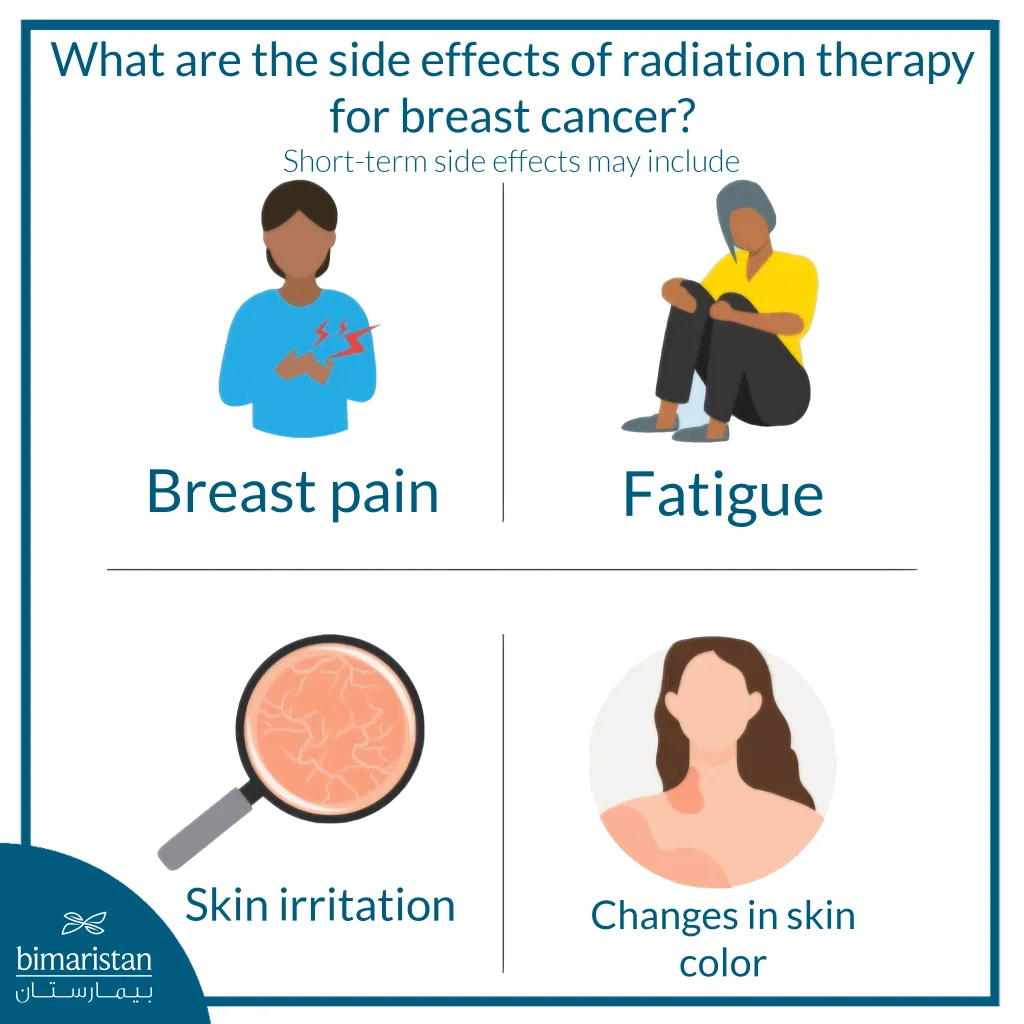
Short-term side effects during breast cancer radiation therapy:
There are several short-term side effects of breast cancer radiation therapy, including:
- Fatigue: Usually begins during treatment and resolves weeks after it ends.
- Breast or nipple pain: Presents as sharp pricking sensations or mild, intermittent pain.
- Skin irritation: The skin may become dry, flaky, or painful, and blisters or sores may appear in the breast folds or under the armpits.
- Skin discoloration: Similar to a sunburn in light-skinned people, or the area may become darker in darker-skinned people.
Long-term side effects of breast cancer radiation therapy:
Breast cancer radiation therapy can be associated with many long-term side effects, including:
- Change in the size or shape of the breast
- Inflammation of the lung tissue or damage to the heart
- Hair loss only in the armpit area, with no loss of hair on the head
- Persistent fatigue that may last for weeks or months after treatment
- Expansion of small, superficial blood vessels on the skin (telangiectasia)
- Lymphedema: Swelling of the arm or breast as a result of radiation affecting the lymph nodes
- Minor impairment of heart or lung function with prolonged exposure or in the absence of modern protective technologies
- Having secondary types of cancer, such as osteosarcoma, sarcoma, or lung cancer
Care after breast cancer radiation therapy
After radiation therapy sessions, the body goes through a gradual recovery phase that requires special care to minimize side effects and protect the skin and tissues that have been exposed to radiation.
Skin care and treatment area after breast cancer radiation therapy
The following steps should be followed to care for the skin and the treated area:
- Wear loose cotton clothing to minimize friction and irritation
- Refrain from swimming in chlorinated pools until the skin is completely healed
- Keep the area clean with lukewarm water and mild soap, drying gently without rubbing
- Use fragrance- and alcohol-free moisturizing creams after consulting your doctor to relieve dryness and redness
- Avoid rubbing or scratching the skin in the treatment area, and refrain from using deodorants or perfumed lotions
- Avoid direct sun exposure on the treated area for the months following treatment, and use sunscreen with a high sun protection factor (SPF 30 or higher) when you need to go out
General care and wellness after breast cancer radiation therapy
General care during radiation therapy is an essential part of the recovery plan, helping to boost the body’s endurance, accelerate healing, and improve quality of life during the various stages of treatment. Consider the following recommendations:
- Drink enough water to stay hydrated
- Get adequate rest and regulate sleep times to relieve fatigue caused by treatment
- Avoid smoking and alcohol, as they have a negative impact on skin healing and optimizing treatment results
- Regular light exercise, such as walking, to improve blood circulation and reduce fatigue
- Maintain a balanced diet rich in vegetables, fruits, and lean proteins to support tissue healing
Regular medical follow-up after breast cancer radiation therapy
Regular follow-up appointments are scheduled with a radiation oncologist or medical oncologist to evaluate healing and monitor for late complications. At subsequent visits, skin, arm movement, and breast or chest wall function are evaluated, and periodic imaging tests, such as mammography or CT scans, are ordered as planned. Notify your doctor if you develop arm or breast swelling that may indicate lymphedema, persistent chest or shoulder pain, sores or skin discoloration, or a chronic cough or shortness of breath.
Expected results with breast cancer radiation therapy
The expected results after breast cancer radiation therapy are one of the most critical concerns for the patient after the end of the sessions, as they reflect the effectiveness of the treatment and the body’s response to it, and help assess the improvement and monitor any possible short- or long-term side effects.
Therapeutic efficacy when undergoing breast cancer radiation therapy
The following is a comprehensive explanation of the expected results after the treatment is completed:
- Studies have shown that radiation therapy after breast-conserving surgery reduces the risk of localized relapse by more than 60-70% and improves long-term survival rates
- Radiation therapy aims to eliminate cancer cells that remain after surgery and minimize the likelihood of the cancer recurring in the same area
- After a mastectomy, radiation significantly reduces the risk of tumor recurrence in the chest wall and lymph nodes
Expected recovery after breast cancer radiation therapy
After the end of breast cancer radiation therapy, the patient is expected to go through a gradual recovery period, during which body functions return to normal and side effects begin to gradually disappear until full activity is restored:
- Most side effects, such as redness or fatigue, go away within a few weeks to a couple of months after treatment ends
- A slight change in skin color or texture may remain permanently, which is a cosmetic effect that does not affect overall health
- The psychological state improves over time thanks to the sense of security after completing the treatment plan
- The patient gradually regains energy and returns to normal daily activity
Breast cancer radiation therapy is a crucial step in the recovery journey, as it significantly lowers the risk of recurrence by targeting and eliminating cancer cells that may remain after surgery. It serves as a key component of a comprehensive treatment plan that includes surgery and systemic therapies, helping improve recovery outcomes and overall quality of life. It remains essential for every patient to maintain close communication with their physician to discuss the most appropriate treatment options and monitor progress, ensuring they receive the full benefit of radiation therapy.
Sources:
- National Cancer Institute. (n.d.). Radiation therapy to treat cancer. U.S. Department of Health and Human Services.
- Al-Hilli, Z., Boughey, J. C., & Jakub, J. W. (2022). Radiation therapy for breast cancer: Current approaches and techniques. International Journal of Breast Cancer, 2022, Article 9272418.