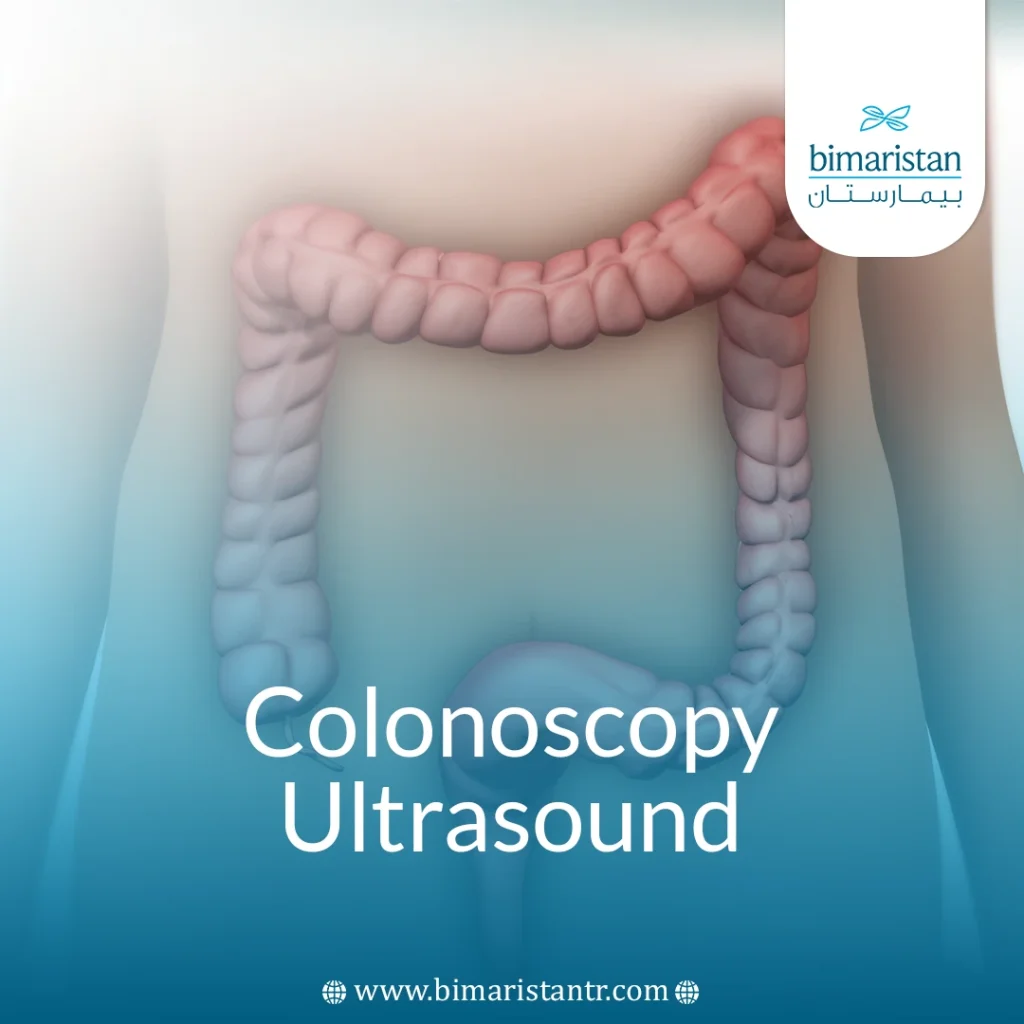

Colon diseases such as tumors, inflammation, and strictures are common issues that often require careful medical intervention. With the development of surgical techniques, it has become easier to treat these conditions in less invasive and safer ways. The most prominent of these modern methods is the colonscopic ultrasound procedure, which provides high precision in resection while minimizing damage to healthy tissues, making it an ideal option for patients who need surgical intervention in the colon.
What is a colonscopic ultrasound procedure?
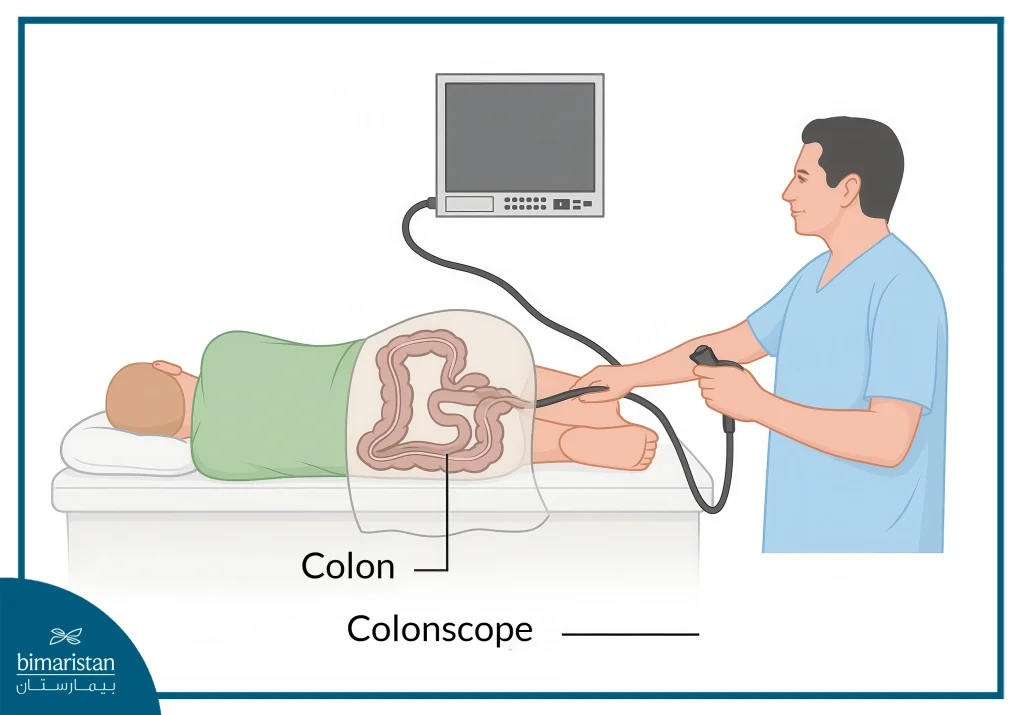
High-frequency ultrasound technology is used in colon surgery as an advanced way to view and visualize the intestines and surrounding tissues with great accuracy. This type of procedure, known as the colonscopic ultrasound procedure, is performed using a flexible scope (colonscope) equipped with a camera and light, which is inserted through the rectum into the colon. Through this scope, a small ultrasound probe is passed that sends detailed images to the monitor screen.
This technique enables the precise targeting of tumors or abnormal changes in the colon wall. In some cases, a thin needle can be threaded through the scope to take a biopsy (tissue sample) or drain fluids, a step known as ultrasound-guided fine-needle aspiration. Additionally, the waves can be used to deliver topical medications directly to specific locations within the body.
This technique differs from conventional surgery in that it does not require opening the abdomen or removing a large part of the intestine, which minimizes pain and post-operative complications. It also provides more accurate images than laparoscopic surgery, which enhances the chances of early diagnosis and effective treatment, especially in cases of tumors or adjacent lymph nodes.
What conditions does a colonscopic ultrasound procedure treat?
- Benign and malignant colon tumors: Colonscopic ultrasound (CUS) is used to determine the extent of tumors and assess lymph node involvement, enabling accurate decisions about surgical or therapeutic interventions.
- Localized obstructions or adhesions: CUS can accurately visualize the layers of the bowel wall and adjacent tissues, which helps in assessing obstructions caused by adhesions or localized pathological changes.
- Crohn’s disease or ulcerative colitis: The technique is used to assess the severity of inflammation, monitor complications such as fistulas or abscesses, and track the patient’s response to long-term treatment.
- When is this technique inappropriate? It may not be ideal in cases that require a thorough extra-intestinal evaluation or if there is an obstruction blocking the passage of the endoscope, and may be used with caution in patients with severe chronic diseases or poor tolerance for endoscopic procedures.
- The importance of early diagnosis: It increases the chances of recovery, facilitates the use of modern techniques such as colonscopic ultrasound procedure, minimizes complications, speeds up recovery, and improves overall treatment outcomes.
Colonscopic ultrasound procedure steps
- Preoperative preparation: The patient is prepared by wearing special clothing, an intravenous cannula is placed in the arm or hand to administer medications, the oxygen level is measured, pressure and breathing monitors are installed, especially if a sedative is used. Everything is explained to the patient before they sign the consent form.
- Ultrasound Guidance: The doctor inserts a colonscope through the anus and advances it through the colon. Once the targeted area is reached, an ultrasound probe is inserted through the colonscope. The doctor then pumps water into the colon to enhance visibility and ensure a clear image. This process helps in capturing clear images and videos of the internal location.
- Accurately remove tissue or tumors: In some cases, a fine needle can be attached through the same tube to take a biopsy or draw fluid (known as an “ultrasound-guided biopsy”). This is done without the need for a major surgical opening, making the procedure less invasive.
- Duration of the procedure and type of anesthesia: The colonscopic ultrasound procedure typically takes between 30 and 45 minutes, with anesthesia usually consisting of a light intravenous sedative, rather than general anesthesia, depending on the patient’s condition and preference.
Benefits of the colonscopic ultrasound procedure
- Higher accuracy in targeting the affected tissue: This technology enables doctors to visualize the layers of the colon wall and surrounding tissues with great clarity, thereby improving the chances of an accurate diagnosis and treatment while minimizing damage to healthy tissues.
- Reduced risk of bleeding compared to conventional surgery: Because the procedure is performed using precise instruments without a large incision, there is much less bleeding during and after surgery.
- Faster recovery and less pain: Since colonscopic ultrasound procedure is a minimally invasive procedure, patients recover faster and experience less pain compared to those undergoing open surgery.
- Minimize post-operative complications: Such as infections or intestinal adhesions, which are more common in conventional surgeries.
These benefits make the colonscopic ultrasound procedure a preferred option for cases requiring high precision and enhanced patient comfort.
Risks and possible complications of the colonscopic ultrasound procedure
Colonscopic ultrasound procedure is a relatively safe procedure and shares the same risk profile as a conventional colonscopy. However, there are some potential complications to consider:
- Bleeding: Minor bleeding may occur after a biopsy, which typically lasts only a few seconds, and blood in the stool is normal in some cases after the procedure. Bleeding after polypectomy may sometimes require hospitalization, blood transfusion, or surgery, but this occurs in less than 1 in 200 cases.
- Perforation: A perforation may occur as a result of the procedure, requiring hospitalization and possibly surgery. This type of complication is extremely rare, occurring in fewer than one case per 2,000 procedures. For appendectomy, the incidence is less than 1 in 500.
- Allergic reactions to medications: These occur very rarely, and if they do occur, medications that immediately reverse their effect are administered.
- Inability to complete the test: Occasionally, the procedure may fail, necessitating alternative tests at the doctor’s discretion.
- Undetected lesions: If the colon is not thoroughly cleaned or the patient is unable to retain air, some issues may not be clearly visible, leading to a small chance of missing certain lesions.
- Discomfort caused by your intestines bloating with air: This is a temporary and limited sensation that usually doesn’t indicate complications.
- Burns or damage to surrounding tissues
- Switching to conventional surgery: It is possible, but the procedure is safe, and complications are very rare.
However, colonscopic ultrasound procedure has a success rate of more than 90%.
Patient results and experiences
The accuracy of T-staging using ultrasound ranges from 88% to 96%. Research indicates that the success rate of resecting localized tumors with high accuracy and minimal complications exceeds 90% in advanced centers.
Success story: Ahmed – 52 years old
- Diagnosis: Ahmed, a 52-year-old government employee, presented with chronic symptoms of abdominal pain and mild stool bleeding and, after multiple examinations, was diagnosed with a small tumor in the sigmoid colon.
- Treatment plan: Colonscopic ultrasound procedure was suggested as an accurate option to assess the stage of the tumor and remove it without the need for open surgery. Ahmed agreed after learning that this technique minimizes complications and speeds up recovery.
- Operation: The operation was performed under mild sedation, and an ultrasound was used to define the boundaries of the tumor and remove it precisely. It did not require a large surgical opening and took less than an hour.
- Post-surgery:
- Ahmed was discharged from the hospital the next day
- He did not experience severe pain and did not require heavy painkillers
- He returned to work in less than two weeks
- A biopsy revealed that the tumor was localized and completely removed
- Final assessment: After 6 months of follow-up, there were no signs of tumor recurrence, and the colon was stable. Ahmed was very satisfied, especially in terms of the speed of recovery and the minimal surgical impact.
Comparing results with conventional surgery
| Criterion | Colonscopic ultrasound procedure | conventional surgery |
|---|---|---|
| Tumor resection success rate | 90-96% | 85-90% |
| Recovery time | Shorter (often 1-3 days) | Longer (5-10 days or more) |
| Complication rate | Less (inflammation, bleeding, or adhesions) | More |
| Surgical volume | Minor or no major cracks | Large surgical incision |
| Length of hospitalization | Short (often 1-2 days) | Longer (days to a week) |
In conclusion, the colonscopic ultrasound procedure is a promising treatment option that combines precision and minimally invasive surgery, improving patient experience and treatment outcomes. However, a specialist should always be consulted to determine the suitability of this technique for each case. As technology continues to evolve, this procedure is expected to play an increasingly significant role in the future of gastrointestinal treatments.
Sources: