
Treatment of prostate enlargement without surgery is a key concern for aging men, as benign prostatic hyperplasia (BPH) commonly leads to urinary symptoms that disrupt daily comfort and quality of life. While surgical intervention may be required in severe cases, many proven non-surgical options exist, including medications, minimally invasive procedures, and herbal remedies. This article explores the most effective treatments for prostate enlargement without surgery, when they are appropriate, and how they can safely relieve symptoms without resorting to surgical methods.
What is benign prostatic hyperplasia?
Benign prostatic hyperplasia (BPH) is an abnormal increase in the size of the prostate that puts pressure on the urethra (the channel through which urine passes), negatively affecting the flow of urine. BPH is a non-cancerous condition but requires treatment to relieve symptoms. It is important to recognize the difference between an enlarged prostate and prostate cancer, as each requires a different diagnosis and treatment. BPH can cause bothersome symptoms, but it does not lead to cancer.
Studies show that about 50% of men over the age of 50 have symptoms of BPH, with the percentage increasing with age. According to the American Urological Association, 90% of men over the age of 80 may show signs of BPH.
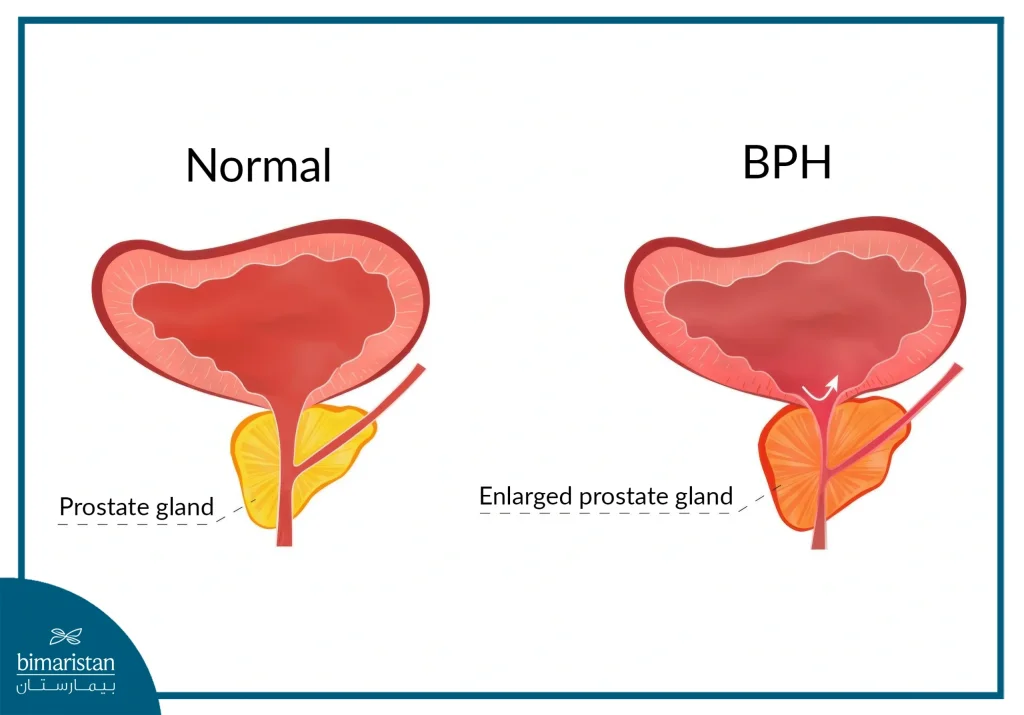
Impact of benign prostatic hyperplasia on the urinary system
An enlarged prostate significantly affects the urinary system, impacting the patient’s quality of life, with common symptoms including:
- Difficulty starting to urinate: The patient may experience difficulty or delayed onset of urine flow, requiring considerable effort to urinate.
- Weak urine flow: The flow of urine may become weak or intermittent, making urination uncomfortable and time-consuming.
- Frequent need to urinate: Increased frequency of urination during the day and especially at night (nocturia).
- Feeling of not emptying the bladder: The man will feel that the bladder is not completely emptied after completing urination, as he will feel the urge to urinate again after a short while.
- A sudden urge to urinate: A sudden, strong urge to urinate that can lead to difficulty controlling or getting to the bathroom in time.
- Urine leakage: Urine leakage may occur, causing embarrassment and discomfort in social situations.
- Pain or discomfort: Some men may experience pain or discomfort in the pelvic area or lower back.
When can an enlarged prostate be treated without surgery?
There are different cases of non-operative treatment of enlarged prostate, which depend mainly on the patient’s condition, such as:
- Mild to moderate cases: Mild to moderate cases of prostate enlargement can be treated without surgery, depending on the severity of the symptoms and their impact on the patient’s daily life.
- Absence of severe complications: If there are no severe complications such as complete urinary retention or kidney failure, non-surgical treatment is an appropriate option for the majority of patients.
- The patient’s desire to avoid surgery: Some patients prefer to avoid surgery for personal or health reasons, making non-surgical options more appropriate.
- The condition responds to pharmacologic or interventional therapy: If the condition responds to pharmacological or interventional treatment, it indicates that it can be treated without surgery.
Drug therapy for prostate enlargement
Medications in various forms and types can be highly effective in treating an enlarged prostate without surgery:
- 5-alpha reductase inhibitors: Finasteride and Dostrad are important medications for treating an enlarged prostate without surgery. They gradually shrink the prostate by inhibiting the conversion of testosterone to dihydrotestosterone (DHT), a hormone that contributes to prostate enlargement. It may take 6 to 12 months to fully see results, as 5-alpha reductase inhibitors can reduce prostate size by up to 25%. A Journal of Urology study showed that Dostradil was more effective in reducing prostate size than finasteride.
- Alpha blockers: Like tamsulosin and alfuzosin, which relax the muscles of the prostate and bladder, making it easier to urinate, these medications have a quick effect but do not shrink the size, and patients usually feel an improvement in symptoms within days. Tamsulosin is one of the most common drugs used in this type of treatment.
- Combination drugs: Combining both 5-alpha reductase inhibitors and alpha-blockers, these medications provide higher efficacy, especially in the presence of severe symptoms, which enhances the patient’s control of symptoms. Several studies have shown that combination therapy between an alpha-blocker and a 5-alpha reductase inhibitor was more effective in improving symptoms than monotherapy.
Other mechanisms to treat an enlarged prostate without surgery
Treatment of prostate enlargement without surgery can be done with various methods, including:
- Prostatic artery embolization (PAE): It is one of the most important methods of treating prostate enlargement without an operation, such as interventional radiology, as this treatment aims to reduce the blood supply to the prostate, which leads to a reduction in its size. Many studies indicate the remarkable effectiveness of this method, as 85% of patients who underwent prostate catheterization experienced a significant improvement in symptoms. The procedure is performed under local anesthesia and is considered less invasive than conventional surgery.
- Thermotherapy: Using microwaves or radiofrequency, excess tissue in the prostate is heated, gradually shrinking it. This procedure is suitable for moderate cases and is a good option for patients who want to treat an enlarged prostate without surgery. A study in the International Journal of Urology shows that heat therapy is highly effective in reducing prostate size and improving urinary symptoms.
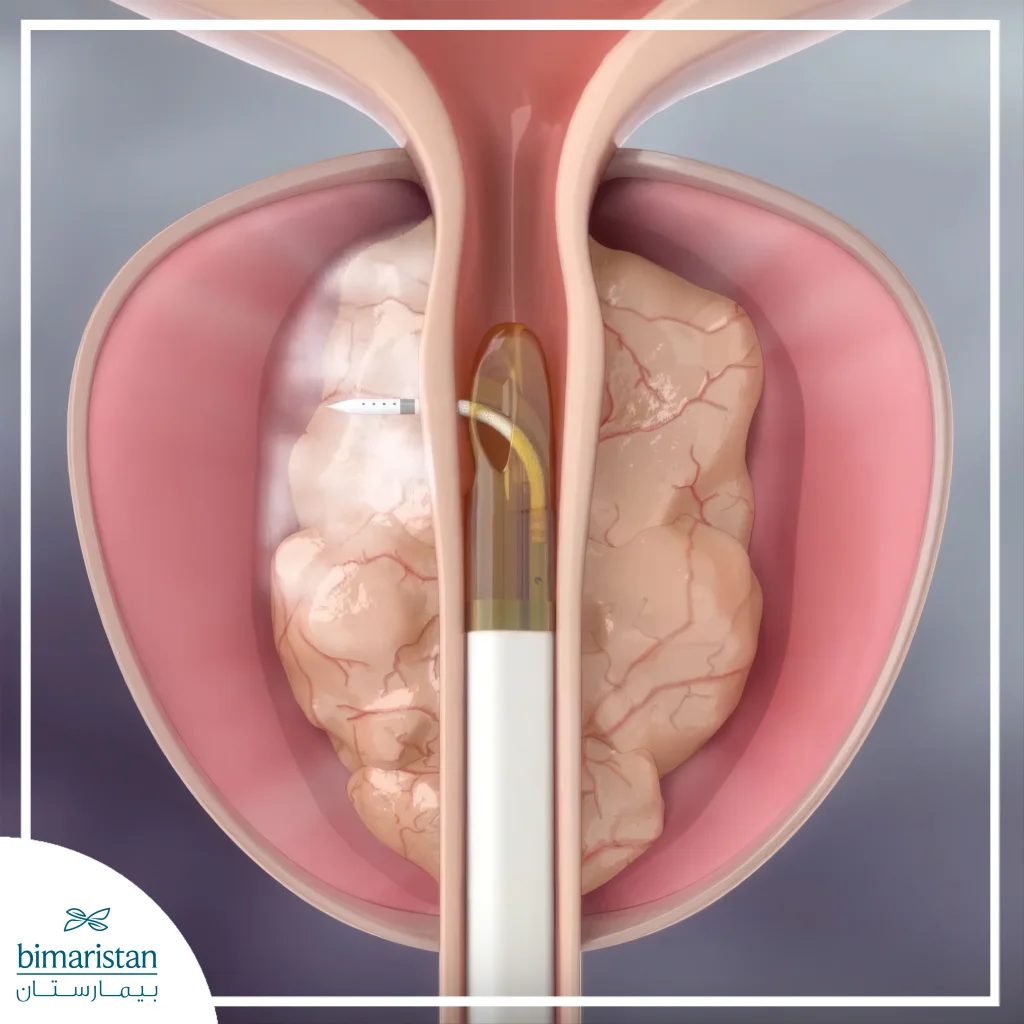
- Rhizium or vaporization: This technique involves pumping water vapor into the prostate tissue to shrink the prostate without the need to put the patient to sleep. This method is quick and effective as it is performed within minutes, and the patient can go home the same day.
Lifestyle changes and natural support
Lifestyle changes are an essential part of managing BPH symptoms and can help minimize discomfort and improve quality of life, especially in the early stages:
- Minimize caffeine and alcohol: Drinking coffee, tea, and alcoholic beverages can irritate the bladder and increase urination. Cutting back can help reduce urinary symptoms such as urgency and frequency.
- Not drinking fluids during nighttime hours: Drinking less water or liquids before bed reduces the frequency of nighttime urination, one of the most bothersome symptoms of an enlarged prostate.
- Regulate urination and avoid waiting too long: Emptying your bladder regularly and not delaying going to the bathroom helps reduce urinary retention and improve bladder control.
- Herbal supplements such as Saw Palmetto: Some studies suggest that Saw Palmetto may alleviate symptoms of BPH in some men. Although its results are not entirely guaranteed for everyone, some patients have noticed significant improvements, provided it is used under medical supervision to avoid interfering with other medications.
When is surgical intervention recommended?
In some cases, drug therapy or lifestyle changes may not be enough, and surgery is the best and only option to avoid complications and improve quality of life. Some of the most common reasons for surgery include:
- Failure of nonsurgical treatments: If the patient does not respond to medications or natural treatments and symptoms persist in a way that is bothersome or interferes with daily life, surgical intervention is a logical step for rapid and lasting relief of symptoms.
- Recurrent urinary retention: Repeated inability to fully empty the bladder or the need for frequent catheterization indicates a severe urethral obstruction that requires surgical intervention to correct the issue.
- Stones form in the bladder: An enlarged prostate can lead to urine accumulation and the formation of stones, these stones can cause pain, infections and hematuria and sometimes need surgical removal when the underlying cause is treated.
- Chronic urinary infections: Recurrent or persistent urinary tract infections may be caused by the bladder not emptying completely due to enlargement, and surgery aims to improve urine flow and reduce the risk of recurring infections.
- Kidney damage caused by the obstruction: If imaging or tests show a negative impact on the kidneys from chronic urine retention, surgical intervention is necessary to relieve the pressure and protect kidney function before permanent damage occurs.
Treatment of prostate enlargement without surgery provides several effective options that suit most patients and help them avoid surgical risks and complications. Consulting a urologist remains essential to determine the best approach based on individual condition and symptom severity. With ongoing advances in non-surgical therapies, many men can now manage this condition successfully and enjoy a marked improvement in their quality of life.
Sources: