
Cervical cancer is one of the most common cancers worldwide, caused by the uncontrolled growth of abnormal cells in the lower part of the uterus that connects to the vagina. The danger lies in the fact that it often develops without clear symptoms in its early stages, making timely detection a vital step to save lives. Thanks to advances in modern medicine, early diagnosis combined with comprehensive treatment can achieve high cure rates and significantly improve patients’ quality of life.
Radiation therapy for cervical cancer is considered one of the most effective methods to control tumors and prevent their spread. It works by directing high‑energy beams at cancer cells to destroy them with precision while protecting surrounding healthy tissue as much as possible. This therapy is frequently chosen as a primary treatment option, either alone or alongside chemotherapy, particularly in cases where the tumor has extended beyond the cervix or following surgery to eliminate any remaining cancerous cells.
What is cervical cancer?
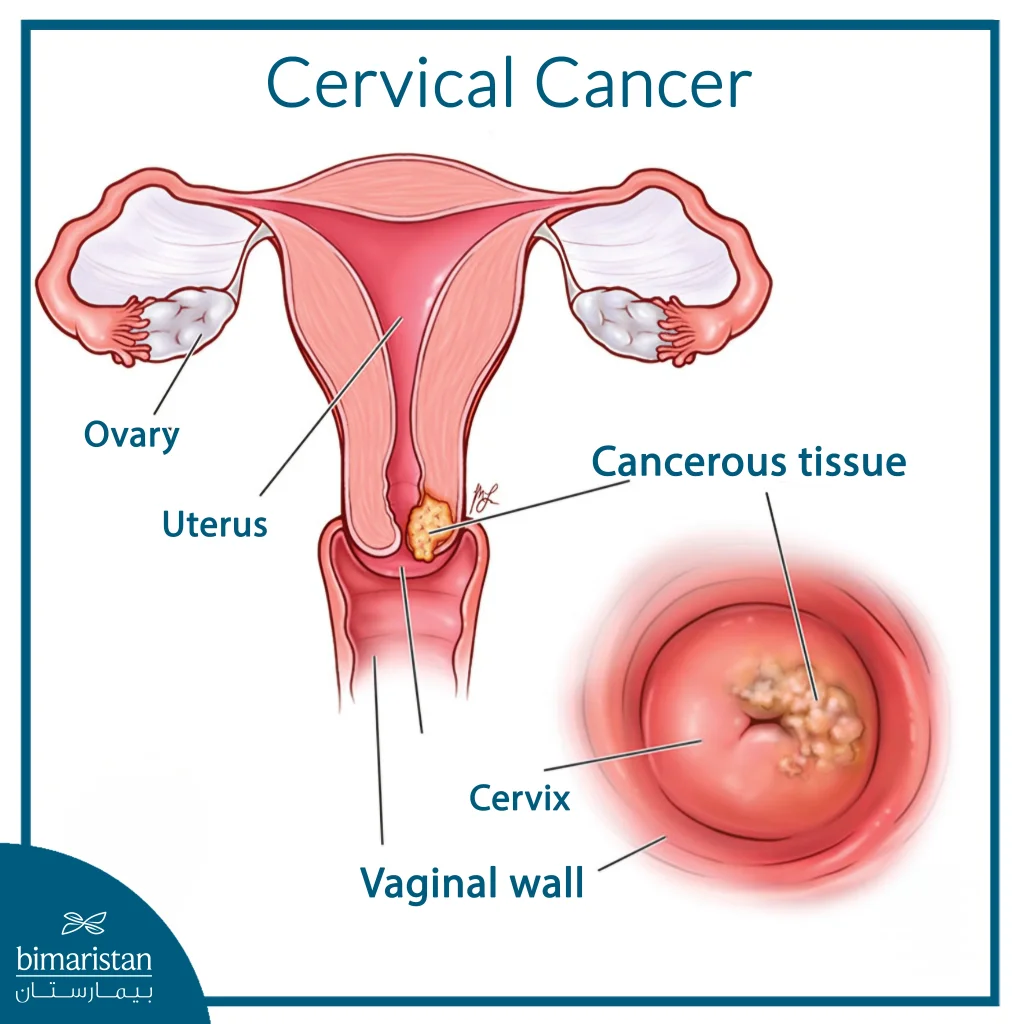
Cervical cancer is an abnormal growth of cells in the cervix, the lower part of the uterus that connects it to the vagina. It is one of the few cancers with a known cause, with human papillomavirus (HPV) as the primary etiological agent. It usually presents as squamous cell carcinoma (80-90% most common) or adenocarcinoma (10-20%). The disease develops gradually and may not show obvious symptoms in its early stages, making regular screening and regular gynecological smears one of the most important means of early detection and prevention.
What is radiation therapy for cervical cancer?
Radiation therapy for cervical cancer uses powerful energy beams to kill cancer cells. This energy can come from X-rays, protons, or other sources. Radiation therapy sessions are usually accompanied by chemotherapy sessions as an initial treatment for cervical cancers that have grown outside the cervix. It can also be used after surgery if there is a higher risk of cancer recurrence. Depending on the stage of cervical cancer, radiation therapy can be used in the following cases:
- As part of the primary treatment: In some stages of cervical cancer, the preferred treatment is radiation and chemotherapy together (called concurrent chemoradiotherapy) because chemotherapy helps the radiation work better, as chemotherapy drugs make cancer cells more sensitive to radiation.
- To treat cervical cancer that has spread or returned after treatment: Radiation therapy may be used to relieve symptoms caused by cervical cancers that have spread to other organs and tissues.
Types of radiation therapy for cervical cancer
The types of radiation therapy often used to treat cervical cancer are:
External beam radiation therapy
External beam radiation therapy (EBRT) aims X-rays at the cancer from a machine outside the body. It is similar in principle to a standard X-ray, but the radiation dose is much higher. Each radiation therapy session takes only a few minutes, but positioning the patient for treatment usually takes longer, as the procedure itself is painless. When external beam radiation therapy is used as the primary treatment for cervical cancer, it is usually combined with chemotherapy in what is known as concurrent chemoradiotherapy.
A low dose of a chemotherapy drug called cisplatin is often used. Radiation is administered five times per week for approximately five weeks, and the chemotherapy schedule is determined based on the type of drug used. If the cancer has not metastasized, brachytherapy may be performed after chemoradiotherapy is complete. External beam radiation can also be used as the primary treatment for patients who cannot tolerate chemoradiotherapy, cannot safely undergo surgery, or prefer not to have surgery, and can be used alone to treat areas where the cancer has spread.
Possible side effects of external beam radiation therapy
Short-term side effects of external beam radiation therapy for cervical cancer can include:
- Fatigue
- Nausea and vomiting
- Upset stomach
- Diarrhea or loose stools (if radiation is directed to the pelvis or abdomen)
- Skin changes (mild redness or scaling in the irradiated area)
- Vaginal pain: Radiation can make the vulva and vagina more sensitive and lead to pain or discharge.
- Changes in the menstrual cycle: Pelvic radiation can affect the ovaries, leading to cycle changes or early menopause.
- Radiation cystitis: Radiation can irritate the bladder, causing discomfort, frequent urge to urinate, and sometimes blood in the urine.
- Low blood cell count:
- Anemia (low red blood cell count) causes fatigue
- Low white blood cell count increases the risk of infection
- Low platelet count increases the risk of bleeding
When chemotherapy is given with radiation, blood cell counts are usually lower, and fatigue and nausea worsen. These symptoms usually improve weeks after treatment ends, and long-term side effects can also occur with external beam radiation therapy.
Internal radiation therapy (Brachytherapy)
Brachytherapy, also known as internal radiation therapy, is a treatment for cervical cancer that involves placing a radiation source directly inside or near the tumor. This method allows the radiation to target the cancer cells with high precision, as it travels only a short distance. The most commonly used approach for treating cervical cancer is intracavitary brachytherapy.
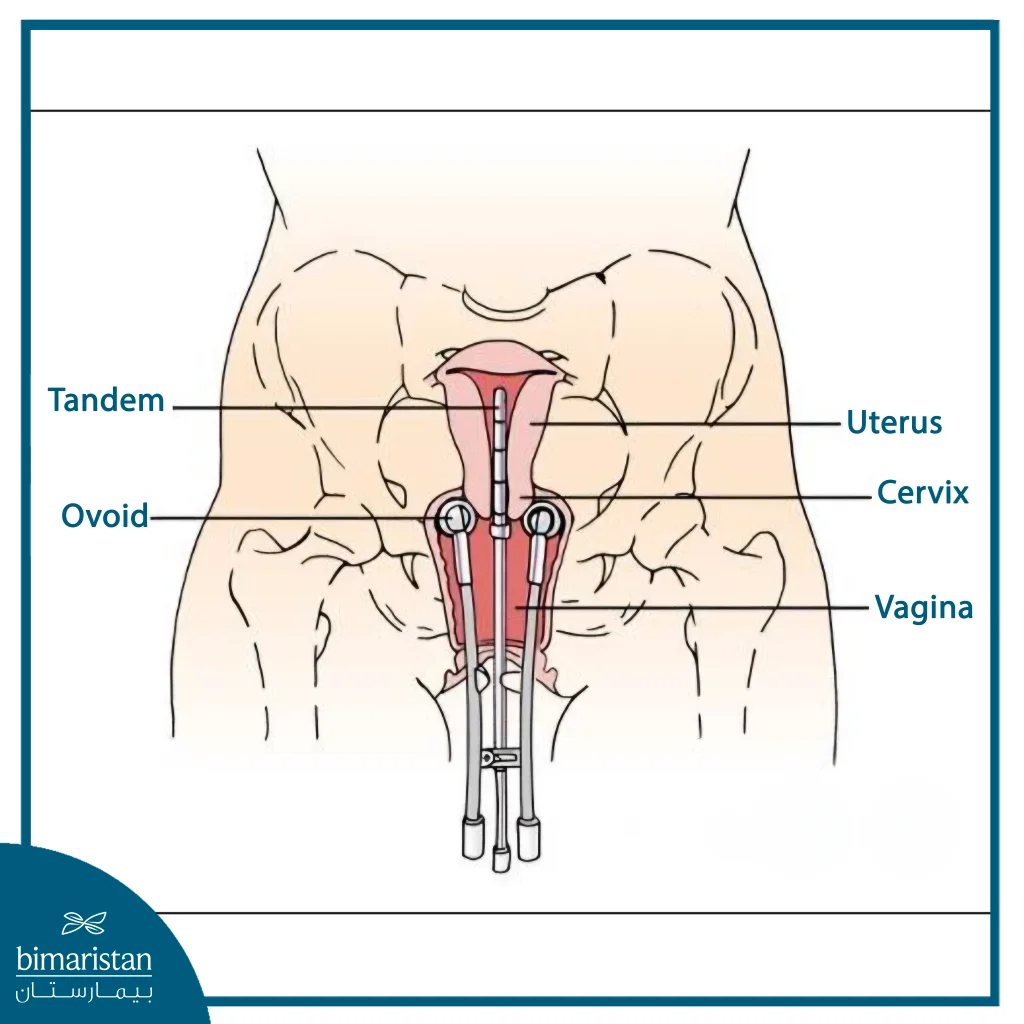
The radiation source is placed inside a device, called an applicator, that is placed in the vagina, and sometimes in the cervix itself. Brachytherapy is usually used in combination with external beam radiation therapy as part of the main treatment plan for cervical cancer, while it is rarely used alone except in some very early cancers.
There are two types of brachytherapy:
Low‑Dose Rate (LDR) Brachytherapy
The treatment is conducted over several days, during which the patient stays in a special room in the hospital. In this room, instruments containing radioactive material are carefully positioned. Throughout the treatment period, medical staff will provide care and support, taking all necessary precautions to minimize direct exposure to radiation.
High‑Dose Rate (HDR) Brachytherapy
It is performed on an outpatient clinic over several sessions, with at least one week between sessions. In each session, the radioactive material is inserted into the applicator for only a few minutes and then removed after the prescribed dose has been administered. The advantage of this type of treatment is that it does not require hospitalization or prolonged inpatient care, making it more comfortable and convenient than low-dose therapy.
To treat cervical cancer in women who have undergone a hysterectomy, the radioactive material is placed inside a tube in the vagina to deliver radiation directly to the targeted area. For women who still have a uterus, the radioactive material is inserted into a small metal tube called a tandem, which is placed inside the uterus, along with small round metal holders known as ovoids positioned near the cervix. This method is referred to as the Tandem and Ovoid method. Another option is called Tandem and Ring, where a circular, ring‑shaped applicator is positioned close to the uterus to deliver precise radiation.
Possible short-term side effects of brachytherapy
Because radiation travels only a short distance in brachytherapy, the main effects are on the cervix and vaginal walls, and the most common effects include:
- Vulva irritation
- Vaginal irritation (redness, pain, or discharge)
- Fatigue, diarrhea, nausea, bladder irritation, and low blood cells (similar to the side effects of external radiation)
Brachytherapy is often given immediately after external beam radiation therapy (before the previous side effects have worn off), so it can be difficult to determine which treatment caused the symptoms.
Radiation therapy steps for cervical cancer
- The process begins with a delicate stage known as treatment planning. The planning stage is one of the most important steps in radiation therapy, during which the appropriate dose and target volume are precisely determined to ensure eradication of cancer cells while minimizing damage to surrounding healthy tissues.
- The doctor starts with advanced imaging scans, such as a CT scan or MRI, to create a detailed map of the pelvic area and pinpoint the exact location of the tumor. The treatment team then uses special computer programs to design a three-dimensional radiation plan that shows where the beams will be directed and what their intensity and angle will be, so that the maximum dose reaches only the tumor. Tiny markers are placed on the patient’s skin to ensure that the beams are directed to the same spot each session.
- In external beam radiation therapy: Specialized equipment is used to precisely direct radiation beams from outside the body to the affected cervix and lymph nodes. Before treatment begins, a planning session, including a computed tomography (CT) scan, is performed to identify the target sites, and small markers may be placed on the skin to facilitate beam delivery to the same spot during each session. The treatment is typically administered five times per week for four to six weeks. During the session, the patient lies on the treatment table while the radiation machine moves around to direct the beams from different angles. The patient must remain completely still throughout the 15-minute session, provided that the procedure is completely painless.
- In internal radiation therapy (brachytherapy), a device known as an applicator is placed inside the cervix or vagina to deliver the radioactive dose directly to the tumor. These instruments are positioned under local or general anesthesia to ensure patient comfort. The radiation source is then connected via specialized cables to a remotely controlled secure unit. The radioactive material remains inside the body for about ten to twenty minutes, after which the applicators are removed once the session ends. This method allows a high dose of radiation to be delivered with high precision to the tumor while protecting adjacent healthy tissues, such as the bladder and intestines, from excessive radiation exposure.
Success rates of radiation therapy for cervical cancer
Radiation therapy for cervical cancer is a key treatment that is highly effective in controlling the tumor and preventing it from spreading to nearby tissues or organs. It is often used in conjunction with chemotherapy to improve treatment outcomes and increase cure rates, as the combination enhances the effectiveness of radiation in destroying cancer cells. This integration of treatment reduces the risk of tumor recurrence after treatment and improves survival, particularly in intermediate- and advanced-stage cancer.
Long-term side effects of radiation therapy for cervical cancer
Side effects with radiation therapy for cervical cancer may appear months or even years after treatment is finished and include:
- Vaginal stenosis: Both external radiation and brachytherapy can cause scar tissue to form inside the vagina, making it narrower, less elastic, or shorter, making intercourse painful. You can help prevent this by regularly stretching the vaginal walls either with intercourse or by using a vaginal dilator (a plastic or rubber tube).
- Vaginal dryness: Radiation can lead to vaginal dryness and pain during intercourse. Topical estrogens (cream, gel, ring, or vaginal tablets) can help moisturize the vagina and improve its lining, especially if the ovaries have been damaged and are causing early menopause.
- Rectal bleeding or stenosis: Radiation can cause chronic inflammation of the rectal wall, leading to painful bleeding or narrowing (constriction). An abnormal connection (fistula) may also form between the rectum and the vagina, causing stool to pass through the vagina. These issues typically occur within the first three years after treatment and may require surgical repair.
- Urinary problems: Radiation can cause chronic cystitis, blood in the urine, or a fistula between the bladder and vagina, which can appear years after treatment.
- Bone weakness: Radiation may weaken the pelvic bones, increasing the risk of fractures, especially in the hip, usually within 2 to 4 years after treatment. Bone density scans are recommended to monitor fracture risk.
- Leg swelling (Lymphedema): When pelvic lymph nodes are treated with radiation, fluid drainage may be impaired, leading to severe leg swelling.
Recovery period after radiation therapy for cervical cancer
Treatment may extend from several weeks to a few months, depending on the type of radiation used and the patient’s condition:
- Ensure adequate rest and avoid excessive physical exertion
- Follow prescribed medications carefully
- Consult a doctor immediately if persistent bleeding or pain occurs
- Refrain from sexual activity temporarily until vaginal tissue has healed
In conclusion, radiation therapy for cervical cancer is a cornerstone of modern treatment strategies, proving highly effective results in destroying cancer cells and controlling disease progression, whether applied alone or combined with chemotherapy. Advances in radiation methods, including brachytherapy and targeted approaches, have enhanced cure rates while reducing side effects.
Early detection and consistent medical follow‑up remain critical in improving success rates and minimizing complications, as they enable timely intervention and precise treatment planning. Ultimately, radiation therapy for cervical cancer continues to be one of the most powerful tools in combating the disease and preventing recurrence, offering patients a greater chance for long‑term health and stability.
Sources:
- National Cancer Institute. (2024). Cervical cancer treatment (PDQ®)-Patient version. U.S. Department of Health and Human Services, National Institutes of Health.
- Viswanathan, A. N., Beriwal, S., De Los Santos, J., Demanes, D. J., Gaffney, D., Hansen, E., … & Small, W. (2022). Radiation therapy for cervical cancer: Executive summary of an ASTRO clinical practice guideline. Practical Radiation Oncology, 12(1), 12-21.