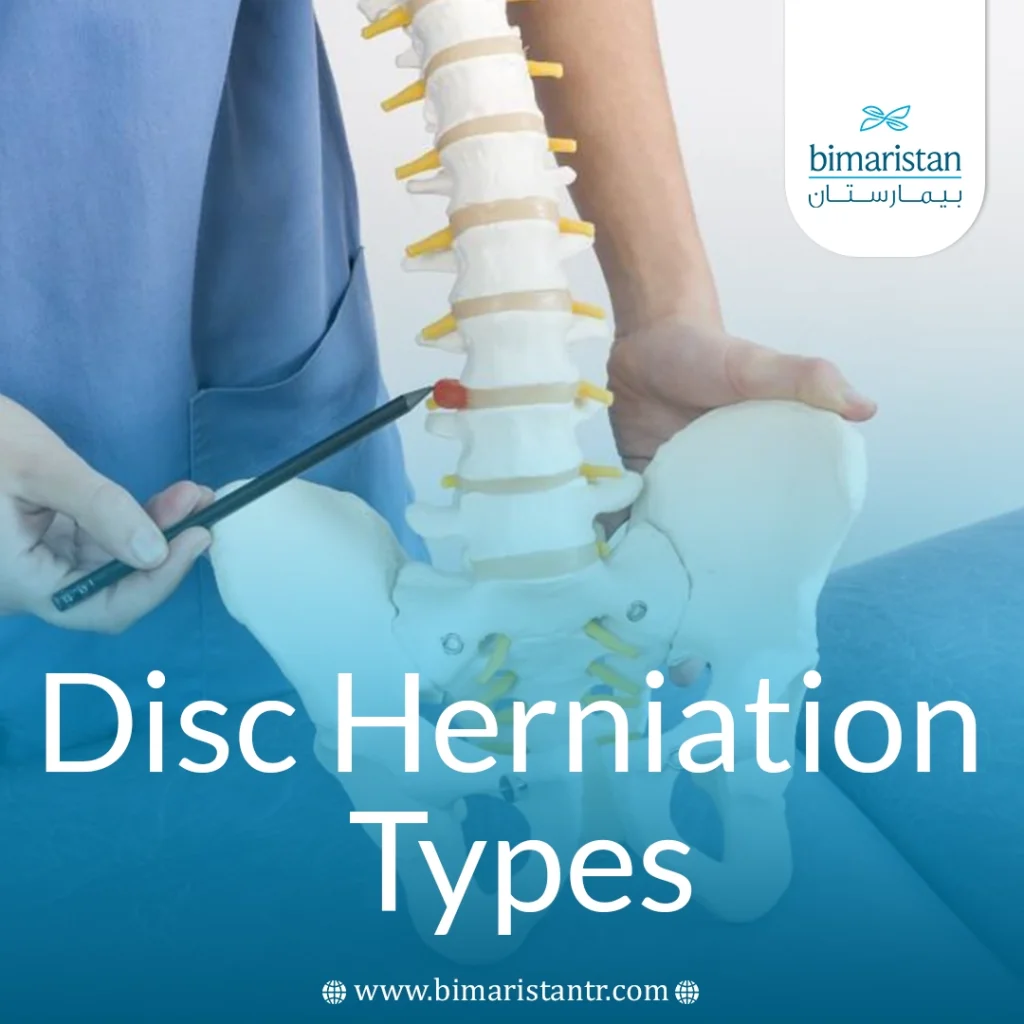


Disc herniation types are among the most common spinal problems, as statistics indicate that nearly 80% of people experience back pain at least once, often due to discs of different degrees. These herniated disc types differ in location and severity, which directly influences the symptoms and the suitable treatment for each condition. Recognizing these herniated disc types supports early diagnosis and helps prevent possible neurological complications.
What is a disc, and how does a herniated disc occur?
A disc is a common medical condition that occurs when part of the nucleus pulposus between the vertebrae protrudes into the spinal canal, causing pressure on the spinal cord and accompanying nerves. This protrusion occurs due to the wear and tear of the disc over time, or due to a sudden injury, which causes the outer shell to rupture and the nucleus pulposus to protrude into the spinal canal:
- Sitting or driving for long periods of time
- Lifting weights the wrong way
- Poor muscular fitness
- Genetic factors
- excessive obesity
- Smoking
These factors are not essential for developing discs, but they do increase the likelihood of early cartilage rupture.
What are the common disc herniation types?
Herniated discs can occur in any area of the spine, whether lumbar, cervical, or thoracic, and each type has its own characteristics and symptoms that distinguish it from the others.
Lumbar disc
Lumbar disc affects the lumbar vertebrae, located in the lower back, and this type is the most common type of disc, as it usually appears after a certain physical effort or after sitting for a long time in the wrong position, and causes severe pain in the lower back, and this pain extends to the legs to cause what is known as sciatica, and may be accompanied by numbness or weakness in the lower limbs.
Cervical disc
This type affects the cervical vertebrae and results in sharp pain radiating to the shoulders and arms with numbness or tingling in the upper extremities, and the risk of developing it is usually increased by sitting in front of a computer for long periods of time or using a phone with an incorrect posture.
Thoracic disc
It affects the thoracic vertebrae in the center of the chest and causes pain that radiates to the chest wall or abdomen, sometimes leading to misdiagnosis as heart or stomach pain.
Types of herniated discs by radiographic form
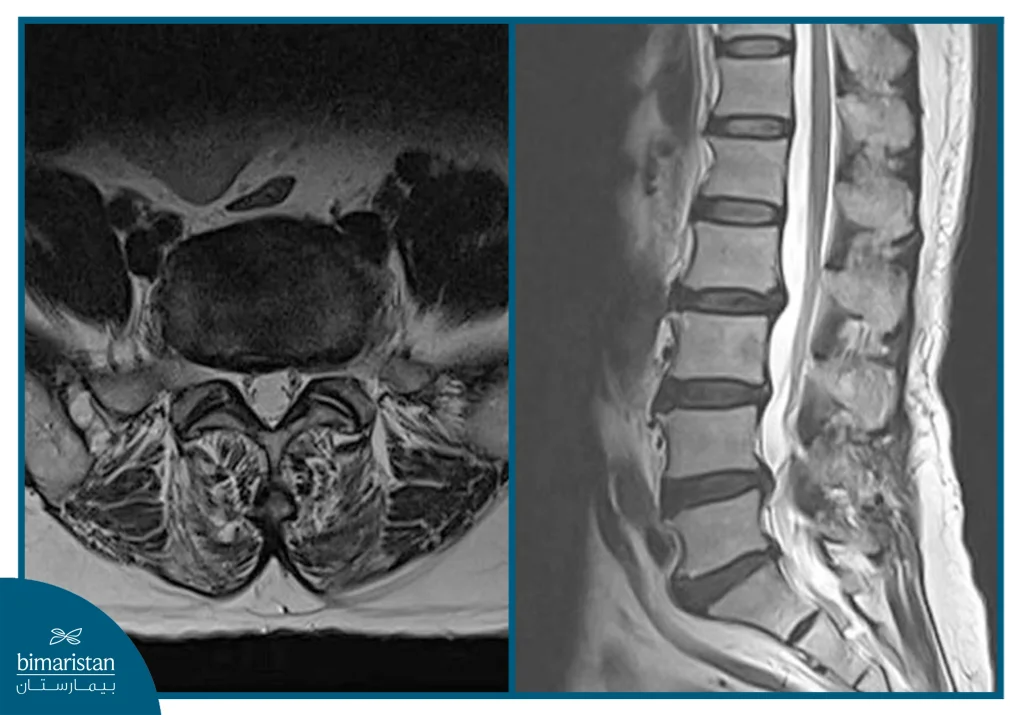
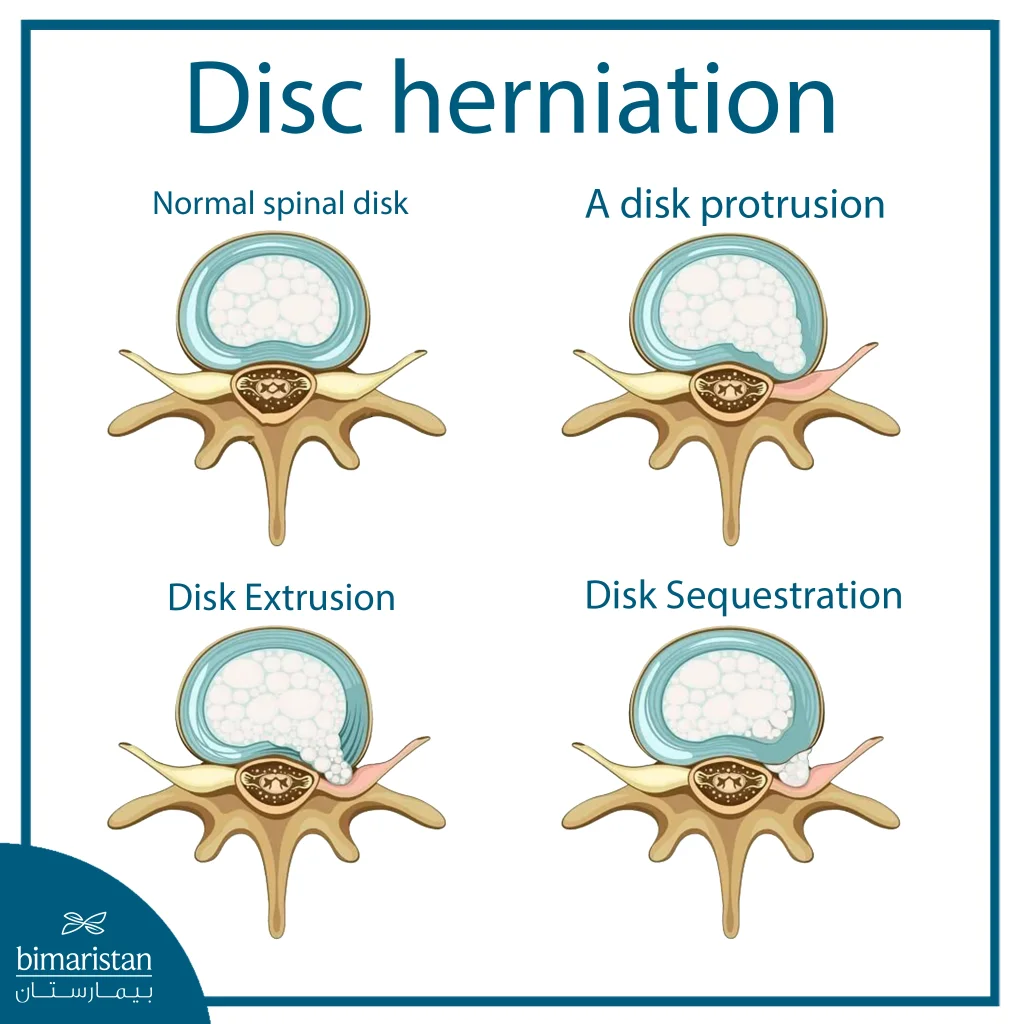
The meaning of herniated disc types by shape means according to what the magnetic resonance image (MRI) shows, as it shows fine details that allow the doctor to distinguish the types of discs in terms of the shape of the herniation and the degree of damage to the cartilage and adjacent nerves, and the herniated disc can be classified into three main forms that differ in terms of the severity of the condition and the appropriate treatment options.
The protruding disk
This type occurs when the cartilage protrudes slightly outward without completely tearing the fibrous sheath surrounding it, as the cartilage remains relatively intact, and often does not cause noticeable symptoms unless it presses on the nerve root. This type of disc is considered one of the types of discs that can be treated with physical therapy.
Herniated disc
This type occurs when the outer shell of the cartilage ruptures, allowing the inner gelatinous material to come out and press on the nerves and spinal cord. This form is the most common cause of pain and numbness in the limbs, and in some cases requires limited surgical intervention to relieve nerve compression.
Pop-up or split disk
In this type, a piece of cartilaginous material detaches completely inside the spinal canal, causing direct pressure on the nerve roots. This form is considered one of the most dangerous types of discs, and is usually diagnosed by MRI with high accuracy, and often requires urgent surgical treatment to avoid future neurological complications.
Symptoms of different disc herniation types
Symptoms of disc types vary depending on the location of the injury in the spine and the extent of compression of the neighboring nerves, but pain remains the most common symptom that prompts the patient to seek medical help, and the most important symptoms of discs, depending on their location:
- Lumbar disc
- Severe lower back pain radiating down the legs
- The pain may be accompanied by tingling or numbness in the lower extremities, or by difficulty walking and standing for long periods.
- Cervical disc
- Severe neck pain that radiates to the shoulders and arms
- It may cause muscle weakness in the hand or fingers.
- Thoracic Disc
- Pain in the middle of the chest or around the rib cage
- Sometimes the patient may experience a burning sensation in the chest and abdomen.
- In advanced cases, more serious neurological symptoms may appear, such as loss of sensation in the extremities or impaired bladder and bowel control.
When one or more of these symptoms occur, it is important to seek medical attention to evaluate the lumbar spine and avoid more serious complications in the future.
How are the disc herniation types diagnosed?
The diagnosis of disc types relies on a combination of careful clinical examination and advanced imaging techniques in order to determine the exact location and degree of herniation. The examining physician usually begins by taking a detailed clinical history, which includes the nature and duration of pain, and its relationship to movement and effort, after which a neurological examination is performed to assess muscle strength, nerve reflexes, and skin sensitivity in the extremities.
Magnetic resonance imaging (MRI) is considered the most important means of diagnosing and differentiating between types of discs, as it shows the exact condition of the cartilage, the location of nerve compression, and the extent of damage to the surrounding tissues, but in some cases a CT scan or EMG may be required to help determine the degree of nerve irritation or rule out other diseases that may cause similar symptoms.
Treatment options available for disc types
After the accurate diagnosis is completed by the examiner, the doctor begins the stage of choosing the appropriate treatment for the disc based on the type and degree, and the treatment is usually divided into two main types: conservative treatment and surgical treatment, as the main goal of the treatment is to relieve pressure on the nerves and restore the patient’s normal movement with the least possible intervention.
Conservative treatment
It is considered the first option in most cases of mild to moderate discs, and includes relative rest and avoiding excessive exertion, in addition to the use of anti-inflammatory drugs to reduce pain and swelling. In this context, physical therapy plays a pivotal role in strengthening the back and abdominal muscles and improving the flexibility of the spine, which helps stabilize the vertebrae and prevent recurrent slippage, and in some cases, local cortisone injections can be used to reduce inflammation around the pinched nerve.
Surgical treatment
It is recommended when conservative methods fail or when there are severe neurological symptoms, such as muscle weakness or loss of sensation. Surgical options include resection of the herniated portion of the disc or endoscopic removal of the cartilage. These procedures are minimally invasive in the treatment of discs and are characterized by rapid recovery and low complication rate. In some advanced cases, spinal stabilization or artificial cartilage replacement may be required to maintain spinal stability.
Knowing the types of discs helps the patient and doctor determine the most accurate treatment plan to relieve pain and improve quality of life. At Beemarestan Medical Center, patients are offered comprehensive evaluation and advanced treatment using the latest microsurgical and endoscopic techniques to effectively and safely treat spine conditions. Bimarestan is your destination for state-of-the-art medicine in Turkey.
Sources: