In recent years, smart lenses have progressed from a means of vision correction to a medical and technological platform capable of monitoring health indicators and sending data in real time. Thanks to advances in material science and microelectronics, lenses are able to measure biomarker-rich tear fluid, allowing for early detection of diseases such as glaucoma and diabetes.
Lenses capable of delivering medication far more efficiently than traditional drops are being developed, as well as innovations that promise to incorporate microscreens that broadcast information directly in front of the eye. With the breadth of research, the future of eye health may be moving into a new era led by smart lenses.
What are smart lenses, and how do they work?
Smart lenses are one of the most impactful innovations in the future of eye health. They are contact lenses designed to offer advanced functionality beyond traditional optical correction. They rely on the integration of high-precision materials with biosensors, microelectronic circuits, and tiny power sources to record health data or modify vision in a more advanced way than conventional lenses.
How smart lenses work
How smart lenses work is based on three main principles:
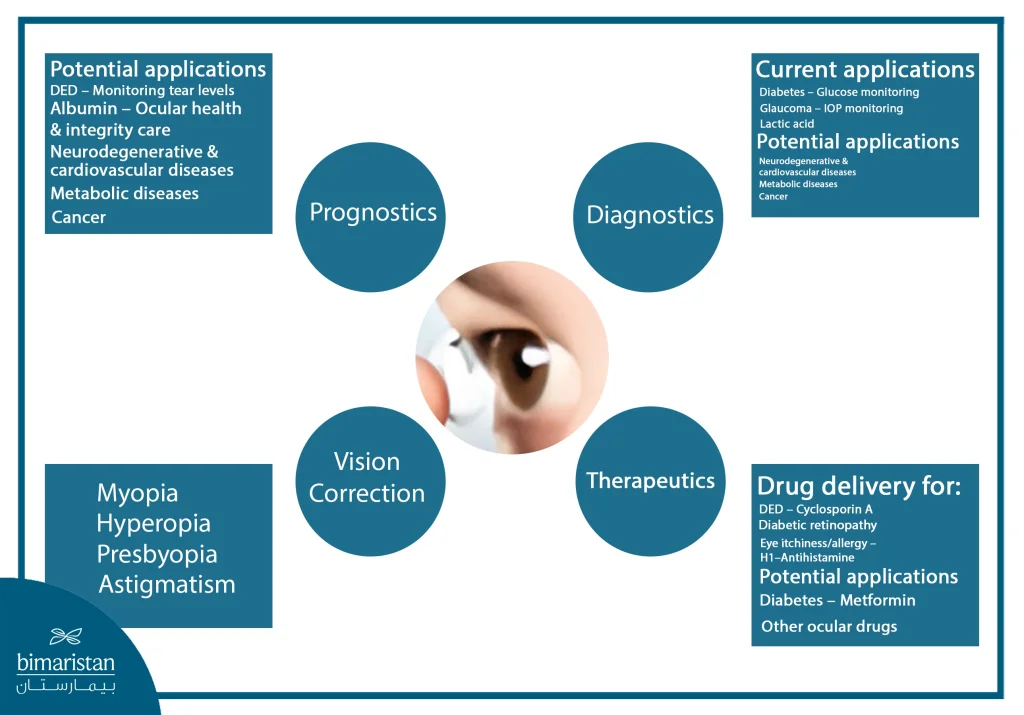
- Interacting with tears: Tears contain measurable biomarkers such as glucose, proteins, and electrolytes, allowing for non-invasive disease monitoring.
- Microsensors: Microchips that measure intraocular pressure or biomaterial concentration and send data to an external device or smartphone app.
- Precise drug delivery: Some lenses are designed to gradually release the drug into the eye, making absorption much higher than traditional drops.
Smart lenses combine vision correction, continuous medical monitoring, and advanced therapeutic management in one small, lightweight lens.
The latest technology in smart lenses in 2025
Adaptive IOLs & Adaptive Contact Lenses
Adaptive lenses have come a long way, relying on materials that are able to change shape or bend in response to the movement of the ciliary muscles within the eye. This allows the field of near and far vision to expand in a way that resembles the function of a natural lens before aging. These lenses are emerging as a promising solution for patients seeking multifocal vision without halos or nighttime blur, while improving visual acuity under changing conditions.
Extended Depth of Field (EDOF) Contact Lenses
These lenses provide an extended range of vision between near, intermediate, and far distances through precise light diffusion technology, minimizing the need for glasses after surgery or while wearing lenses. EDOF lenses have become widely popular because they offer stable vision with a significant reduction in nighttime glare compared to traditional multifocal lenses.
Accommodating Lenses
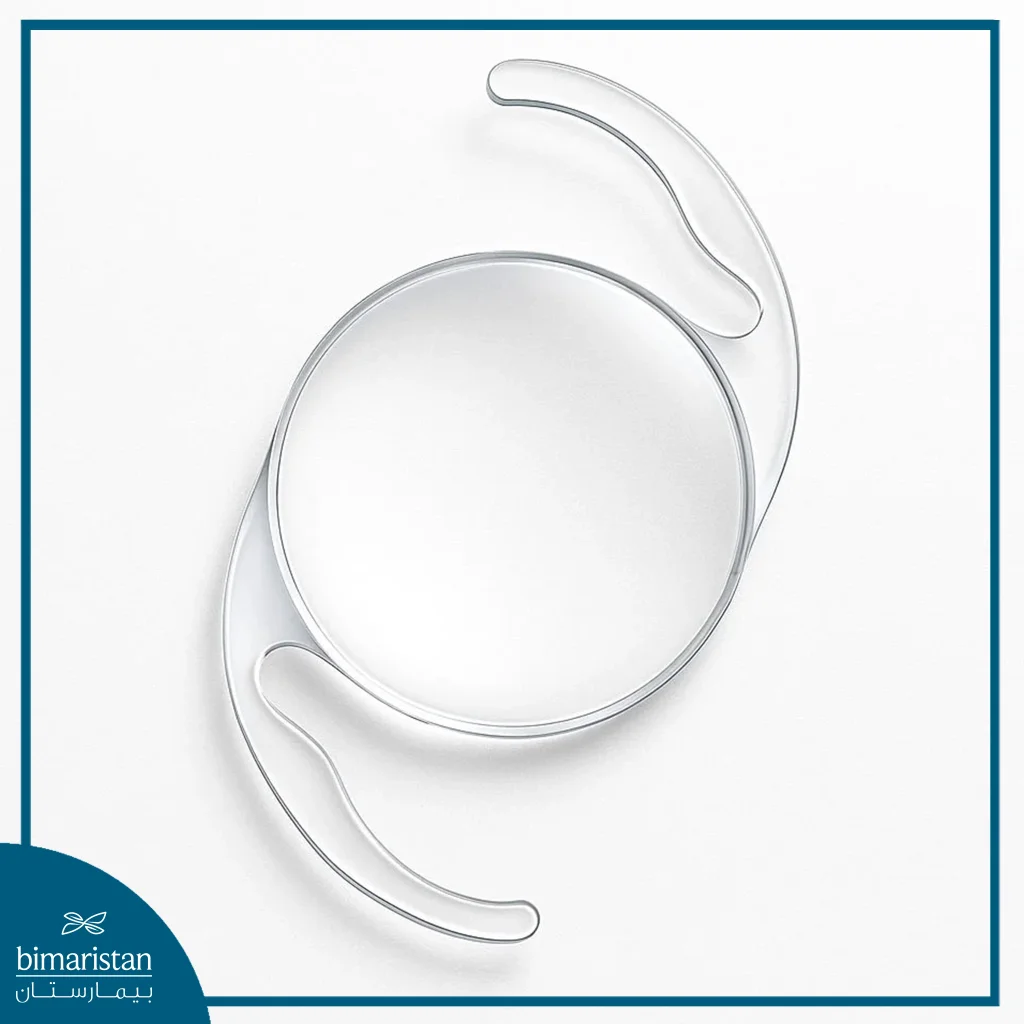
Kinetic lenses rely on a slight movement within the eye, moving back and forth according to the activity of the ciliary muscle, mimicking the eye’s natural focusing mechanism. The use of flexible materials and precise sensors has helped improve the lens’s response to movement, providing better near vision for patients after cataract surgery.
Hybrid Smart Lenses
Combining the EDOF principle with multifocal lenses or combining biometric smart lenses with traditional optical lenses, lenses are being developed that combine smart vision with microelectronic layers that allow for a wide range of medical information or vision modification after implantation.
Light-Adjustable Lenses (LAL)
LAL is one of the most revolutionary technologies in recent years. After the lens is implanted, a special UV light is used to change the power of the lens until the optimal visual result is achieved. In addition, this technology has significantly reduced the likelihood of reoperation or the need to use glasses after surgery.
Biosensing Smart Lenses
This is one of the hottest trends of 2024-2025, as the lenses contain:
- Glucose sensors
- Sensors for electrolytes and proteins
- Intraocular pressure (IOP) sensors
- Microfluidics systems are very precise
These lenses provide continuous monitoring of diseases such as diabetes and glaucoma without any surgical intervention.
Therapeutic Drug-Delivery Contact Lenses
A contact lens capable of releasing medication has become 10 times more potent than traditional drops in terms of pharmacokinetics. These lenses work by:
- Gradual drug release
- Increase the length of time the therapeutic substance remains inside the eye
- Minimize the effects of repeated dosing
Most use of therapeutic contact lenses for drug delivery today is geared toward treating inflammation, dry eye and glaucoma.
Connected Smart Lenses
The lenses contain:
- Embedded electronic chips
- Antennas for wireless communication
- Bio-powered microscopic batteries
- Data transmission units
These lenses will send medical information via smartphone, provide real-time monitoring of health status, and are suitable for the near future for conditions such as glaucoma, diabetes, and severe dehydration.
Display-Embedded Lenses
Several companies have reportedly begun developing lenses that display small digital information in front of the eye, such as:
- Hygienic measurements
- Alerts
- Low-light images
The field is still in its infancy, but it’s paving the way for a revolution in wearable AR technologies.
Who are smart lenses for?
Smart lenses are an ideal choice for many people, including:
Patients over the age of 50
Smart lenses are an ideal option for people with age-related visual impairment, helping to compensate for the loss of natural lens elasticity (Presbyopia). Reports suggest that modern lenses, especially adaptive and EDOF lenses, can give these patients a more balanced vision across different distances.
Cataract patients
Smart lens implants are one of the most advanced options for cataract patients, providing better vision than traditional monovision lenses. Some lenses, such as Light-Adjustable Lenses, allow the power of the lens to be adjusted after surgery, achieving very precise visual results, as reported by OmniVisionEye.
People who want to get rid of their glasses for good
Smart lenses, especially multifocal and EDOF, give users the ability to see near and far without the need for glasses. They are an excellent choice for those who have an active lifestyle and want to be more visually independent.
Patients with astigmatism
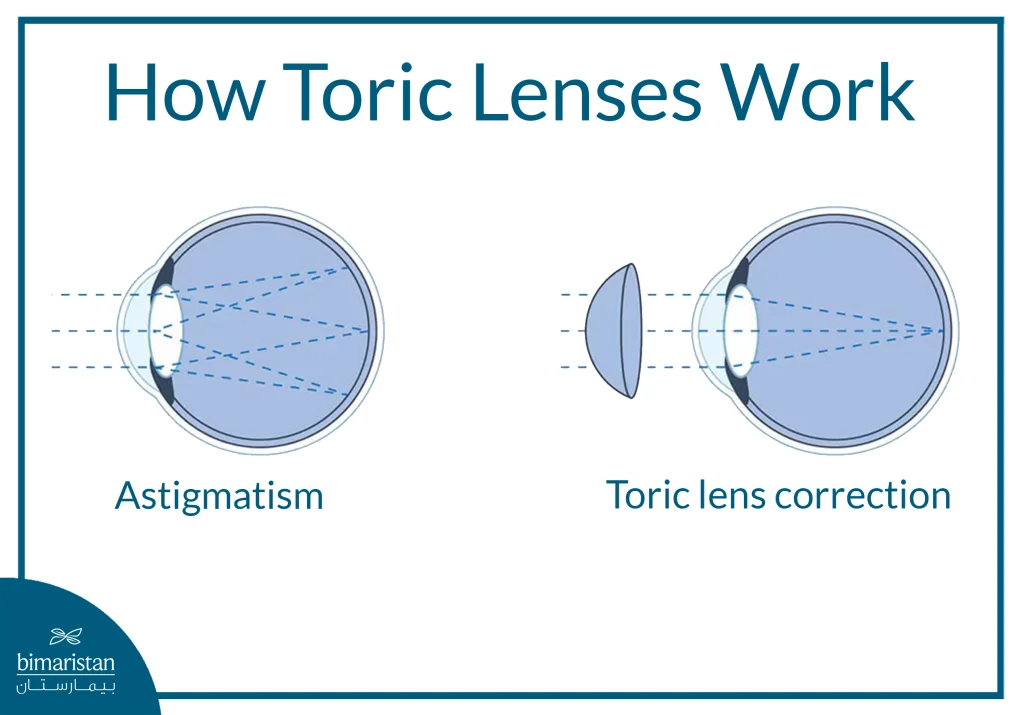
Smart Toric lenses are now available that can correct astigmatism with high precision. Some hybrid lenses combine contrast correction and dry eye syndrome with strong support for aberration correction.
The criteria for selecting the right smart lens for a patient varies depending on many factors, including
How to Choose the Right Smart Lens
Evaluation of corneal thickness and eye angle
Topographic measurements help determine the eye’s ability to tolerate a suitable lens. Doctors recommend a thorough corneal examination prior to lens selection to ensure visual stability after implantation.
Axial length measurements of the eye
Axial length is a key factor in choosing a smart lens, especially for Light-Adjustable and adaptive lenses. Surgeons use advanced optics to obtain accurate values that minimize the potential for refractive error.
Lifestyle factors
The right lens varies based on the patient’s daily routine:
- Book reader → EDOF or multifocal
- Lots of night driving → Lenses with minimal halos
- Intensive computer use → Mid-range lenses
Medical centers recommend adapting the lens to the patient’s lifestyle for the best possible visual results.
A comparison of the latest smart lenses
| Lens type | Mechanism of action | Visibility range | Does it correct astigmatism? | Basic advantages | Main uses |
|---|---|---|---|---|---|
| Adaptive IOLs | Its strength varies depending on the movement of the ciliary muscle | Close – Medium – Far | Yes | Mimics the natural lens of the eye and reduces the need for glasses | After cataract surgery |
| Extended Depth of Field (EDOF) lenses | Extended focal depth to give a continuous view | Close – Medium – Far | Yes | Stable visibility and low nighttime glare | Daily activities and digital use |
| Accommodating lenses | Moves inside the eye back and forth to focus | Close-Medium | No | Significantly improved near vision | Older patients |
| Hybrid Smart Lenses | Integrating different visual or electronic technologies | Different by type | Yes | Adjusting refractive problems after a cataract | Astigmatism and special cases |
| Light Adjustable Lenses (LAL) | Strength modification using UV light after implantation | Highly customizable | Yes | Highest visual fidelity after surgery | adjusting refractive problems after a cataract |
| Biosensing Lenses | Measuring tear composition and disease indicators | Not intended for visualization | No | Monitor glucose, blood pressure, and vital signs | Diabetes – Glaucoma |
| Drug-Delivery Lenses | Gradually releasing the drug through the lens | – | – | Drug efficacy 10 times higher than drops | Inflammation – Dry Eye – Glaucoma |
Advantages of modern smart lenses
Smart lenses have many advantages, including:
- Provides a wide range of visibility across different distances
- Non-invasive monitoring of important health indicators
- Improving visual quality of life, especially for cataract patients
- The lens power can be adjusted after implantation (in LAL).
- Minimize the need for frequent medication drops with therapeutic lenses
- Support for more accurate astigmatism correction options
Potential risks of smart lenses
Just as any medical procedure has risks, smart lenses have a few:
- Halos and night reflections: Some multifocal lenses can cause night halos, although this has been greatly reduced in recent versions.
- Postoperative infections: As with any intraocular lens, the risk of infection is present but very low when adhering to modern surgical standards.
- The need for re-adjustment: In Light-Adjustable lenses, the patient may need several sessions with a UV light to get the ideal final strength.
The cost of smart lenses in Turkey compared to other countries
| Smart Lens Type | Turkey | Europe (Germany/France/Britain) | United States |
|---|---|---|---|
| Adaptive IOLs | 1,800 – 2,800$ | 3,500 – 4,500$ | 4,500 – 6,000$ |
| Extended Depth of Field (EDOF) lenses | 1,600 – 2,500$ | 3,000 – 4,200$ | 4,500 – 5,500$ |
| Accommodating IOLs | 1,700 – 2,700$ | 3,200 – 4,800$ | 4,800 – 6,200$ |
| Hybrid Lenses | 1,900 – 3,200$ | 3,500 – 4,900$ | 5,000 – 6,500$ |
| Light Adjustable Lenses (LAL) | 2,500 – 3,400$ | 4,500 – 6,000$ | 6,000 – 8,000$ |
| Biosensing Lenses | 800 – 1,200$ | 1,500 – 2,500$ | 2,000 – 3,500$ |
| Drug-Delivery Lenses | 600 – $1,000 | 1,300 – 2,000$ | 2,000 – 3,000$ |
Why is Turkey a leading destination for smart lenses?
Turkey has many advantages that distinguish it from others in performing smart lens surgeries, including
- Widespread proliferation of centers specializing in EDOF and LAL lenses
- Utilizing advanced measuring devices to achieve high-precision optical results
- Surgeons experience thousands of operations per year
- Advanced cataract surgery results with modern lenses
- Advanced health infrastructure and lower costs than in Europe and America
Smart lenses are one of the most important innovations in eye care, combining vision correction, biomonitoring, and intraocular drug delivery, opening up new possibilities for improving the quality of vision and eye health in the future. With the rapid development of medical technologies, the capabilities of smart lenses are increasing year by year, becoming a more accurate, comfortable, and effective option for patients around the world.
Sources:
- OmniVision Eye. (n.d.). Innovations in Contact Lens Technology: What’s New and What’s Next?
- EMJ Reviews. (2024). Emerging Smart Contact Lens Technology for Wearable Biosensors and Drug Delivery: Biomarkers in Tears.
- Eyes On Eye Care. (2024). Smart Contact Lenses: Focus on the Future.