
Preparation before esophageal surgery is a fundamental and vital step that significantly influences the outcome and overall success of the procedure. Properly preparing the patient for esophageal surgery plays a crucial role in reducing the risks of surgical complications, such as infections, bleeding, and respiratory issues, while also enhancing the patient’s ability to tolerate anesthesia and the surgical procedure itself.
The preparation phase before esophageal surgery includes a thorough medical evaluation of the patient’s general health, essential diagnostic tests, and psychological support aimed at boosting mental readiness. These measures also help shorten the recovery time after surgery by stabilizing the patient’s condition before the operation. Therefore, strict adherence to the preparation before esophageal surgery is key to achieving optimal results and minimizing post-surgical complications that could impact the patient’s well-being.
Why is preparation before esophageal surgery important?
Preparation before esophageal surgery is a crucial step in ensuring the success of the procedure and reducing its associated risks. This stage involves a thorough evaluation of the patient’s health status, enabling the medical team to implement appropriate strategies to decrease the likelihood of complications and enhance the patient’s physiological readiness for the surgical intervention.
Pre-surgical preparation emphasizes optimizing the respiratory and digestive systems, both of which are essential for maintaining stability during and after the operation. This process also contributes to faster recovery and a shortened recuperation period, making these factors key drivers behind the importance of preparation before esophageal surgery.
- Reduce the risk of infection after the procedure
- Reduce bleeding during and after surgery
- Prevention of respiratory complications such as pneumonia
- Improved respiratory function and oxygenation
- Digestive support to minimize swallowing and digestion issues
- Assessing nutritional status to promote recovery
- Boosting immunity before surgery
- Reduce the length of hospitalization
- Preparing the patient psychologically for the procedure
- Ensuring anesthesia safety and avoiding complications
- Facilitate post-operative care and follow-up
Basic steps in preparation before esophageal surgery
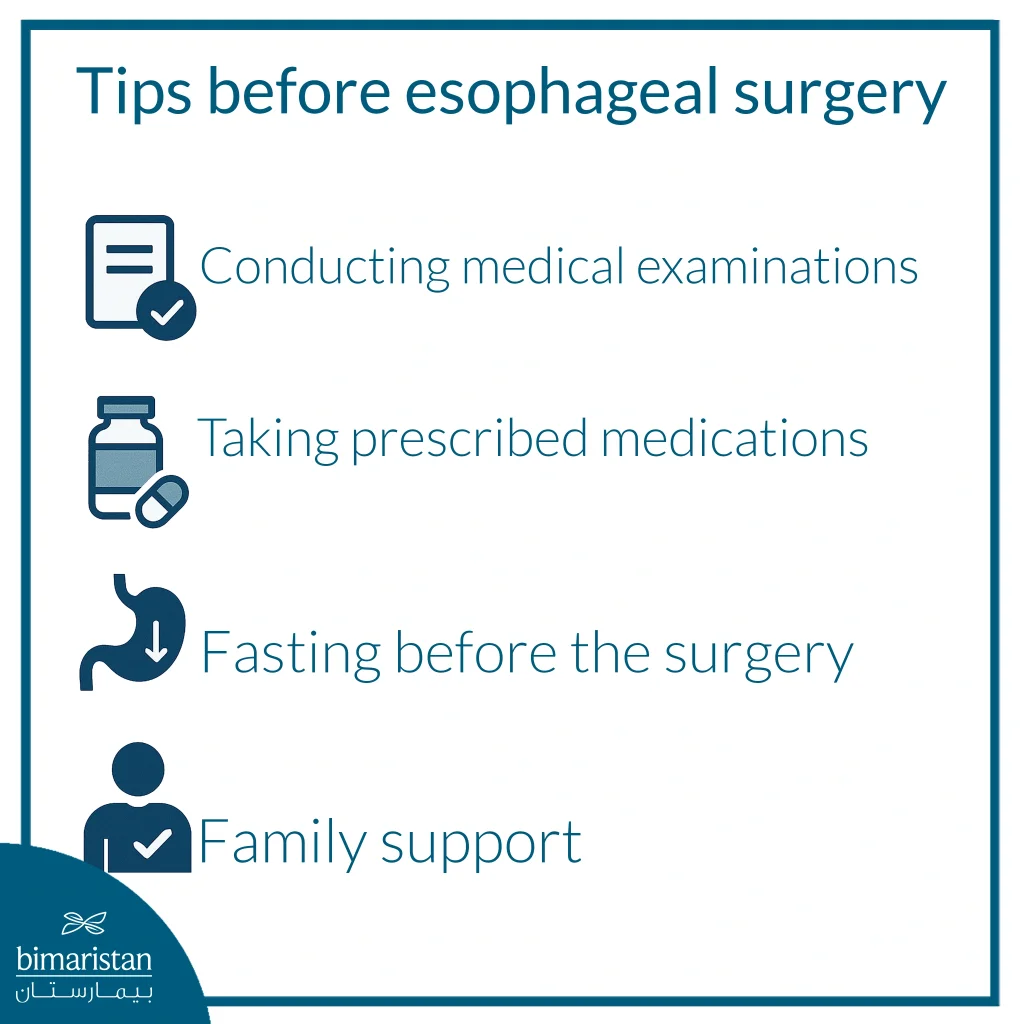
Preparation before esophageal surgery requires adherence to precise and detailed steps to ensure patient safety and optimize the outcome of the procedure. Preparing a patient for esophageal surgery begins with a comprehensive medical evaluation, followed by organizing medications, adhering to an appropriate diet, and providing comprehensive psychological support for the patient. These basic steps contribute to minimizing complications and accelerating recovery, and are the most critical stages of preparation before esophageal surgery:
Comprehensive medical evaluation
Organizing medications is also an essential part of the patient’s preparation for esophageal surgery, as it is necessary to stop taking blood-thinning medications such as aspirin before surgery to reduce the risk of bleeding. The doses of some other medications should be adjusted according to the specialist doctor’s recommendations, especially those that affect the immune system or vital functions. Adhering to these instructions ensures safe preparation and minimizes the occurrence of medication complications during the pre- and post-esophageal surgery period.
Preoperative diet before surgery
Diet is also an essential step in preparation before esophageal surgery. The patient must adhere to the fasting instructions, which specify a certain period before the operation to avoid complications during anesthesia. Additionally, it is recommended to reduce the intake of fatty or irritating foods for the esophagus, as these may increase irritation or paralytically affect the digestive system. Maintaining a proper diet before surgery helps improve the condition of the esophagus and facilitates recovery after the operation.
Psychological support and mental preparation of the patient
Psychological support is as important as medical preparation before esophageal surgery. The medical team must explain the course of the surgery and recovery steps to the patient, which helps reduce anxiety and stress. Answering common questions that patients may have is an essential part of psychological support, as it gives them more confidence and increases their commitment to the preparation plan.
Instructions for the day of the surgery
Adhering to the instructions for the day of the procedure is a crucial part of preparation before esophageal surgery, as it significantly contributes to ensuring a smooth and safe procedure. Preparation for esophageal surgery is incomplete without a thorough understanding of the steps to take on the day of surgery, from arrival time at the hospital to the initial procedures before entering the operating room.
When should I get to the hospital?
Patients should arrive at the hospital at the exact time predetermined by the surgical team or medical coordinator. Patients are often asked to arrive two to three hours before the scheduled operation time to complete administrative procedures and undergo final assessments, such as taking vital signs, confirming fasting status, and reviewing the medical file with the anesthesia and surgery team. Arriving early allows enough time to avoid any delays in the procedure and ensures complete readiness.
What should you bring?
The patient should bring their ID card, all relevant medical documents (such as test results and a list of current medications), and any previously completed health insurance papers or forms. Additionally, a small bag containing comfortable clothes to wear after the procedure and basic personal hygiene items is required. It is best to avoid bringing any jewelry or valuable items. Bring a written list of medications that the patient takes regularly.
What do you expect in the first few hours before entering the operating room?
Preparation before esophageal surgery begins in the early hours of the operation day, when the patient arrives at the hospital and enters the pre-operative area. Here, they are asked to change into a customized surgical gown, while medical staff confirm the patient’s identity and surgical details. Vital signs, including blood pressure, heart rate, temperature, and oxygen saturation, are carefully monitored.
Next, the anesthesiologist reviews the anesthesia plan, discusses any relevant health history or drug allergies, and may administer intravenous fluids or pre-anesthetic medications. During this phase, final procedural steps are explained, and the patient receives reassurance, reinforcing the importance of preparation before esophageal surgery in creating a safe and stable environment for the upcoming procedure.
The role of the medical team in preparation
Preparation before esophageal surgery involves coordinated efforts from the medical team to ensure patient safety and optimal surgical outcomes. This team includes the surgeon, anesthesiologist, and nursing staff, each contributing critically to the preoperative phase. The surgeon evaluates the case, discusses the procedural steps and associated risks, and determines preparatory measures based on diagnostic imaging and tests. Simultaneously, the anesthesiologist reviews the patient’s overall health, focusing on cardiac and pulmonary functions, to select the safest anesthesia method and provide clear guidelines on fasting and medication adjustments.
The nursing staff also plays an essential role during preparation before esophageal surgery by gathering clinical information, implementing medical instructions, and providing both psychological and logistical support to the patient. At this stage, effective communication is crucial; patients are encouraged to express their concerns and ask questions, fostering mutual understanding and collaboration that smooths the path to a successful surgical preparation.

General tips to help the patient in preparation before esophageal surgery
Preparing for esophageal surgery involves following specific guidelines that help reduce complications and enhance surgical outcomes. This preparation includes making lifestyle changes and organizing practical aspects to ease the preoperative period. Patients are advised to adhere to the following recommendations:
- Quit smoking: It is advisable to stop smoking well before surgery, as smoking increases the risk of complications after the procedure.
- Maintain light physical activity: Light exercise, such as walking, can help improve fitness and promote recovery after surgery.
- Organize your work and vacation schedule: It’s best to arrange work and vacation schedules in advance to allow enough time to recover after surgery, which can help reduce stress and improve focus on recovery.
Top Frequently Asked Questions About Preparation Before Esophageal Surgery
Preparation before esophageal surgery requires adherence to precise instructions to ensure patient safety and the success of the procedure. Here are answers to the most common questions that patients may have during the pre-esophageal surgery phase:
Can I drink water before surgery?
It is advisable to stop eating solid food eight hours before surgery and drinking liquids four hours before the procedure to ensure gastric emptying and reduce the risk of complications during anesthesia.
Can I take a shower?
It is best to shower with antibacterial soap the night before surgery to minimize the risk of infection. You should avoid using lotions such as creams or deodorants after showering.
What should I do if I feel nervous before the procedure?
It is common for people to feel anxious before surgery. To help alleviate this anxiety, consider practicing relaxation techniques such as deep breathing exercises or meditation. Additionally, don’t hesitate to speak with your medical team and ask any questions you may have, as this can help reduce stress.
Preparation before esophageal surgery is a vital phase that directly contributes to the success of the procedure and reduces the risk of complications. It encompasses a thorough medical assessment, careful regulation of medications, strict compliance with preoperative dietary guidelines, and provision of psychological support to ease anxiety and build patient confidence. Active collaboration between the patient and the healthcare team enhances surgical outcomes and promotes faster recovery. It is essential to follow these preparatory measures in order to achieve the best possible results after surgery.
Sources:
- Donington, J. S. (2005). Preoperative preparation for esophageal surgery. Thoracic Surgery Clinics, 15(2), 277-285.
- A.D.A.M. Medical Encyclopedia. (n.d.). Esophagectomy – minimally invasive. MedlinePlus.