
Liver transplantation is a surgical procedure performed to treat acute or chronic liver failure when no other effective treatments are available. The liver is the largest internal organ in the body and plays a vital role in essential functions, including detoxification, protein synthesis, and regulating the immune system.
Despite the critical nature of this procedure, liver transplant complications can present significant challenges, including immune-related disorders and rejection of the transplanted organ. Given the limited number of available donors relative to the growing demand, living donor liver transplantation has emerged as a viable solution, benefiting from the liver’s unique ability to regenerate in both donor and recipient. However, liver transplant complications may necessitate ongoing medical surveillance after surgery to ensure successful recovery and long-term transplant viability.
What is a liver transplant?
Orthotopic Liver Transplantation is a surgical procedure in which a diseased liver is removed and replaced with a healthy liver from a deceased donor or a portion from a living donor. The process begins with a thorough evaluation by a multidisciplinary medical team to assess the patient’s eligibility for transplantation. Once confirmed, the patient is placed on a waiting list. Liver transplantation is a complex operation requiring general anesthesia and careful postoperative care. Although the transplanted liver can regenerate and reach normal size in both donor and recipient within months, offering a renewed chance at life, liver transplant complications may arise, necessitating close follow-up to ensure long-term success and improved quality of life.
Liver transplant complications (early)
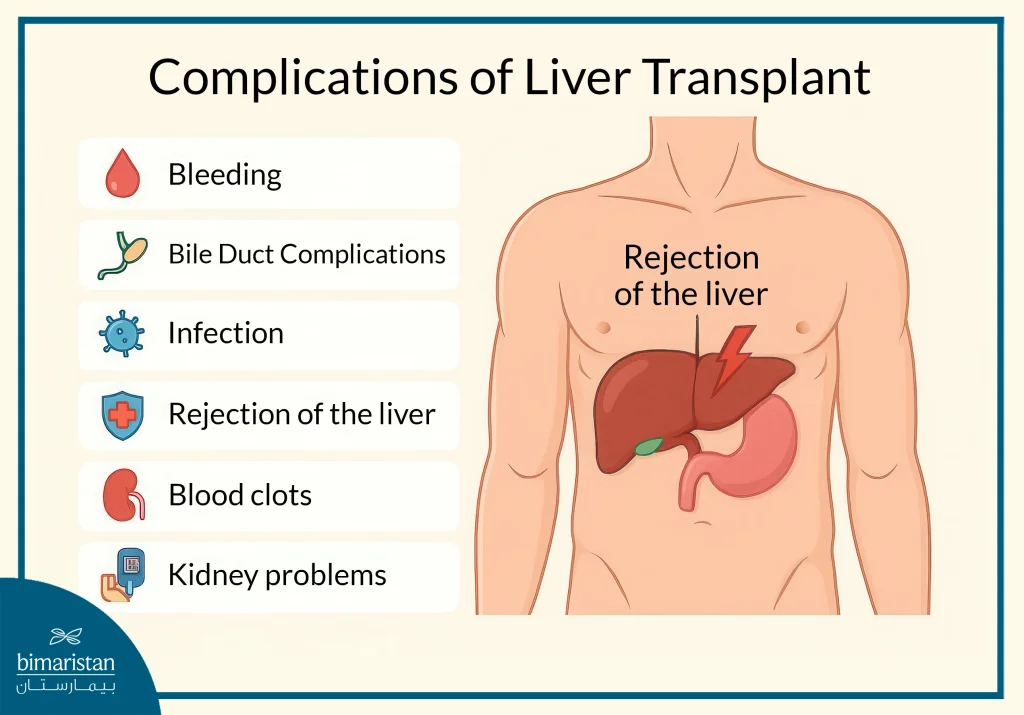
Liver transplant complications, especially early ones, are manifestations that may appear in the first days or weeks after surgery and need careful medical follow-up. These complications after liver transplantation include conditions such as rejection of the transplanted organ, infections, or blood vessel issues.
Bleeding or the need for a blood transfusion
Bleeding is one of the most common liver transplant complications, occurring in about 80-90% of patients in the first week after the operation. Bleeding occurs during or after surgery and may require a blood transfusion or even a return to the operating room.
Rejection of the transplanted liver
In about 30% of patients during the first year, the body’s immune system attacks the transplanted liver as a “foreign body”. This is prevented with immunosuppressive drugs, but rejection can still occur and is often treated with high-dose corticosteroids.
Infections
It occurs in 20-30% of patients during the first weeks after surgery, where the leading cause of these liver transplant complications is the weakening of immunity caused by anti-rejection drugs. Infections that may affect the chest, abdomen, urinary tract, or surgical wound are typically treated with antibiotics; however, in some serious cases, surgical intervention may be necessary.
Bile duct complications
This type of complication, which affects 15-20% of patients, is often treated after liver transplantation by installing stents or using laparoscopic tools without the need for open surgery.
Poor initial liver function
It affects about 10% of patients, especially when using livers from elderly donors or those with cirrhosis of the liver. This condition leads to delayed recovery and an increased risk of complications after liver transplantation.
Hepatic artery thrombosis
It occurs in 6% of cases and is one of the most serious complications after early liver transplantation that blocks blood flow to the transplanted liver, leading to irreversible damage to the bile ducts and liver, and may require urgent retransplantation.
Transplanted liver failure (Primary Non-Function – PNF)
Occurring in about 3% of cases, it is characterized by the transplanted liver not functioning within the first few days and often requires a new liver transplant as a matter of urgency.
The need for a second liver transplant (Re-transplantation)
About 3-5% of patients require a new liver transplant due to failure of the transplanted liver or perfusion issues, which may appear within days of the first transplant.
Portal or hepatic vein thrombosis
It affects 1-2% of patients and impairs blood flow to or from the liver, potentially requiring treatment with anticoagulants, interventional radiology, and occasionally retransplantation.
Deep vein thrombosis (DVT)
Affects 1 in 100 patients. It occurs in the veins of the legs and can travel to the lungs, and is prevented by anticoagulant medications and compression stockings.
Cardiovascular complications
Occurs in 1-3% of patients. These include arrhythmias, heart attacks, or strokes, and the risk increases when there is a history of previous cardiac disease.
Failed Surgery
In rare cases (1 in 400), the surgeon may not be able to complete the operation: Severe bleeding, serious anesthesia issues, or the discovery of disease in the donor liver during surgery.
Transmission of cancer from the donor
Very rare, occurring in fewer than 1 in 1,000 individuals. Despite thorough donor screening, it is still possible to transmit rare cancers. The patient is informed, and the option is discussed with them beforehand.
Serious infection from a donated liver
They are also very rare (less than 1 in 1000) and include viruses such as hepatitis B, C, or HIV, and the most common infection is CMV. This type of complication after a liver transplant is often easily treated.
Liver transplant rejection and types
Rejection of the transplanted liver is among the most frequent liver transplant complications, particularly immune-mediated rejection. It occurs when the patient’s immune system identifies the new liver as a foreign entity and initiates an attack. Rejection affects up to 30 out of 100 patients within the first year post-transplant, most commonly during the initial six months. To minimize this risk, patients receive immunosuppressive medications; however, rejection can still occur despite adherence, often indicated by elevated liver enzymes or clinical signs such as fever and jaundice.
Acute rejection is typically managed with high-dose intravenous corticosteroids administered over three days. In approximately 80% of cases, this leads to improvement, while the remaining 20% may require additional corticosteroid therapy or more potent immunosuppressants, such as anti-T-cell globulin (ATG), in severe or refractory cases of rejection.
Infection after liver transplant
Infection is one of the frequent liver transplant complications, particularly in the early postoperative period. Around 20 to 30 out of every 100 patients require additional antibiotic therapy within the first few weeks after surgery, primarily due to immunosuppressive medications that impair the body’s ability to combat pathogens. Infections may occur at various sites and, if left untreated, can escalate to sepsis.
In certain cases, infected fluid may accumulate around the transplanted liver or within the abdominal cavity, necessitating surgical drainage and decontamination. Fortunately, most infections respond well to standard antibiotics, making early diagnosis and vigilant medical monitoring essential to reduce the risk and severity of this complication following liver transplantation.
Liver transplant complications (long-term)
After a liver transplant and surviving the early recovery phase, some patients may encounter long-term health complications that persist for months or even years. These complications vary between patients, requiring ongoing medical monitoring and preventive care..
Persistent Infections
Infections remain common even months or years after liver transplantation, due to the continued use of immunosuppressive medications. The most common infections include chest and urinary tract infections, which usually respond to antibiotics. In some cases, viruses such as CMV may be transmitted from the donated liver.
High blood pressure (Hypertension)
Between 40 to 80 out of every 100 patients suffer from high blood pressure after transplantation. Cortisone use and weight gain contribute to this risk and are usually treated with antihypertensive medications.
Kidney Problems
Kidney dysfunction occurs in up to 40% of patients, and some may require temporary dialysis. The leading cause is immunosuppressive drugs such as tacrolimus and cyclosporine, and the condition may progress to the need for a kidney transplant.
High Cholesterol
Many patients have high cholesterol levels after transplantation, often due to weight gain or steroid use. The treatment often requires the use of statins.
The need for a second liver transplant (Re-transplantation)
Up to 9 out of every 100 patients may need a second liver transplant due to chronic deterioration in liver function, recurrence of the original disease, or technical complications from the first transplant.
Chronic Rejection
It occurs in about 2% of patients. It refers to the gradual deterioration of the transplanted liver due to a slow immune response that may lead to the destruction of the bile ducts (ductopenia). A second transplant may be required if immunotherapy is unsuccessful.
Strong medications are used to prevent liver rejection and cause side effects such as high blood pressure, kidney issues, chronic infections, stomach irritation, osteoporosis, and sugar or lipid imbalances. Medications vary from center to center.
Increased Cancer Risk
Patients are at a higher risk of developing some types of cancer, most notably skin cancer, lymphoma (PTLD), and smoking-related cancers due to prolonged immune system suppression.
Recurrent Liver Disease
The disease that led to the first liver failure may return to the transplanted liver, especially in autoimmune diseases such as PSC and PBC, or in cases of cirrhosis of the liver. The rate of recurrence varies according to the type of previous disease.
Cardiovascular Disease
Heart disease can develop soon after the transplant as a result of blocked arteries or weakened heart muscle. The treatment includes blood thinners, arterial catheterization, and circulatory medications.
Mortality after transplant
About 7 out of every 100 patients die within the first year after transplant. The risk of death is related to factors such as age, presence of chronic diseases, weakened immunity, or previous cancer infections.
How to minimize liver transplant complications
After a liver transplant, a long phase of medical care begins to protect the transplanted liver and keep it healthy for as long as possible. There are several key steps to follow to minimize liver transplant complications:
Adherence to immunosuppressive medications
One of the most important measures that helps reduce the risk of liver transplant complications, particularly rejection, is the lifelong and regular use of immunosuppressive medications, as these drugs suppress immune system activity to prevent it from attacking the transplanted liver.
The patient undergoes routine blood tests to detect early indicators of liver transplant complications, especially signs of rejection that may precede noticeable symptoms; if rejection is suspected, a liver biopsy may be conducted to confirm the diagnosis.
Preventing infections that increase liver transplant complications
Since immunosuppressive drugs weaken the immune system, patients become more susceptible to infections. This risk can be minimized by following prevention guidelines, such as:
Continuous medical follow-up
Ongoing follow-up with the transplant team is essential for early detection of issues, including rejection, liver function deterioration, or medication side effects, thereby minimizing the risk of liver transplant complications.
- Liver function tests
- Monitor blood pressure, sugar, and cholesterol
- Regular cancer screenings
A healthy lifestyle to solve liver transplant complications
Following a healthy lifestyle can help minimize liver transplant complications, including:
- Refrain from smoking
- Maintaining a healthy weight
- Exercise regularly
- Reduce your intake of fats and sugars
- Controlling blood pressure and diabetes
Liver transplantation is a life-saving intervention for patients with liver failure. Yet, it remains a complex procedure often associated with both short- and long-term liver transplant complications, which can vary in severity among individuals. Through consistent adherence to prescribed medications and regular medical follow-up, many liver transplant complications can be effectively managed, leading to favorable long-term health outcomes. Awareness and preparedness for potential liver transplant complications play a crucial role in ensuring transplant success and enhancing the patient’s post-operative quality of life.
Sources:
- NHS Blood & Transplant. (n.d.). Longer-term risks of a liver transplant. In Risks of a liver transplant. Retrieved July 18, 2025,
- Johns Hopkins Medicine. (n.d.). Liver transplant. In Treatments, tests & therapies. Retrieved July 18, 2025,