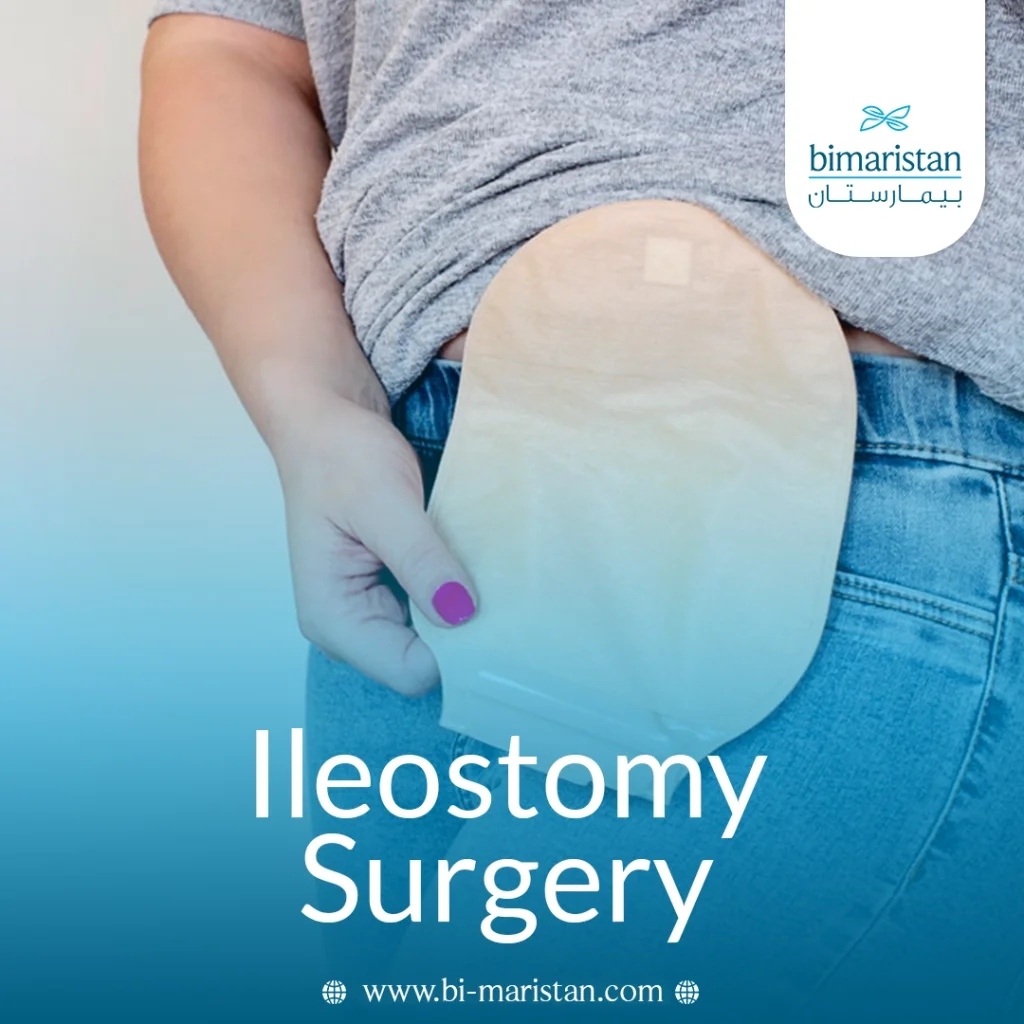

An ileostomy is an important surgical procedure used to divert waste from the small intestine to an opening in the abdominal wall. Doctors use this procedure for conditions such as chronic inflammatory bowel disease, Crohn’s disease, ulcerative colitis, or certain types of colorectal cancer. This procedure plays a vital role in protecting the intestines after surgery, preventing serious complications and ensuring a proper recovery for the patient.
Ileostomy is a common procedure in contemporary surgery, used by doctors around the world as a safe and effective option to improve the quality of life of patients who need temporary or permanent support for waste drainage. Understanding the importance and popularity of ileostomy helps patients make the right medical decision and adapt to the changes that occur after the procedure, while maintaining bowel health and overall well-being.
What is an ileostomy?
An ileostomy is a surgical procedure that diverts the small intestine through a small opening in the abdominal wall to drain waste from the body when issues prevent its normal passage through the colon and rectum. This procedure is necessary in a variety of conditions, such as chronic inflammatory bowel disease or certain types of colorectal cancer.
Surgeons perform this procedure when the colon (large intestine) can no longer use digestive waste to store and transport it. During an ileostomy, the surgeon creates an opening in the abdominal wall called an ostomy and connects the end of the small intestine (ileum) to this new opening. Digestive waste will exit the small intestine through the stoma, bypassing the large intestine, and collect in a special pouch placed on the surface of the skin.
The difference between a temporary and a permanent ostomy
- Temporary stoma: It is created for a specific period of time to protect the surgical connection in the intestine after a partial bowel resection. After full recovery, the stoma can be closed, and the normal waste pathway can be restored.
- Permanent ostomy: Used when it is not possible to reconnect the bowel, the stoma remains permanently open to drain waste.
Depending on the need, an ileostomy can be temporary or permanent. If the condition affecting the large intestine subsequently improves, you can discuss the possibility of ileostomy reversal with your surgeon.
Types of Ileostomy
There are two main types of ileostomy: loop and end.
- Loop ileostomy: Usually temporary. The surgeon inserts a loop of small intestine (ileum) through the abdomen and opens one side of it to create the stoma.
- ُEnd ileostomy: Often a permanent procedure, the surgeon separates the small intestine from the large intestine and brings the end of the ileum to the surface to form the stoma.
- Pouch ileostomy: The surgeon creates an internal pocket of the small intestine to store waste inside the body, which is emptied using a catheter several times a day. It does not require an external bag, but it requires a lot of care.
A loop ileostomy preserves the connection between the small and large intestine in case it can be used again later, while a definitive ileostomy removes this connection, but preserves the full length of the small intestine.
Why would you need an ileostomy?
You may need an ileostomy if you have a condition in your colon or the end of the ileum that makes it currently or permanently unusable. An ileostomy is often part of a larger surgery to treat a condition. Some of these conditions include
- Intestinal obstruction: An ileostomy can help treat blockages in the colon caused by cancer, scarring, or other conditions.
- Cancer of the colon or rectum: When cancer affects the colon or rectum, a complete or partial removal of the colon or rectum may be necessary. This surgery, known as a colectomy or surgical resection, may be necessary if the cancer has spread through the colon or rectum, or if the cancer is causing a blockage in the intestines.
- Complications of diverticulitis: An ileostomy may be needed to treat serious infections or tears in the colon caused by diverticulitis. This condition causes bulging and swelling of the colon wall.
- Inflammatory bowel disease (IBD): Conditions such as Crohn’s disease or ulcerative colitis can damage the colon.
- Familial adenomatous polyposis (FAP): This genetic condition causes many polyps in the colon that can turn into cancerous tumors. An ileostomy may be performed after colon removal to manage waste.
- Congenital conditions: Conditions present from birth, such as Hirschsprung’s disease or anal atresia, may require a colostomy in infants or children.
- Recovery from surgery: To protect tissue after colon or rectal surgery, an ileostomy may be performed to give it time to heal.
- Trauma or injury: An injury to the colon, such as an accident or gunshot wound, may require a colostomy.
- Intestinal perforation
A patient’s bowel may need temporary rest to recover from an illness or surgery to treat it. On the other hand, if you need to have part of your colon removed, you may need a permanent ileostomy.
Ileostomy procedure details
Before an ostomy is performed, the bowel must be cleaned to ensure the safety of the procedure and minimize the risk of infection. The doctor will determine the most appropriate method, which may include an enema or laxative solution to prepare the bowel and a restricted diet for a few days before surgery to facilitate bowel cleansing. Good preparation contributes greatly to the success of the operation and the ease of recovery.
What happens during an ileostomy
During an ileostomy, the patient will be under general anesthesia to ensure no pain. The surgeon will then:
- Opening an opening in the abdomen to locate the small intestine (ileum)
- Choosing the right technique
- Ileal end: Bringing the ileal end out to the opening.
- Ileal loop: A portion of the ileum is brought out in the form of a loop.
- Suturing the intestines with skin to stabilize the stoma
- Install an ostomy bag to securely collect waste
The procedure may be done in an open surgical approach or via laparoscopic surgery.
What happens after an ileostomy
After surgery, the patient usually spends several days in the hospital for recovery and observation. During this time, a nurse who specializes in intestinal ostomy will guide the patient. The patient will learn how to care for the stoma, including cleaning it and preventing infections, and will practice using the ostomy bag and handling waste safely and comfortably. Nutritional status will be monitored, and steps to gradually reintroduce foods will be taught. This intensive care in the early days will help to quickly adjust to the changes in the bowel and daily life after the ostomy.
Risks and potential complications of ileostomy
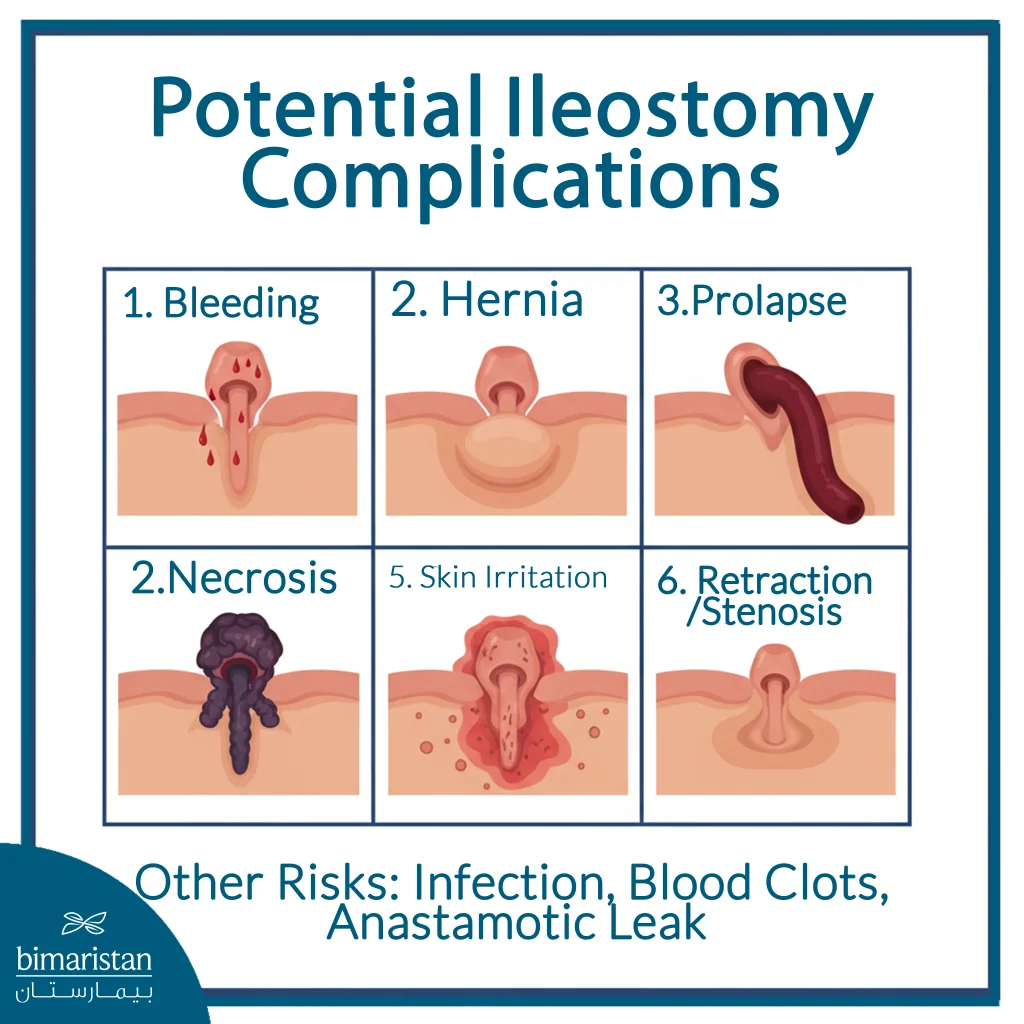
All surgical procedures carry risks. These general risks include bleeding, infection, blood clots, and the risks associated with anesthesia. For an ileostomy, there is a range of specific risks associated with the creation of the stoma and bowel function after surgery. The stoma is the most delicate part of the ileostomy, requiring careful care and constant monitoring to avoid any issues that may affect its healing or function. The most common complications associated with it include:
- Bleeding: This is most common during the first 30 days after the procedure.
- Hernia: A hernia can form around the stoma, causing a bulge under the skin.
- Prolapse: Part of the intestine may push out through the stoma, a condition known as prolapse.
- Tissue death (necrosis): Occurs when blood flow to the stoma is reduced, a condition that requires immediate medical attention.
- Skin irritation: The skin around the stoma may become red or infected due to leakage or poor stoma bag placement.
- Shrinkage: The stoma may drop below the level of the skin, resulting in leakage or difficulty in properly stabilizing the stoma bag.
- Stenosis: The stoma opening may narrow, blocking the passage of waste, and in some cases may need to be enlarged or surgically repaired.
- Separation of the stoma from the skin: The stitches securing the stoma to the skin may detach, resulting in an open wound that needs medical attention.
- Infusion: Leakage from the stoma is most common immediately after surgery, but may occur later as a result of weight loss or gain or pregnancy.
Risks may not be limited to the stoma, as bowel function itself can be affected after surgery due to the change in the digestive pathway and the way waste is eliminated. These complications include the following:
- Inability to absorb enough nutrients from food
- Obstruction: The intestine or stoma may become blocked, resulting in pain, bloating, and difficulty passing waste.
- Adhesions: This is scar tissue that forms after surgery, connecting tissues or organs together and may cause a blockage or reduce blood flow to the intestines.
- Increased amount of stool or diarrhea: The patient usually empties the ostomy bag 4 to 6 times a day, but in case of excessive increase, the doctor should be consulted to adjust the diet or treatment.
Recovery and outlook after ileostomy surgery
An ileostomy is a major surgical procedure, and the body needs time to recover. Full recovery usually takes 6 to 8 weeks, and this may vary depending on the patient’s health status and whether they have had other bowel surgery. After surgery, the patient will often follow a limited diet to help the bowel heal.
After an ostomy, waste won’t come out of the anus as before. Instead, the waste will exit through the bowel stoma and collect in the ileostomy bag. Also, the ostomy will not affect urination. Also, if the ostomy is temporary (symptomatic), your doctor will assess whether it’s safe to reverse the ostomy and reconnect your bowel after your recovery. This usually happens after 3 to 12 months, depending on the speed of recovery and your health condition.
Ileostomy does not affect life expectancy. While any surgery carries some risk, an ileostomy treats serious, potentially life-threatening conditions and often improves your quality of daily life by protecting your bowel and minimizing complications.
When should you see a doctor immediately after an ileostomy?
The patient should contact their doctor if they are experiencing:
- Cramps, nausea, or persistent vomiting
- Unpleasant odor from the colostomy
- Injury, bleeding, or irritation around the ileostomy
- Going more than six hours without passing feces
Life after an ileostomy
Life after an ileostomy is a new experience for the patient that requires some adaptation, but it doesn’t prevent them from going about their daily lives normally. Thanks to modern techniques and comfortable stoma bags, most patients are able to return to their normal activities after a short recovery period.
- Stoma care: The stoma and surrounding area should be kept clean to avoid irritation or infection, and the bag should be changed regularly as directed by the doctor or ostomy nurse.
- Diet: It is recommended to eat small, frequent meals and avoid foods that cause gas or bloating. It is also recommended to drink adequate amounts of water to replace lost fluids.
- Physical activity: You can return to normal activity gradually, avoiding heavy lifting in the first few weeks after surgery.
- Psychological support: Support from family or patient groups is very important for adjusting to a new life after surgery.
Over time, the patient becomes accustomed to ileostomy care and is able to work and socialize completely normally.
Is there an alternative to an ileostomy?
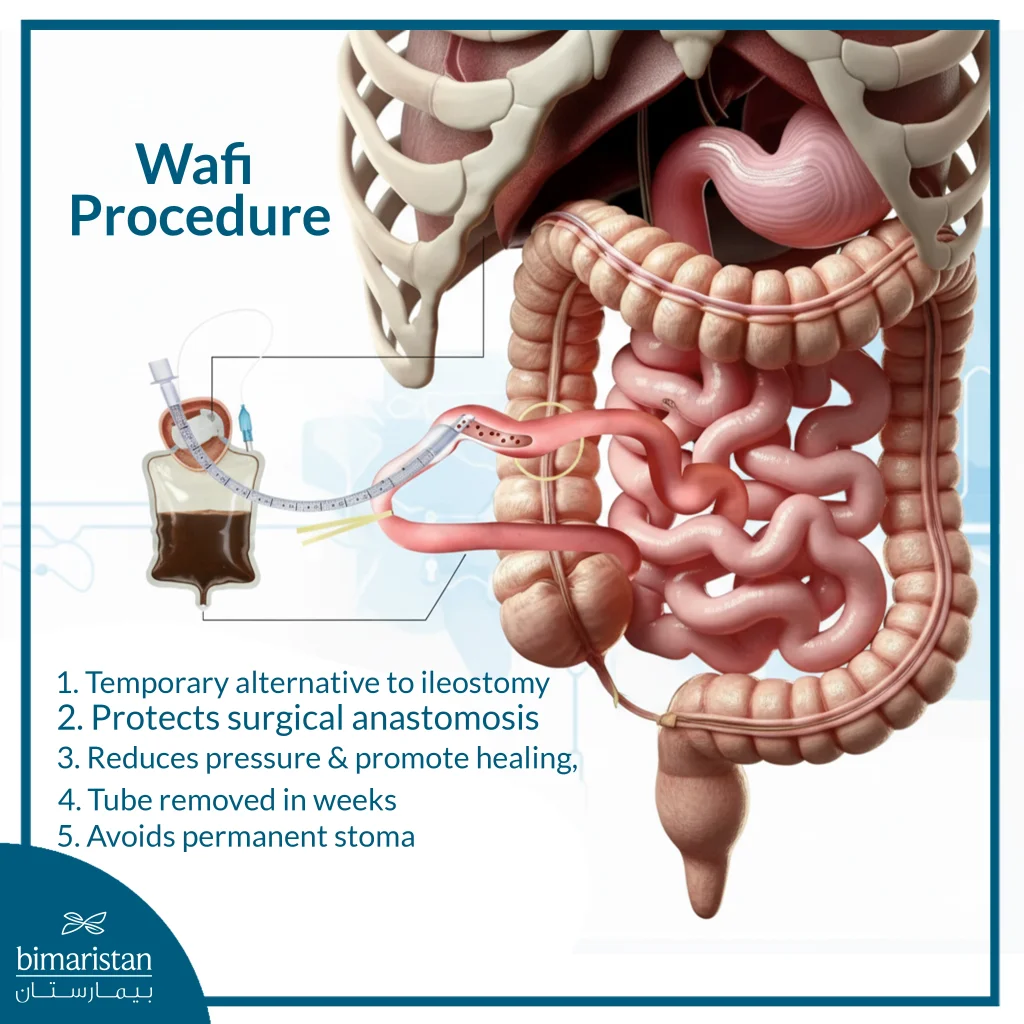
With advances in colorectal surgery, modern alternatives to the traditional ileostomy have emerged that aim to protect the surgical junction and minimize the need for a permanent stoma, while giving patients greater control and comfort. These alternatives include the temporary tube (Wafi) and the Continent Ileostomy pouch.
Wafi as a temporary option
Wafi procedure is used as a temporary alternative to an ileostomy, especially after surgeries on the small intestine or colon. The surgeon inserts a flexible tube through the stoma to temporarily drain waste, reducing pressure on the surgical joint and allowing it to heal. This solution avoids a permanent stoma and prolonged wearing of an external bag. The tube is removed after several weeks, without the need to create a permanent stoma or wear an external bag. This procedure is a safe and effective option for patients who need temporary protection of the surgical joint, while minimizing complications and speeding recovery.
Inner ileal pocket
An internal ileal pouch is an advanced option for patients who have had their entire colon removed. An internal reservoir is created from the small intestine to store waste inside the body. The patient empties the waste using a catheter several times a day, without the need to wear an external bag. This option is suitable for patients who want greater freedom of movement and a natural body appearance, but it requires careful monitoring and ongoing care.
Turnbull-Cutait technique
The Turnbull-Cutait technique is an old surgical technique that has recently made a comeback in some cases. The end of the intestine is partially taken out through the abdominal wall for a short time before being reconnected internally. This method minimizes the risk of leakage of the surgical connection. It also avoids the creation of a temporary or permanent stoma in some cases, which improves quality of life and minimizes complications.
Santulli Enterostomy Technique
It is often used in pediatric surgery, but can be applied to adults in some complex cases. The idea is to create a partial connection between the intestines for partial drainage, while allowing the remaining part to function internally. This technique helps to avoid a permanent ostomy and maintains as much normal bowel function as possible.
Finally, an ileostomy is an essential surgical procedure that saves lives and improves quality of life, especially in cases of chronic bowel disease or after major colorectal operations. This procedure aims to protect the bowel from serious complications and ensure a proper recovery, whether the ostomy is temporary or permanent. Understanding the details of an ileostomy, why it is performed, and how to care for it after surgery helps patients better adapt to the post-operative changes and return to daily life with confidence and safety.
Bimaristan Hospitals in Turkey provide comprehensive medical care for patients requiring ileostomy surgery, under the supervision of specialized doctors with extensive experience in gastrointestinal surgery, using the latest technology to ensure the best results and faster recovery.
Sources:
- Rajaretnam N, Lieske B. Ileostomy. . In: StatPearls . Treasure Island (FL): StatPearls Publishing
- Mithany RH, Shahid MH, Shahid R, Hannan A, Gill MU, Aslam S. Ileostomy 101: Understanding the Basics for Optimal Patient Care. Cureus. 2023 Oct 11;15(10):e46822
- MedlinePlus. (2024). Colostomy. U.S. National Library of Medicine