

Ozone therapy for herniated discs is an effective modern treatment that alleviates back and neck pain by reducing disc inflammation and improving oxygen delivery to nearby tissues. Clinical studies indicate that this therapy can ease pain in over 70% of patients without requiring surgery, making it a safe and reliable option for many cases. With its rising popularity, herniated disc ozone therapy is now offered in advanced medical centers worldwide as a trusted alternative to conventional surgical procedures.
What is herniated disc ozone therapy, and how does it work?
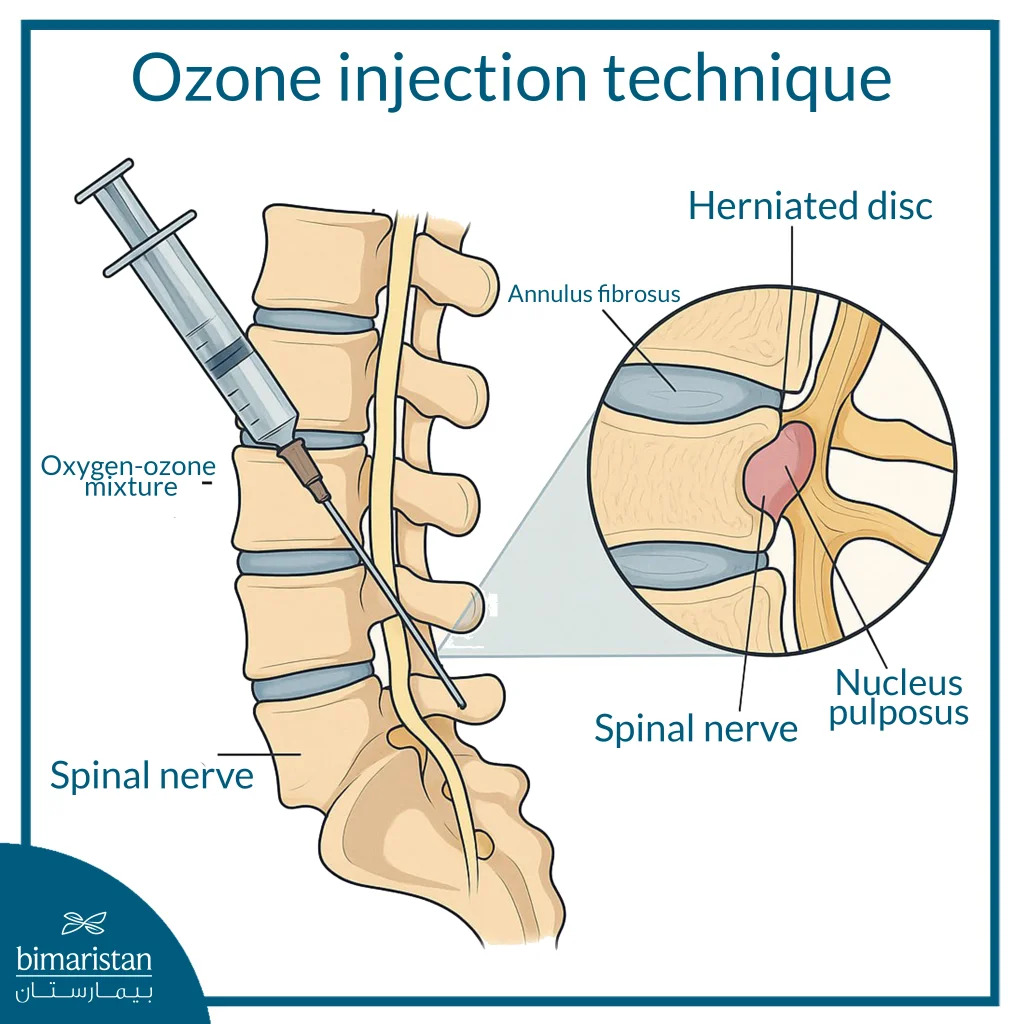
Herniated disc ozone therapy is a non-surgical medical procedure designed to relieve the pain caused by herniated discs located between the vertebrae of the spine. This treatment involves injecting a carefully measured mixture of oxygen and ozone gas into or around the herniated disc. The goal is to reduce the size of the gel-like nucleus, which is pressing on the nerves and spinal cord, thereby alleviating the mechanical pressure on these structures. The mechanism of action of ozone and its effectiveness in treating herniated discs can be summarized as follows:
- Ozone improves the flow of oxygen to tissues
- Ozone stimulates the body’s natural healing processes
- Ozone has an anti-inflammatory and antiseptic effect that prevents bacterial infections
These effects help reduce pain and muscle spasm and gradually restore spinal flexibility without the need for surgical intervention.
Conditions for which herniated disc ozone therapy is suitable
Although herniated disc ozone therapy can be an ideal option for some patients, it is not suitable for all patients. Candidates are selected carefully based on various factors. The key situations in which herniated disc ozone therapy is the best option are summarized below:
- Herniated disc ozone therapy is an effective option in the early and middle stages of a herniated disc, when symptoms are still caused by partial compression of the nerves without a complete rupture of the disc
- Ozone therapy is recommended for chronic lower back or neck pain that has not responded to pharmaceutical and natural treatments, particularly if accompanied by symptoms of numbness or mild tingling in the limbs, without significant muscle weakness.
- Ozone therapy is used to relieve pain caused by spinal arthritis or mild spinal stenosis
- Ozone therapy is used in cases where the patient is unable to undergo surgery due to certain chronic diseases or other risk factors
In cases of large herniated discs or loss of control of movement or sensation, surgery is preferred over ozone.
Herniated disc ozone therapy steps
The stages of herniated disc ozone therapy are divided into three main phases: preparation before the injection session, the procedure, and discharge from the hospital with regular follow-up.
Pre-session preparation
The preparation begins with magnetic resonance imaging (MRI) to assess the patient’s condition and determine the exact location of the herniated disc and the extent of its pressure on the nerves.
Ozone injection
Ozone disc treatment is conducted in a sterile room designed to maintain a safe radiation environment, under the supervision of a doctor who specializes in treating spinal pain. The procedure begins with the application of local anesthesia to the skin in the targeted area. Next, the doctor uses a fine needle, guided by CT or fluoroscopy, to directly access the affected disc. The entire session typically lasts about 20 to 30 minutes.
Post-session
This procedure is characterized by allowing the patient to leave the hospital on the same day without the need for an overnight stay. However, patients are advised to avoid heavy physical activity for a few days following the procedure. They can expect to gradually notice improvements in pain and mobility within a few weeks after treatment.
Advantages of herniated disc ozone therapy compared to surgery and physical therapy
| Comparison | Ozone therapy | Conventional Surgery | Physical therapy |
|---|---|---|---|
| Method of treatment | Ozone gas is injected into the cartilage to shrink it and relieve pressure on nerves | Surgically removing or replacing part of the cartilage | Therapeutic exercises and physiotherapy sessions to strengthen muscles and improve flexibility |
| Type of intervention | Non-invasive (fine needle injection) | Fully surgical | non-invasive |
| Type of anesthesia | Local | General | No anesthesia required |
| Duration of the procedure or program | 20–30 minutes for one session | 1–2 hours for the operation | Several sessions over several weeks |
| Hospitalization | No hospital stay required (same-day discharge) | 2-4 days post-operative stay | No hospital stay required |
| Recovery period | Short (3-5 days) | Long (4-6 weeks) | Medium (2-4 weeks) |
| Success rate | 70-80% in moderate cases | 85-90% in severe cases | 50-60% depending on the severity of the condition |
| Possible complications | Rare and mild (temporary pain or minor inflammation) | Possible (bleeding, inflammation, nerve damage) | Very rare (muscle fatigue or minor pain) |
| Long-term results | Mostly stable when adhering to recommendations | Effective but requires a longer recovery time | Useful in mild cases only |
| Return to daily activity | A few days later | A few weeks later | Gradually, depending on the response |
Possible side effects of ozone disc treatment
Although ozone disc treatment is a relatively safe and low-risk procedure, as it is non-invasive and performed under radiation guidance, there are a number of rare side effects that the patient may experience after the procedure. These side effects are often temporary and easily treatable, and some of the most common include:
- Mild pain or temporary discomfort at the injection site that usually disappears within a few days
- A sensation of heat or numbness in the injected area due to nerve stimulation
- Mild stiffness in the muscles surrounding the spine as a normal, temporary reaction
Other symptoms may be more serious but are very rare, including:
- Localized infection, if strict sterilization standards are not followed, can be easily treated with antibiotics
- Temporary dizziness or nausea due to interaction with ozone gas, often resolving within hours
- A slight worsening of pain in the first few days before gradual improvement begins, which is normal due to the body’s reaction to ozone
The doctor’s adherence to precise dosage and modern sterilization standards makes these complications very rare, making herniated disc ozone therapy a safe and effective option for patients who wish to avoid surgery.
Results of ozone disc treatment and evaluation of its effectiveness
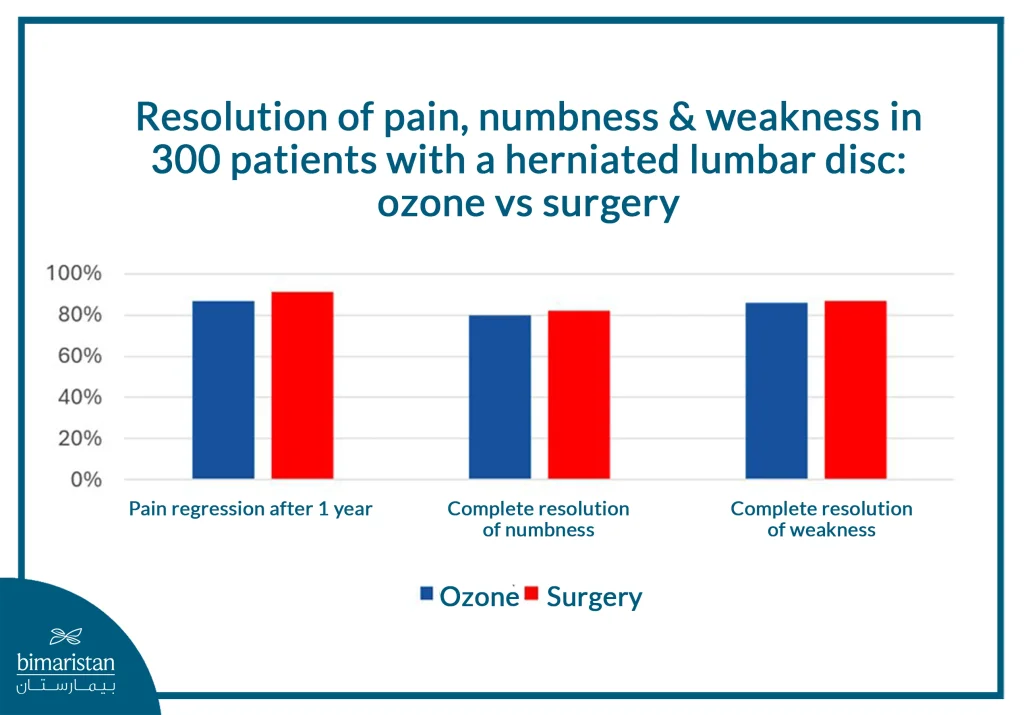
Several clinical studies have shown that herniated disc ozone therapy achieves high success rates of 70% to 80% in relieving pain and improving mobility in patients with mild or moderate herniated discs, due to its ability to shrink the disc and relieve pressure on the nerves, effectively without resorting to surgery.
The results of the treatment usually begin to appear within a few weeks of the session, with the patient noticing a gradual reduction in pain and a marked improvement in back or neck flexibility. Long-term follow-up showed that most patients maintained their improvement for more than a year when they adhered to muscle-strengthening exercises and avoided excessive stress. Today, doctors evaluate treatment effectiveness using measures of pain, mobility, and radiographic imaging. Research has shown that ozone therapy significantly reduces inflammation and improves tissue perfusion, making it an ideal option for cases that do not respond to conservative treatment and require an effective, non-surgical solution.
Herniated disc ozone therapy represents a paradigm shift in spinal pain management, offering rapid relief without surgery or lengthy recovery. Thanks to its proven safety and effectiveness, it has become a preferred option for patients seeking lasting solutions to chronic discomfort. Bimaristan Medical Center in Turkey provides this therapy with advanced equipment and specialized doctors to ensure optimal treatment outcomes.
Sources:
- Spine-health. (2023). Ozone therapy for herniated disc pain relief.
- National Center for Biotechnology Information. (2023). Ozone therapy in low back pain: Mechanisms and clinical evidence.