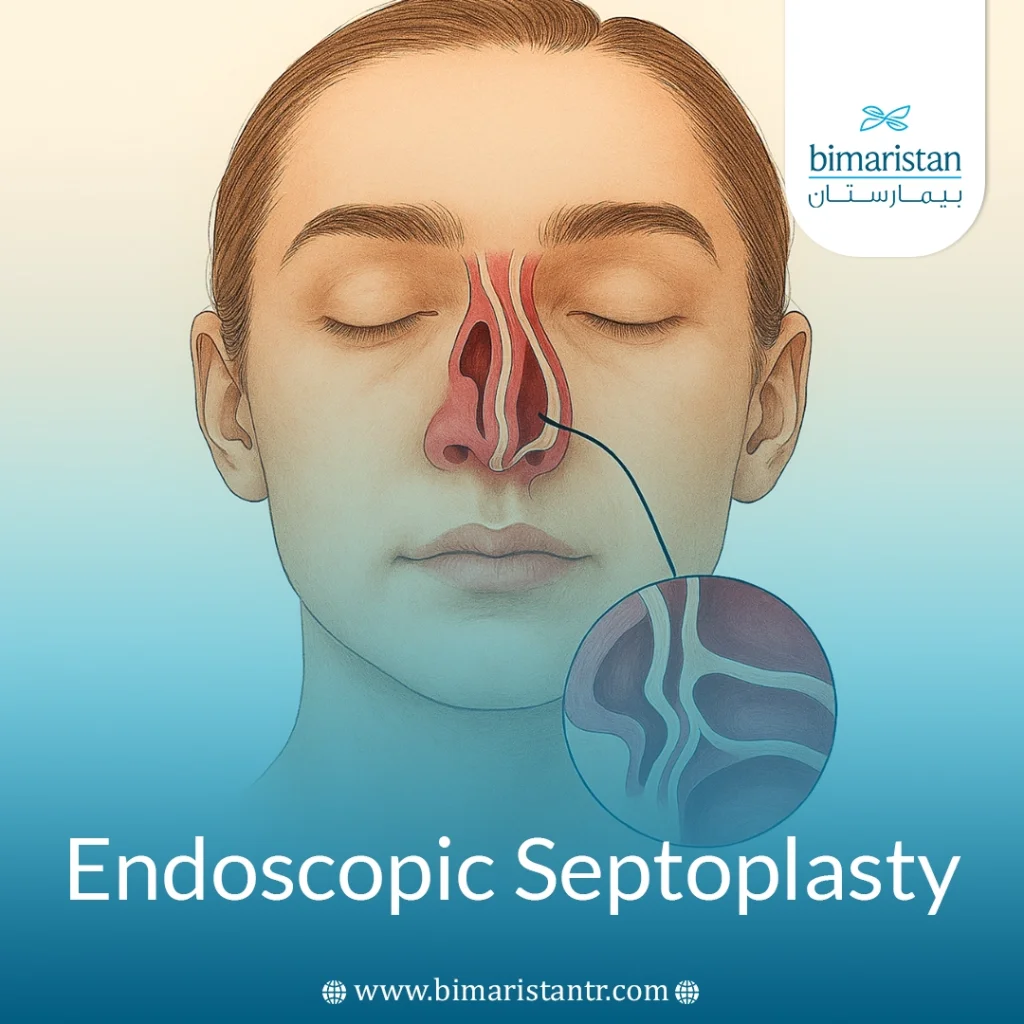
Endoscopic septoplasty is an effective treatment for chronic nasal obstruction, helping improve airflow and overall breathing quality. A deviated septum is a widespread condition, affecting a significant portion of the population to varying degrees, and often leads to persistent symptoms that interfere with daily life.
Using an endoscope during this procedure enables enhanced visualization and precise access within the nasal cavity, thereby reducing the need for extensive incisions. This minimally invasive approach promotes faster recovery and lowers the risk of complications. In Turkey, endoscopic septoplasty has gained popularity due to the country’s advanced medical centers, equipped with cutting-edge endoscopic systems and expert surgeons in nasal and sinus care, positioning it as a top destination for both local and international patients.
What is a deviated septum?
A deviated septum occurs when the bone and cartilage that separate the nasal cavity are not centered. The septum separates the left and right sides of the nasal cavity. Up to 80% of the general population has a deviated septum.
Some people may not realize they have a deviated septum because they have no symptoms. However, for some, a deviated septum can narrow the nasal airway, leading to difficulty breathing, frequent headaches, nosebleeds, or sleep disturbances. With the development of medical techniques, endoscopic septal deviation correction has become a preferred surgical option due to its high accuracy, fewer complications, and faster recovery compared to conventional methods.
What are the symptoms of a deviated septum?
A mild deviated septum may not cause any complications at all. But if you have a severely deviated septum, you may develop complications. Symptoms of a deviated septum may include:
- Blockage in one or both nostrils
- Headache
- Facial pain
- Chronic sinus issues
- Sleep apnea
- Snoring or breathing loudly during sleep
- Nasal congestion
- Nosebleeds
- Dry mouth
What causes a deviated septum?
An injury, such as a broken nose, can cause a deviated septum. Other causes include:
- practicing sports that require physical contact
- Car accidents
- Falling
- Fights and other physical altercations
- In infants, this injury may occur during birth
A deviated septum may be the result of normal growth. As the nose grows, so does the septum, and sometimes it can tilt to one side. This is the most common cause of a deviated septum.
When is endoscopic septoplasty necessary?
Doctors resort to endoscopic septoplasty when symptoms become chronic or directly affect the patient’s health and quality of life:
- Failure of drug therapy: When symptoms do not improve after using medications such as nasal sprays or decongestants, or when symptoms recur frequently.
- Impact on quality of life: If the patient has a chronic nasal obstruction that interferes with sleep, causes excessive snoring, or limits the ability to perform daily activities.
- Persistent respiratory symptoms: Difficulty breathing on one or both sides, or recurrent sinusitis due to airway obstruction.
What is endoscopic septoplasty?
Endoscopic septoplasty is a procedure that utilizes a flexible endoscope equipped with a high-resolution camera, enabling the surgeon to visualize fine details within the nose and reposition the septum to improve airflow.
Difference between conventional and endoscopic surgery
In conventional surgery, wider incisions and a direct view of the tissues are made, which can result in greater swelling and a longer recovery period. Endoscopic surgery utilizes precise instruments and a small camera, thereby minimizing the need for large incisions and providing the surgeon with a clearer view of the internal tissues.
Advantages of endoscopic septoplasty
- Accurate vision: Zoom in and see fine details of the septum and nasal passage.
- Fewer incisions: Reduce the size of the incisions and thus minimize bleeding and scarring.
- Faster recovery time: The patient often recovers within a few days compared to traditional methods.
Preparation before endoscopic septoplasty
After planning for endoscopic septoplasty, preparation for the procedure usually involves the following:
- Review your current medications: The doctor will ask you about the medications you are taking and may ask you to stop or adjust certain medications before or after the procedure
- Ask about your medical history: Tell your doctor about any aches and pains you have or if you have a history of allergic reactions.
- It is best to avoid eating or drinking for several hours before the procedure, often for 6 to 8 hours
- Stay away from smoking before and after the procedure, as it affects the blood supply to the mucous membranes and slows down healing
- Pre-operative antibiotics are not required in every case, but some surgeons prescribe them for prophylaxis, especially when there is a risk of infection or a history of nasal injury.
Endoscopic septoplasty procedure
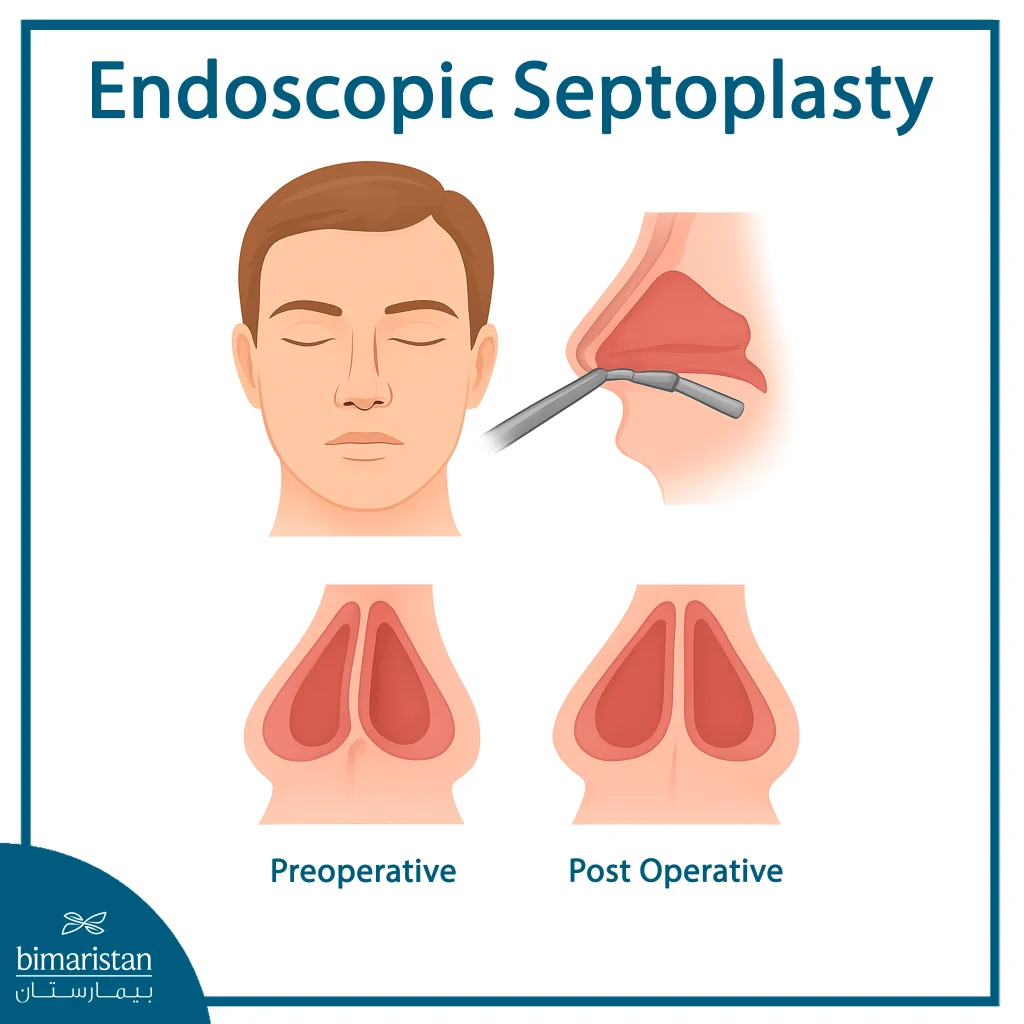
Endoscopic septoplasty typically begins under general anesthesia to ensure patient comfort and prevent movement during the procedure, though in select minor cases, local anesthesia with sedation may be sufficient. The surgeon then inserts a slender nasal speculum equipped with a camera into the nasal cavity, providing a clear view of the septum and adjacent structures without requiring large incisions.
The septum is carefully assessed to identify any deviations or deformities contributing to airway blockage. Using specialized instruments, the surgeon removes or reshapes the displaced bone and cartilage to straighten the septum and restore normal airflow. Once the correction is complete, the septum is re-examined endoscopically to confirm alignment and ensure no residual obstruction remains.
In certain cases, a small stent may be placed to support the septum during healing. Due to the minimally invasive nature of endoscopic septoplasty, extensive suturing is often unnecessary. Postoperatively, patients are advised to rest, maintain nasal hygiene, avoid strenuous activity for several days, and attend follow-up visits to monitor recovery and prevent complications.
Recovery after endoscopic septoplasty
- What to expect in the early days: Temporary swelling or blockage of the nose, accompanied by light bleeding, may occur, which is normal.
- Symptoms: Mild pain that can be controlled with painkillers, and gradual improvement in breathing.
- Patient Instructions
- Get plenty of rest.
- Clean your nose with saline solution as directed by your doctor.
- Avoid blowing your nose vigorously or being exposed to dust and smoke during the recovery period.
Benefits of endoscopic septoplasty compared to open surgery
Endoscopic septoplasty differs from conventional surgical correction of a deviated septum in the following ways:
- Shorter recovery time
- Minimally invasive and safer with less chance of complications
- The pain associated with endoscopic septoplasty is less severe
- Surgical scars from the procedure are small
Risks and possible complications
Endoscopic septoplasty, like any surgical procedure, is generally safe and effective but carries some rare risks of complications. One common issue is mild bleeding during the first few days after surgery; this usually resolves on its own and is short-lived. Additionally, there is a possibility of developing a nasal or sinus infection, which is typically manageable with antibiotics prescribed by the physician.
Other uncommon complications may include internal nasal adhesions or recurrence of septal deviation, which could require further intervention if they lead to persistent obstruction or breathing difficulties. Some patients might notice temporary swelling, bruising around the nose, or slight changes in nasal shape during the healing phase, which usually diminish over time.
To ensure a smooth recovery and reduce the risk of complications, patients should follow post-operative care guidelines, including avoiding strenuous activities, keeping the nasal area clean, and attending regular follow-up visits with their doctor for optimal long-term results.
Finally, endoscopic septoplasty is a safe and effective procedure that improves nasal airflow and relieves chronic obstruction symptoms. While some risks and complications may occur, adhering to postoperative instructions and attending regular follow-ups ensures optimal outcomes and a smooth recovery. Visiting specialized medical centers, such as Bimarestan Medical Center, is highly recommended to receive expert care, where advanced equipment and skilled professionals perform the procedure with precision and safety.
Sources:
- Khan, M. M., & Parab, S. R. (2016). Endoscopic septoplasty-Two handed technique with endoscope holder: A novel approach. Indian Journal of Otolaryngology and Head & Neck Surgery, 68(4), 475-480
- Rosner, A. J. (2022, October 17). Endoscopic septoplasty and turbinate reduction. Dr. Rosner EN