The best age for rhinoplasty is a key factor in ensuring its success and long-term stability. The nose is not only an organ that performs the function of breathing, but it is also an essential element of facial beauty and symmetry, and is often the first thing people notice when they look at us. Therefore, many people want to improve the shape of their nose to feel more confident and satisfied with their appearance. With advances in medical techniques, rhinoplasty is now safer and more accurate than ever before, boosting its popularity among young people and adults.
What is the goal of rhinoplasty?
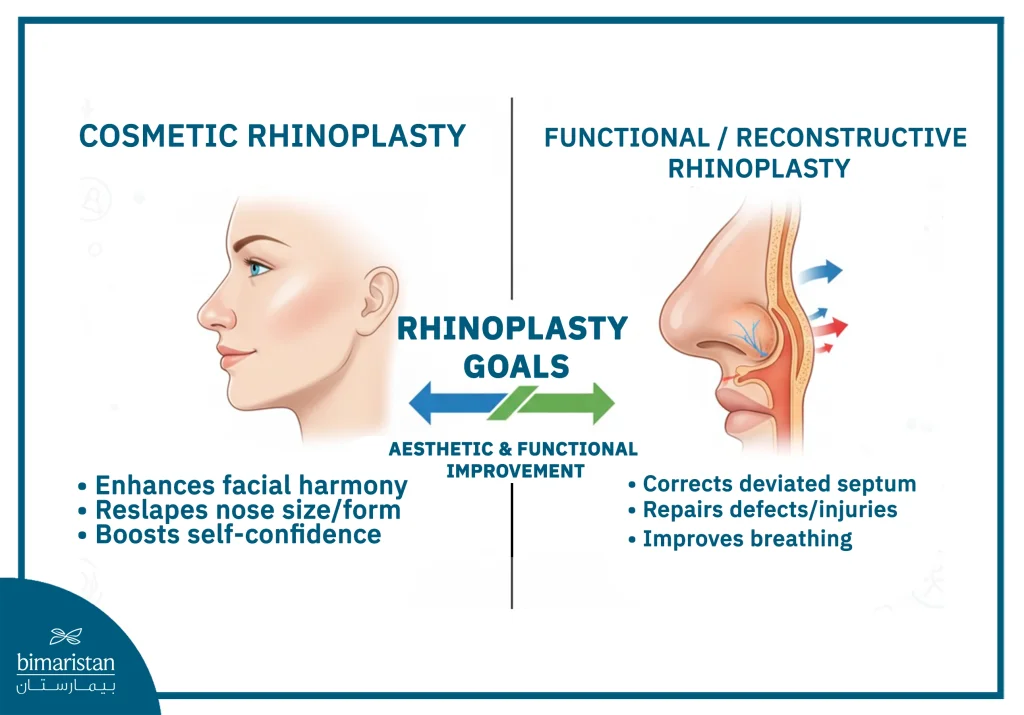
Rhinoplasty aims to improve both the appearance and function of the nose; it is not a purely cosmetic procedure, as some people think. Many people resort to it to correct birth defects or respiratory issues caused by a deviated septum or narrowed airways, which makes breathing difficult and affects quality of life. From an aesthetic point of view, the surgery helps to reduce, slim, or modify the deviation of the nose to match the facial features, giving the patient a more harmonious and self-confident appearance. Doctors usually differentiate between two types of operations:
- Cosmetic: It aims to improve the appearance of the nose without affecting the function.
- Reconstructive: It aims to repair deformities, birth defects, or previous injuries to the nose.
Thus, the real goal of rhinoplasty is not only about appearance, but also about improving respiratory function and aesthetic balance between the components of the face.
Why does age matter in rhinoplasty?
Age is not just a number when it comes to rhinoplasty; it is an important factor that affects the way the surgery is performed, the technique used, and the results of the procedure. Differences in physical development and cosmetic and functional needs between adolescents, young adults, and the elderly make age a key factor to consider before making a decision. If the patient has breathing issues or structural defects such as a deviated septum, the procedure can often be performed at a younger age, as the goals of the surgery are purely functional to improve breathing and quality of life, not just for cosmetic reasons.
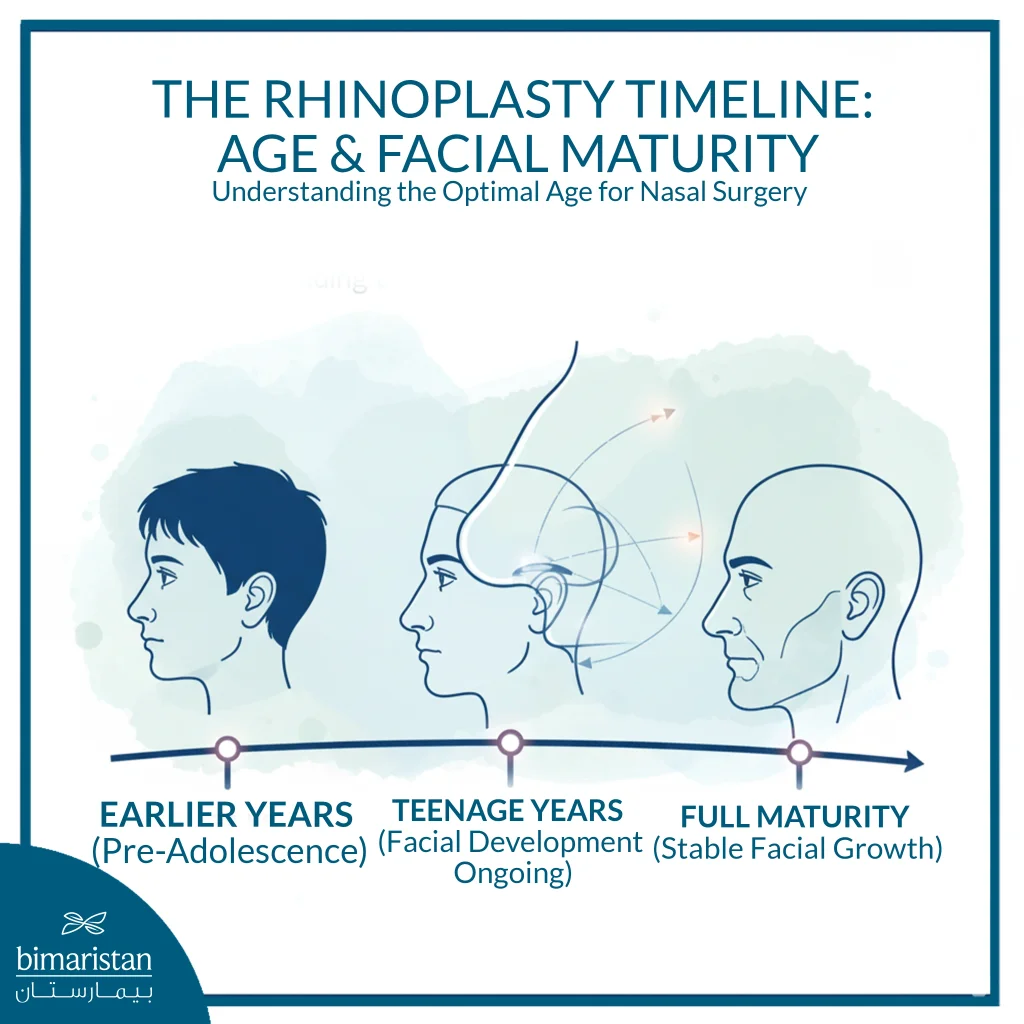
For a purely cosmetic procedure, most specialized surgeons recommend waiting until the face is fully developed. In girls, facial bone growth is usually complete around the age of 16, while in boys, it is usually around the age of 18. Performing surgery before this stage may lead to future changes in the shape of the nose, such as asymmetry or the need for subsequent corrective surgery.
What is the best age for rhinoplasty?
Choosing the best age for rhinoplasty is one of the most important factors that determine the success of the procedure and the longevity of its results. The nose, like the rest of the face, goes through stages of growth and development until it reaches its final shape, and any surgical intervention before this completion may lead to unwanted changes in the future.
Doctors point out that the best age for rhinoplasty is slightly different for males and females. For girls, it’s best to wait until 15 to 16 years old, when the facial bones are almost complete, while for boys, doctors prefer to wait until 17 to 18 years old, as their bone growth usually lasts longer. Performing the procedure before this age may hinder the normal growth of the nose or lead to changes in its shape later on, requiring corrective surgery in the future. Therefore, doctors are always keen to assess the maturity of the bones and nasal tissues before approving the procedure.
It is also important to know that age alone does not determine readiness, as the ideal age for surgery is not only related to physical maturity, but also psychological and emotional maturity. Rhinoplasty dramatically changes facial features, and the patient must be able to accept these changes and deal with the recovery period, which can take weeks. Emotional maturity helps to set realistic expectations about the results and minimizes the likelihood of post-operative dissatisfaction.
Also, before surgery, the doctor will thoroughly review the patient’s medical history. Some conditions, such as cleft lip or congenital deformities, may require surgery at a younger age for functional or reconstructive reasons. Other health issues may require postponing the surgery to ensure safety and minimize risks.
Signs you’re ready for rhinoplasty
Determining the right time to undergo the procedure depends not only on chronological age but also on the patient’s physical and psychological readiness. Here are the signs that you’re ready to take the plunge with confidence:
- Complete facial and bone growth: When the nasal and facial bones are fully developed, the results are more stable and natural, reducing the likelihood of later changes in shape.
- A medical diagnosis that confirms physical readiness: Before the procedure, the doctor performs a thorough examination to make sure there are no respiratory issues or chronic infections that may hinder the success of the surgery or recovery.
- Parental support and an encouraging environment: If the patient is an adolescent, family support plays a pivotal role in making the right decision, both in terms of psychological preparation and commitment to the post-operative recovery period.
Together, these signs help the doctor and the patient make an informed and responsible decision, ensuring that rhinoplasty is a successful and safe experience in all aspects.
Can rhinoplasty be done after the age of 40?
Some people think that rhinoplasty is only for young people, but the truth is that the surgery is possible and safe at any age as long as the general state of health is good and there are no chronic diseases that prevent undergoing anesthesia or slow recovery. Many people after the age of 40 turn to rhinoplasty not only for aesthetic reasons, but also to correct respiratory issues or the effects of previous injuries.
However, the elasticity of the skin must be taken into consideration, as with age, the skin loses some of its elasticity and its ability to adapt to new changes in the shape of the nose, which may affect the speed of recovery and the appearance of the final results. However, thanks to modern techniques in surgery and lasers, it is possible to achieve natural and harmonious results even at advanced ages, provided that the procedure is performed by an experienced specialist who accurately assesses the case.
In the end, it is the surgeon’s assessment that is the deciding factor in determining a patient’s suitability for surgery, not their chronological age alone.
Factors that determine the best age for each person
Readiness for rhinoplasty varies from person to person, as it is influenced by several interrelated factors, most notably:
- General health status: The patient should be free of diseases that may hinder wound healing or affect anesthesia, such as heart conditions or blood-clotting disorders.
- Type of nasal condition: Congenital deformities or accidental injuries may require early intervention, while cosmetic cases can be delayed until growth is complete.
- Psychological state and emotional maturity: Rhinoplasty is not an impulsive decision; it needs to be done with full awareness of the expected results. Psychologically stable people are better able to accept change and cope with the results.
- The surgeon’s opinion after the clinical examination: The physician is best able to determine the most appropriate time for surgery after evaluating bone growth, skin elasticity, and the patient’s overall health status.
Tips before considering rhinoplasty
Before deciding to undergo rhinoplasty, it is important to follow some tips that will help you achieve satisfactory and safe results:
- Consult a rhinoplasty specialist: Choose a certified and experienced surgeon to evaluate your case and explain your options.
- Waiting until bony growth is complete: In the case of adolescents, it is preferable to postpone the procedure until the nose and face are fully developed to ensure that the results are stable and do not change in the future.
- Talk openly about expectations: Discuss with your doctor what you want to look like, but be realistic in your expectations, as the goal of the procedure is natural symmetry, not absolute perfection.
- Investigate the psychological reasons behind the desire for cosmetic surgery: The desire must come from within and not from social pressure or a desire to imitate others, because self-acceptance is an essential part of the success of the procedure.
Benefits by age
The benefits of rhinoplasty vary by age, both cosmetically and functionally. For adolescents, the surgery usually focuses on balancing facial features, which boosts self-confidence during the critical years of growth. For adults, the procedure may provide noticeable cosmetic effects, such as lifting the nose and improving the shape of the tip, especially as the nose shows signs of aging or the tip sags.
Functionally, adolescents often seek to correct congenital defects such as a cleft lip, which can dramatically change their lives and enhance their daily quality of life. Adults and the elderly are more focused on improving breathing, which has a positive impact on their daily comfort and quality of sleep.
Functionally, adolescents often seek to correct congenital defects such as a cleft lip, which can dramatically change their lives and enhance their daily quality of life. Adults and the elderly are more focused on improving breathing, which has a positive impact on their daily comfort and quality of sleep.
As for the recovery period and risks, young people have a higher ability to heal faster due to cell regeneration and faster wound healing, but they need psychological maturity to accept the changes in facial features. In contrast, older people may face a longer recovery period due to reduced skin elasticity and slower healing, and may require additional care to ensure optimal and safe results.
Rhinoplasty results at different ages
The results of rhinoplasty vary from person to person, depending on age, health status, skin quality, and how well the patient follows the doctor’s instructions after surgery. Each age group has its own physiological characteristics that affect the final shape of the nose and the speed of recovery. Here are the results of rhinoplasty at different ages:
- In adolescents, the results are usually excellent in terms of shape and symmetry, because the skin is still elastic and heals quickly. However, it is important that the bony growth is fully developed before the operation, so that the results do not change in the future. Psychological support and guidance from parents is essential to set realistic expectations for the teenager.
- When young: This is the most favorable group for rhinoplasty, as growth is complete and skin elasticity is at its best, contributing to natural and fast-appearing results. At this stage, it is easier to balance aesthetics and respiratory function perfectly.
- In the elderly, although the results remain positive, the elasticity of the skin decreases with age, and healing may take longer. In these cases, the doctor takes care to maintain symmetry with the aging facial features so that the result looks natural and not artificial.
Regardless of age, following the doctor’s instructions after the procedure, such as avoiding stress, using cold compresses, staying away from the sun, and smoking, plays a pivotal role in determining the speed of recovery and the quality of the final result. The success of the procedure depends not only on the skill of the surgeon, but also on the patient’s cooperation and care for their new result.
Finally, it can be said that the best age for rhinoplasty varies from person to person, as there is no specific age for everyone, and the decision depends on how fully developed the nose is, the general state of health, and the psychological readiness for surgery. Performing the procedure at the right time, under the supervision of a specialized doctor, ensures more natural and safe results that last for many years.
If you are considering rhinoplasty and seeking a reliable center that combines medical expertise and modern technologies, Bimaristan Medical Center is your best choice. The center includes an elite group of rhinoplasty doctors in Turkey with extensive experience in cosmetic and reconstructive procedures, with careful follow-up before and after surgery to ensure the best aesthetic and functional results. At Bimaristan Medical Center, we strive to provide comprehensive care to help you achieve the look you desire with confidence and safety.
Sources:
- Kalantar-Hormozi A, Ravar R, Abbaszadeh-Kasbi A, Rita Davai N. Teenage Rhinoplasty. World J Plast Surg. 2018 Jan;7(1):97-102
- Kopacheva-Barsova G, Nikolovski N. Justification for Rhinoseptoplasty in Children – Our 10 Years Overview. Open Access Maced J Med Sci. 2016 Sep 15;4(3):397-403
- MedlinePlus. (n.d.). Vitamin D deficiency. U.S. National Library of Medicine