
Asbestos is a fibrous mineral that was widely used in building materials and insulation due to its high resistance to heat and corrosion, but over time, it was found that inhaling its fine fibers may cause cumulative damage to lung tissue, especially for workers in old factories or workshops that still contain this material.
Recent research indicates a close link between asbestos and lung cancer. Prolonged exposure to asbestos is one of the most important environmental factors causing this type of cancer, and with the increase in health awareness, medical authorities today seek to educate people about the dangers of asbestos and ways to prevent its harm in order to preserve the safety of the respiratory system.
What is asbestos?
Asbestos is a group of naturally occurring minerals in the form of very fine fibers found in soil and rocks in many parts of the world. Consisting mainly of silicon and oxygen, these fibers are characterized by their high hardness, resistance to heat and chemicals, and poor electrical conductivity, making them previously used in industrial insulation, building materials, ships, and automobiles.
Asbestos types are known by several names such as chrysotile, crocidolite, amosite and others, all of which are scientifically linked to an increased risk of lung diseases and cancer, and when these fibers break down or emit their dust into the air, they can be inhaled and stuck inside the lungs, causing asbestos damage to the lungs that may not show symptoms until many years after exposure.
How does asbestos lead to lung cancer?
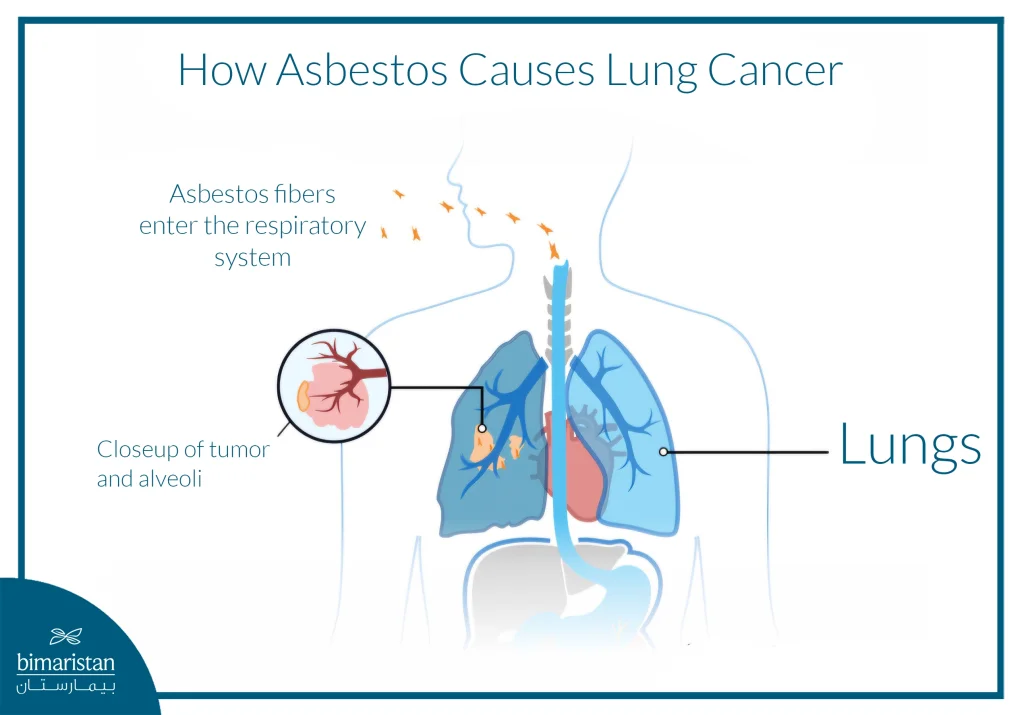
When asbestos microfibers are inhaled, they become lodged in the lung tissue and cannot be easily eliminated by the body, and over time, they cause chronic inflammation and progressive cell damage, increasing the likelihood that they will become cancerous. The link between asbestos and lung cancer develops gradually over many years of exposure.
All types of asbestos are harmful, and there is no “safe” type when it comes to lung cancer risk. Asbestos can also cause other diseases, such as mesothelioma, which can affect the pleura that surrounds the lungs or the peritoneum that lines the abdominal cavity and envelops the internal organs. The time between exposure and the onset of the disease is known as the latency period, which can last for more than ten years. Periodic screening is recommended for exposed individuals to ensure early detection and improve the chances of treating asbestos-related lung cancer.
What factors increase the risk of asbestos-induced lung cancer?
The likelihood of developing lung cancer increases with the length of exposure to asbestos and the intensity of inhalation of its fine fibers, especially in industrial and occupational environments that lack means of protection. Occupational asbestos exposure is one of the most important factors causing the disease, as it often affects workers in the fields of construction, ship repair, and the insulation industry.
Smoking is also a major factor that multiplies the impact of asbestos on the lungs. Studies show that the risk of lung cancer is significantly higher when smoking and asbestos exposure are combined than when each factor is considered separately. The risk also increases in people who are older or have chronic lung disease, making prevention and regular screening essential to minimize the impact of asbestos damage to the lungs.
What are the symptoms of asbestos-induced lung cancer?
The symptoms of asbestos-induced lung cancer are similar to those of other causes, such as smoking, and are often mild at first, leading to a delayed diagnosis. In the early stages, the patient may feel unexplained fatigue or mild shortness of breath, and as the condition progresses, the symptoms begin to increase to include:
- A chronic cough that may be accompanied by blood
- Pain or pressure in the chest area
- Loss of appetite and visible weight loss
- Wheezing or hoarseness when breathing
- Recurring respiratory infections and difficulty recovering from them
- Swelling of the face or neck as a result of the major blood vessels in the chest being affected when the tumor spreads
These symptoms are generalized and nonspecific, making it difficult to detect the disease in its early stages without careful medical evaluation.
The diagnosis of asbestos lung cancer depends on a series of careful steps that begin with taking a detailed medical and occupational history. Determining the duration and severity of asbestos exposure helps guide the diagnosis and develop the appropriate treatment plan. The stages of diagnosis usually include the following:
- Study of medical history and occupational exposure: This is the first step in assessing the likelihood of injury based on the nature of the job and the extent of exposure to asbestos.
- Imaging tests: A chest X-ray, computerized tomography (CT) scan, or positron emission tomography (PET) scan to identify any changes in lung tissue.
- Bronchoscopy or needle biopsy: To obtain a sample of tissue or fluid from the lung and have it examined in a lab.
- Histologic or cytologic examination: To accurately determine the type of cells affected and the stage of the disease.
An accurate diagnosis through these steps helps doctors determine the stage of the cancer and develop a personalized treatment plan for each patient, improving the chances of successful asbestos lung cancer treatment and facilitating long-term follow-up.

What types of lung cancer are caused by asbestos?
Prolonged exposure to asbestos fibers is associated with the development of two main types of primary lung cancer, small cell carcinoma (SCC ) and non-small cell carcinoma (NSCLC), which are the two most common types among people with this exposure.
- Non-small cell carcinoma: It accounts for the vast majority of cases and has three main subtypes: adenocarcinoma, squamous cell carcinoma, and large cell carcinoma. This is the type most commonly associated with prolonged occupational exposure to asbestos.
- Small cell carcinoma: Less common, but more aggressive and spreads quickly in the body, often seen in people who combine smoking with asbestos exposure.
The treatment of asbestos lung cancer varies from patient to patient depending on the stage of the disease and the type of cells affected, and doctors usually rely on a combination of treatments aimed at removing the tumor or limiting its growth and improving the patient’s quality of life. The most commonly used treatments include the following:
- Surgery: This is the best option in the early stages when the cancer has not spread to other areas and may involve removing part of the lung (lobectomy) or, in some cases, the entire lung.
- Chemotherapy: Used to shrink the size of the tumor or eliminate cancer cells that cannot be surgically removed, it can be administered before or after surgery or in conjunction with radiation.
- Radiation therapy: It is based on directing high-energy rays at the tumor to destroy cancer cells or prevent them from growing, and is used after surgery or to relieve symptoms in advanced stages.
- Targeted immunotherapy and drug therapy: Activates the immune system to attack cancer cells and target the proteins that these cells use to hide from the immune defense.
- Palliative care: Provided in the advanced stages with the aim of relieving symptoms and improving quality of life, it includes pain control and supportive therapies.
The treatment plan is determined based on the stage of the cancer, the size of the tumor, and the type of cells affected, and multidisciplinary treatment is often recommended to achieve the best possible results.
Neglecting to treat asbestos-induced lung cancer often leads to worsening symptoms and a gradual deterioration of respiratory function. Over time, the tumor inside the lung grows larger, causing airway obstruction or collapse of part of the lung and increasing difficulty in breathing.
The tumor may spread to other organs such as the liver, bones, and brain, causing severe pain, neurological disorders, or loss of weight and energy. The disease can also be associated with fluid collection in the pleura (pleural effusion), which increases shortness of breath and requires frequent fluid withdrawal, and in some cases, the fibrosis caused by asbestos damage to the lungs may lead to chronic respiratory failure that limits the patient’s ability to perform daily activities.
Studies show that delayed treatment reduces the chances of controlling the disease and increases the likelihood of metastasis, making early diagnosis and timely therapeutic intervention critical to improving survival and quality of life.
How can asbestos-induced lung cancer be prevented?
Preventing exposure to asbestos is the key to minimizing lung cancer and related diseases. This begins in the workplace, especially for those working in the restoration of old buildings or industries that previously used asbestos. Occupational safety procedures must be adhered to, and protective equipment, such as special masks and protective clothing, must be used. It is also advisable to inform the occupational safety officer or the employer when an exposure risk is suspected, as specialized bodies such as the Occupational Safety and Health Administration (OSHA) can provide guidance or conduct a site inspection if needed.
In older homes that may contain asbestos-containing insulation materials or floors, it is not advisable to try to remove them on your own, as breaking or puncturing them may release the fibers into the air. Certified professionals should be hired to examine samples and perform removal operations in a safe manner if necessary, as the presence of asbestos itself is not dangerous as long as the material is intact and undamaged.
Smoking cessation and avoiding secondhand smoke inhalation can reduce the risk of asbestos-induced lung cancer, as can a healthy lifestyle that includes a diet rich in fruits and vegetables, and preventing occupational exposure to asbestos remains the cornerstone of protecting long-term respiratory health.
What are the global efforts to reduce asbestos use?
International health and environmental organizations have been working for decades to reduce the use of asbestos after its proven link to lung cancer and chronic respiratory diseases. The World Health Organization (WHO) has listed asbestos as a Class I carcinogen and has called for phasing out its use in all industries.
The International Labor Organization (ILO) has issued regulations requiring member states to implement strict safety standards in workplaces where asbestos may be present, including air monitoring, worker training, and the use of personal protective equipment (PPE). More than 60 countries around the world have completely banned the manufacture, import, or marketing of asbestos-containing materials, including the European Union, Australia, and Japan.
Despite the continued use of asbestos in some developing countries due to its low cost, international bodies are working to support safe alternative programs for industrial insulation and encourage the use of alternative non-fibrous materials. Global efforts to reduce the use of asbestos confirm that the complete elimination of asbestos-related diseases is possible through strict legislation, environmental monitoring, and community awareness of its health risks.
In conclusion, asbestos exposure is one of the most important preventable causes of lung cancer. Inhaling its fine fibers causes cumulative damage to lung tissue over time, and studies show that the severity of the risk is related to the duration and level of exposure, especially in smokers. Raising awareness of the dangers of asbestos and lung cancer and adhering to safety measures is an essential step in protecting public health and minimizing future injuries.
Sources:
- American Cancer Society. (2023, November 17). Asbestos.
- MD Anderson Cancer Center. (2023, April 3). Asbestos exposure and cancer: 8 things to know.