
Millions of children worldwide suffer from genitourinary disorders that require pediatric urology surgery during childhood. Studies indicate that 30–50% of children with urinary tract infections develop urinary reflux, one of the most common tract abnormalities. Pediatric urology surgery continues to advance with modern laparoscopic techniques. Delivering precise and safe treatment at an early age is essential for preserving kidney and bladder health.
What are urinary tract disorders?
Many children face various disorders of the urinary tract and reproductive system from birth, including congenital abnormalities and functional disorders that affect urination and the health of the kidneys and bladder. If not detected early and treated appropriately, these issues can lead to long-term complications, including recurrent infections, fertility issues, or impaired kidney development. Pediatric urology surgery at an early age aims to safely and effectively correct these disorders while improving the normal function and cosmetic appearance of the urinary system. The success of pediatric urology depends on careful evaluation and the surgeon’s experience. Pediatric urologic disorders include:
Hypospadias
Hypospadias is one of the most common congenital malformations in male children requiring pediatric urology surgery. It occurs when the urethral opening is positioned below the head of the penis to varying degrees and may extend towards the middle or base of the penis in severe cases. The deformity may be associated with curvature of the penis, difficulty urinating, and cosmetic issues that later affect sexual function if not treated properly.
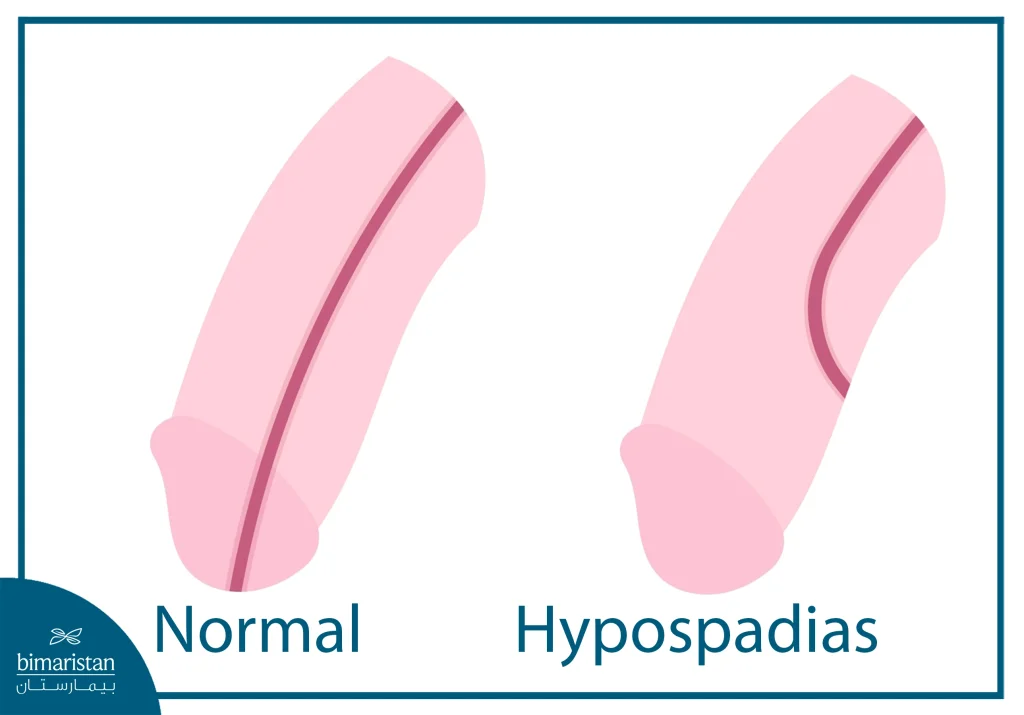
Hypospadias treatments
The primary treatment is reconstructive surgery, preferably performed between the ages of 6 and 18 months to ensure better healing and minimize psychological effects later on.
The process usually includes:
- Reshaping the urethra to guide it back to its natural position
- Curvature correction to straighten the penis and improve future function
- Cosmetic enhancement of the penis to normalize its shape and erection
Circumcision is not recommended before diagnosis, as the skin may be needed for treatment. Depending on the degree of the hypospadias, the operation may be performed in one stage or, for complex cases, in two stages. The success rate is excellent when performed by a pediatric urologist.
Urine reflux from the bladder into the ureter (Vesicoureteral reflux)
Vesicoureteral reflux (VUR) is one of the most common urinary tract disorders in children, often requiring pediatric urology surgery. It results from a malfunction of the valve between the ureter and the bladder, allowing urine to flow backward toward the kidney rather than downward. This can lead to recurrent urinary tract infections, fever, and abdominal pain. In untreated cases, it can lead to kidney scarring and long-term decline in kidney function. VUR is classified into grades 1-5, with each grade indicating the severity of the reflux and the appropriate treatment plan.
Treatment of vesicoureteral reflux
Treatment options include:
- Drug therapy (for mild and moderate degrees)
- A small dose of prophylactic antibiotic is usually used to prevent recurrent infections while the child grows and the valve heals spontaneously. The child is monitored via echocardiography and urine analysis at regular intervals according to the doctor’s plan.
- Endoscopic injection therapy (Deflux injection)
- One of the most popular and best options currently available involves injecting Deflux, a gel-like substance administered endoscopically, to strengthen the valve and prevent regurgitation. This procedure is quick, taking only 15–20 minutes, almost painless, with a high success rate, especially since patients can return home the same day.
- Reconstructing surgery (for high or recurring grades)
- This procedure is performed when the previous two treatments have failed or when severe reflux (grade 4–5) is present. The surgery involves reconstructing the valve between the bladder and ureter to permanently prevent urine backflow, with excellent success rates. It can be performed via:
- Conventional surgery
- Advanced laparoscopic surgery
- This procedure is performed when the previous two treatments have failed or when severe reflux (grade 4–5) is present. The surgery involves reconstructing the valve between the bladder and ureter to permanently prevent urine backflow, with excellent success rates. It can be performed via:
Cryptorchidism (undescended testicle)
Cryptorchidism is a common developmental disorder of the reproductive system in newborn males that often requires pediatric urology surgery. The condition occurs when the testicle remains in the abdomen or the inguinal canal rather than descending normally into the scrotum during the last weeks of pregnancy. It can be one or both testicles and is usually noticed during a routine checkup of the baby. The condition is more likely to occur in:
- Premature babies
- Low birth weight
- A family history of similar cases
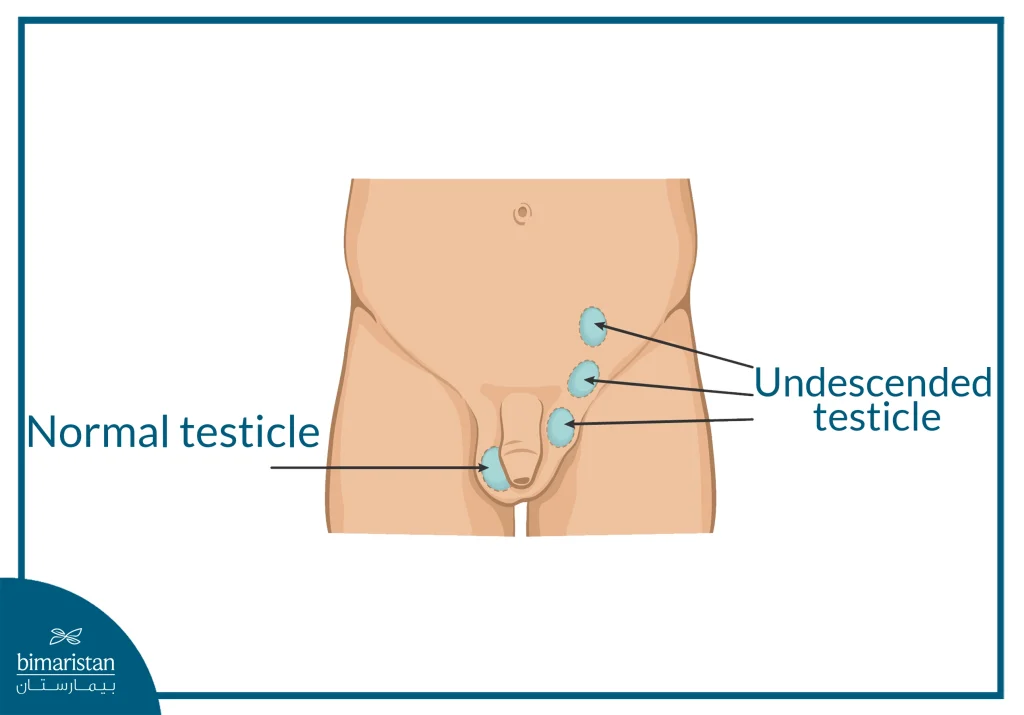
Cryptorchidism treatment
The only effective treatment is to stabilize the testicle and return it to the scrotum surgically. Surgery is usually recommended between 6 and 12 months to ensure the best results. Benefits of the procedure include:
- Improve future fertility
- Reduced risk of tumors
- Protecting the testicle from wrapping and choking
- Optimize cosmetic and natural testicular position
The operation is usually performed through a small incision in the inguinal area, but in some cases it can be performed laparoscopically, with a very high success rate.
Renal pelvic dilatation (Hydronephrosis)
It refers to an increase in the size of the renal pelvis caused by urine accumulation. This condition most commonly occurs either because of an obstruction at the point where urine exits the kidney into the ureter or due to vesicoureteral reflux from the bladder. Persistent dilatation over a prolonged period may compress the renal parenchyma and impair its function; therefore, the condition requires regular evaluation by a pediatric urologist.
Management depends on the severity of the dilatation and the underlying cause of obstruction, and includes:
- Regular monitoring and follow-up:
- It is used for mild cases, with ultrasound performed every few months to monitor for increasing dilation. Many children improve spontaneously as their urinary tract grows.
- Laparoscopic surgery
- It is performed when a clear obstruction is present or when the dilatation begins to affect renal function. The surgery works by opening the obstructed area and reconstructing the urinary passage so that urine flow returns to normal and the renal pelvis gradually decreases in size.
Ureteropelvic Junction Obstruction (UPJO)
It is a narrowing at the junction of the ureter and renal pelvis, preventing normal urine flow and leading to its accumulation within the kidney. This obstruction is the most common cause of hydronephrosis in children and may be detected during pregnancy or after birth when renal pelvic dilatation is observed on ultrasound.
- The primary treatment is pyeloplasty (surgical enlargement of the ureteropelvic junction), performed by one of two approaches:
- Laparoscopic pyeloplasty (most common option):
- Excision of the narrowed segment
- Restoration of normal urine flow
- Re-anastomosis of the ureter to the renal pelvis in a wide and healthy manner
- Advantages include less postoperative pain, a faster return to normal activities, and minimal scarring.
- Open pyeloplasty (conventional surgery):
- Reserved for complex cases or when laparoscopy is not suitable for the child
- Excellent success rates, with a gradual reduction of hydronephrosis after surgery
- Laparoscopic pyeloplasty (most common option):
Inguinal hernia in children
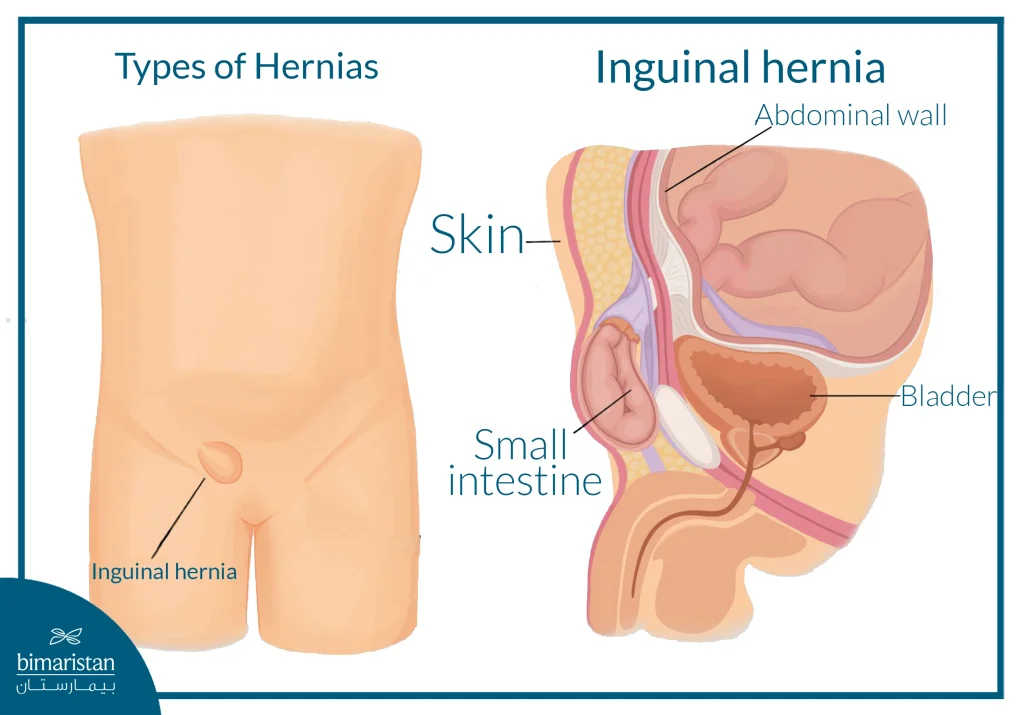
An inguinal hernia occurs when the inguinal canal remains open after birth, allowing some of the abdominal organs to push into the scrotum. It usually appears as a visible bulge that increases when crying or coughing and may temporarily disappear upon relaxation. The only treatment is surgery to close the duct, which is usually a short and simple procedure performed under general anesthesia. It can be done laparoscopically or by conventional surgery, depending on the child’s condition.
Risks and potential complications of pediatric urology surgery
Pediatric urology surgery is generally safe, especially when performed in specialized centers equipped with the latest technology, but, like any surgery, it may involve risks and complications that parents should be aware of to properly care for their child after surgery. Some of the most prominent risks include:
- Infection: Both surgical site infections and catheter-related urinary tract infections are often treated with antibiotics.
- Bleeding: Minor bleeding may occur during or after the procedure, and in some cases, the child may need a blood transfusion if the bleeding is significant.
- The need for additional surgeries: Rarely, a child may need a second surgery if complications arise or if the first surgery is not completely successful.
- Temporary pain and swelling: This is normal after any surgery and gradually subsides within the first few days with the use of prescription painkillers.
- Problems with tissue healing or internal scarring: Especially after open surgery, which can affect the organ’s long-term function if not properly monitored.
- Urine leakage or internal leakage: During ureteral or bladder repair, temporary urine leakage from the operative area may occur and is usually managed with catheterization or observation.
- Temporary effect on urination or kidney function: Some children may experience frequent urination or minor changes in kidney function after the procedure, which usually improve gradually with medical follow-up.
- Temporary or permanent urinary tract obstruction: Swelling or scarring may make it difficult for urine to pass for a period after the operation, and in some cases, the child may need additional intervention to repair the obstruction.
Cost of pediatric urology surgery in Turkey
Turkey is one of the best destinations for pediatric urology, thanks to advanced medical care, specialized surgical staff, and the latest technologies in laparoscopic and microscopic pediatric urology. Bimaristan Center offers these procedures with the highest standards of safety and quality at a much lower cost than in European and Gulf countries, making it the ideal choice for parents seeking the best care for their children while staying within their budget. Table showing the average prices of pediatric urology surgery in Turkey:
| Procedure | Cost in Turkey (USD) |
|---|---|
| Hypospadias surgery | 1800 – 3500 |
| Endoscopic vesicoureteral reflux treatment (Deflux injection) | 1600 – 2800 |
| Reconstructive surgery for urinary reflux | 2500 – 4500 |
| Cryptorchidism fixation (Orchiopexy) | 1400 – 2400 |
| Renal pelvic dilatation (Hydronephrosis) treatment | 3000 – 5500 |
| Inguinal hernia repair | 900 – 1500 |
Offering high‑quality specialized treatment in pediatric urology surgery, Bimaristan Medical Center delivers advanced care and consistent results through expert surgeons and state‑of‑the‑art technology. The center ensures parents a safe and supportive environment with a personalized surgical plan tailored to each child. By choosing Bimaristan, families receive the best pediatric urology surgery at a competitive cost compared to many countries. Ultimately, your child’s health remains the top priority at Bimaristan, where medical expertise and compassionate care meet.
Sources:
- Bailey, R. R., & Skoog, S. J. (2011). Surgical management of vesicoureteral reflux: Open versus endoscopic approaches. Urology, 21695451. PMC.
- Skoog, S. J. (2011). Surgical management of vesicoureteral reflux in children. Pediatric Urology, 57-58. ICUrology.
- Al-Rahim, R., Nadi, H. M., & Al-Zubaidi, A. (2018). Prevalence of vesicoureteral reflux in children with urinary tract infection. Iraqi Medical Journal, 64(2), 141-147.
- American Urological Association. (2010). Vesicoureteral reflux guideline. AUA Guidelines.