The PSA test is one of the most important blood tests used in the early detection of prostate cancer and evaluation of glandular health in men. This test shows how much PSA protein leaks from the prostate into the blood, helping doctors distinguish between benign conditions, such as enlargement or inflammation, and malignant conditions. This test is available with high accuracy and low cost through specialized medical centers such as Bimarestan, which combines European quality and affordable price in a safe and integrated medical environment.
What is PSA?
PSA is a glycoprotein produced by the cells lining the prostate ducts, whose primary physiological function is to liquefy semen after ejaculation, which contributes to the release of sperm. Normally, blood PSA levels remain very low (usually less than 4 ng/mL) because a healthy prostate does not allow large amounts of this protein to leak into the bloodstream. When the tissue structure of the prostate is disrupted, such as inflammation, BPH , or the presence of prostate cancer, the cells are injured and allow greater amounts of PSA to pass into the blood, resulting in higher values in the analysis.
PSA Laboratory Types
There are two main types of PSA in the blood:
- Bound PSA: PSA bound to plasma proteins such as alpha-1-antichymotrypsin.
- Free PSA: Found unbound to proteins in serum and accounts for 10-30% of total PSA.
The sum of these two types makes up what is known as total PSA and is the most commonly used test clinically. The ratio of free to total PSA is used as an additional indicator as follows:
- Less than 10% often indicates cancer
- More than 25% tend to be benign hyperplasia or inflammation
Importance of PSA testing
A PSA test enables us to do each of the following:
- Early detection of prostate cancer:
- Elevated PSA before the onset of clinical symptoms helps diagnose the disease in its early stages, increasing the chances of a full recovery
- Monitoring the effectiveness of treatment: PSA testing is done after surgery, radiation, or hormone therapy to monitor the patient’s response, as follows
- A decrease in PSA to less than 0.1 ng/mL after total prostatectomy indicates a successful resection.
- Any recurrence of an elevated tumor after a period of stability is considered an indicator of tumor recurrence.
- Evaluation of benign diseases:
- such as benign prostatic hyperplasia or chronic inflammation, where PSA is moderately elevated
- Preventive surveillance:
- For men at high risk (family history or certain ethnicities, such as African-American men)
When is a PSA test recommended?
Recommendations vary by medical organization, but general guidelines are as follows:
| Category | Suggested age to start screening | Frequency of examination |
| Normal-risk men | After the age of 50 | Every 1-2 years |
| Intermediate-risk men (limited family history) | After 45 years of age | Annual |
| High-risk men (more than one affected relative) | After 40 years of age | Annual |
PSA testing is also recommended when urinary symptoms such as:
- Pain in the perineum or pelvis
- Weak or intermittent urine flow
- Urinary urgency or nocturnal urinary frequency
- Blood in urine or semen
PSA screening process
It consists of several stages:
Preparing for a PSA test
The test does not require fasting or special preparation:
- Avoid sexual intercourse or ejaculation for 48-72 hours before the test
- If there is a urinary infection, it is advisable to postpone the test until the infection has healed
- Refrain from riding a bicycle or a stationary bike for two days before the exam
- Avoid anal exams, cystoscopy, or urinary catheterization at least a week before the exam
Prostate specific antigen (PSA) test
The procedure includes:
- Drawing venous blood from the arm
- The sample is analyzed in the laboratory using immunohistochemical techniques to measure PSA in ng/ml.

Interpreting PSA test results
Table showing the possible interpretation of each PSA test value:
| Value (ng/mL) | Possible explanation | Recommendation |
| < 4 | Mostly Natural | Periodic follow-up |
| 4-10 | Often, advanced or metastatic cancer | Additional evaluation such as free PSA or biopsy |
| > 10 | High likelihood of cancer | The need for a comprehensive assessment and targeted biopsy |
| > 100 | Additional evaluation, such as free PSA or biopsy | Urgent assessment |
Interpreting the percentage of free PSA:
- < 10%: High risk of prostate cancer
- 10-25%: Moderate risk and requires careful monitoring
- > 25%: High likelihood of benign enlargement or chronic inflammation
Factors Affecting Test Accuracy
PSA results can be affected by many factors, including:
- Physical exertion and intercourse: Temporarily raises PSA
- Age: PSA gradually increases with age as a result of normal prostate enlargement.
- Infections and urinary procedures: They may temporarily raise PSA, so it’s best to wait 4-6 weeks before retesting.
- Medications: Prostate enlargement medications such as Finasteride or Dutasteride reduce PSA by about half.
Next steps after a PSA spike
If PSA rises above the normal range, it is not a definitive diagnosis of cancer, but rather a first step to be followed by additional testing:
- Recheck after 6-8 weeks to make sure the elevation has stabilized
- Clinical rectal examination to assess prostate size and texture
- Multi-criteria MRI to identify suspicious foci
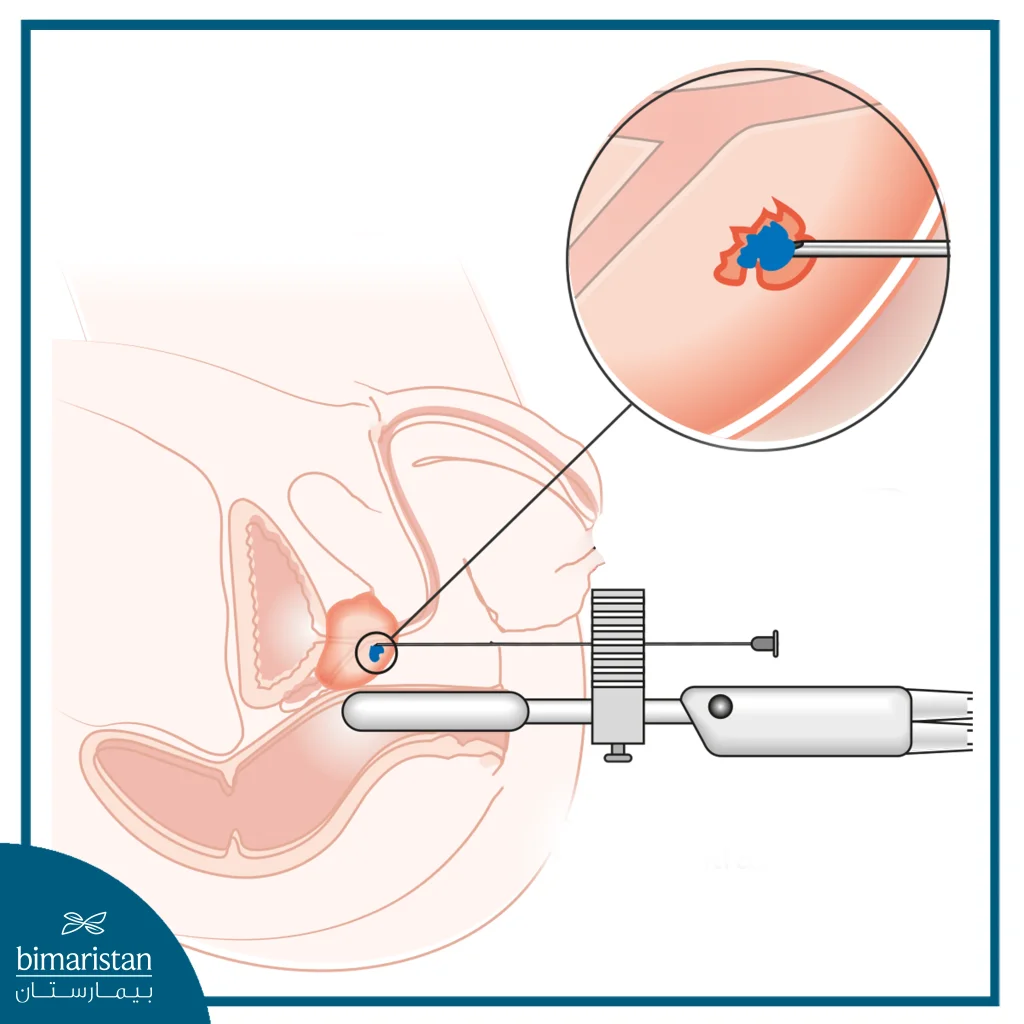
- Guided biopsy: A confirmatory diagnostic test, usually 10-12 samples are taken from different areas to confirm the presence, type, and Gleason score of cancer cells.
Advantages and disadvantages of PSA testing
The PSA test is one of the most important laboratory tools for assessing prostate health and early detection of prostate cancer, but it has advantages and limitations that should be well understood before relying on it fully. Here are the advantages and disadvantages associated with using this test:
- pros:
- Simple and easy to do
- A precise tool for post-treatment follow-up
- It helps in early diagnosis and saving lives
- cons:
- The possibility of false positives in cases of enlargement or inflammation.
- The possibility of false negatives exists in some cancers with low PSA production.
- This sometimes leads to overdiagnosis and unnecessary treatment.
Cost of the PSA test in Turkey
Turkey is a leading destination for medical analysis and testing thanks to the sophistication of its laboratories and the quality of its services, and Bimarestan Medical Center stands out as an ideal choice for those who want to get the best medical quality at the lowest possible cost. Bimarestan combines high accuracy of results, state-of-the-art laboratory technology, and affordable prices for both local and international patients.
As for the cost of PSA testing in Turkey, it is considered low compared to European and Gulf countries, where prices usually range between 50 and 100 USD, depending on the type of test (total or free) and the laboratory or hospital where the analysis is performed. Bimaristan offers patients the possibility to get tested in accredited centers with high accuracy and competitive prices, while providing a free consultation service and follow-up results with specialized doctors.
The prostate-specific antigen (PSA) test is an essential tool in the early detection and follow-up of prostate cancer and benign prostate diseases. Although it is not a diagnostic test by itself, its clinical value increases when combined with clinical examination, imaging, and biopsy. It is recommended that men over 50 or those with a strong family history be screened periodically, with the results followed up by a specialized urologist to avoid misinterpretations or unnecessary procedures.
Sources:
- National Health Service (NHS). (2023, November 14). PSA test. NHS.
- National Cancer Institute. (2024, February 12). Prostate-specific antigen (PSA) test. U.S. Department of Health and Human Services, National Institutes of Health.