
Eye tumors are relatively rare compared to other cancers, with about 850 new cases per year in the United Kingdom and about 3,400 people diagnosed in the United States each year. These tumors affect various parts of the eye or surrounding tissues and can be benign or malignant, depending on the type of cell that originated there. Common types include ocular melanoma, squamous cell carcinoma, ocular lymphoma, and pediatric retinoblastoma.
Because eye tumors can threaten vision or spread to other parts of the body if not detected early, early diagnosis and treatment are critical to saving sight and life.
What are eye tumors?
Ocular tumors refer to a group of rare tumors that begin inside the eye or in surrounding structures such as the eyelid, lacrimal gland, and optic nerve. These tumors result from abnormal cell proliferation that leads to the formation of a mass known as a tumor, which may be benign (non-cancerous) or malignant (cancerous).
Benign tumors do not spread to other parts of the body, while malignant tumors have the ability to grow rapidly and travel through the blood or lymph nodes. Tumors that start inside the eye are called primary eye tumors, while those that spread from other organs, such as the lungs or breast, are known as secondary tumors, which are more common in patients with metastatic cancer.
Types of ocular tumors
Ocular tumors are classified according to where they originate and what type of cells they consist of, and can be divided into several main groups:
1. Intraocular tumors
Tumors that arise within the eyeball itself include:
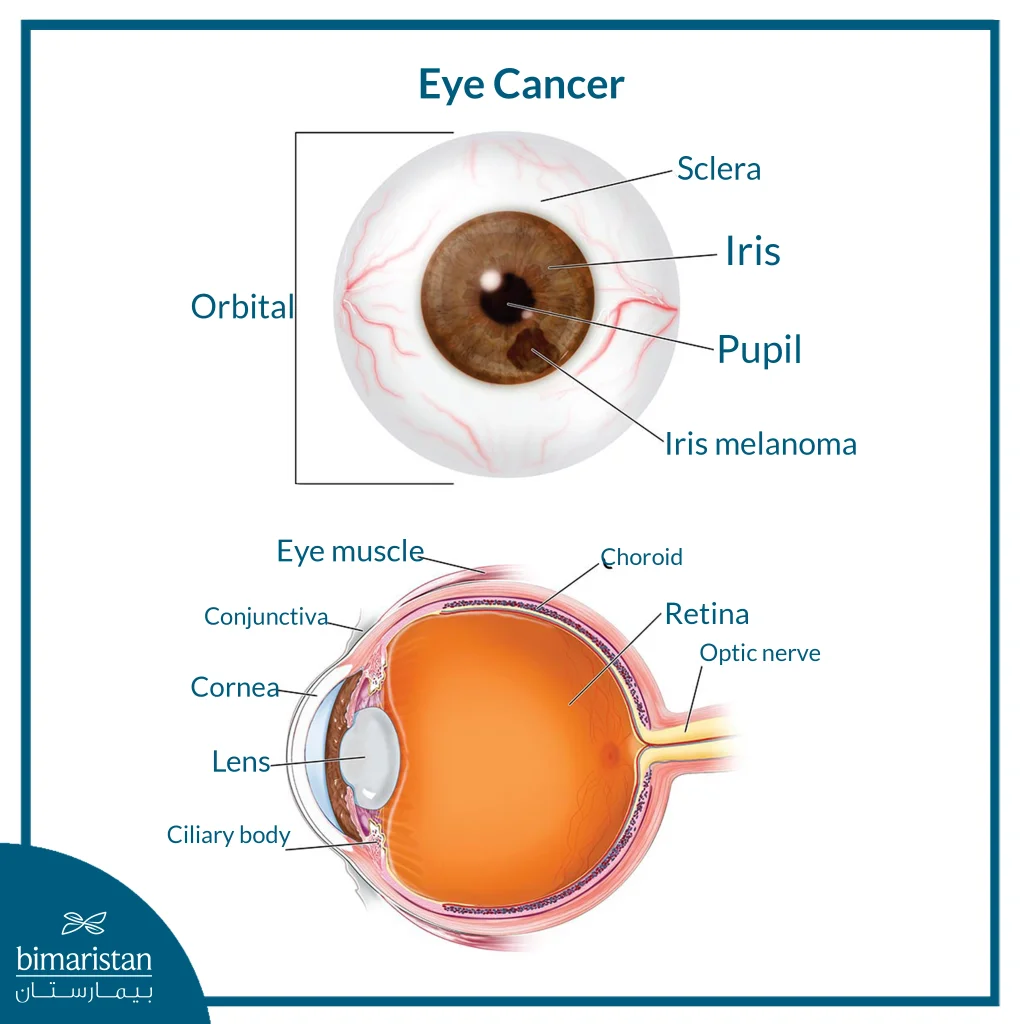
- Intraocular Melanoma: The most common type of ocular cancer, it originates from cells called melanocytes, the pigment-producing cells of the iris, choroid, and ciliary body
- Iris melanoma: It appears as a dark spot on the iris and grows slowly.
- Ciliary body melanoma: originates behind the iris and affects the muscles that control the eye’s lens.
- Choroidal melanoma: The most common type, it appears in the vascular layer that nourishes the retina.
- A rarer type of melanoma can also appear in the conjunctiva (conjunctival melanoma), which, although rare, is more aggressive.
- Retinoblastoma: A malignant tumor in children under the age of five that originates from the retinal cells at the back of the eye, often hereditary and associated with mutations in the RB1 gene. It usually presents with a white pupil or strabismus.
- Intraocular lymphoma: A rare type of non-Hodgkin’s lymphoma (mostly B-cell lymphoma) that affects people over the age of 50 or those who are immunocompromised, and is often associated with central nervous system lymphoma.
2. Periocular tumors
These are tumors that form in the tissues surrounding the eyeball, such as the muscles, nerves, eyelid, and lacrimal gland:
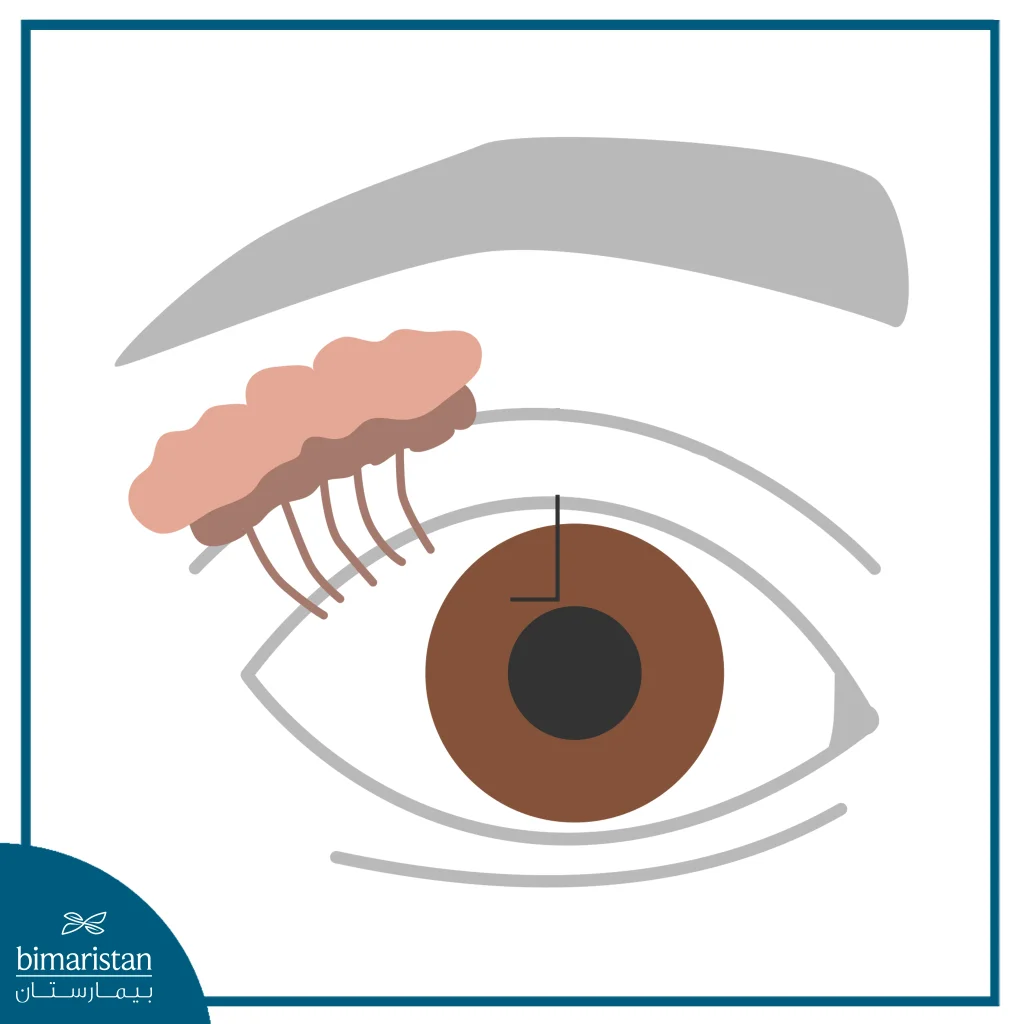
- Basal cell carcinoma: The most common eyelid cancer.
- Squamous cell carcinoma: Appears on the skin or conjunctiva.
- Tumors of the lacrimal gland: They arise in the gland responsible for producing tears.
- Rhabdomyosarcoma: It affects the muscles surrounding the eye and is one of the most common malignant ocular tumors in children.
3. Benign ocular tumors
Although some are not considered cancer, they can cause visual issues if they are close to the central macula, such as:
- Choroidal nevus: Similar to a mole inside the eye and often not dangerous.
- Choroidal hemangioma: A hemangioma that may affect vision at its sensitive location in the retina.
Symptoms of ocular tumors
Symptoms of ocular tumors may not appear in the early stages and are often discovered during a routine eye exam, but as the tumor progresses, a range of signs can appear, most notably:
- Seeing flashes of light, wavy lines, or floating spots in the field of view
- A dark spot in the iris or inside the eye that gets larger over time
- Painless partial or total vision loss
- Persistent blurred or foggy vision
- A bulging or swollen eye
- A growing lump on the eyelid or inside the eyeball
- Eye irritation or redness that doesn’t improve with treatment
- In rare cases, pain in or around the eye
It’s worth noting that these symptoms may mimic minor eye conditions, so it’s advisable to see an ophthalmologist as soon as any of them appear to determine the exact cause.
Causes of ocular tumors
ocular tumors arise when certain cells within the eye begin to divide and grow uncontrollably, resulting in a mass known as a tumor, which may travel through the blood or lymphatic system to other parts of the body. The exact causes are not fully understood, but the following factors may increase your risk:
- Aging, as most cases are diagnosed after the age of 50
- Genetic disorders such as atypical mole syndrome or tumor predisposition syndrome associated with the BAP1 gene
- Light skin or blue-green eyes
- Family history of ocular tumors or melanoma
- Prolonged exposure to ultraviolet light from the sun or tanning beds
- Weakened immune system or chronic diseases that affect immunity
Studies show that a combination of these genetic and environmental factors may contribute to an increased risk of eye tumors, making regular eye exams essential for early detection and prevention.
Diagnosis of ocular tumors
The diagnosis of ocular tumors is a delicate step that requires the collaboration of a team of ophthalmology and oncology specialists to distinguish malignant tumors from benign ocular conditions and to determine the exact extent of tumor spread. Diagnosis usually involves a number of stages and medical examinations organized as follows:
- History taking and clinical examination
- The doctor begins by gathering detailed information about the patient’s symptoms, such as changes in vision, the presence of dark spots, or protrusions in the eye.
- The patient is asked about family history of tumors or related genetic diseases, and environmental factors such as prolonged sun exposure.
- After that, the doctor performs a thorough eye examination to assess the shape, movement, and internal structure of the eyeball.
- Specialized ophthalmic examination: The doctor uses advanced tools to examine the eye in detail, the most important of which are
- Ophthalmoscope: A handheld instrument equipped with lenses and light that enables the doctor to see the fundus, retina, and optic nerve.
- Slit lamp: A table-mounted device that allows examination of the front and back of the eye under high magnification to detect any tumors or abnormal changes.
- During the examination, the doctor may notice dark spots, dilated blood vessels, or abnormal movement of the eyeball, which raises suspicion of an internal tumor.
- Imaging examinations: Medical imaging is used to confirm the presence, location, and extent of a tumor, including
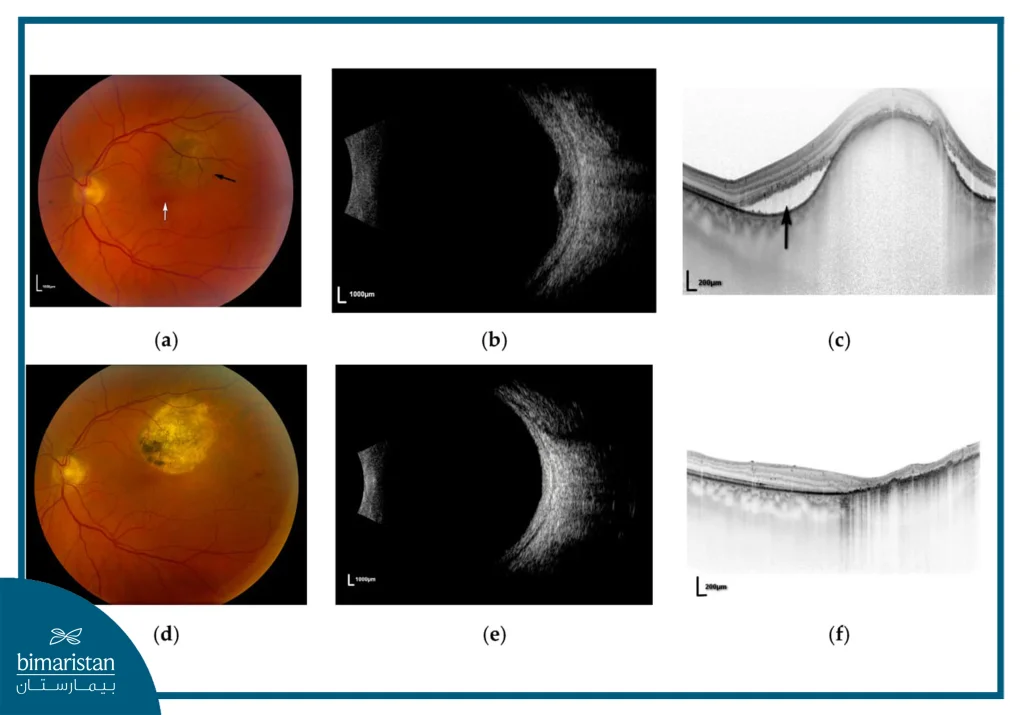
- Ocular ultrasound: accurately shows the size, shape, and location of the tumor, and is essential in the diagnosis of intraocular melanoma.
- Fluorescein angiography: A special dye is injected into a vein to highlight the blood vessels inside the eye, and then they are photographed with a specialized camera.
- Computed tomography (CT) or magnetic resonance imaging (MRI): to assess the extent of tumor spread to the optic nerve or surrounding tissues.
- Positron emission tomography (PET): Used in advanced cases to detect distant metastases in the liver or lungs.
- Biopsy and histologic analysis: In some cases, the doctor may take a sample of the tumor to confirm the diagnosis and determine the type of cells
- Fine Needle Aspiration Biopsy: Used to withdraw a small amount of fluid or cells from inside the eye.
- Incisional Biopsy: A small piece of the tumor is removed for microscopic examination.
- Excisional biopsy: This involves completely removing the tumor, if possible, to conduct a comprehensive histological and genetic analysis. These analyses help determine the degree of tumor aggressiveness and precisely guide the treatment plan.
- Tumor staging: After the diagnosis is confirmed, the tumor is staged to see how far it has progressed using one of two main systems
- AJCC (TNM) system:
- T: The size of the tumor and its extent within the eye or towards the surrounding tissues.
- N: The tumor has spread to the lymph nodes around the ear or neck.
- M: Presence of metastases to distant organs, especially the liver.
- These criteria are combined to determine the cancer stage from I (least advanced) to IV (most advanced).
- COMS system: Based on measuring tumor dimensions in millimeters, it classifies them into:
- Small: Height between 1–2.5 mm and width 5–16 mm.
- Medium: Height between 2.5–10 mm and width up to 16 mm.
- Large: Height exceeding 10 mm or width exceeding 16 mm.
- AJCC (TNM) system:
This classification helps choose the most appropriate treatment and accurately assess the patient’s future prospects, as early diagnosis plays a pivotal role in preserving vision and reducing the risk of the tumor spreading.
Treating ocular tumors
The choice of treatment method for ocular tumors depends on the type, size, location, and extent of the tumor, as well as the patient’s general condition and visual ability. In some cases, when the tumor is small or slow-growing and does not threaten vision, the physician may recommend periodic monitoring rather than immediate treatment to avoid complications that could affect vision. In cases that require medical intervention, several effective treatment options are available, including:
- Radiation therapy: This is one of the most commonly used methods of treating ocular melanoma. Either a small radioactive disk is implanted near the tumor (Brachytherapy), where a microplate is implanted that releases doses of radiation to destroy cancer cells over a few days, or an external beam of radiation (External Beam Radiation Therapy) is directed at the tumor without touching the eye. Proton radiation is sometimes used for its ability to accurately target the tumor and minimize damage to healthy tissue.
- Surgery: Surgery is performed for small or localized tumors that have not spread outside the eye. Common procedures include removal of part of the iris or the combined iris and ciliary body, or removal of choroidal tumors. In advanced cases, surgery may require the removal of the entire eyeball with a prosthetic eye that is identical to the healthy eye. If the tumor has spread to surrounding tissues, a more extensive resection may be performed, including the eyeball and some adjacent tissues.
- Laser therapy: A thermal laser is used to destroy tumor cells through Transpupillary Thermotherapy and can be applied alone or after radiation therapy to prevent tumor recurrence.
- Immunotherapy: Tebentafusp is used in some cases of inoperable or metastatic ocular melanoma. It works by stimulating the immune system to recognize and attack cancer cells more effectively.
- Targeted therapy: Targeting specific genetic mutations within tumor cells, such as BRAF mutations, is more precise and has less impact on healthy cells.
- Chemotherapy: It is not commonly used for ocular tumors, but it is used when other treatments have failed or when the tumor has spread to distant organs.
Side effects of treatment can vary depending on the type of procedure used, sometimes including vision loss or partial vision loss, so the doctor balances the effectiveness of the treatment with preserving as much visual function as possible.
Coping after ocular tumor treatment
Psychological support and visual rehabilitation are an important part of recovery after ocular tumor treatment. After major surgeries such as eye removal, the patient is fitted with a prosthetic eye that moves closer to normal to improve outward appearance.
Visual rehabilitation therapy helps train the patient to adapt to changes in vision and use the good eye more efficiently. Regular follow-ups with the ophthalmologist and oncologist are recommended to detect any signs of tumor recurrence or late complications. Family and psychological support can also help reduce anxiety and improve quality of life.
Preventing ocular tumors
Although complete prevention of ocular tumors is not possible, certain measures may reduce the risk of infection and aid in early detection, including:
- Having regular eye exams at least once a year, especially for those over the age of 50 or who have a family history of the disease
- Wearing UV-blocking sunglasses when exposed to direct sunlight
- Avoid using artificial tanning devices as much as possible
- See your doctor as soon as you notice any change in iris color, eye shape, or decreased vision
- Maintaining a healthy lifestyle prevents immune dysfunction and helps prevent harmful cellular mutations
Early diagnosis and treatment is the most important factor in improving the chances of recovery and preserving vision, while advanced medical centers like Bimaristan in Turkey provide comprehensive care that includes the latest radiation and surgical treatment techniques under the supervision of elite ophthalmologists and oncologists
Ocular tumors are rare but can significantly affect vision and quality of life if not detected early. Early diagnosis and regular follow-up with a specialized doctor increase the chances of controlling the disease while preserving vision as much as possible. With advances in surgical and therapeutic techniques, most cases can be treated safely and precisely in specialized centers such as Bimaristan Medical Center in Turkey, which provides patients with comprehensive care under the supervision of ophthalmology and oncology experts using the latest diagnostic and therapeutic methods.
Sources:
- Moorfields Eye Hospital NHS Foundation Trust. (2024). Eye cancer (ocular melanoma).
- University Hospital Southampton NHS Foundation Trust. (2023). Eye (ocular) cancer: Diagnosis and treatment.
- Johns Hopkins Medicine, Wilmer Eye Institute. (2023). Treatment of Tumors in the Eye.
- National Health Service (NHS). (2024). Eye cancer.