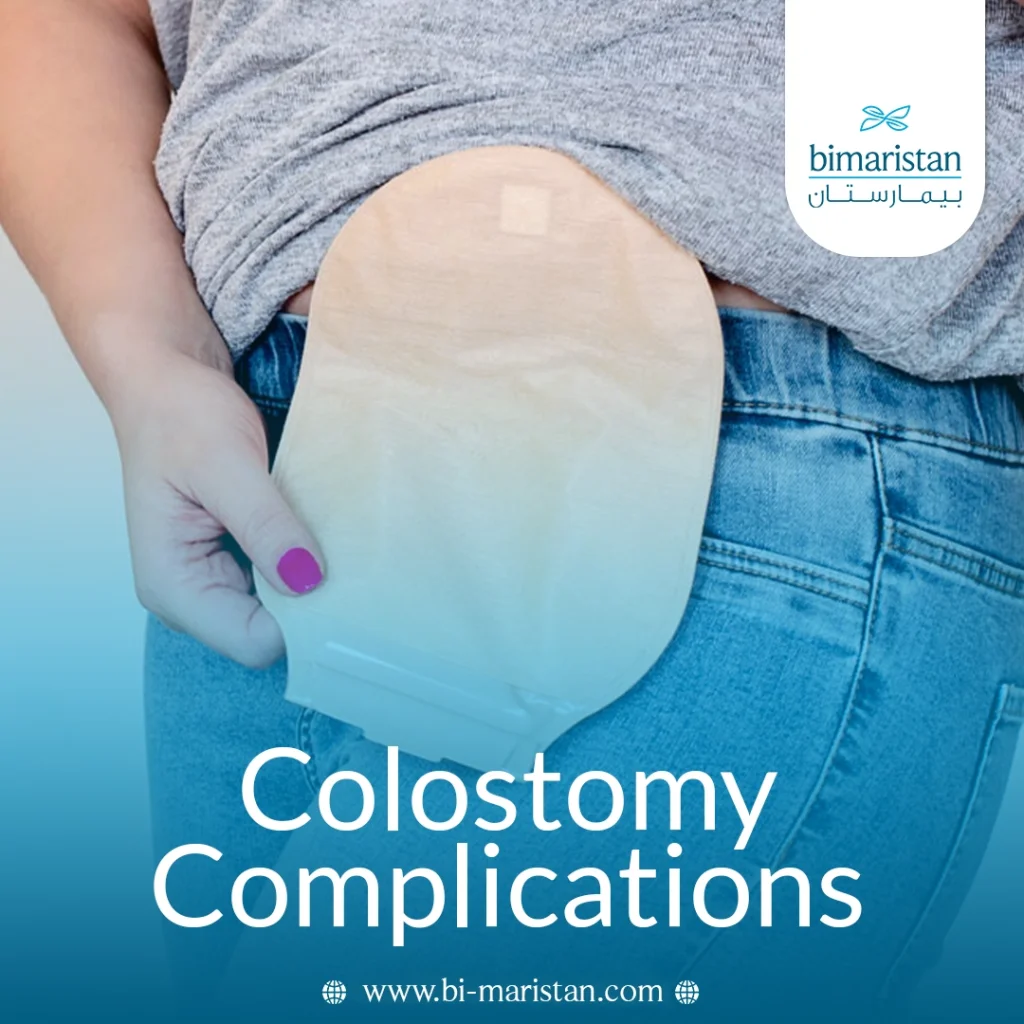

Colostomy is often used to support patients whose digestive system cannot function normally due to chronic diseases or intestinal injuries. While this procedure can be life‑saving and significantly improve health, colostomy complications remain a challenge that demands careful monitoring and ongoing care. Patients may face issues such as skin irritation around the stoma or difficulties adapting to the physical and psychological changes after surgery.
With advances in modern medicine, new alternatives and techniques have been developed to reduce these complications and enhance patients’ quality of life, offering more flexible and less disruptive treatment options. Recognizing colostomy complications and learning to manage them are vital steps in preparing patients and guiding them toward the most appropriate option for their condition.
What is a colostomy?
A colostomy is a surgical procedure that alters the route by which feces exit the body. During the operation, the surgeon creates an opening in the abdominal wall (a stoma) and attaches a section of the colon to it. Instead of passing through the rectum, feces are collected in an external bag affixed to the abdomen. Depending on the patient’s condition, a colostomy may be temporary for several months or permanent.
Most permanent stomas are end colostomies, in which the terminal end of the colon is brought through the abdominal wall and fixed to the skin. Temporary stomas, such as a loop colostomy, involve creating an opening on the side of the colon and connecting it to the abdominal wall, thereby restoring normal passage of stool through the colon after closure. A colostomy is often performed after surgery to remove part of the colon or due to intestinal injuries, and it is considered part of the treatment plan for managing conditions that prevent the normal passage of feces. After the procedure, you will receive instructions from your healthcare team on how to care for the stoma and adapt to its presence.
Conditions that require a colostomy
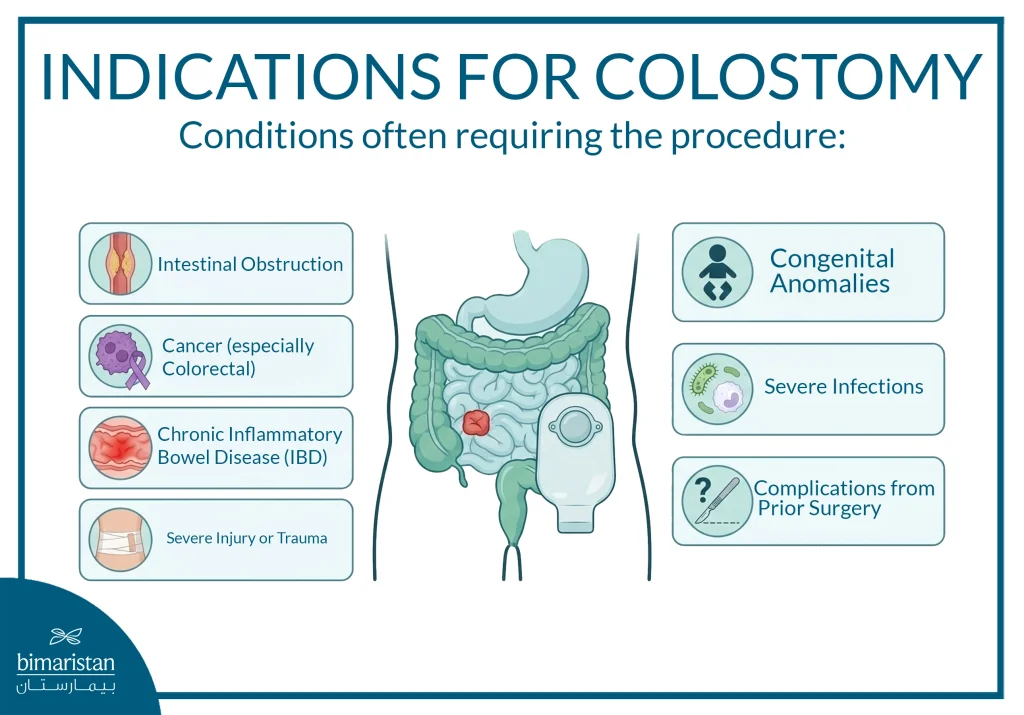
There are several medical conditions that may require a colostomy, most notably:
- Intestinal obstruction: Occurs when the passage of stool is blocked by a tumor, fibrosis, or adhesions after surgery. A colostomy helps bypass the obstruction and avoid complications.
- Cancer (especially colorectal cancer): An ostomy is performed after tumor removal or to protect the surgical site from pressure during healing.
- Chronic inflammatory bowel diseases: Such as Crohn’s disease and ulcerative colitis. When symptoms worsen or the intestines suffer severe damage, a colostomy becomes a therapeutic solution.
- Trauma or injuries: Including accidents, gunshot wounds, or intestinal rupture caused by infections.
- Congenital malformations: Such as imperforate anus in children.
- Severe infections: Particularly when fistulas or uncontrolled inflammation cannot be managed by conventional methods.
- Complications of previous surgeries: Such as failure of intestinal wound healing or serious leakage.
What are the complications of a colostomy?
Although colostomy is a necessary medical procedure in many cases to save lives or improve gastrointestinal function, it is associated with complications. These complications vary from patient to patient, and may occur immediately after the procedure or in the long term, and can sometimes affect your daily lifestyle.
Short-term complications of a colostomy
Colostomy complications usually appear within the first few days or weeks after the procedure, and include:
- Infection at the surgical site: Infection can be caused by bacteria or inadequate care and often presents as redness, pain, or pus at the site.
- Bleeding: May occur during or after surgery due to impaired wound healing or the use of anticoagulant medications.
- Pain and discomfort: It is normal to experience some pain in the first few weeks, which is often treated with painkillers.
- Leaking feces around the stoma: Caused by an inadequate stoma bag or skin swelling in the area, it can lead to skin irritation.
- Stoma obstruction: This can result from intestinal swelling or mucus accumulation and may cause cramping or nausea.
Long-term complications of colostomy
After the initial recovery, some chronic colostomy complications may arise, such as:
- Peristomal hernia: Occurs when the abdominal muscles around the stoma weaken, allowing part of the intestine to push out.
- Narrowing of the stoma: May lead to difficulty passing stool and may require dilation via medical procedures or surgery.
- Chronic skin irritation: Due to constant friction or leakage, it may progress to chronic inflammation or ulceration.
- Stoma retraction or prolapse: Retraction occurs when the intestine is drawn back into the abdominal cavity. Prolapse occurs when an excessive portion of the intestine protrudes outward beyond the skin.
- Gastrointestinal issues such as changes in stool consistency, excess gas, and frequent diarrhea or constipation.
The impact of colostomy complications on quality of life
The complications of a colostomy are not limited to the physical aspects, but may extend to psychosocial aspects, including:
- Anxiety and depression: As a result of the sudden change in the way of defecation.
- Impact on marital life and intimacy: There may be emotional or physical challenges that require communication and support from your partner.
- Changes in daily routine: such as changing your bag regularly, practicing consistent skin care, or adhering to specific dietary advice.
- Impact on physical activity: Some patients may need to modify their exercise regimen or avoid activities that apply pressure to the abdominal area.
- Impact on self-confidence: Some patients may feel embarrassed or uncomfortable, especially in public or during social activities.
How to prevent or minimize colostomy complications
Although a colostomy can be a necessary and life-saving medical procedure in some cases, proper post-operative care plays a major role in minimizing colostomy complications and improving the patient’s quality of life. By following medical guidelines and proper healthy habits, living with a stoma can be made easier and safer. Here are the most important steps to prevent and minimize the complications of a colostomy:
- Proper care of the skin around the stoma: Keeping the skin clean and dry is one of the most important ways to prevent infections and irritation.
- Using appropriate stoma equipment: Choosing the right pouch or device significantly reduces leakage and friction.
- Regular follow-ups with a specialized care team: Follow-up visits help detect early changes in the stoma, such as stenosis or hernia, provide guidance on the latest specialized care tools, and adjust the treatment or feeding plan as needed.
- Adhering to an appropriate diet: Proper nutrition helps prevent bloating, obstruction, and digestive problems. Common recommendations include eating slowly and chewing thoroughly, drinking adequate water, avoiding foods that cause gas or blockage, and introducing new foods gradually while monitoring the body’s response.
- Maintain a healthy weight: Being overweight may put pressure on the abdominal wall and increase the risk of peristomal hernia. Moderate physical activity, such as walking, can help prevent this while avoiding heavy lifting.
- Awareness and psychological preparation: Coping well with the changes contributes to better physical and mental health. This may include attending support sessions or ostomy patient groups, consulting a mental health professional when needed, and learning how to manage the stoma at work and in social activities.
- Using supportive products: These include barrier rings, skin‑protective powders, and special adhesives that help secure the pouch for longer periods. Such tools greatly reduce discomfort and leakage.
Most colostomy complications can be managed or prevented with appropriate care and the use of specialized ostomy equipment. The more aware the patient is and the more closely they follow the guidelines, the easier it is to adjust to an ostomy and the less impact it has on daily life.
Colostomy alternatives?
With advances in modern medicine and surgery, colostomy is no longer the only option for cases requiring stool diversion or bowel protection during healing. Today, new, less invasive, and more flexible options are available, allowing for the preservation of the natural course of digestion or the use of temporary solutions rather than permanent ones. These alternatives depend on the patient’s condition, the type of health issue, and factors such as age, general health, and test results.
The temporary tube is one of the most prominent alternatives, allowing fecal drainage or bypassing the affected segment of the intestine without the need for a permanent abdominal stoma, thereby reducing complications and improving quality of life when suitable. While a colostomy may still be necessary for some patients, these new technologies offer clinicians and patients broader, more promising options that can avoid permanent or complex procedures.
Wafi Procedure alternative minimizes colostomy complications
There are many potential complications after a conventional colostomy, ranging from skin infections to psychosocial impacts on the patient. In this context, the Wafi Procedure has emerged as a modern alternative that provides temporary bowel protection and minimizes the risks and complications of colostomy, as the tube can be easily removed after recovery.
What is the Wafi Procedure, and how does it work?
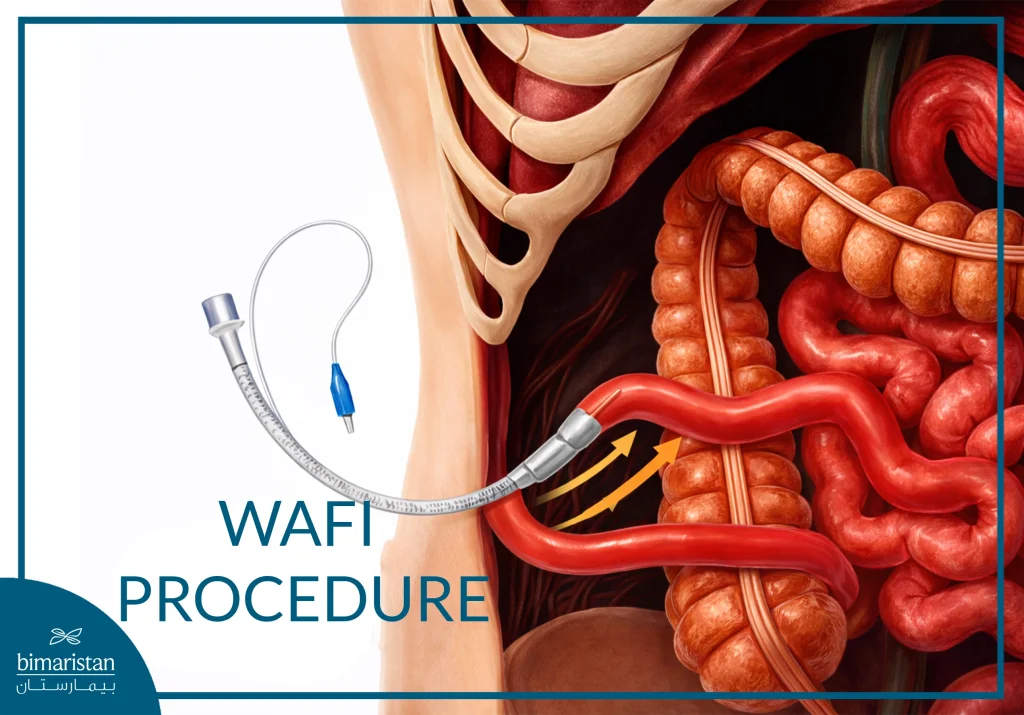
Modern surgical techniques aim to minimize major surgical interventions and reduce colostomy-related complications. The Wafi Procedure is an example of such developments, offering a temporary and safe solution. The procedure involves inserting a temporary tube into the terminal portion of the small intestine to drain feces during the recovery period after a colectomy or rectal resection. The primary goal is to protect the surgical junction from pressure or leakage, allowing the wound to heal safely.
Once healing is complete, the tube can be removed without additional surgery, unlike a conventional ostomy, which may require subsequent closure. The procedure is also less invasive, reducing the risk of surgical and psychological complications for the patient.
| Comparison | Colostomy | Wafi Procedure |
|---|---|---|
| Type of intervention | Major surgery | Minimally invasive |
| Skin complications | High | low |
| External pouch | Permanent/Temporary | Unnecessary |
| Procedure removal | Additional surgery | Simple removal |
| Quality of life | Moderate | Higher |
What colostomy complications can be avoided with the Wafi Procedure
One of the most important goals of developing the Wafi Procedure is to minimize the surgical and medical complications associated with conventional ostomy. The following are the most important complications that can be avoided with the Wafi Procedure:
- Skin irritation and infection: Thanks to the absence of a permanent stoma and a continuous external pouch, skin irritation and the risk of infections are minimized.
- Peristomal hernia: Because a conventional stoma creates a large opening in the abdominal wall, while Wafi uses a smaller internal tube, hernias are less likely to occur.
- Stenosis or prolapse of the stoma: These issues are often associated with permanent stomas and are significantly less common with Wafi.
- Colostomy complications related to permanent pouching: Leakage, odors, and skin irritation are greatly minimized or may disappear entirely.
Impact on quality of life
In addition to minimizing physical complications, the Wafi Procedure plays an important role in improving patients’ psychological and social comfort, making it an attractive option for patients concerned about a conventional ostomy. The following are the most important effects of the procedure on life:
- Greater peace of mind: No permanent opening that hinders self-confidence, no need to deal with a bag every day.
- Ease of movement and physical activity: No major restrictions on exercise or daily activities compared to a conventional ostomy.
- Easy removal after recovery: The temporary tube is removed without additional surgery, minimizing stress and surgical risks.
- Enhanced daily routine: With the need for a permanent external pouch, personal care and body hygiene are simplified, reducing the burden on the patient and family.
Colostomy complications remain one of the most significant challenges for patients after surgery, both in the short and long term. These may include infections, parastomal hernia, skin irritation, and psychological difficulties. Modern innovations such as the Wafi Procedure provide an advanced alternative that greatly reduces these complications, offering temporary bowel diversion, simple tube removal, and enhanced physical and emotional quality of life, without the need for a permanent pouch or additional closure surgeries.
For specialized guidance on whether the Wafi Procedure can serve as an alternative to colostomy, contact the Bimaristan Medical Center, where the medical team provides individualized evaluations and designs tailored treatment plans to minimize colostomy complications and improve patient well-being.
Sources:
- Attallaah W, Gachabayov M, Bulut A, Verdiyev O, Javadov M, Barzola E, Inanc O, Kajmolli A, Bergamaschi R. Comparing Wafi ileostomy to Brooke ileostomy in stage 3 rectal cancer: a prospective cohort study. Updates Surg. 2025 Sep;77(5):1357-1362
- National Library of Medicine. (2024, March 31). Colostomy: MedlinePlus Medical Encyclopedia. MedlinePlus
- Ge, Z., Zhao, X., Liu, Z., Yang, G., Wu, Q., Wang, X., Zhang, X., Cheng, Z., & Wang, K. (2023). Complications of preventive loop ileostomy versus colostomy: a meta-analysis, trial sequential analysis, and systematic review. BMC Surgery, 23, Article 235
- Johns Hopkins Medicine. (n.d.). Colostomy
- Maria A, Lieske B. Colostomy Care. . In: StatPearls