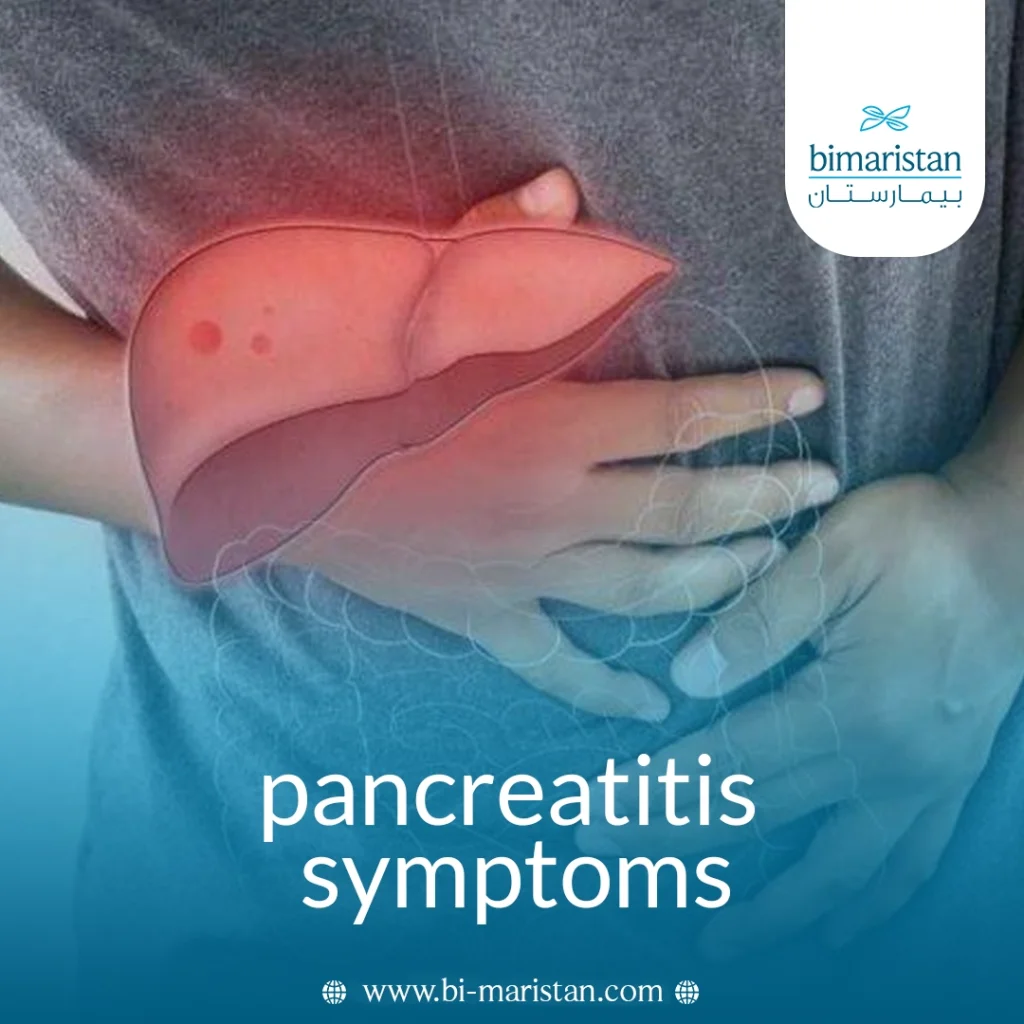
Acute pancreatitis symptoms tend to appear without warning; you may suddenly feel severe pain in the upper abdomen, whereas the symptoms of chronic pancreatitis are more subtle and last longer.
The pancreas is frequently prone to inflammation for a variety of reasons. Pancreatitis can be acute or chronic; that is, symptoms may appear suddenly within a few days, and the condition resolves quickly with treatment (acute pancreatitis), or it may present with symptoms and signs over a long period of time, lasting for several years (chronic pancreatitis).
The pancreas is a long gland located in the abdomen behind the stomach. This gland secretes digestive enzymes and juices that help you digest food, in addition to producing the hormones insulin and glucagon, which regulate your blood sugar levels and keep them within normal limits. Let’s learn more about pancreatitis, its acute and chronic symptoms, and its causes.
What are the symptoms of acute pancreatitis?
Symptoms of acute pancreatitis can range from mild to severe, depending on the severity of the inflammation. Some patients experience mild symptoms that are not particularly serious and improve quickly with treatment; this is usually the most common scenario. In other cases, however, the inflammation may be more severe and lead to serious complications such as pancreatic necrosis or the development of chronic pancreatitis.
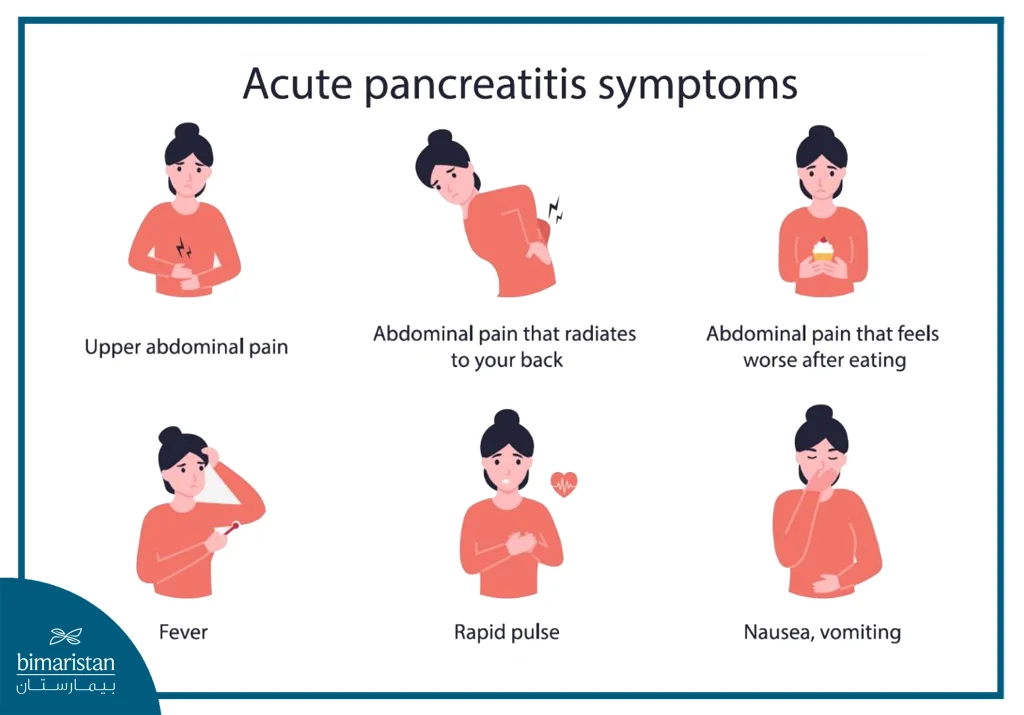
Acute pancreatitis symptoms include the following:
Upper abdominal pain that radiates toward the back
Abdominal pain is often the first symptom experienced by patients with pancreatitis. In acute pancreatitis, the pain appears suddenly and is located in the upper abdomen; it may even radiate to the back. It is usually extremely severe and worsens when the abdomen is touched or after eating.
Nausea and vomiting
Nausea and vomiting are common acute pancreatitis symptoms and may be accompanied by other symptoms such as a rapid heartbeat, as well as increased respiratory rate and depth.
Fever
As with most infections, fever is a common symptom of acute pancreatitis; the patient’s temperature may reach 39°C and may be accompanied by jaundice (yellowing of the skin and eyes).
Loss of appetite
Because abdominal pain worsens with eating, patients with pancreatitis lose their appetite and stop drinking, which can lead to rapid weight loss; this symptom is more pronounced in chronic pancreatitis.
Symptoms of chronic pancreatitis
Chronic pancreatitis is defined as a persistent condition that impairs the pancreas’s ability to perform its various functions in the body, manifesting as a range of symptoms that persist over long periods of time and may last a lifetime; however, these symptoms can be managed with appropriate treatment.
Chronic pancreatic disease can result from a variety of causes, including recurrent episodes of acute pancreatitis, which can cause irreversible damage to the pancreas, or heavy alcohol consumption over long periods of time, which eventually leads to inflammation and damage to the pancreas.
The signs and symptoms of chronic pancreatitis are as follows:
- Recurring episodes of abdominal pain that occur from time to time
- As the inflammation progresses, the episodes become more frequent and take longer to heal
- Unexplained weight loss
- Fatty, foul-smelling diarrhea (due to the pancreas’s failure to secrete digestive enzymes)
- Abdominal cramps may be accompanied by nausea and vomiting
Causes of Acute Pancreatitis
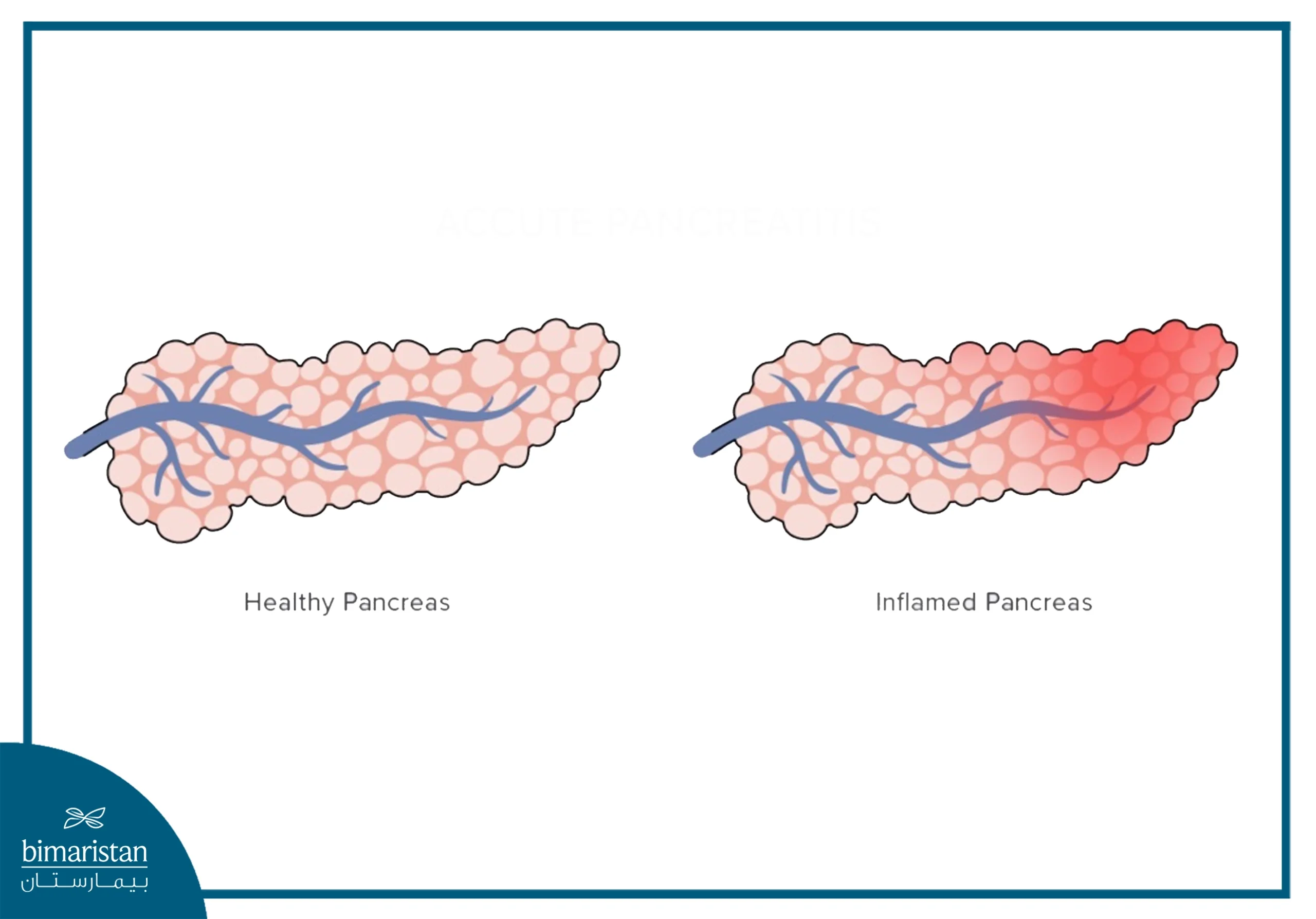
Pancreatitis often results from the activation of digestive enzymes within the pancreatic tissue, which irritates pancreatic cells and causes acute inflammation.
There are risk factors that increase the likelihood of developing acute pancreatitis and experiencing its symptoms, including the following:
Gallstones
Gallstones are one of the most common causes of pancreatitis; stones in the gallbladder can slip into the bile duct and block it, causing enzymes to become trapped within the pancreas.
Alcoholism
Studies have shown a strong link between heavy alcohol consumption and an increased risk of pancreatitis. This is due to alcohol’s toxic effect on the pancreatic ductules and acinar cells, as well as an increase in the viscosity of secretions, which leads to duct obstruction and enzyme retention.
Alcohol can cause both acute and chronic pancreatitis, but it is primarily responsible for chronic pancreatitis.
Metabolic disorders
Elevated triglycerides and cholesterol are risk factors for pancreatitis because they impair capillary blood flow, reducing blood supply to pancreatic cells; the same applies to hypercalcemia.
Use of certain medications
In some people, certain medications can cause inflammation of the pancreas as a potential side effect, especially when taken in excessive doses without consulting a doctor. These medications include the following:
- Antibiotics
- Glucocorticoids
- Antihypertensive medications
- Urinary tract
There are many classes of medications that can cause pancreatitis, so when you are diagnosed with pancreatitis, your doctor will ask you if you have recently started taking any new medications.
Bruises and previous surgeries
Being involved in a traffic collision or falling from a great height onto the abdomen can cause injury to the pancreas; the same is true of abdominal surgeries, which carry a risk of accidental injury to the pancreas.
Causes of Chronic Pancreatitis
Chronic pancreatitis occurs when the pancreas suffers permanent damage that prevents it from performing its normal functions, leading to chronic inflammatory symptoms that typically persist for several years.
The most common and significant cause of chronic pancreatitis in adults is long-term excessive alcohol consumption, which leads to recurrent episodes of acute inflammation that, over time, cause damage to the pancreas and result in permanent scarring.
As for chronic inflammation in children, the most common and significant cause is cystic fibrosis, a genetic condition that children are born with and that damages many organs in the body, including the pancreas.
Autoimmune pancreatitis is also a major cause of chronic inflammation; your body’s dysfunctional immune system may attack healthy pancreatic cells, leading to inflammation of the pancreas.
About 20 to 30% of chronic pancreatitis cases remain of unknown cause, but doctors have identified risk factors that may increase your risk of developing the condition, including:
- Smoking
- A family member has pancreatitis
- Weight Gain and Obesity
- Diabetes
- Radiation therapy to the abdominal area
How is pancreatitis diagnosed?
To diagnose pancreatitis, the specialist will ask about your symptoms and the nature of the pain you are experiencing, then perform a physical examination by pressing on your abdomen to observe your reactions and whether your abdominal pain increases.
One of the following tests is ordered to confirm the diagnosis:
Blood tests
When the pancreas becomes inflamed, the levels of its enzymes in the blood increase, particularly amylase and lipase. Therefore, the levels of both enzymes are measured in the blood; elevated levels raise suspicion of pancreatic inflammation, although an increase does not necessarily always indicate the presence of inflammation.
A white blood cell count and other blood tests are also helpful in diagnosing pancreatitis.
Abdominal ultrasound
An abdominal ultrasound (echo) is a diagnostic tool that allows the examiner to detect inflammatory changes in the pancreas or gallstones in the gallbladder.
Computed Tomography
A CT scan provides clear images of abdominal organs, such as the pancreas and gallbladder, to detect inflammation or gallstones.
Pancreatic biopsy
A biopsy is rarely ordered because previous tests are usually sufficient to diagnose pancreatitis; a biopsy is most often ordered when pancreatic cancer is suspected, in order to rule it out.
Stool Analysis
This test is ordered in cases of chronic pancreatitis to measure the levels of fat in the patient’s stool, which may indicate poor absorption of food due to a deficiency in pancreatic digestive enzymes.
In conclusion, the symptoms of acute and chronic pancreatitis are somewhat similar in nature but differ in severity and the time required for the symptoms to subside. We find that the symptoms of chronic pancreatitis last longer but are milder in comparison to those of acute pancreatitis. In both types, abdominal pain radiating toward the back is the most common symptom. As for the causes, they are also similar, as gallstones and alcohol are considered the most common causes of pancreatitis.
Sources: