Laser dentistry has become one of the most advanced techniques in modern dentistry, particularly for its ability to provide more precise and comfortable treatment than traditional methods. In recent years, the use of lasers has increased in many therapeutic and cosmetic procedures, ranging from treating cavities to gum contouring and teeth whitening.
What is laser dental treatment?
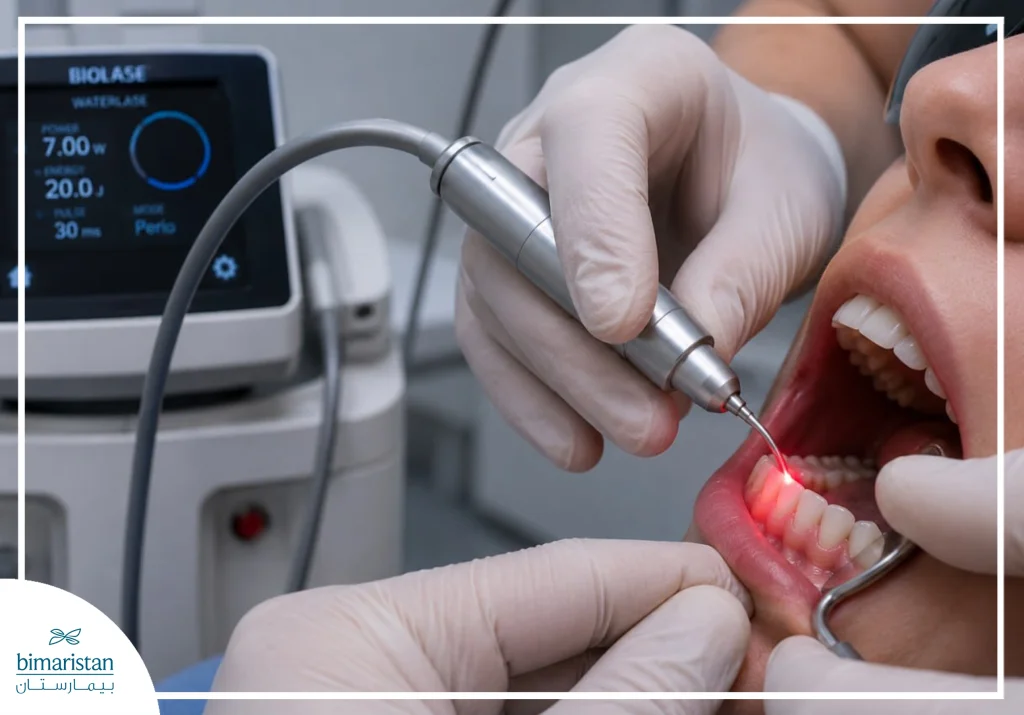
Laser dentistry uses laser beams to perform various therapeutic procedures inside the mouth and on the teeth, where the laser acts as a precise tool to remove, sterilize, or reshape tissue, depending on the specific case. This technology has been approved by the U.S. Food and Drug Administration (FDA) for use in numerous dental treatments due to its high precision and greater patient comfort. In some cases, lasers can reduce the need for traditional drilling tools and may also reduce the need for local anesthesia, especially in simple procedures.
Types of Lasers Used in Dentistry
Lasers used in dentistry are divided into two main types:
Solid-state laser
This type is used for dental and bone procedures and is characterized by its ability to remove decay and prepare teeth for fillings without significantly affecting healthy tissue. In some cases, treatment can be performed without anesthesia because it causes less pain than traditional drilling. Its most common uses include:
- Treatment for Tooth Sensitivity
- Early Detection of Tooth Decay
- Preparing Teeth for Certain Restorations
- Removing Cavities and Preparing Teeth for Fillings
Soft Tissue Laser
This type is used in treatments for the gums and soft tissues inside the mouth, where it helps reduce bleeding and accelerate wound healing. It is characterized by its ability to help seal blood vessels and nerve endings during treatment, thereby reducing pain and swelling after the procedure. Some of its common uses include:
- Gum Reshaping
- Treatment of Gum Disease
- Treatment for a Gingival Smile
- Removing the sublingual bridle
- Removal of growths and inflamed tissue
Applications of Laser Dentistry
Lasers are used today in a wide range of dental treatments and cosmetic procedures, helping to make many treatments more precise and comfortable while reducing pain and bleeding compared to traditional methods. Among their most notable uses are:
- Treatment for Mouth Ulcers: Reducing Pain and Speeding Up the Healing of Mouth Ulcers.
- Oral biopsies: The removal of small tissue samples for laboratory examination.
- Gum Treatment: Lasers help eliminate bacteria, clean gum pockets, and promote faster tissue healing.
- Gummy Smile Treatment: Used to reshape the gums and reveal more of the teeth to improve the appearance of the smile.
- Cavity Treatment: Lasers are used to precisely remove decay and prepare the tooth for a filling while minimizing discomfort.
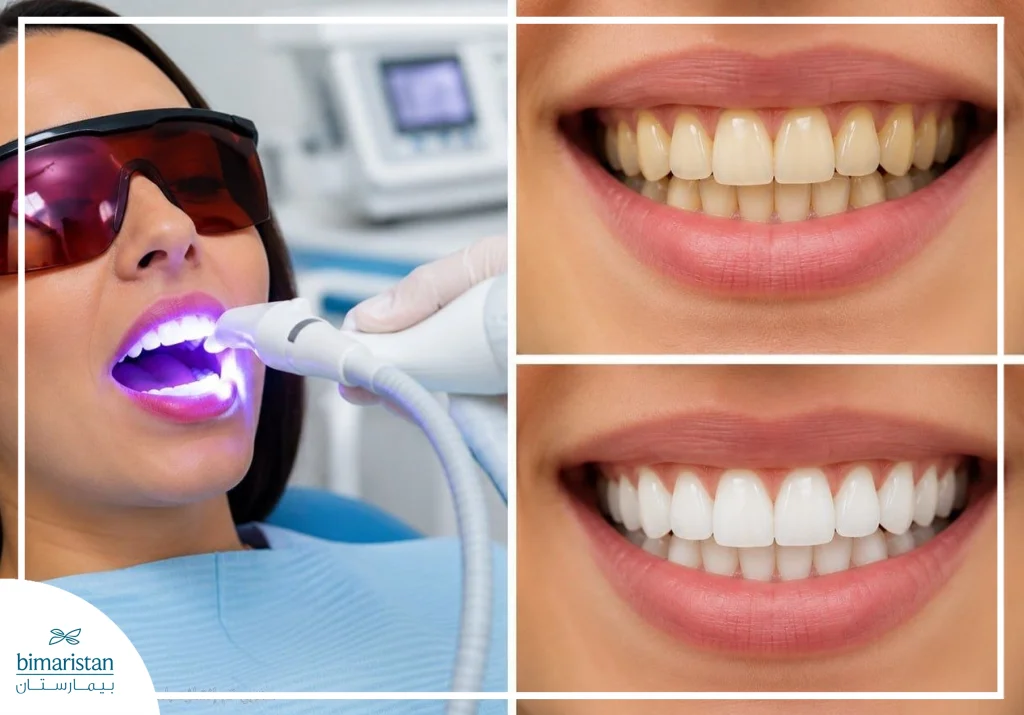
- Teeth Whitening: Laser light activates the whitening agents, accelerating the appearance of results during in-office whitening sessions.
- Treatment for Snoring and Sleep Apnea: Helps improve the airway by reshaping certain soft tissues inside the mouth and throat.
- Removing mouth sores and lesions: Lasers may help relieve pain and speed up the healing of certain mouth sores or remove small lesions inside the mouth.
- Treatment for Tooth Sensitivity: Laser therapy helps reduce tooth sensitivity to hot or cold beverages by sealing the microscopic channels in the dentin layer.
Benefits of Laser Dental Treatment
Laser treatment offers many benefits compared to traditional methods, including:
- Reducing Pain During Treatment
- Less Bleeding During Gum Procedures
- Wound and Tissue Healing Speed
- Reducing the need for anesthesia in some cases
- Reducing the risk of infection due to the laser’s sterilizing capability
- Preserving as much of the tooth’s natural structure as possible
- Reducing anxiety in patients who are afraid of the sound of traditional drilling
Disadvantages of Laser Dental Treatment
Despite the many advantages of lasers, there are some limitations you should be aware of:
- It cannot be used in all cases of tooth decay
- Some cases require anesthesia even when using a laser
- The cost of laser treatment is often higher than that of traditional treatment
- Some procedures still require traditional tools
- It may not be suitable for teeth with certain types of metal fillings
A Comparison of Laser Dental Treatment and Traditional Treatments
When comparing laser dental treatment to traditional methods, many patients and dentists note clear differences in comfort during treatment, recovery time, and procedural precision. The following table highlights these differences:
| Laser Dental Treatment | Traditional Treatments |
|---|---|
| less pain | Greater Pain |
| Less bleeding | More bleeding |
| Faster Healing | Slower |
| Better Sterilization | Less sterilization |
| Higher accuracy | Lower accuracy |
| More Comfort | Less comfort |
Despite the many advantages of laser dental treatment, it is not a complete substitute for traditional treatments, as some dental procedures still require the use of traditional instruments, depending on the type of case and its complexity.
Is laser dental treatment safe?
Laser dental treatment is considered safe when performed by a specialist who is trained in the use of medical laser devices. Although risks are rare, improper use of the device can damage surrounding tissues, so it is important to choose a medical center with sufficient experience in this type of treatment. Special protective eyewear is also worn during sessions to protect the eyes from laser beams.
The Cost of Laser Dental Treatment in Turkey
The cost of laser dental treatment in Turkey varies depending on the type of procedure required, the number of sessions, the dentist’s experience, and the techniques used at the clinic. In general, laser treatment is more expensive than some traditional treatments, but it offers numerous benefits, such as reduced pain and bleeding, as well as a faster recovery time. Below are the approximate average prices for the most common laser dental procedures in Turkey:
| Procedure | Average Cost |
|---|---|
| Laser Treatment for Tooth Decay | $80–$200 |
| Laser Gum Treatment | $150–$400 |
| Laser Teeth Whitening | $200–$500 |
| Laser Treatment for Tooth Sensitivity | $50–$150 |
| Laser Treatment for a Gingival Smile | $250–$700 |
| Laser Removal of the Bit | $150–$400 |
| Removal of Oral Ulcers and Lesions | $100–$300 |
| Laser Crown Lengthening | $200–$600 |
In conclusion, laser dental treatment has, in recent years, become a modern technology that has brought significant advancements in dentistry, as it provides more precise, comfortable treatments while reducing pain, bleeding, and recovery time compared to many traditional methods. Given its wide range of applications, laser treatment has become the preferred choice for many patients seeking a more comfortable treatment experience.
Turkey is also considered a leading destination for laser dental treatment, thanks to the availability of modern technologies and experienced dentists, as well as affordable costs compared to many other countries. However, choosing the right treatment depends on a specialist’s assessment and the patient’s condition to ensure the best possible results.
Sources: