Parkinson’s disease is one of the most common neurodegenerative disorders, affecting more than 10 million people worldwide according to recent estimates. In this disease, patients suffer from motor symptoms such as tremors, rigidity, and bradykinesia, which directly affect their quality of life. In recent years, non-surgical techniques have emerged as a promising treatment option. Among the most notable of these is transcranial magnetic stimulation (TMS), which aims to modulate brain activity. TMS is increasingly being used as an adjunctive therapy to improve motor symptoms and reduce reliance on medication.
What is transcranial magnetic stimulation?
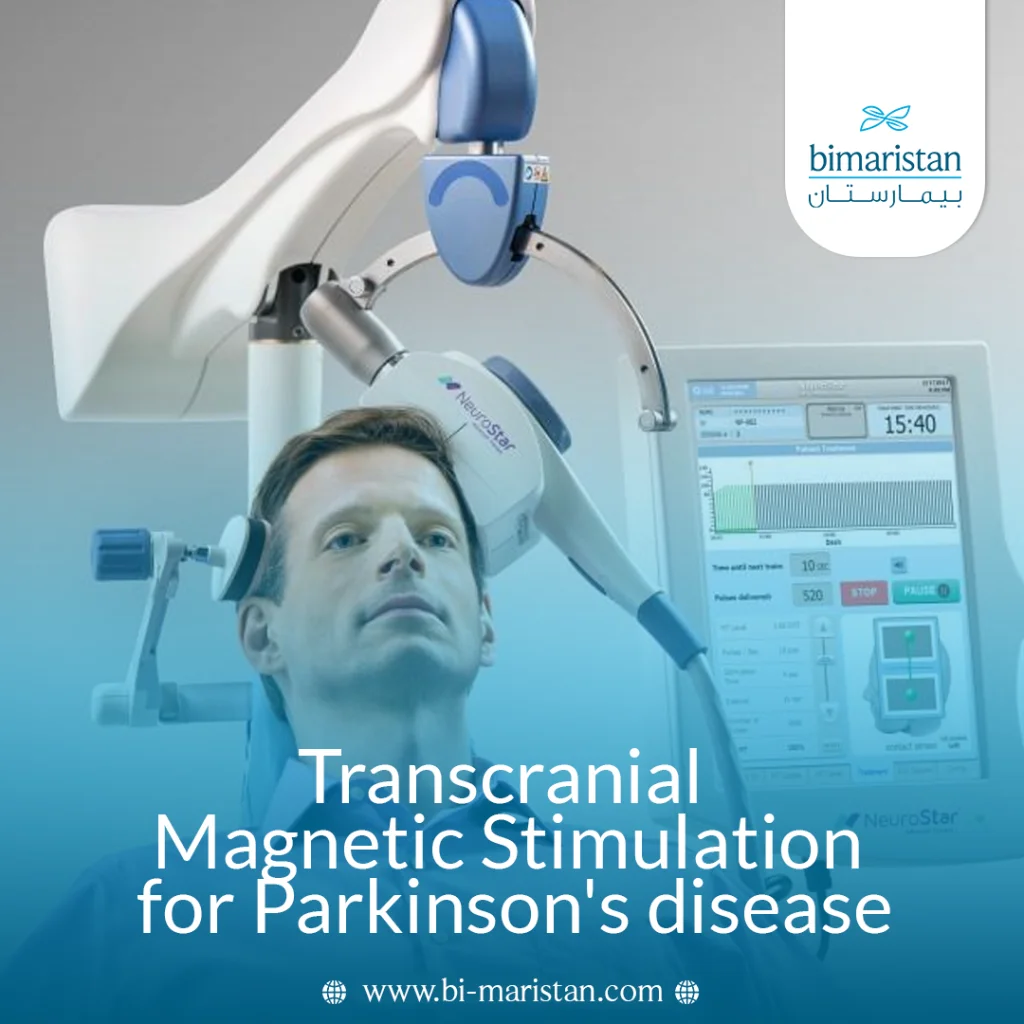
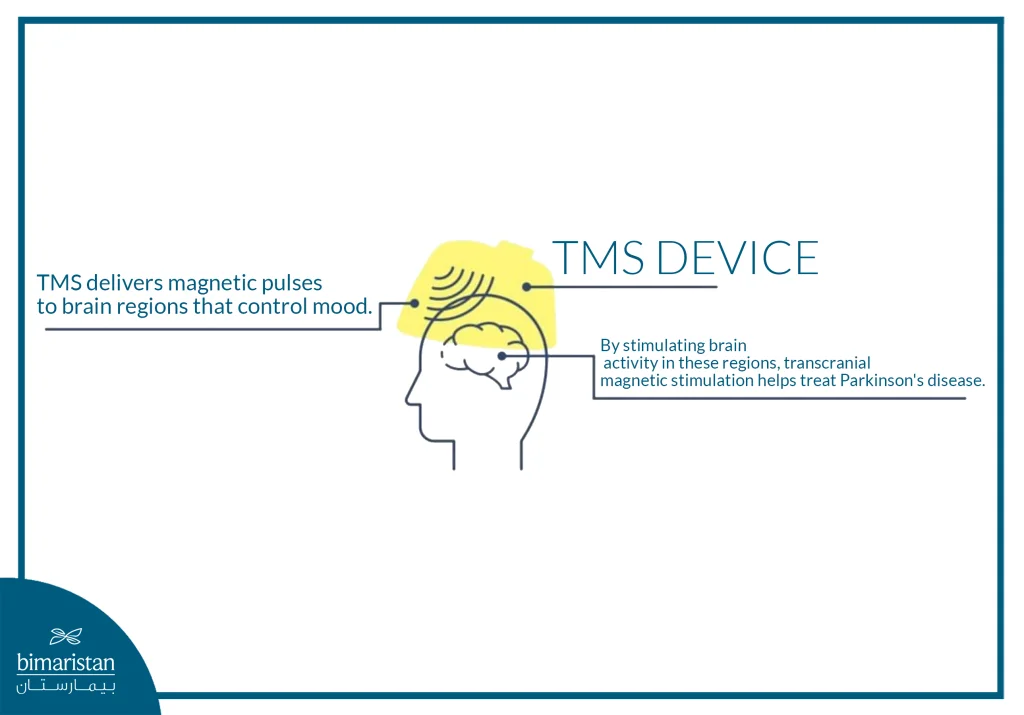
Transcranial Magnetic Stimulation (TMS) is a non-surgical technique that involves generating a varying magnetic field applied to the scalp to stimulate neurons in specific areas of the brain. This is done using a magnetic coil placed over the skull, which generates small electrical pulses within the cerebral cortex without the need for any surgical intervention or anesthesia.
In the repetitive form of this technique, known as repetitive transcranial magnetic stimulation (rTMS), a series of regulated pulses is delivered that cumulatively affect neural activity, allowing for the modulation of brain functions related to movement or mood. This ability to reorganize neural activity is the basis for the technique’s usefulness in neurological disorders such as Parkinson’s disease.
This technique focuses specifically on the primary motor cortex and the supplementary motor area—regions that play a key role in motor control and are directly affected by Parkinson’s disease.
What does this have to do with Parkinson’s disease?
The essence of Parkinson’s disease is a dopamine deficiency in the basal ganglia, which leads to a disruption in the regulation of motor signals between the brain and the muscles; this disruption is not limited to a chemical deficiency, but also includes changes in electrical activity within the motor cortex and associated regions.
This is where transcranial magnetic stimulation comes into play, as it works to modulate this abnormal neural activity by stimulating specific areas of the brain. Studies indicate that repetitive transcranial magnetic stimulation (rTMS) can help restore the balance between inhibitory and excitatory neural pathways, which has a positive effect on motor performance.
This treatment is also used as an adjunct to medication—not as a substitute—to improve symptoms such as slowness of movement and stiffness, and in some cases to alleviate non-motor symptoms such as depression associated with the disease. Therefore, transcranial magnetic stimulation is viewed more as a means of modulating brain activity than as a direct treatment for the underlying cause of the disease.
Benefits of Transcranial Magnetic Stimulation for Parkinson’s Patients
The clinical studies I submitted indicate that transcranial magnetic stimulation can provide a range of therapeutic benefits for Parkinson’s patients, especially when used as an adjunct therapy alongside conventional medications, through its direct effect on the neural networks responsible for movement and mood.
- Improvement in Tremor: Some protocols have shown a marked improvement in the severity of tremor as a result of modulating activity in the motor cortex.
- Reducing bradykinesia: This is one of the symptoms that responds best to treatment, as stimulation helps speed up motor responses.
- Improves muscle stiffness: by rebalancing nerve signals, which reduces muscle stiffness.
- Improved gait and balance: Especially when targeting the supplementary motor area, which enhances stability of movement and reduces the risk of falls.
- Reducing non-motor symptoms: such as depression, as some studies have shown an improvement in patients’ mental well-being.
- The potential to reduce medication doses: In some cases, this may help reduce the side effects associated with long-term drug therapy.
Overall, the results show that transcranial magnetic stimulation does not cure the disease, but it helps improve quality of life by providing better symptom control, with a good safety profile compared to surgical options.
Who are the appropriate patients for this treatment?
The clinical studies you submitted show that the effectiveness of transcranial magnetic stimulation varies depending on the patient’s characteristics and the stage of the disease; therefore, cases are carefully selected to achieve the best therapeutic response.
- Patients in the early to moderate stages: At this stage, neural circuits are still malleable, and the response to treatment is better than in the advanced stages.
- Patients who do not respond adequately to medication: particularly when motor symptoms persist despite regular medication.
- Patients experiencing side effects from medications, such as motor fluctuations or involuntary movements resulting from long-term treatment.
- Patients who are not eligible for surgery: such as the elderly or those with comorbidities that preclude deep brain stimulation (DBS).
- Patients with non-motor symptoms: such as depression associated with Parkinson’s disease, where stimulation can have a dual effect on both movement and mood.
Conversely, some studies suggest that caution should be exercised or that this treatment should be avoided in certain cases—such as patients with a history of epilepsy or those with implanted metal devices in the brain—in order to reduce the risk of complications.
How are transcranial magnetic stimulation sessions conducted?
Transcranial magnetic stimulation sessions are conducted in a structured manner as part of a specific treatment protocol, often at centers specializing in neurology or neurorehabilitation, without the need for anesthesia or surgical procedures.
- Initial Assessment: The patient’s condition, symptom severity, and target brain region are determined, and the so-called motor threshold is measured to determine the appropriate stimulation intensity.
- Determining the Stimulation Site: The device is positioned precisely on the scalp to target the motor cortex or areas associated with movement.
- Session Procedure: Repeated magnetic pulses are transmitted at different frequencies (low or high) depending on the therapeutic goal.
- Session Duration: Each session typically lasts about 20–30 minutes and may be repeated several times a week.
- Number of sessions: Studies indicate that treatment protocols spanning several consecutive sessions (e.g., 10–12 sessions over a few weeks) are needed to achieve a cumulative effect.
- Combination with Physical Therapy: In some cases, stimulation is administered before physical exercises (such as gait training) to enhance therapeutic outcomes.
The data show that combining magnetic stimulation with motor training can lead to longer-lasting improvements in motor performance compared to using either method alone, as a result of enhanced neural plasticity in the brain.
Risks and Side Effects
Transcranial magnetic stimulation is considered a relatively safe procedure, especially when performed according to well-established medical protocols, and the clinical studies you submitted have shown that patients tolerate the sessions well without any serious side effects. However, some mild and temporary side effects may occur in certain patients:
- Mild headache after the session: This is the most common symptom; it is usually temporary and resolves on its own.
- A tingling or uncomfortable sensation on the scalp: caused by the effect of magnetic pulses on the superficial nerves.
- Mild fatigue or dizziness: These may occur after the session in some patients.
- Mild facial muscle spasms: due to the proximity of the stimulation site to the facial nerves.
Rare complications include:
- Risk of a seizure: This is a very low probability and usually occurs in cases that have not been carefully selected or when pre-existing risk factors are present.
- Psychological discomfort in some patients: especially during the first few sessions.
Therefore, a thorough evaluation is always conducted before starting treatment, and patients with contraindications—such as the presence of metallic implants inside the skull or a history of uncontrolled epilepsy—are excluded. In general, the evidence shows that this treatment has a high safety profile compared to surgical interventions, making it a suitable option for a wide range of patients.
A Comparison of Transcranial Magnetic Stimulation with Other Treatments for Parkinson’s Disease
When evaluating transcranial magnetic stimulation, it is essential to compare it with other treatment options used for Parkinson’s disease—particularly medication and deep brain stimulation (DBS)—to understand its role within the treatment plan.
- Compared to drug therapy: The primary treatment for Parkinson’s disease relies on medications such as levodopa, which provide rapid symptom relief; however, as the disease progresses, their effectiveness diminishes and motor fluctuations and side effects may occur. In contrast, magnetic stimulation is not considered a substitute for medication; rather, it is used as an adjunctive therapy to improve symptoms when the response to medication becomes insufficient.
- Compared to deep brain stimulation (DBS): DBS is considered an effective surgical option for advanced cases, in which electrodes are implanted inside the brain. This procedure achieves strong, long-lasting results, but it carries surgical risks and requires a complex procedure. In contrast, magnetic stimulation is a non-surgical, relatively safe procedure that does not require anesthesia; however, it often produces a less potent effect and requires repeated sessions to maintain results.
- In terms of effectiveness: Studies I have submitted indicate that magnetic stimulation can improve motor symptoms such as walking and balance, especially when combined with physical therapy, but its effects are typically gradual and limited compared to surgery.
- In terms of safety: Magnetic stimulation is considered safer than surgical options, with mild and temporary side effects in most cases, and no serious complications reported in clinical studies.
- In terms of application: Magnetic stimulation can be used at various stages of the disease, particularly for patients who are unwilling or unable to undergo surgery, making it a flexible option within the treatment plan.
Transcranial magnetic stimulation (TMS) is an advanced treatment option that opens up new possibilities for patients with Parkinson’s disease, especially those who do not respond adequately to conventional treatments. Although it is not a curative treatment, it significantly helps improve symptoms and enhance quality of life. Selecting the right patient and applying the correct treatment protocol remain critical factors in achieving the best outcomes. In this context, the Bimaristan Medical Center offers advanced treatment solutions within an integrated environment that employs the latest neurological technologies in a thoughtful and professional manner.
Sources:
- Chung, C. L. H., Mak, M. K. Y., & Hallett, M. (2022). Transcranial magnetic stimulation promotes gait training in Parkinson’s disease.
- Huang, Y. Z., Lu, C. S., Rothwell, J. C., & Lo, C. C. (2023). Repetitive transcranial magnetic stimulation in Parkinson’s disease: Mechanisms and clinical applications.