
Stomach cancer is one of the cancers that may require surgical intervention to remove the tumor and the affected parts of the stomach. In recent years, surgery has evolved to become less invasive and more precise thanks to the use of robotic systems. Robotic gastric cancer surgery allows the surgeon to control precise and flexible instruments through small incisions in the abdomen, while obtaining a three-dimensional, magnified view of the surgical site.
This technique can be used to perform a partial or total gastrectomy and remove the lymph nodes surrounding the tumor, depending on the patient’s condition and disease stage. Turkey offers specialized centers that use robotic surgery to treat certain gastrointestinal cancers, making it a viable option for patients seeking treatment outside their home country. In this article, we’ll review how robotic gastric cancer surgery is performed, when it is used, its main benefits and risks, and the recovery period afterward.
What is robotic gastric cancer surgery?
Robotic gastric cancer surgery, or robotic gastrectomy, is a minimally invasive surgical procedure used to treat stomach cancer. This operation is performed with the da Vinci robotic surgical system. The procedure involves the complete or partial removal of the stomach to eliminate cancerous cells and tumors, while aiming to preserve healthy tissue and nearby organs as much as possible.
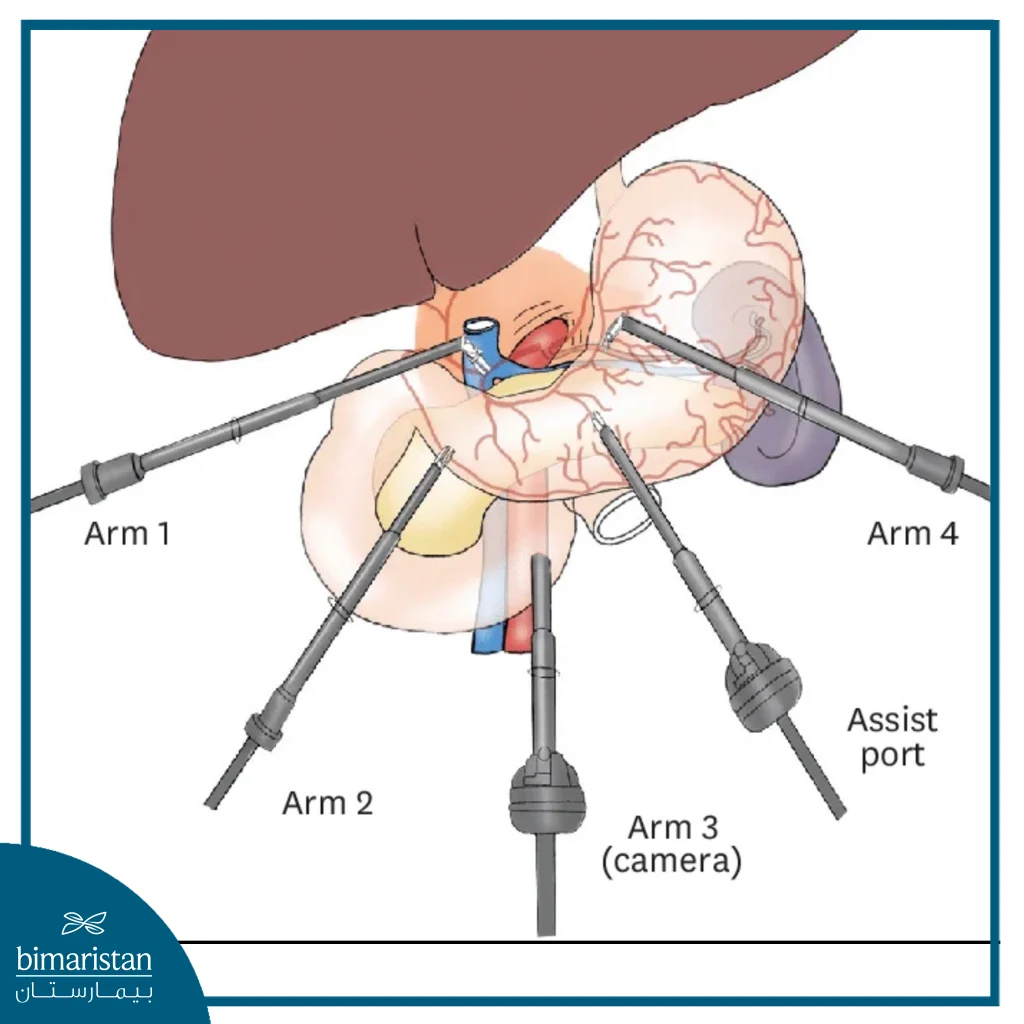
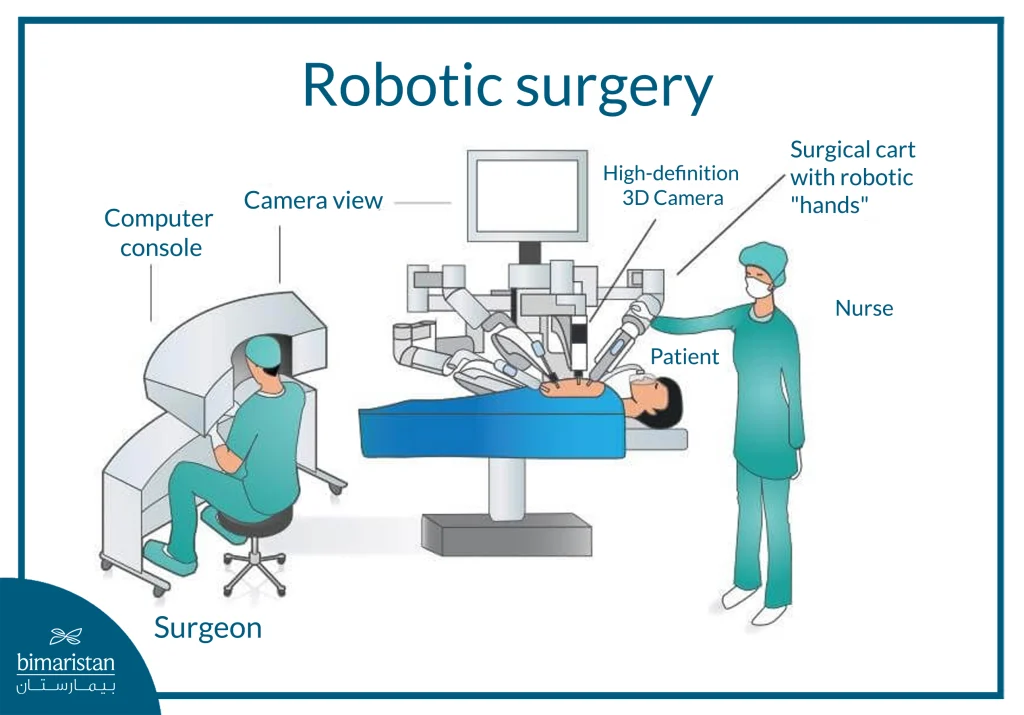
Contrary to what the name might suggest, the robot does not perform this surgery independently; the surgeon remains in full control throughout the procedure, sitting at a control console from which he or she guides the robotic arms carrying the surgical instruments.
These instruments have an impressive ability to bend and rotate freely, surpassing the capabilities of even the most skilled human surgeon. This advanced functionality allows for greater precision when working with tissue. Additionally, they provide high-resolution 3D visualization and clear magnification of the surgical field, enabling the surgeon to see minute details that may not be visible to the naked eye. This approach offers reduced scarring and faster recovery times than conventional open surgery. Results suggest these benefits may improve surgical outcomes and quality of life, especially when integrated into a comprehensive treatment plan for stomach cancer.
When is robotic surgery used to treat stomach cancer?
Initially, robotic surgery was used to treat stomach cancer primarily in the early stages of the disease, specifically in cases where there was no clinical evidence of tumor spread to the lymph nodes. However, with advances in technology and increased experience with this type of surgery, the scope of robotic surgery has expanded to also include clinically stage T1 and T2 tumors, regardless of whether the lymph nodes surrounding the stomach are involved.
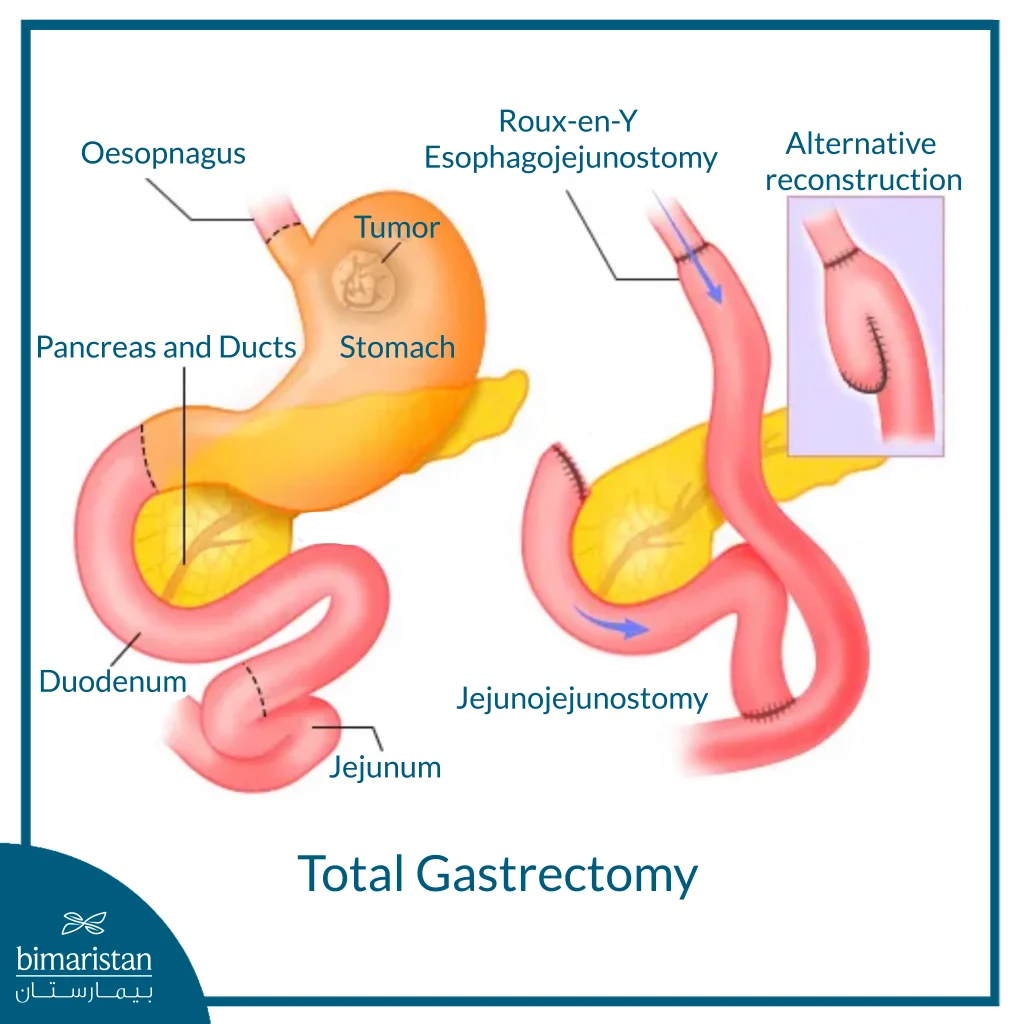
Robotic gastric cancer surgery varies depending on the tumor’s location and size. It may involve total gastrectomy or partial gastrectomy, preserving the remaining stomach. A wedge resection of the stomach may also be performed to remove the tumor along with a limited portion of the stomach wall, or a transgastric resection may be performed to access and remove the tumor from within the stomach.
The extent of lymph node dissection depends on the extent of disease spread; in early-stage gastric cancer without lymph node involvement, a limited D1+ resection is sufficient, whereas a more extensive D2 resection is performed in advanced cancer or when surrounding lymph nodes are confirmed to be involved.
When it comes to advanced stomach cancer, particularly when the tumor has reached the serosa, the application of robotic or laparoscopic surgery is still somewhat limited. There are specific conditions that can restrict the feasibility of robotic surgery, including large tumors, extensive lymph node involvement, and situations that require the removal of more than one organ. Therefore, selecting the appropriate patients for this type of surgery depends on the stage of the disease and how far it has spread; it is not suitable for all cases of stomach cancer.
How is a patient prepared for robotic gastric cancer surgery?
Before undergoing robotic gastric cancer surgery, the patient undergoes a comprehensive evaluation aimed at determining the type of cancer, its extent, and the patient’s suitability for this type of surgery. This is achieved through numerous laboratory tests and imaging studies, in addition to a general assessment of the patient’s health. Nutritional status is also reviewed, and nutritional supplements are provided as needed. In iron deficiency, intravenous iron may be administered; in anemia, blood counts are corrected immediately before surgery. Smokers are advised to quit smoking for a sufficient period before undergoing surgery and to refrain from smoking after the procedure, as smoking is associated with delayed recovery and an increased risk of complications.
The patient must also inform the doctor if she is pregnant and tell the medical team about all medications, vitamins, herbs, and supplements she is taking. Patients are usually asked to stop certain medications, such as aspirin, vitamin E, blood thinners, and anti-inflammatory drugs, one week before surgery, but to continue prescribed medications on the day of the procedure with only a small amount of water. Patients must not eat or drink after midnight the night before the procedure. It is also recommended to wear compression stockings and take a prophylactic antibiotic before surgery.
How is robotic gastric cancer surgery performed?
Robotic surgery can be used to remove part of the stomach or the entire stomach, depending on the tumor’s location, size, and the extent of the stomach cancer. The procedure is performed through small incisions in the abdomen, through which the surgeon uses robotic instruments and a high-resolution camera that provides a clear, three-dimensional view of the surgical site. Robotic gastrectomy typically takes about 3 to 5 hours, and the steps can be summarized as follows:
- General anesthesia and monitoring: The patient is placed under general anesthesia, with regular monitoring of vital signs.
- Making surgical incisions: The surgeon sterilizes the incision sites and makes several small abdominal incisions to insert the camera and robotic instruments.
- Examining the abdomen and locating the tumor: The abdominal cavity is examined to identify the tumor’s location and extent of spread, while assessing the tissues and organs surrounding the stomach.
- Mobilizing the stomach and preparing it for resection: The portion of the stomach to be removed is separated from the surrounding tissues, and the blood vessels supplying the stomach are managed appropriately.
- Resecting the affected portion of the stomach: In a partial gastrectomy, the portion containing the tumor is removed while preserving as much healthy stomach tissue as possible. However, if the tumor is extensive or its location necessitates it, the surgeon may need to remove the entire stomach.
- Removing lymph nodes: Nearby lymph nodes are removed when indicated to assess them for the presence of metastatic cancer cells.
- Reconstructing the digestive tract: Following partial gastrectomy, the remaining stomach is reconnected to the intestine. After total gastrectomy, the esophagus is connected directly to the intestine to allow food to pass through the digestive tract.
- Checking the integrity of surgical anastomoses: The surgeon inspects the anastomotic sites to ensure that the connections are secure and there is no leakage.
- Extracting the resected specimen and closing the incisions: The removed tissue is extracted through one of the surgical incisions, and the small incisions are closed once the procedure is complete.
What are the benefits of robotic gastric cancer surgery?
From a technical perspective, the robotic system offers the surgeon a high-resolution, three-dimensional view with zoom capabilities. It translates the surgeon’s hand movements into precise motions of up to 360 degrees while minimizing hand tremors. This enhances the ability to dissect tissue and remove lymph nodes with greater accuracy. Additionally, the system allows the surgeon to work from a comfortable seated position, reducing fatigue. However, it’s important to note that robotic surgery typically takes longer than laparoscopic or open surgery.
Compared with open surgery, robotic surgery for stomach cancer offers several potential benefits for the patient related to the small size of the surgical incisions, as the large incisions ranging from 20 to 30 cm in open surgery are replaced by small incisions no larger than a few centimeters. Among the benefits of robotic surgery are:
- Reduced post-operative pain
- Lower risk of bleeding and infection by pathogens
- Shorter hospital stay
- Faster return to daily activities; some patients are able to walk within just a few hours after the procedure
- Minimized damage to surrounding nerve and muscle tissue, which reduces the need for pain relievers, a benefit that is particularly helpful for patients with a thicker abdominal wall
What are the possible complications following robotic gastric cancer surgery?
Robotic gastric cancer surgery, like any surgical procedure, carries certain risks and potential complications. General complications may include bleeding, bacterial infection at the incision sites, and adverse reactions to anesthesia, which in rare cases may include breathing difficulties. A leak may also occur at the anastomosis site between sections of the intestine or stomach, which is a complication specific to this type of surgery.
In the first few days after surgery, the patient may experience mild pain, fatigue, and discomfort from the gases used during the procedure; this sensation may sometimes temporarily extend to the shoulder or abdomen, but it usually subsides within 24 to 48 hours. Since the surgery is performed laparoscopically through small incisions, the risk of an incisional hernia or infection is relatively low compared to open surgery.
Cost of robotic gastric cancer surgery in Turkey
Turkey is a leading country in robotic surgery, with specialized hospitals and medical centers across cities offering robotic gastric cancer surgery. The estimated cost for this procedure typically ranges from $15,000 to $28,000. However, this estimate can vary significantly based on several factors, including the hospital, city, and surgeon, the complexity of the procedure, whether the resection is partial or total, and the length of the hospital stay, along with any diagnostic or postoperative services included in the treatment package. Therefore, it is important to confirm the price on a case-by-case basis with the hospital after reviewing the patient’s medical reports.
In conclusion, robotic gastric cancer surgery is a minimally invasive technique suitable for a select group of patients. This approach offers several potential benefits, including smaller surgical incisions, improved visualization during the procedure, precise control over surgical instruments, and a faster recovery. However, these advantages are not guaranteed in every case. The suitability of this surgical option depends on several factors, primarily the tumor’s stage and location, the patient’s overall health, and the surgical team’s experience.
Sources: