
.floating_btn{ display:none !important; } .println-contact-form-button-element{ display:none !important; }
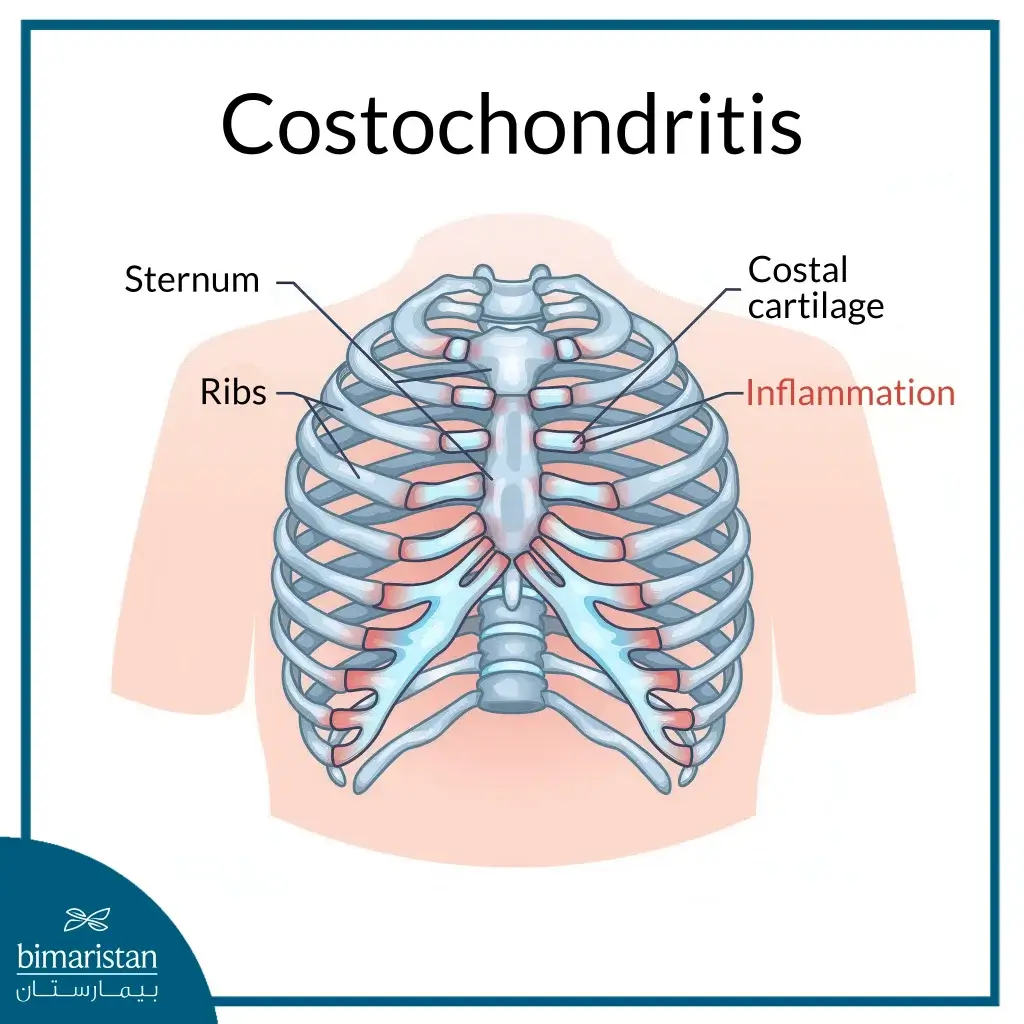
Costochondritis is characterized by cartilage inflammation that connects the ribs to the sternum in the chest, resulting in chest pain. Although this pain can be concerning, particularly if it occurs on the same side as the heart, costochondritis is not an indicator of a heart attack and typically does not cause any serious complications. This inflammation most commonly affects the upper ribs on the left side of the body, and the pain is often most noticeable when the cartilage meets the sternum. However, it can also appear where the cartilage connects with the ribs. Despite causing sharp pain, especially during breathing or movement, this condition usually improves over time.
Costochondritis: definition, causes, and symptoms
Costochondritis is an inflammatory condition affecting the cartilage that connects the ribs to the sternum (the bone at the center of the chest). This inflammation results in chest pain that becomes more noticeable, especially when moving or taking deep breaths, where patients report sharp or persistent pain in the chest area.
Rib cartilage inflammation commonly occurs in the upper ribs on the left side of the body. The pain is usually more intense where the rib cartilage connects with the sternum, known as the costosternal joint. Additionally, patients may experience pain in the area where the cartilage meets the ribs, which can complicate the diagnosis in some cases.
Costochondritis is one of the most common causes of chest pain, and patients may mistakenly think the pain is related to heart problems, such as a heart attack. The similarity in the location of the pain and the way it starts can increase anxiety. Still, it is essential to note that costochondritis is not related to the heart and does not indicate a serious medical condition, such as heart issues, as heart attacks do not cause costochondritis.
Although costochondritis can affect anyone, it is more common in certain groups, such as women over the age of 40 and athletes who engage in physical activities requiring repetitive physical contact. In most cases, the condition improves on its own over a few weeks or months without needing treatment. However, some cases may require medical intervention to alleviate pain or manage inflammation more effectively.
Since costochondritis often resolves on its own, medical monitoring is vital to ensure a correct diagnosis and to rule out other potential causes of chest pain.
Causes of costochondritis
While the exact cause of costochondritis remains unknown in many cases, research suggests that a range of factors may contribute to the development of this inflammation, either directly or indirectly. These factors include:
- Trauma or direct injury to the chest, Such as from car accidents, falls, or rib fractures, which directly affects the rib joints and chest cartilage.
- Repeated physical strain: Activities that require repeated movement of the upper body, such as weightlifting, intense sports, or even strenuous household tasks, can place continuous pressure on the rib joints.
- Infections: Certain infections, particularly those that follow chest surgeries or occur in the context of respiratory diseases such as tuberculosis or viral infections, may lead to inflammation of the costal cartilage.
- Chronic joint diseases, such as rheumatoid arthritis or osteoarthritis, affect the joints and increase the likelihood of inflammation in areas like the costosternal joint.
- Severe or persistent coughing or vomiting: Sudden and repetitive coughing or vomiting can strain the muscles and irritate the chest joints.
- Other rare causes: In some cases, costochondritis may be associated with systemic conditions, such as fibromyalgia or dysfunction in the posterior joints (thoracic vertebrae).
Symptoms of costochondritis
The clinical symptoms of costochondritis are crucial in diagnosing the condition, as they resemble the symptoms of heart diseases and other chest-related conditions, which may cause concern for the patient. The most common symptom is chest pain, which varies in intensity and nature and is significantly affected by movement or pressure on the chest wall. The key symptoms associated with this condition include:
- Chest pain: This pain typically appears in the front of the chest and is often centered on the left side of the sternum. It may extend to the back, abdomen, shoulders, or arms and is described as sharp, pressing, or stabbing. It is common for more than one rib to be affected simultaneously.
- Pain worsens with movement: The pain increases with the upper body or chest wall movement, and becomes more pronounced when lying down, especially on the affected side. The condition may also cause what is known as “localized tenderness,” meaning pain upon pressing the joints where the ribs connect to the sternum.
- Exacerbation with specific activities: Major triggers that intensify the pain include deep or forceful breathing, coughing, sneezing, or vomiting. Everyday movements, such as twisting the torso, reaching for something high, exercising, or even hugging someone, can aggravate the symptoms due to the strain on the muscles and chest wall.
Diagnosis of costochondritis
There is no specific test or exam that can directly diagnose costochondritis. Typically, the diagnosis is exclusionary, meaning that the doctor starts by ruling out other causes of chest pain before arriving at this diagnosis. Initially, severe conditions that may cause chest pain, such as heart attacks, are ruled out. An electrocardiogram (ECG) assesses the heart’s electrical activity. A chest X-ray may also be conducted to exclude issues like pneumothorax or rib fractures.
Next, the doctor performs a comprehensive physical exam to assess the severity and location of the pain. Specific movements, such as manipulating the rib cage or arms in specific ways, may provoke symptoms. The torso is also examined for signs of previous injuries or trauma.
Although no imaging test is specific for diagnosing costochondritis, some tests, such as CT scans, MRIs, and ultrasound imaging, may be used to rule out other possible causes of pain.
Sometimes, blood tests may be ordered to check for infections or other health problems that might contribute to the symptoms.
Treatment for costochondritis
Most cases of costochondritis improve over time, as the rib cage gradually recovers through rest, allowing the inflamed cartilage joints to heal. Treatment options vary depending on the severity of symptoms and the patient’s condition, and may include home care, medications, physical therapy, and, in rare cases, surgery.
Home treatment
Home care is one of the primary and practical approaches to managing costochondritis and includes:
- Rest: Give the rib cage time to heal and avoid activities that could worsen the symptoms.
- Hot or cold compresses: Applying heat or cold to help reduce pain and swelling.
- Pain relievers: Non-steroidal anti-inflammatory drugs (NSAIDs), such as ibuprofen, which are available over the counter, work to reduce pain and inflammation.
- Avoid activities that trigger pain, such as physical sports or movements that exacerbate symptoms.
Medication treatment
In some cases, medication is needed to relieve inflammation and persistent pain. Medications used in the treatment of costochondritis include:
- Corticosteroid injections: Used in cases of chronic or persistent pain, where the medication is injected directly into the painful area if the symptoms do not respond to initial treatments.
- Tricyclic antidepressants, such as amitriptyline, are specifically used to manage chronic pain associated with sleep disturbances.
- Anticonvulsants: Like gabapentin, which is used to control chronic pain, especially in cases that do not respond to traditional treatments.
- Antibiotics: If a bacterial or fungal infection causes costochondritis, intravenous antibiotics may be prescribed, followed by an oral course that lasts between 2 and 3 weeks.
Physical therapy
Physical therapy plays a crucial role in treating costochondritis, helping alleviate pain and enhance muscle flexibility. Some of the main physical therapies include:
- Stretching exercises: These exercises help strengthen and increase flexibility in the chest muscles, reducing pain and improving movement.
- Transcutaneous electrical nerve stimulation (TENS): A device that sends weak electrical currents through adhesive patches on the skin near the pain area. This electrical current reduces or masks pain signals, reducing their transmission to the brain.
Surgical treatment
Surgical intervention may be considered in rare cases where the condition does not respond to other treatments. If chronic pain persists and significantly affects quality of life, the inflamed cartilage may be removed surgically.
Prevention of costochondritis
Costochondritis is a condition that is difficult to prevent entirely, due to the unclear causes behind its development. Experts believe that it may result from the accumulation of micro-trauma or ongoing stress on the ribs or chest cartilage, leading to repeated inflammation in the area. While complete prevention is not always possible, specific steps can reduce the risk of developing this condition or alleviate its severity. Some preventive measures include:
- Avoiding excessive pressure on the chest and ribs: Repeated or sudden pressure on the chest and ribs is a significant factor in the development of costochondritis. Therefore, it is important to avoid activities that place excessive physical stress on the chest area without allowing adequate rest.
- Rest after intense physical activities: Giving the body time to recover after strenuous activities helps reduce pressure on the cartilage.
- Avoiding activities that cause chest pain.
- Regular stretching exercises: Stretching helps improve the flexibility of the chest muscles and reduces stress on the ribs.
In conclusion, costochondritis is considered a condition that can cause severe chest pain and may be a significant source of concern for patients if not correctly diagnosed and treated. Although the causes of this condition are often unclear, following preventive advice can help reduce the risk of developing it and alleviate its symptoms.
Suppose you are experiencing similar symptoms or have been diagnosed with costochondritis. In that case, Bimaristan Center in Turkey is one of the leading medical institutions with a high capacity for effectively diagnosing and treating this condition. Thanks to its specialized medical team and the latest treatment technologies, Bimaristan Center ensures comprehensive patient care, whether through medication, physical therapy, or even surgical intervention. If you’re seeking the best specialized medical care, Bimaristan Center is the ideal choice for receiving the appropriate treatment and returning to a pain-free, healthy life.
References: