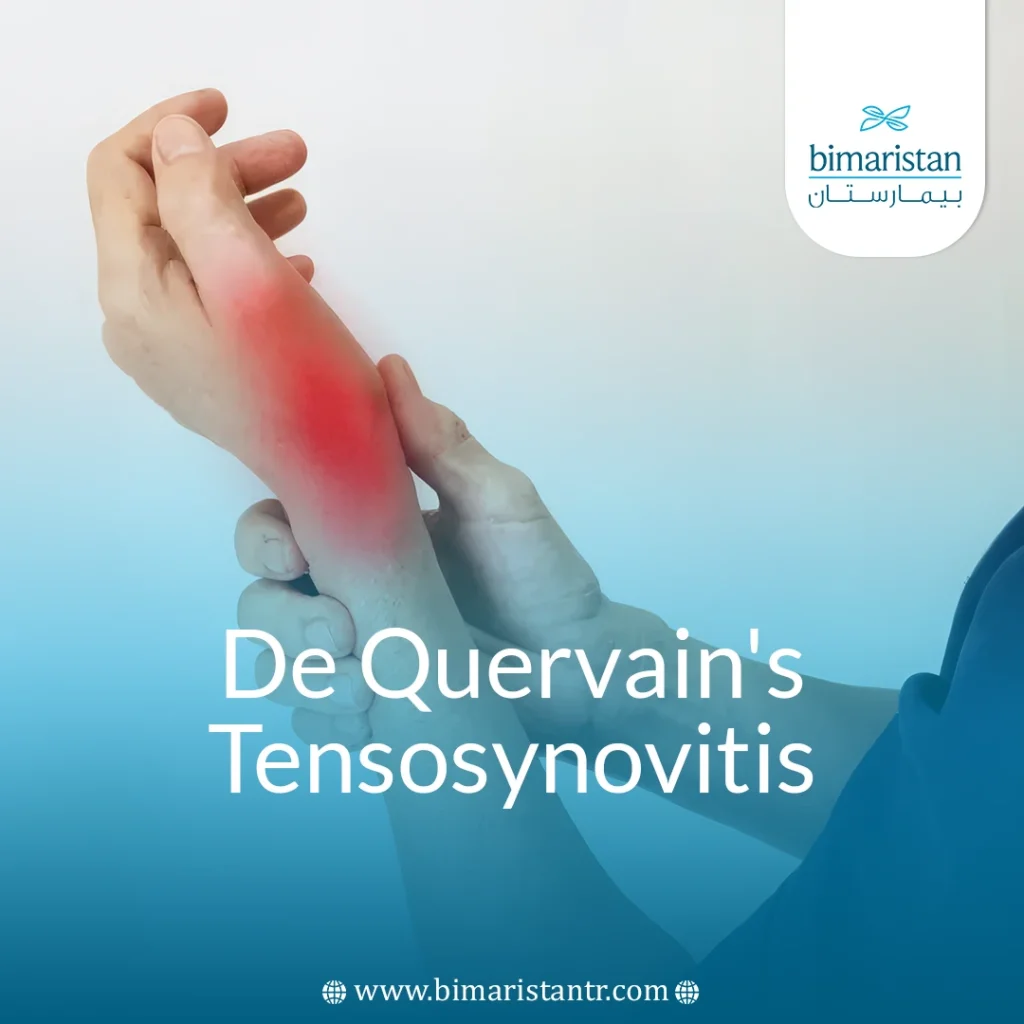
Thumb tendonitis, medically known as De Quervain’s Tenosynovitis, is a painful inflammatory condition that affects the tendons located on the thumb side of the wrist. This inflammation presents as swelling of two tendons that pass through a narrow sheath from the wrist to the base of the thumb, leading to restricted movement and causing pain, particularly when rotating the wrist, gripping objects, or forming a fist.
Although the exact cause of this inflammation remains uncertain, repetitive thumb and wrist movements, whether related to work or hobbies such as gardening, racquet sports, or carrying children, are among the most notable contributing factors in exacerbating the condition. Management typically begins with conservative treatments, including splinting and resting the wrist for several weeks. However, surgery may be required if symptoms persist to relieve pressure on the constricted tendon sheath.
What is thumb tendonitis?
Tendons are strong, flexible cords of fibrous tissue that connect muscles to bones, playing a vital role in enabling daily movements such as running, jumping, and grasping by transmitting the force of muscle contraction to the skeletal system. Surrounding these tendons is a protective tissue sheath that produces synovial fluid, facilitating the smooth and frictionless gliding of the tendon within the fibrous bony canals.
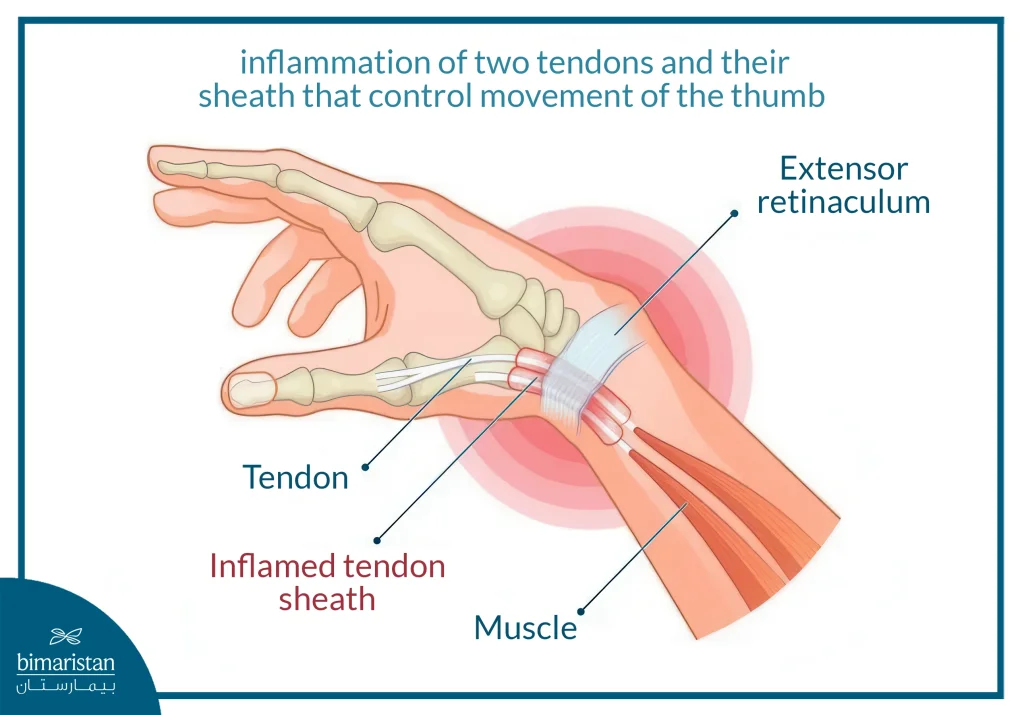
In thumb tendonitis, two main tendons in the hand are affected: the extensor pollicis brevis and the abductor pollicis longus, which originate from the dorsal side of the forearm and pass through a narrow tunnel known as the extensor retinaculum toward the base of the thumb on the lateral side of the wrist. This fibrous retinaculum measures approximately 2 cm in length, making it susceptible to entrapment and friction, especially with repetitive trauma or excessive motion, which can lead to congestion in the synovial sheath surrounding these tendons and result in an inflammatory process known as De Quervain’s Tenosynovitis.
This inflammation causes thickening and swelling of the sheath, leading to abnormal friction on the tendons during movement, which results in sharp pain at the base of the thumb that can radiate to the forearm, and makes it difficult to perform simple motions such as gripping or grasping. It is considered one of the most common types of tenosynovitis, affecting approximately 1% of the U.S. population annually. It appears more frequently among adults in their fourth and fifth decades of life, with women being affected 8 to 10 times more than men. It is also commonly observed among individuals with a history of elbow injuries, such as medial or lateral epicondylitis, or those involved in activities that require repetitive thumb and wrist motions.
Causes of thumb tendonitis
Although the exact cause of thumb tendonitis remains unknown, medical literature points to several predisposing and causative factors leading to the onset or worsening of this condition. Chronic overuse of the wrist or thumb, particularly in daily repetitive movements such as grasping, gripping, or twisting, is among the most prominent causes, as it leads to irritation of the tendon sheath, resulting in thickening and swelling that restricts tendon movement within the narrow fibrous bony tunnel leading to the thumb base.
Direct trauma to the wrist or thumb, such as blows or bruises, can contribute to the formation of scar tissue within the sheath, hindering smooth tendon gliding. Chronic inflammatory conditions like rheumatoid arthritis are also common pathological factors that predispose individuals due to continuous inflammatory immune responses. Moreover, hormonal changes during pregnancy can cause fluid retention in tissues, increasing pressure on the fibrous sheath and contributing to the development of the condition, a phenomenon that is notably common among pregnant or breastfeeding women.
Activities involving frequent lateral wrist movements while stabilizing the thumb are direct triggers for the onset or worsening of the inflammation. Such activities include racquet sports like tennis and badminton, using hand tools such as hammers, fine sewing tasks, lifting small children, playing the piano, or even intensive gardening and crafts requiring repeated gripping.
Thus, thumb tendonitis is a multifactorial disorder involving excessive mechanical use, localized trauma, inflammatory, and hormonal changes, requiring comprehensive evaluation of risk factors for each case individually to establish an effective and thorough treatment plan.
Symptoms of thumb tendonitis
Pain on the radial side of the wrist, just below the base of the thumb, is the most common symptom of thumb tendonitis. This pain may appear suddenly or develop gradually over time, worsening with the use of the thumb or wrist. Other associated symptoms include:
- Localized swelling near the base of the thumb, sometimes accompanied by redness and warmth indicative of inflammation.
- A sensation of popping or snapping in the wrist when bending or moving the thumb, due to swollen tendons rubbing within the narrow sheath.
- Stiffness or reduced thumb mobility.
- Extreme tenderness when pressing on the affected area.
- In some cases, the formation of a fluid-filled cyst near the thumb base as a chronic inflammatory response.
- Numbness or tingling in the thumb or wrist may occur in advanced cases due to the pressure on nearby nerves.
Diagnosis of thumb tendonitis
Diagnosis of thumb tendonitis primarily relies on a detailed clinical examination conducted by the healthcare provider, which begins with palpation of the radial side of the wrist, following the course of the swollen tendons, and checking for localized pain or swelling at the base of the thumb upon pressure. A thorough medical history is also recorded, including the onset of symptoms and activities that may exacerbate the condition, such as repetitive movements or chronic strain.
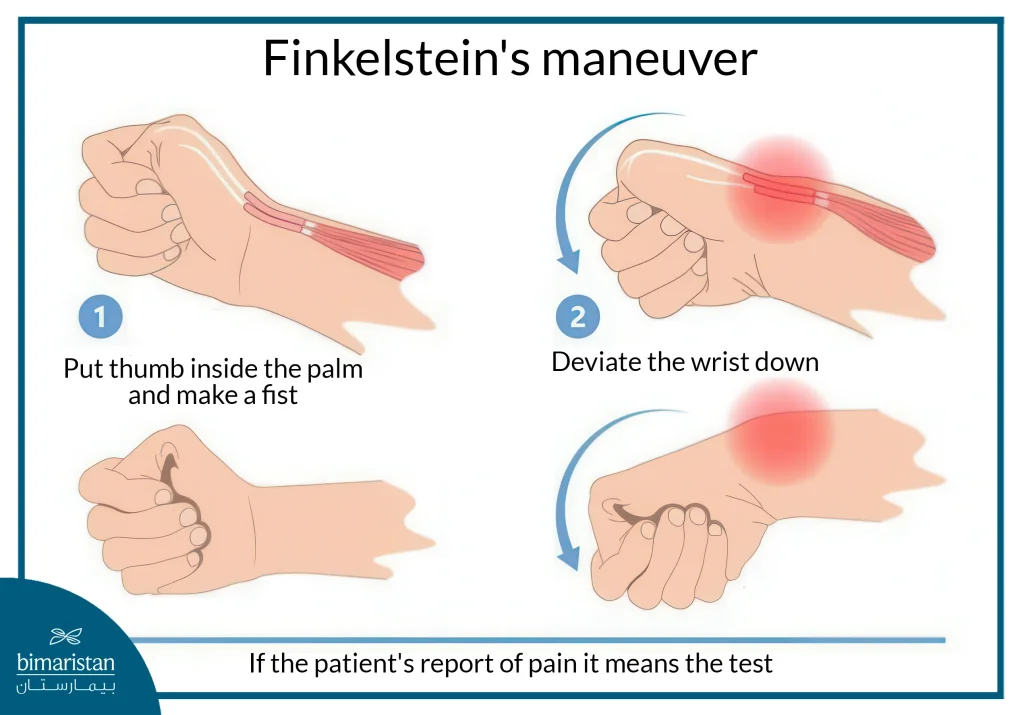
Finkelstein Test: Is the cornerstone of clinical confirmation. In this test:
- The patient is asked to bend the thumb into the palm and cover it with the four fingers to form a closed fist.
- Then, the wrist is bent toward the ulna (toward the little finger), similar to a handshake motion.
This position stretches the affected tendons, and if inflammation is present, the patient will experience sharp pain or marked discomfort along the thumb side of the wrist, indicating a positive test.
Additional investigations include imaging studies, such as X-rays, which are performed not to confirm the diagnosis but to exclude other conditions that may cause similar wrist pain, such as osteoarthritis or microfractures.
Treatment of thumb tendonitis
The treatment of thumb tendonitis depends on the stage of the injury, the severity of symptoms, and the patient’s response to therapy. It is divided into three main types: conservative treatment, pharmacological treatment, and surgical treatment. All of these aim to reduce pain and swelling, restore thumb and wrist function, and prevent recurrence.
Conservative treatment
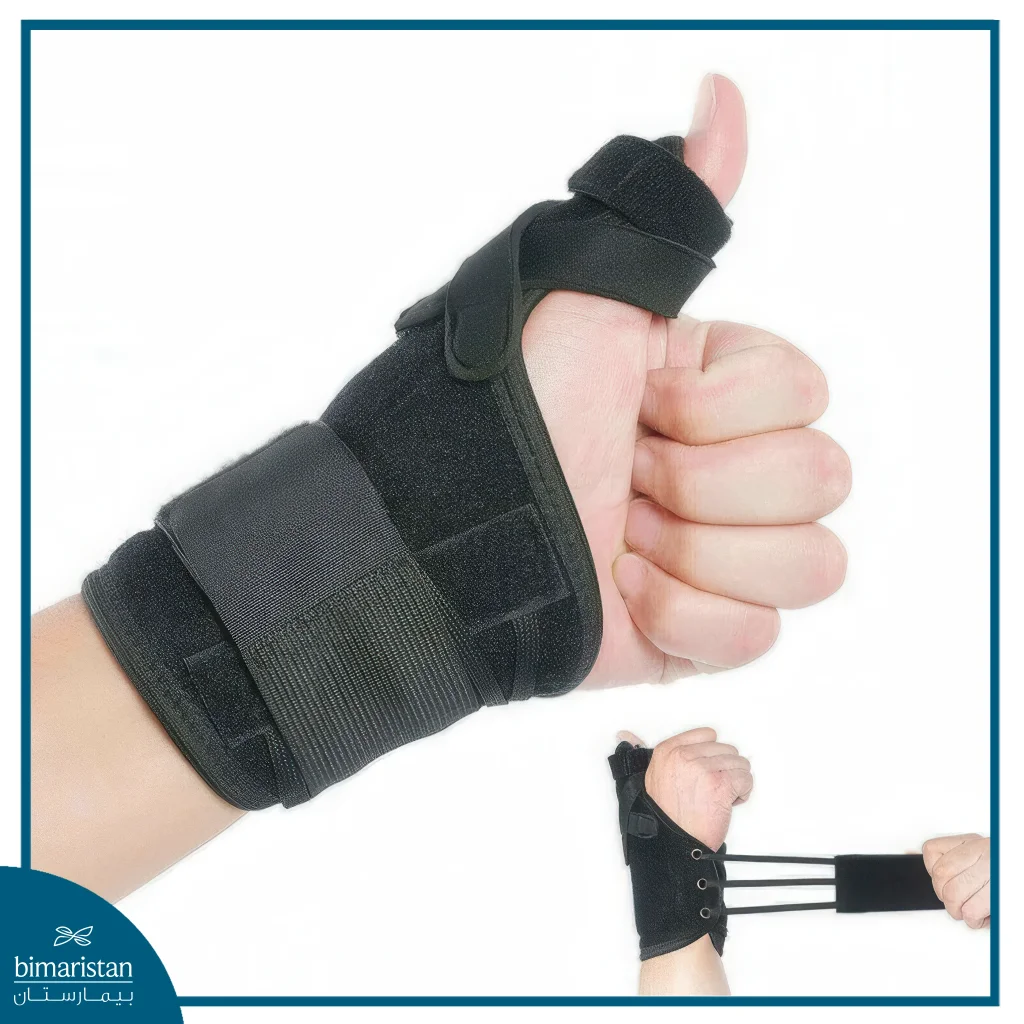
Conservative treatment is recommended as the first-line approach and involves resting and modifying daily activities to avoid repetitive movements or activities that exacerbate the pain. Special splints or braces immobilizing the thumb and wrist are recommended, typically worn continuously for at least four to six weeks. Applying ice packs for 15 to 20 minutes every four to six hours also reduces swelling and alleviates pain. After symptom improvement, a therapeutic exercise program supervised by a physical therapist, such as tennis ball gripping exercises, is recommended to improve flexibility and restore muscle strength.
Medication therapy
For pharmacological treatment, nonsteroidal anti-inflammatory drugs (NSAIDs), such as ibuprofen and naproxen, are used to relieve pain and reduce inflammation, either orally or topically. If symptoms persist, corticosteroid injections into the tendon sheath may be administered, showing significant effectiveness in relieving symptoms in more than half of patients, particularly when used early in the treatment course. Additionally, some natural herbs may be used as complementary treatments in mild to moderate cases, including white willow bark, turmeric, ashwagandha, and arnica, which are known for their anti-inflammatory properties; however, these should be used preferably under medical supervision.
Surgical intervention
In cases unresponsive to conservative or injection therapies, or where pain persists and hand functionality deteriorates, surgical release of the tendon sheath is recommended. The surgery is performed under local anesthesia in an outpatient setting, involving a small incision in the sheath to widen it and allow free tendon movement. Care is taken to identify and protect nearby nerves, and inflamed tissue surrounding the tendons may be removed. The surgery aims to relieve radical pain and restore thumb and wrist movement. Surgical complications are rare but may include bothersome scar formation, temporary thumb numbness, infection (less than 1%), or localized stiffness. Postoperative rehabilitation, including physical therapy exercises, is recommended to facilitate a full recovery and restore hand function.
Prevention of thumb tendonitis
Prevention of thumb tendonitis mainly relies on modifying activities that could trigger pain by adopting healthy and preventive habits. Key preventive measures include avoiding activities that exacerbate the condition and taking breaks to reduce wrist and thumb strain. Varying hand movements and avoiding static postures for long periods also help reduce the risk.
Additionally, prevention is more effective by avoiding the overuse of the thumb and wrist, which can be achieved by learning proper techniques when engaging in various activities, whether athletic or occupational, and using appropriate protective equipment during physical tasks. Gradual progression when starting new activities or exercises is crucial to avoid strain and injury, as well as taking regular breaks during repetitive tasks. Suppose wrist pain is experienced during or after physical activity. In that case, it is essential to avoid “playing through pain” and allow adequate rest and recovery to reduce the likelihood of this troublesome inflammation.
In conclusion, thumb tendonitis is a painful condition that can significantly affect hand and wrist functionality. With the various causes and contributing factors, such as overuse or repetitive motions, appropriate treatment primarily relies on early diagnosis and effective symptom management, whether conservatively, medically, or surgically in some cases.
Prevention remains a crucial element in avoiding the worsening of inflammation. Healthy habits, such as avoiding thumb and wrist overuse, taking regular breaks, and learning proper techniques during activities, help maintain tendon and joint health.
In this context, Bimaristan Hospital in Turkey stands out as a distinguished destination for treating such conditions, thanks to the outstanding expertise of its specialized medical team in managing thumb tendonitis, utilizing the latest medical methods and therapeutic techniques. The hospital provides comprehensive healthcare, from accurate diagnosis and effective treatment to rehabilitation, ensuring a full recovery and a safe return to daily activities. Bimaristan Hospital also features the latest medical equipment that contributes to improved treatment outcomes and significant pain relief.
References:
- De Quervain’s tenosynovitis. NHS Foundation Trust.
- DE QUERVAIN’S TENOSYNOVITIS. THE SPORTS MEDICINE PATIENT ADVISOR
- De Quervain’s Disease. Patient Information Therapy Services.
- What Is De Quervain Tenosynovitis? AMERICAN SOCIETY FOR SURGERY OF THE HAND
- De Quervains Tenosynovitis. East Sussex Healthcare, NHS Trust
- De Quervain’s Tenosynovitis Rehabilitation Exercises. The University Hospital of Columbia and Cornell