
.floating_btn{ display:none !important; } .println-contact-form-button-element{ display:none !important; }
Stiff fingers are considered a common symptom that impedes the normal movement of the hand and may result from various causes, ranging from chronic diseases to acute injuries. Joint inflammation is among the primary causes of this condition, but other common conditions include tenosynovitis (as in trigger finger), carpal tunnel syndrome, and even various hand injuries. Stiffness may present at specific times of day, which helps the physician deduce the underlying disorder and determine the most appropriate treatment approach.
This article examines the various causes of stiff fingers, diagnostic methods, and available treatments, encompassing home remedies, simple exercises, pharmacological therapies, and surgical interventions. It also highlights the role of home exercises in restoring joint flexibility and the impact of splints in reducing stiffness and reviews some surgical procedures, such as capsulotomy and soft tissue release.
Medical causes and accompanying symptoms of stiff fingers
Finger stiffness is a common symptom resulting from a broad spectrum of pathological disorders affecting the hand. It is defined as a reduced flexibility and movement of joints, tendons, or surrounding tissues, resulting in difficulty opening or bending the fingers normally. Causes range from chronic inflammatory conditions to mechanical or neurological dysfunctions, and associated symptoms vary depending on the underlying cause. Prominent causes include:
- Osteoarthritis: A degenerative disease affecting joint cartilage due to aging or overuse, leading to pain, morning stiffness, and swelling in joints near the fingertips and the base of the thumb.
- Rheumatoid arthritis: An autoimmune disease causing chronic inflammation in small joints, manifesting as morning stiffness lasting over 30 minutes, symmetrical hand pain, and finger deformities such as Boutonniere and Swan neck deformities.
- Trigger finger: This occurs due to inflammation of the tendon sheath surrounding the finger tendons. It locks the finger in a bent position with a “clicking” sound when attempting to straighten it, accompanied by pain and swelling at the base of the finger.
- Dupuytren’s contracture: A chronic fibrotic disorder causing the formation of nodules and fibrous cords in the palm, especially affecting the ring and little fingers, resulting in persistent finger flexion and difficulty in extension.
- Carpal tunnel syndrome: Results from compression of the median nerve at the wrist, causing numbness, tingling, and stiffness, especially in the thumb, index, and middle fingers, with symptoms worsening at night or after repetitive activity.
- Tendinitis: Caused by overuse or repetitive injuries, leading to pain outside the joint, swelling, and difficulty moving the fingers.
- Diabetes: It may cause skin and tendon stiffening, leading to diabetic hand syndrome, which presents as chronic stiffness and reduced finger movement.
- Pregnancy: Fluid retention associated with pregnancy may contribute to the development of carpal tunnel syndrome.
- Trauma and injuries, Such as fractures, joint sprains, or tendon tears, can cause localized swelling, acute pain, and stiffness due to tissue scarring or fibrosis.
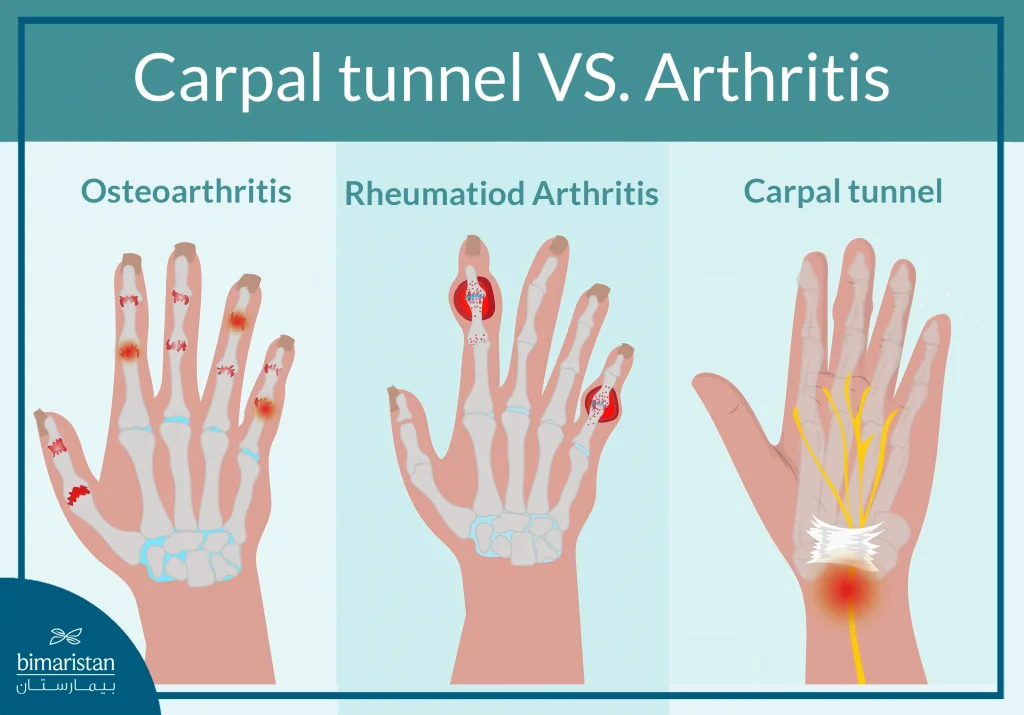
Diagnosis of stiff fingers
Diagnosis relies on a thorough clinical history, including inquiry about symptoms, physical activity patterns, and recent injuries. A physical exam follows this to assess the range of finger motion and look for signs of inflammation or deformity.
Imaging tests, such as X-rays, MRI scans, or CT scans, may detect structural changes in joints and tendons. Blood tests can help identify immune or inflammatory causes, such as rheumatoid arthritis or psoriatic arthritis.
Treatment of stiff fingers
The optimal treatment approach for stiff fingers is determined based on several clinical factors, including the underlying cause, the patient’s age, overall health, symptom severity, and the condition’s impact on functional ability.
The causes of stiffness are not limited to joint disorders but may also involve surrounding structures, such as tendons and ligaments, which directly affect joint mobility. The underlying pathology is the key determinant in selecting the treatment plan.
Treatment usually begins with conservative options such as physical therapy, stretching exercises, and anti-inflammatory medications, with progression to interventional or surgical options if conservative treatments fail.
Below is a review of the primary treatment modalities used for stiff fingers depending on their causes.
Natural remedies for stiff fingers without medications
Several natural remedies can be applied at home to manage stiff fingers without the use of medications, although scientific evidence supporting their efficacy remains limited. It is essential to consult a physician before attempting these treatments, as some may be contraindicated for specific individuals. The following remedies may help reduce arthritis-related pain, swelling, and joint stiffness:
- Ginger: Has anti-inflammatory properties that may help relieve pain and improve joint mobility.
- Willow bark: Contains aspirin-like compounds that may help reduce inflammation and pain.
- Turmeric: Contains curcumin, a potent anti-inflammatory agent.
- Green tea: Rich in antioxidants that may help reduce inflammation and improve joint health.
- Boswellia (Indian frankincense): May reduce swelling and improve joint flexibility.
- Fish oil: Contains omega-3 fatty acids with anti-inflammatory effects.
- Devil’s claw: Known for its ability to relieve pain and improve movement in arthritis-affected joints.
Exercises to improve finger joint mobility
Exercises can improve the flexibility and mobility of the fingers while reducing joint pain and swelling. Several stretching exercises can be performed for this purpose:
Finger bending and extension exercise
Start by bending the fingers toward the palm and then fully extending them. Then, form a tight fist and hold it for 10 seconds, followed by relaxation for 10 seconds. Keep the elbow on a stable surface and keep the wrist straight during movement. Perform the movement slowly to avoid pain.
Finger touching exercise
This exercise focuses on enhancing the thumb’s range of motion and improving the muscular coordination between the thumb and the other fingers. The movement starts by extending the palm upward. Then, the thumb is moved toward the index finger until it touches it, and this position is held for five seconds before returning the thumb to its normal position. Each finger’s movement is repeated individually, giving the hand greater flexibility and more precise control.
Lateral finger slide exercise
In this exercise, the hand is placed on a table with the palm facing downward, and the fingers are slid—one by one—toward the thumb without bending them. After completion, the fingers are returned to their original positions. This exercise helps improve the lateral movement of the fingers, which is essential for fine tasks such as grasping small objects and writing.
Fist formation exercise
This exercise strengthens the intrinsic hand muscles. A firm fist is formed and maintained for 45 seconds, then the hand is opened and the fingers are given time to rest. This exercise is repeated several times daily and helps strengthen the supporting structures of the finger joints.
Finger stretching exercise
This exercise focuses on lengthening the ligaments and tendons. The hand is placed on a flat surface so that the palm is in complete contact with it. The fingers are extended until they are fully straightened and maintained in this position for 30 to 60 seconds. This exercise is repeated several times a day to improve the overall range of motion and reduce morning stiffness.
Grip strengthening exercise using a soft ball
This exercise improves overall grip strength. A small, soft ball is held and squeezed firmly for several seconds, and then the hand is gradually opened. The exercise is repeated for 45 seconds per hand, and it is recommended to give the hand a day or two of rest after performing it to avoid muscle fatigue.
Ball pressing exercise
Similar to the previous exercise, this one focuses on daily repetition by pressing the ball repeatedly in a controlled manner. This exercise enhances the strength of the small muscles in the hand, making it ideal for individuals who experience finger weakness or loss of grip strength.
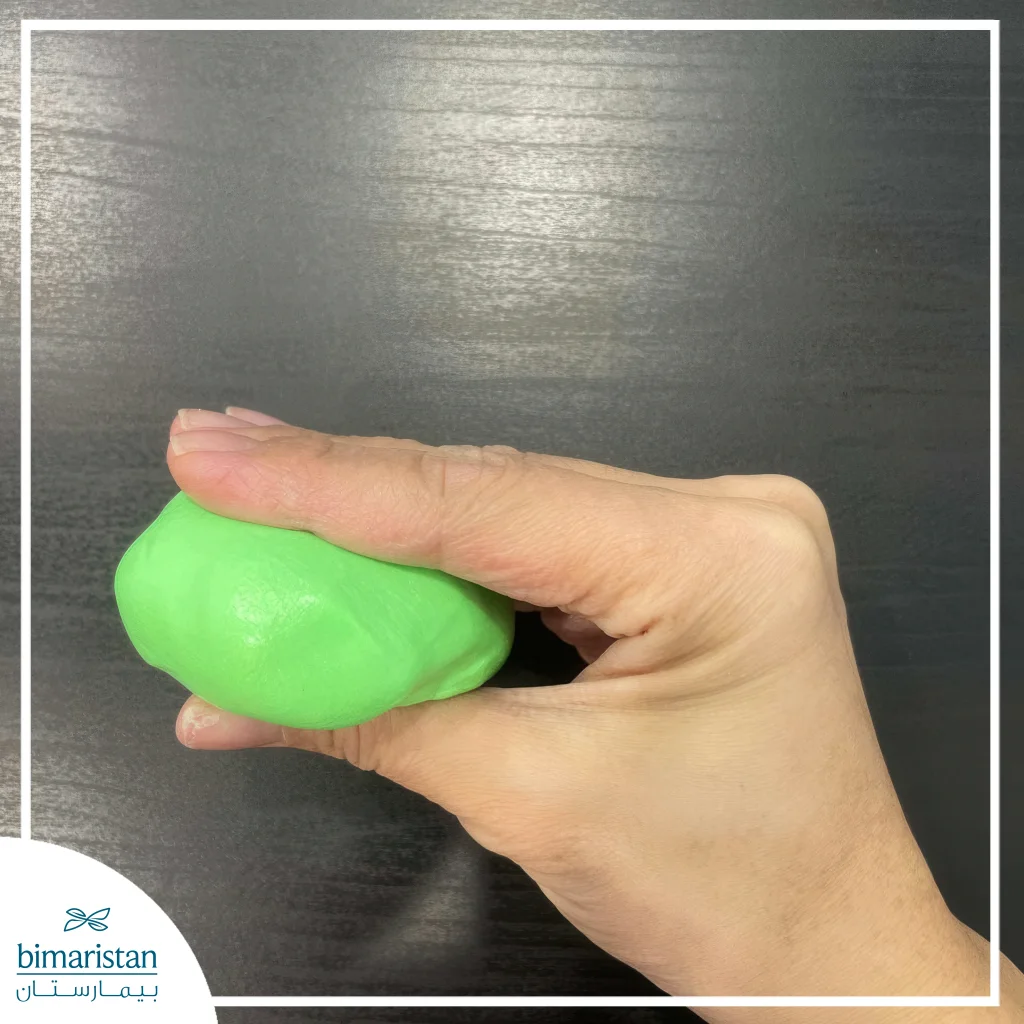
Clothespin grip exercise:
This is performed using a simple clothespin pressed between the thumb and index finger, and the exercise is then repeated with the remaining fingers. This exercise improves finger coordination and increases strength.
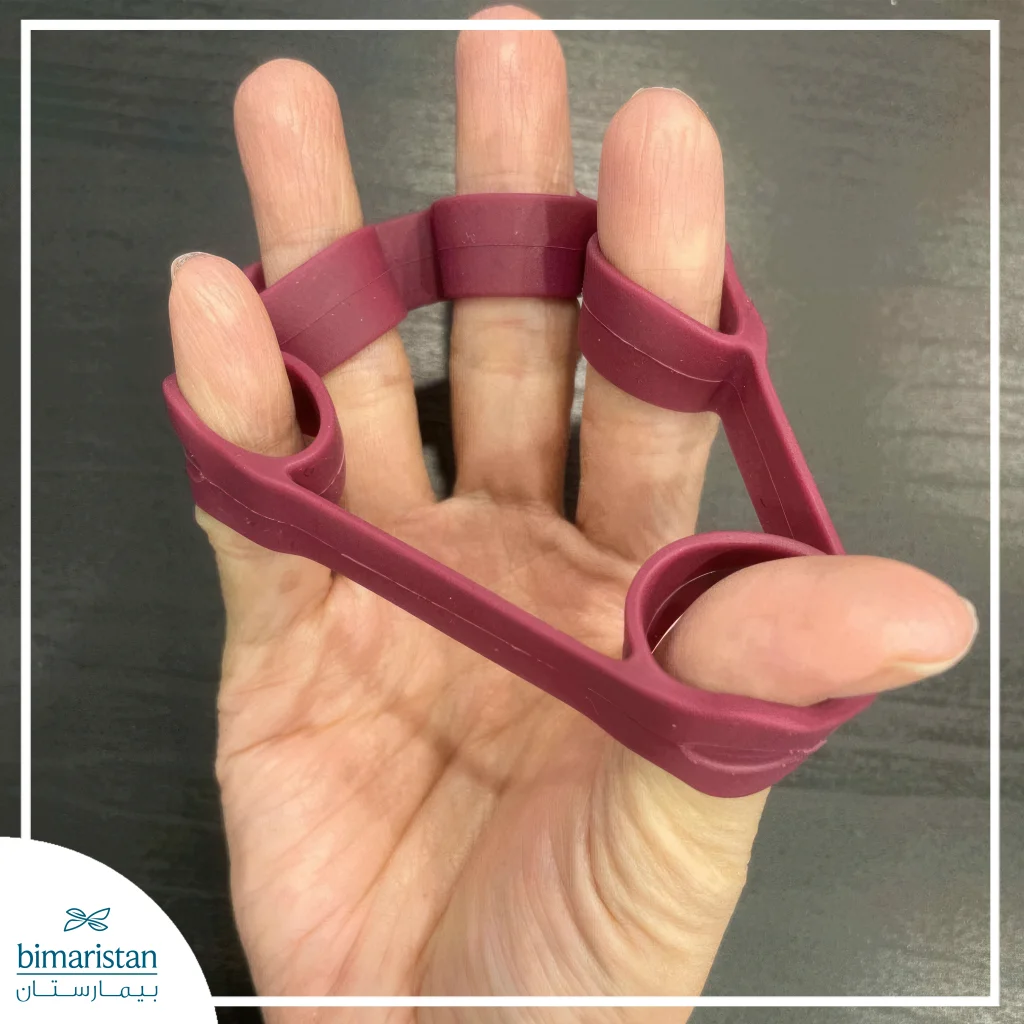
Rubber band stretch exercise
A rubber band is wrapped around all fingers with the thumb, and then the fingers are opened and closed with controlled force. This exercise strengthens the outer hand muscles and increases their ability to resist fatigue.
Wrist flexion exercise
This exercise is performed using a light water bottle. The bottle is held with the palm facing downward, and the wrist is flexed slowly upward and downward. The exercise is repeated with the palm facing upward to stimulate the forearm and wrist muscles and tendons, contributing to finger support and relieving pressure on them.
Recent studies have shown that incorporating these exercises into daily treatment plans, especially for patients with rheumatoid arthritis, may significantly improve hand function over the course of a year by enhancing grip strength, finger flexibility, and daily task performance. Nevertheless, consultation with a physician or physiotherapist remains necessary to tailor exercises to individual cases and avoid complications.
Pharmacological treatment of stiff fingers
Drug therapy is one of the primary methods for managing stiff fingers, particularly in patients with chronic inflammatory conditions such as rheumatoid arthritis or osteoarthritis. For example, non-steroidal anti-inflammatory drugs (NSAIDs) are widely used to reduce pain, swelling, redness, and localized heat in the affected joints. Among the most commonly used medications in this regard are:
- Ibuprofen
- Naproxen
- Aspirin
- Acetaminophen
Depending on the severity of symptoms and the extent of inflammation, these medications can be used either topically on the affected joint or orally as systemic treatment. While effective in quickly relieving symptoms, long-term use must be under medical supervision to avoid potential side effects such as gastrointestinal or kidney problems.
Corticosteroid injections
When the condition does not respond to conventional treatments or is in advanced stages, physicians inject corticosteroids directly into the affected joint, especially in cases like trigger finger or rheumatoid arthritis. These injections effectively reduce stiffness and alleviate pain; however, their use must be limited to avoid side effects, such as weakening of the tendons or ligaments.
After receiving a steroid injection, it is recommended to avoid using the treated finger for at least 3 days and to refrain from making tight fists or performing tasks that require a firm grip for up to 3 weeks. These injections also demonstrate notable effectiveness in alleviating carpal tunnel syndrome symptoms, thereby enhancing hand and finger mobility.
Enzyme therapy
Enzyme therapy—particularly using collagenase enzyme—is an effective option in cases of Dupuytren’s contracture, a condition that causes severely stiff fingers due to collagen fiber accumulation. This enzyme breaks down the collagen fibers that form fibrous cords under the skin, thereby reducing stiffness and restoring mobility.
Collagenase is injected directly into the fibrous cords, often followed by a manual procedure performed by the physician to complete the breakdown of the fibrosis after local anesthesia. Possible side effects of enzyme injections include localized pain, tenderness, bruising, blister formation, and temporary localized swelling. Despite these side effects, this treatment is less invasive than surgery and yields remarkable functional results, improving hand range of motion.
Role of splints and supports
Splints and braces are practical tools for managing stiff fingers, especially in cases accompanied by severe pain or visible joint deformity. These tools help stabilize the affected joint and maintain its alignment, reducing pressure and tension on surrounding tissues and contributing to a gradual improvement in range of motion.
Additionally, splints are used to stretch and elongate contracted tissues, and they have shown significant success in treating trigger finger, with a success rate of around 60%. Splints are especially effective during acute flare-ups, when symptoms are sudden and severe, but they are not a long-term solution, as prolonged use may lead to muscle weakness, atrophy, and further stiffness.
Other options that can be combined with splints include compression gloves, which some studies have shown to reduce pain and stiffness, particularly during acute flare-ups. However, these tools should be worn under specialist supervision, with properly selected sizes according to physician or pharmacist recommendations, and used according to the provided instructions. After removing the splint or stopping brace use, hand exercises should be started immediately to stimulate the muscles and restore strength and functional mobility.
Surgical intervention for stiff fingers
When drug and physical therapies do not yield sufficient results, surgical intervention becomes a necessary option for some advanced cases of finger joint stiffness. The types of surgeries used vary depending on the underlying cause of the stiffness and include the following options:
- Excision of fibrotic tissue, as in cases of Dupuytren’s contracture, where the hardened fibrous cords are removed to improve finger movement.
- Tendon release is used when adhesions around the tendons cause stiffness and limitation of motion. This procedure aims to restore the range of motion by surgically removing these adhesions.
- Synovectomy, a procedure performed on patients with chronic arthritis, in which the inflamed joint lining is removed to relieve pain and improve hand function.
- Carpal tunnel release is performed to treat carpal tunnel syndrome. In this procedure, the median nerve is freed by cutting the surrounding wrist ligament to reduce pressure and improve stiffness symptoms.
- Joint replacement is a surgical technique used in cases of severe inflammation when the joint becomes completely nonfunctional. An artificial joint, typically made of silicone or metal, is implanted into the bone to enhance movement and alleviate pain.
- Arthrodesis (joint fusion) is a choice used when the pain becomes unbearable despite treatment. It involves fusing the bones to prevent permanent joint movement. Despite its effectiveness in pain relief, it results in a loss of motion in the affected joint.
After any surgical procedure, the hand is temporarily immobilized with a splint until the tissues have healed. Once the splint is removed, the patient is advised to begin a rehabilitation program that includes gradual exercises to restore function and strength.
Prevention of stiff fingers
Preventing stiff fingers is a crucial step in avoiding the need for complex treatments later on, especially in cases resulting from injuries or conditions such as arthritis. Key preventive measures include quitting smoking, which is known to negatively impact blood circulation and tissue health, potentially contributing to joint deterioration. It is also recommended to protect the hands and fingers from injuries during daily or sports activities by taking appropriate precautions, particularly in jobs involving strenuous effort or using heavy tools.
It is equally important not to immobilize the affected hand completely. Instead, regular movement is advised to maintain tendon and ligament function and to prevent the thickening or hardening of synovial fluid within the joint. Practical exercises include finger-stretching routines, which help preserve joint flexibility and support a healthy range of motion.
Moreover, maintaining a healthy body weight plays a preventative role in reducing stress on the joints, even though the impact of excess weight on finger joints is less significant compared to larger joints such as the knees or hips.
In light of the above, stiff fingers are a troubling condition requiring accurate diagnosis and a comprehensive treatment plan that considers the underlying cause and associated symptoms. Despite the variety of available treatment methods—ranging from physical therapy and medications to surgical interventions—specialized medical follow-up remains the most critical factor in improving outcomes and restoring proper hand function.
In this regard, Bimaristan Hospital in Turkey stands out as a leading center for treating such conditions, thanks to its extensive experience in rheumatology, the high qualifications of its specialized medical staff, and its reliance on the latest medical technologies and advanced equipment. The integration of modern medical knowledge with cutting-edge therapeutic techniques at this facility enables patients to receive comprehensive care, significantly enhancing their chances of recovery and improving their quality of daily life.
References:
- Decoding Joint Pain: Causes, Symptoms, and Strategies. International Journal of Clinical Rheumatology
- Joint Pain. Patient Access
- Joint pain (Arthralgia). TEMASEK FOUNDATION. National Cancer Centre Singapore
- Muscles & Joints. Help keep your muscles and joints flexible and manage pain, by Alison Cullen