
The surgical treatment of ureteral obstruction is one of the most important medical procedures that has saved the lives of many patients and saved kidney function from deterioration. Ureteral obstruction can lead to permanent damage if not treated in time, making surgical intervention a necessary step in restoring normal urine flow and relieving pressure on the kidneys.
This type of surgery has seen significant advances in recent years, as modern technologies such as laparoscopic surgery and medical robotics have reduced pain and shortened recovery times compared to traditional methods. Turkey has become one of the leading countries in this field, thanks to the availability of specialized medical centers that combine expert staff and advanced equipment, making it a preferred destination for patients looking for effective and safe treatment with international quality.
What is ureteral obstruction?
Ureteral obstruction is a blockage in one or both of the ureters. The ureters are the tubes that carry urine from the kidneys to the bladder. Many different conditions and diseases can cause blockages in the ureters. A blocked ureter prevents urine from entering and leaving the bladder. Urine can build up and damage the kidneys. This can cause pain and put the patient at risk of infection. In severe cases, ureteral obstruction can lead to kidney failure.
Ureteral obstructions are relatively common. It is more common in men over the age of 60 because their prostate gland enlarges with age. The prostate is a gland located below the bladder in front of the rectum. An enlarged prostate can obstruct the flow of urine, causing it to accumulate in the bladder. It can also put pressure on the ureter, causing a blockage. Anyone, at any age, can develop ureteral obstruction, including children.
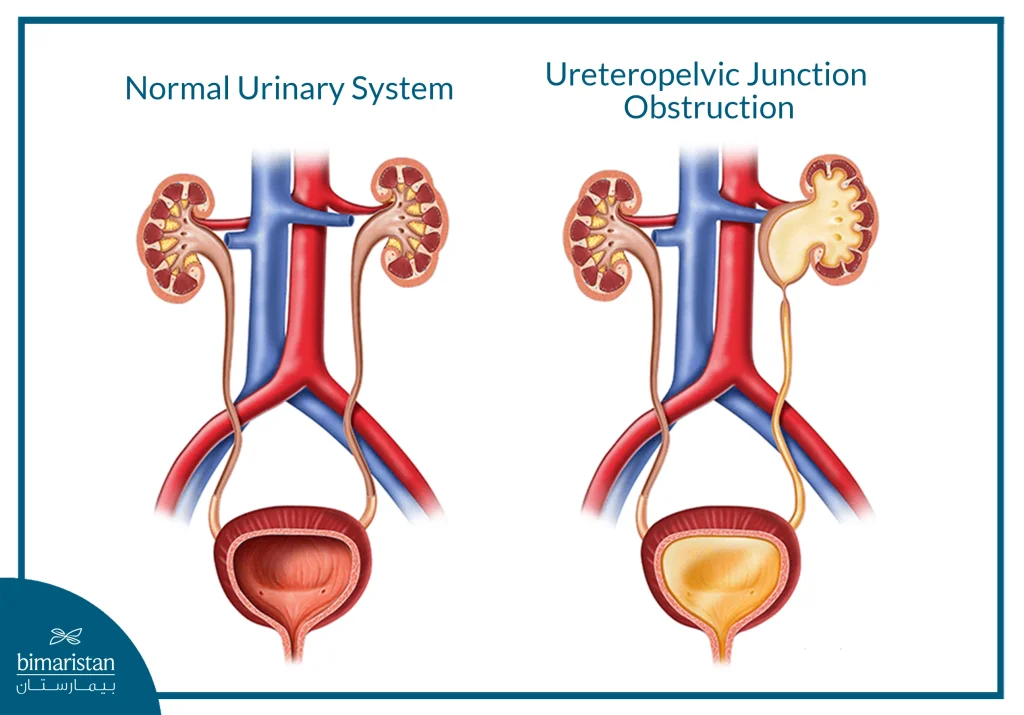
Conditions that require surgical treatment of ureteral obstruction
Surgical treatment of ureteral obstruction is needed when conservative or pharmacologic methods fail to remove the obstruction or when the obstruction is severe enough to threaten kidney function. The goal of surgery in this case is to restore normal urine flow and prevent permanent kidney damage. Doctors resort to surgical treatment of ureteral obstruction in the following cases
- Blockage due to a tumor
- Congenital or acquired narrowing of the ureter
- Recurrent ureteral obstruction despite repeated treatment
- A complete blockage in the ureter that prevents the passage of urine
- Hydronephrosis (a buildup of urine inside the kidney), which can cause pain
- Blockage caused by a large stone that can’t be removed or broken up with medication
- External pressure from a neighboring organ (such as the uterus, colon, or prostate)
- Recurrent urinary infections or elevated creatinine indicate deteriorating kidney function
Before deciding on surgery, the doctor performs several tests, the most important of which are:
- Accurately locate the blockage with CT scans or ultrasound
- Evaluate the impact of the blockage with kidney function tests (creatinine and urea)
- Check for active infection with urine tests and bacterial cultures
Accurate preoperative diagnosis is of great importance as the choice of the appropriate type of operation depends mainly on the results of these diagnoses.
Types of surgical treatment of ureteral obstruction
In cases of ureteral obstruction that cannot be treated with medication or simple procedures, doctors resort to surgical treatment of ureteral obstruction to remove the obstruction and restore normal urine flow from the kidney to the bladder. The types of surgeries to treat ureteral obstruction vary depending on the cause of the obstruction, its location, and the patient’s general condition. Here are the most common types currently used:
Ureteroscopic surgical treatment of ureteral obstruction
It is one of the most common and minimally invasive procedures. It is a procedure used to break up kidney stones and involves inserting a small scope, called a ureteroscope, through the urethra and bladder and into the ureter to the site of the stone. Ureteroscopy is usually performed under general anesthesia, and the procedure usually takes one to three hours. It is suitable for ureteral stones or minor obstructions. It does not require an external incision; recovery is quick, and the patient often leaves the hospital on the same day.
Surgical treatment of ureteral obstruction with a ureteral stent
The procedure temporarily facilitates the passage of urine from the kidney to the bladder until the cause of the blockage is resolved. The doctor inserts a small plastic tube into the ureter during endoscopy or after surgery. This method is usually used after the removal of stones or when there is external pressure on the ureter. The stent is temporary and is usually removed after weeks or months, depending on the situation.
Surgical treatment of ureteral obstruction with ureteral reconnection
In this type of operation, the doctor replaces the narrowed or damaged part of the ureter and connects it to a healthy bladder or ureter. It is usually used for congenital or scarred strictures that cannot be treated endoscopically. It can be performed via open, endoscopic, or robotic surgery. It is one of the most successful long-term surgeries for recurrent obstructions.
The length of the affected portion of the ureter is assessed before surgery to determine the most appropriate technique for each case. In most cases, kidney function gradually normalizes over the following weeks after surgery with regular follow-up with your doctor.
Robot-assisted surgical treatment of ureteral obstruction
Doctors use advanced robotic systems to provide high-precision surgery with very small incisions. Minimizes bleeding and scarring. Accelerated recovery after the procedure. Accurate results, especially in ureteral reconstruction. However, it is expensive and available only in specialized centers. This technique is often used in complex cases that are difficult to handle with traditional laparoscopy. It also gives the doctor a three-dimensional view and more precise control of the surgical instruments, which increases success rates and minimizes complications.
Ureteral obstruction is treated surgically with nephrostomy or external urinary drainage
A nephrostomy is used in emergency situations or when immediate surgery is not possible. The doctor inserts a thin tube of skin directly into the kidney to drain urine out of the body. This helps temporarily protect the kidney from damage until the blockage can be surgically repaired later.
Each type of procedure is chosen based on the cause of the blockage and the severity of the condition, and the doctor determines the best option after careful examination and imaging.
Surgical treatment of ureteral obstruction steps
The patient is advised to fast for several hours before the procedure, and to stop certain medications such as blood thinners if necessary. The steps vary depending on the type of procedure used, but in general, whether it is laparoscopic or open surgery:
- Anesthetize the patient
- Accessing the ureter and locating the blockage
- Removing the damaged part or lithotripsy if the stone is the cause
- Reconnecting the ureter or installing a stent to facilitate the passage of urine
- Carefully close wounds and place a temporary urinary catheter if necessary
The procedure usually takes one to three hours, depending on the degree of blockage and the method of surgery.
Post-op and patient care
After the surgery, the patient is transferred to the observation room and then to the regular department for follow-up. The amount and color of urine are monitored to make sure the kidneys are functioning normally. The patient may feel some minor pain or burning while urinating, and is given painkillers and antibiotics to avoid infection. It is also advised to drink plenty of water to facilitate urine output and clean the ureters.
Recovery and care after surgical treatment of ureteral obstruction
The length of stay in the hospital depends on the type of surgery; with endoscopic or robotic surgery, the patient may leave within 24-48 hours, while in open surgery, the stay may extend to 3-5 days. During this period, the medical team will monitor urine drainage and administer the necessary fluids and medications to stabilize the condition and accelerate recovery.
Post-op tips
- Drink water regularly (2-3 liters per day unless otherwise advised by your doctor)
- Avoid heavy exertion or heavy lifting for at least two weeks
- Follow-up appointments and post-operative scans
- Pay attention to personal hygiene to avoid infection
Danger signs to see a doctor
- High temperature or chills
- Reduced or no urine output
- Swelling in the abdomen or around the wound
- Heavy bleeding or pain that doesn’t improve with painkillers
If you experience any of these symptoms, see your doctor immediately for an evaluation.
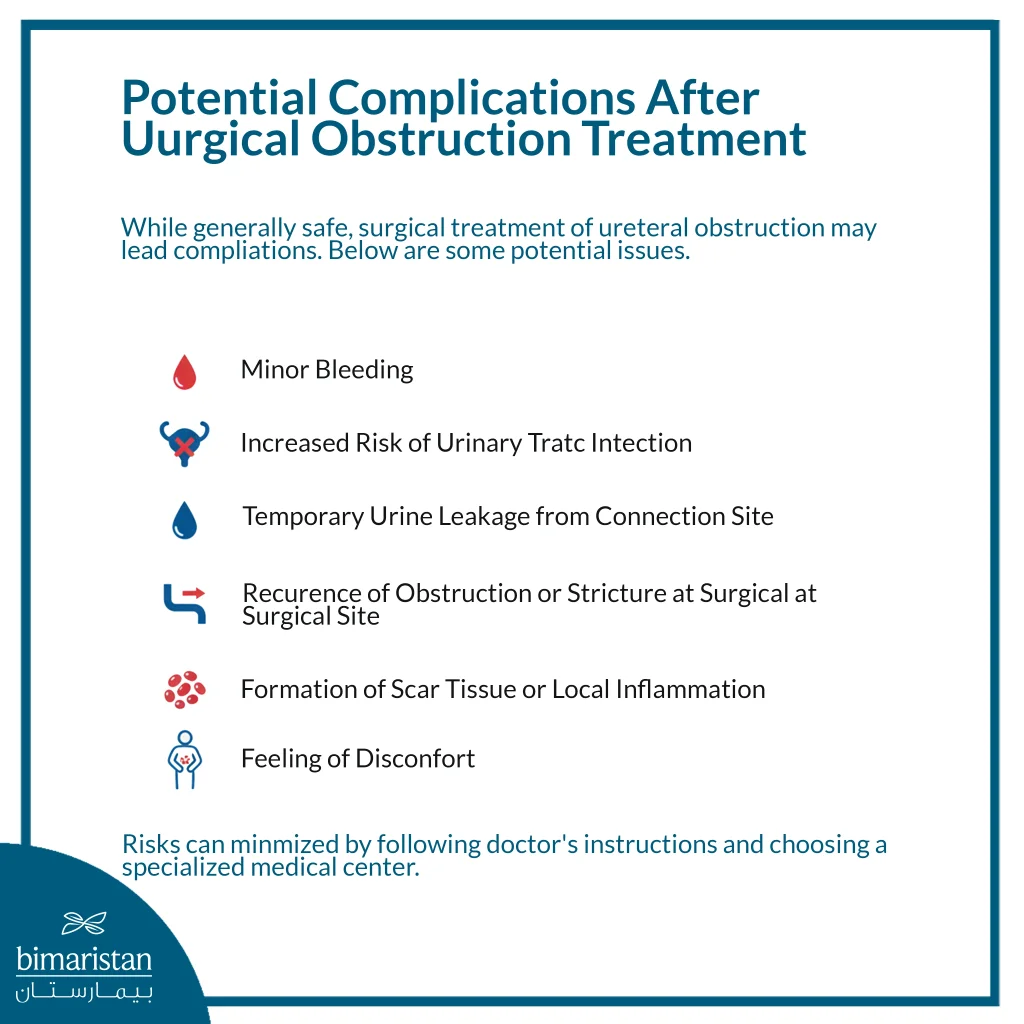
Possible complications after surgical treatment of ureteral obstruction
Although the procedure is safe in most cases, there are some potential complications. The following are the most important complications that may occur after ureteral obstruction surgery:
- Minor bleeding
- Increased risk of urinary infections
- Temporarily leaking urine from the delivery site
- Recurrent blockage or narrowing at the surgical site
- Form localized scarring or inflammation
- Discomfort
These risks are minimized by adhering to the doctor’s instructions and choosing a specialized medical center.
Success rates for surgical treatment of ureteral obstruction
The success rate of surgically treating ureteral obstruction reaches more than 90-95% in most cases, especially when performed by a surgeon specialized in urology. Regular post-operative follow-up helps prevent recurrence of the blockage and maintain full kidney function.
Ureteral Obstruction Surgery Cost
The cost of surgically treating a ureteral obstruction varies from country to country, depending on several factors. Below is a rough overview of the costs in some countries:
| State | Average Cost (USD) |
|---|---|
| Turkey | 4,500-3,500 USD |
| United States | 15,000-8,000 USD |
| Germany | 10,000-7,500 USD |
| Saudi Arabia | 5,000-4,000 USD |
Preventing ureteral obstruction and recurrence
After a ureteral obstruction is successfully treated surgically, it is important to follow a healthy lifestyle to minimize the chances of the obstruction coming back. Here are the top tips for preventing ureteral obstruction:
- Dietary advice: Avoid eating foods rich in salt and fats that may contribute to the formation of stones, and eat plenty of fresh vegetables and fruits that help improve kidney function. You should also minimize carbonated beverages and caffeine because they may increase the concentration of salts in the urine.
- Drink water: It is recommended to drink 2 to 3 liters of water daily. Water helps to dilute the concentration of salts and prevent stones from forming in the kidneys or ureters. It is best to spread your water intake throughout the day and not all at once.
- Follow up with regular checkups: Periodic urinalysis and X-rays should be done for early detection of any new stones or stenosis. Kidney function and creatinine should be monitored periodically to make sure the kidneys are functioning normally. See your doctor immediately if you have any symptoms such as pain in the flank or a change in the color of your urine.
Ureteral obstruction is a serious condition that requires accurate diagnosis and prompt medical intervention to avoid kidney damage and loss of kidney function. Surgical treatment is the best option in advanced cases or when conservative treatment fails, as it aims to remove the blockage and restore normal urine flow using the latest techniques, such as endoscopic or robotic surgery.
The results of the procedure vary depending on the cause of the blockage and the condition of the kidney, but success rates are very high when performed in specialized centers by an experienced urology team. Therefore, it is always advisable to visit a reliable medical center with specialists in this field, such as Bimaristan, which provides comprehensive care and accurate diagnosis with the latest methods to ensure the best possible treatment results.
Sources:
- Uhlig A, Uhlig J, Trojan L, Hinterthaner M, von Hammerstein-Equord A, Strauss A. Surgical approaches for treatment of ureteropelvic junction obstruction – a systematic review and network meta-analysis. BMC Urol. 2019 Nov 11;19(1):112
- European Association of Urology. (2009). Ureteral Obstruction: Etiology and Management. European Urology Supplements, 8(4), 398-406
- Jacobs BL, Kaufman SR, Morgenstern H, Hollenbeck BK, Wolf JS Jr, Hollingsworth JM. Trends in the treatment of adults with ureteropelvic junction obstruction. J Endourol. 2013 Mar;27(3):355-60
- Khan F, Ahmed K, Lee N, Challacombe B, Khan MS, Dasgupta P. Management of ureteropelvic junction obstruction in adults. Nat Rev Urol. 2014 Nov;11(11):629-38