

The symptoms of vertebral compression on the nerves are one of the most common causes of pain among adults around the world, as statistics indicate that more than 80% of people suffer from back pain at some point in their lives, as constant pressure on the nerves leads to disorders of sensation or movement that may affect the quality of daily life, and early detection and correct treatment help avoid chronic complications and improve the physical performance of the patient.
What is vertebral compression on the nerves?
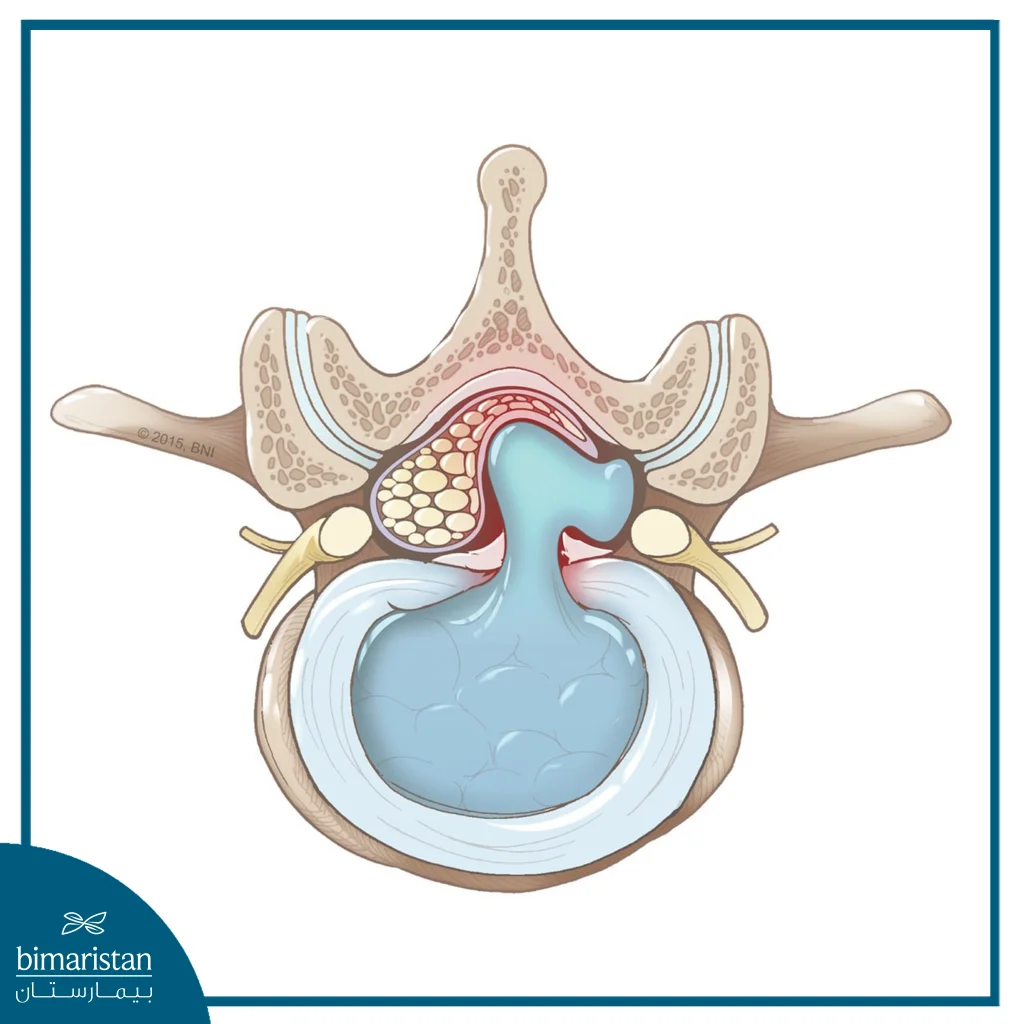
Vertebral compression is a condition that occurs when the vertebrae or surrounding structures press on the nerve roots that exit the spinal cord, causing the nerves to be unable to transmit nerve signals normally, resulting in symptoms such as pain, numbness, weakness, etc.
Common causes of vertebral compression on nerves
The causes of vertebral compression on the nerves are varied and include:
- Herniated or slipped disc: The most common cause, as in this case, the disc between the vertebrae herniates and the gel inside it comes out and presses on the spinal cord and nerves surrounding the injury, a condition that cannot be left untreated, but must be treated as soon as possible.
- Stenosis of the spinal canal or neural foramen: The spinal canal is the channel through which the spinal cord passes, and the neural foramen is the opening through which the nerve exits. A narrowing of either causes compressive symptoms that make the patient unable to perform daily functions smoothly.
- Tumors: A tumor in the spinal canal narrows the diameter of the spinal canal, compressing the spinal cord and surrounding nerves, causing the same symptoms as a patient with spinal stenosis.
- Rheumatoid arthritis: It may be ranked as the least likely cause of spinal cord compression, but in general, all bone diseases can cause nerve compression.
- Injuries and accidents: Any injury to the spine can lead to nerve compression and compression symptoms.
These are the most important causes of vertebral compression on the nerves, and the cause must be identified so that the appropriate action can be taken to treat it.
Symptoms of vertebral compression on nerves
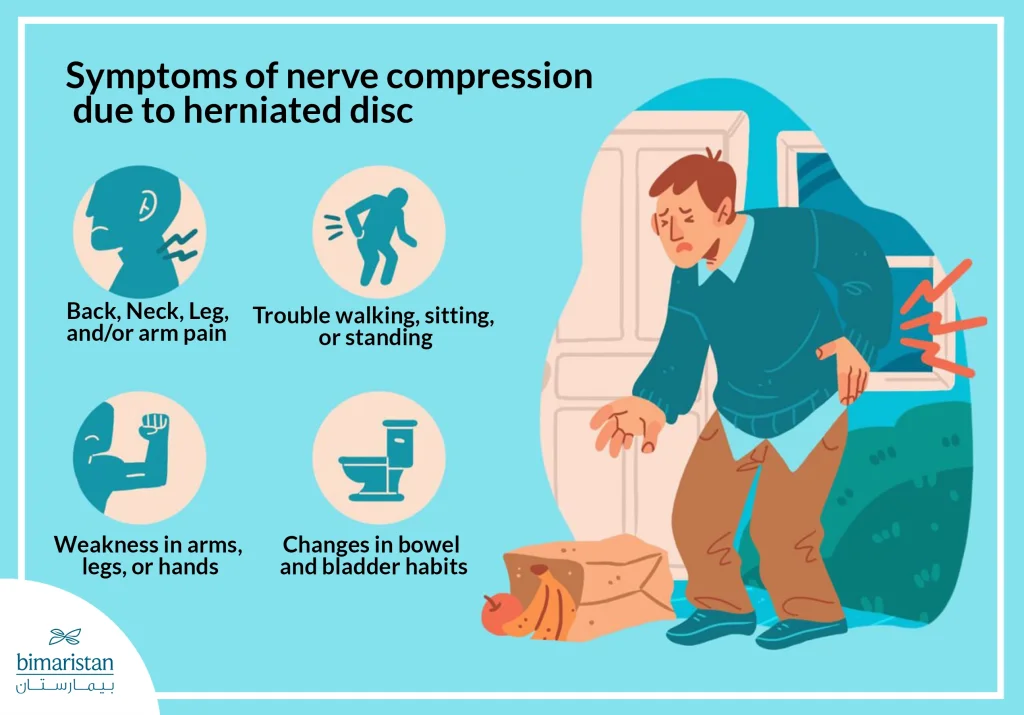
The symptoms of vertebral compression on the nerves depend on where along the spinal cord the nerve is compressed, but there are some common symptoms that occur when any part is compressed, the most important of which are:
- Pain: Pain in the back or neck area that radiates to the extremities, depending on the location of the injury (e.g., legs or arms).
- Numbness and tingling: Tingling or numbness in parts of the body supplied by the pinched nerve.
- Muscle weakness: Muscle weakness around the affected nerve, which affects movement.
- Loss of sensation: Difficulty walking or feeling your feet in severe cases.
- Problems with bladder or bowel control: In severe cases, loss of bladder or bowel control may occur.
If you experience any of these symptoms, you should see your doctor to determine the nature and cause of the pain, and to correct it before it worsens.
Medical diagnostics
The medical diagnosis of spinal compression symptoms depends on a combination of clinical and imaging tests that help the doctor determine the exact location and severity of the compression:
- Clinical examination: The doctor begins with a clinical examination to assess the extent of pain, muscle strength, and nerve reflexes, asking questions about the pattern of pain and its spread to the extremities.
- Magnetic resonance imaging (MRI): This imaging is the most accurate in detecting spinal stenosis or herniated discs.
- Electromyography (EMG): This test is used to assess the extent to which nerve signals are affected, providing accurate information about the integrity of the affected nerves and muscles.
This comprehensive diagnosis helps develop an appropriate treatment plan that prevents the condition from worsening and preserves the spine’s function.
Treating the symptoms of vertebral compression on the nerves
Treatment of the symptoms of vertebral compression on the nerves varies depending on the severity of the compression and the degree to which the patient is affected by pain, numbness, and muscle weakness, but in general, treatment aims to relieve pressure on the nerve and improve mobility and quality of life, and is usually divided into conservative and surgical treatment.
Conservative nerve decompression therapy
It is the first choice in most cases, especially when symptoms are mild to moderate, and includes:
- Relative rest and avoiding strenuous movements: For example, avoid prolonged sitting at a computer.
- Use analgesic and anti-inflammatory medications: To relieve pain and swelling.
- Physiotherapy: This helps to strengthen the back muscles and improve flexibility.
- Thermal or electrotherapy sessions: To reduce muscle spasm and improve blood perfusion.
- Cortisone injections: Used in some cases, cortisone is injected around the affected nerve, which reduces inflammation and speeds up recovery.
Interventional or surgical treatment for nerve compression symptoms
Surgical treatment is recommended when conservative measures fail to treat nerve pain, or when severe neurological symptoms such as limb weakness or loss of bladder and bowel control occur. Surgical procedures vary depending on the cause and location and include herniated discectomy, spinal canal widening, or spinal stabilization in cases of instability.
Herniated Discectomy
This procedure is performed when conservative treatment fails to relieve symptoms of vertebral nerve compression after 6 to 8 weeks, or when there are signs of severe nerve compression. The surgical intervention aims to remove the herniated portion of the disc that is compressing the nerve, which quickly relieves pain and preserves neurological function. Recently, such surgery has been performed with precise methods such as microdiscectomy or endoscopic resection, which minimizes the surgical intervention and speeds up the recovery period.
Vertebral canalization
This operation is performed when the narrowing of the spinal canal is so severe that it causes obvious pressure on the spinal nerves, as this leads to the appearance of symptoms of compression of the back vertebrae on the nerves, such as the appearance of diffuse pain in the legs, numbness or muscle weakness, or difficulty walking short distances, and the operation aims to remove the bony or ligamentous part that presses on the nerves, allowing the canal to expand and improve the flow of nerve signals, and today the operation is performed with advanced techniques that reduce pain and bleeding and speed up recovery.
Spinal stabilization
Spinal stabilization surgery is performed when the pressure of the back vertebrae on the nerves leads to spinal instability or abnormal movement between the vertebrae that causes chronic pain or imbalance, and the operation aims to stabilize the affected vertebrae and prevent their abnormal movement, by making a small incision and removing the part causing the pressure, such as a herniated disc or excess bone, and then implanting special metal screws and nails inside the vertebrae, which leads to their permanent fixation, and this relieves pressure on the nerves and restores the spine’s alignment.
When should you see a doctor immediately?
It is advisable to see a doctor immediately when symptoms of vertebral compression on the nerves cause a serious neurological injury that requires urgent intervention, including sudden or increasing weakness in the legs or arms, loss of control over urination or defecation, or numbness in the genital area or between the thighs (known as the “horse saddle” sign) You should also seek immediate medical help if you experience severe pain that does not go away with rest or medication, or if you notice difficulty walking or a rapid deterioration in mobility, as early detection in such cases reduces the risk of permanent nerve damage and increases the chances of a full recovery.
In conclusion, the symptoms of vertebral compression on the nerves vary from person to person depending on the severity and location of the compression, but accurate diagnosis and early treatment remain the key to recovery. Bimaristan Medical Center offers patients the latest diagnostic and therapeutic methods under the supervision of a group of doctors specialized in the treatment of spine diseases to ensure the best possible results and restore normal movement without pain.
Sources:
- National Health Service (NHS). (2024). Back pain – Causes and treatments.
- Spine-health. (2024). Understanding nerve compression and back pain.