
.floating_btn{ display:none !important; } .println-contact-form-button-element{ display:none !important; }
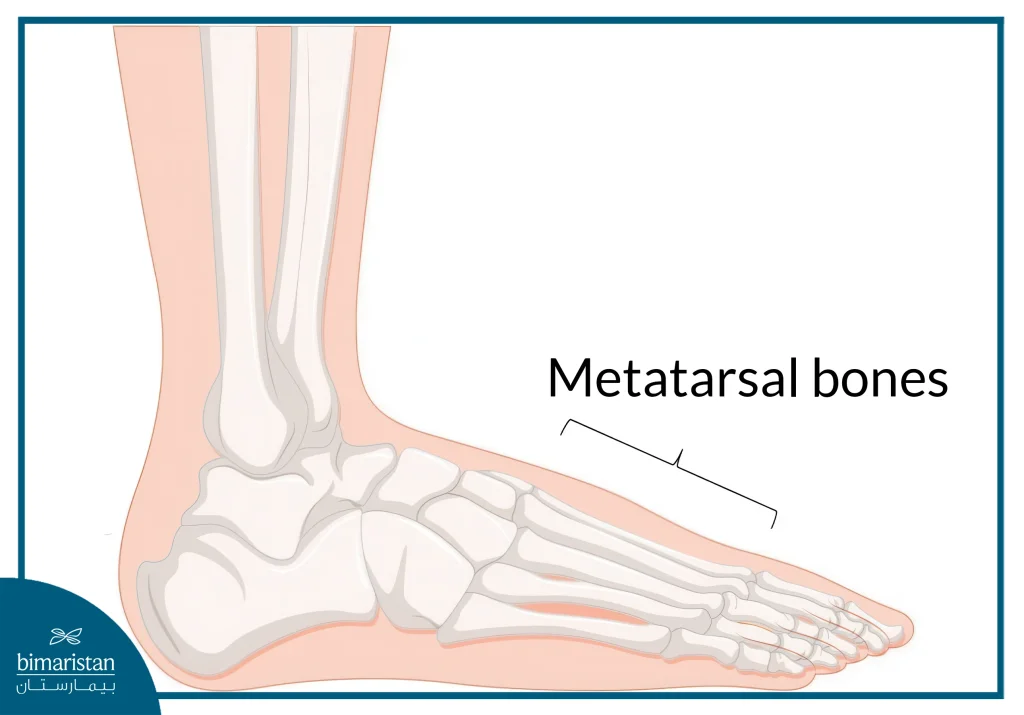
Metatarsal fractures are among the most common injuries in cases of foot trauma, occurring in one or more of the five metatarsal bones extending between the ankle and the toes.
Direct or indirect traumatic injuries often cause these fractures. They may also result from repetitive microstress, leading to stress fractures, causing noticeable pain in the foot bones and difficulty walking.
Metatarsal fractures, especially fractures of the fifth metatarsal, are considered common injuries among adults of both genders, while first metatarsal fractures are the most common among children under the age of four. Meanwhile, fractures of the central metatarsals (second, third, and fourth) often occur together and rarely occur in isolation.
The treatment plan varies depending on several factors, including the specific metatarsal bone involved, the number of bones fractured, and the degree of displacement between fracture fragments. Treatment may be conservative, involving external immobilization with splints or medical shoes. At the same time, some cases may require surgical intervention to ensure proper bone healing, especially if there is displacement at the fracture site or in complex Jones fractures.
In emergency cases, metatarsal fractures are handled with great caution, highlighting the importance of accurate assessment by a multidisciplinary medical team to provide optimal care. This care begins with rapid diagnosis, proceeds through immobilization options, and includes surgical interventions if necessary, to ensure full recovery of foot function and achieve the best possible healing outcomes.
Information about metatarsal fractures
A metatarsal fracture is an injury involving a crack or complete break in one of the metatarsal bones, which are fundamental components of the foot structure, where five long and slender bones extend between the rear tarsal bones and the front phalanges.
Each metatarsal bone consists of three main anatomical parts: the head, the shaft (body), and the base. These bones form joints proximally with the cuneiform bones and the cuboid bone, while distally they articulate with the proximal phalanges.
Metatarsal fractures occur as a result of acute injuries, such as falls or severe ankle twists, or due to repetitive stress that leads to bone weakening and stress fractures.
Fracture of the fifth metatarsal, which connects to the small toe, is among the most common metatarsal fractures.
When a fracture occurs specifically at the base of this bone, it is known as a Jones fracture, characterized by difficulty in healing and requiring careful therapeutic management.
Types of metatarsal fractures
Understanding the types of metatarsal fractures is crucial for determining the most appropriate treatment plan. Fractures are classified according to several main criteria:
- Open and closed fractures:
- Open fracture: Characterized by a tear in the skin overlying the fractured bones, exposing soft tissues to severe injury and increasing the risk of osteomyelitis. Open fractures are more dangerous than other types and require precise medical assessment and emergency treatment to avoid complications.
- Closed fracture: This occurs when the bones break without tearing the skin, thereby reducing the risk of infection. Closed fractures are more common and are usually easier to manage compared to open fractures.
- Displaced and non-displaced fractures:
- Displaced fracture: The broken bones are shifted from their normal positions, necessitating special medical intervention to realign and fix the bones, often requiring surgery or internal fixation under anesthesia.
- Non-displaced fracture: The bone breaks without shifting the fragments from their natural alignment and is usually treated more conservatively using splints or medical shoes.
- Location of the fracture within the metatarsal:
- Metatarsal head: The distal part connected to the base of the phalanges.
- Metatarsal neck: The transitional area between the head and shaft.
- Metatarsal shaft: The middle, elongated part of the metatarsal bone.
- Metatarsal base: Includes special fractures such as Jones fracture or avulsion fracture, located where the metatarsal connects to the tarsal bones.
- Based on displacement and associated dislocation:
- Fracture with dislocation: Associated with separation or dislocation of the fractured bone from its typical joint, often requiring anatomical repositioning with internal fixation.
- Fracture without dislocation: The fractured bone maintains its anatomical position and is usually treated with simple external immobilization methods.
Causes of metatarsal fracture
Understanding the causes of metatarsal fractures is essential for prevention and reducing the likelihood of these injuries. Major causes include:
- Direct trauma and strong impacts: Direct injuries, such as falling onto the foot or heavy objects falling on it, lead to acute fractures that may involve the metatarsals, ankle, and ligament tears. Such injuries are common among industrial workers and athletes.
- Ankle twisting: Ankle sprains are a significant cause of fractures at the base of the metatarsal, especially when tendons or ligaments attached to the fifth metatarsal are pulled, leading to an avulsion fracture.
- Repetitive stress and overuse: Repetitive pressure on the bones from long-distance running, carrying heavy weights while walking, or engaging in high-impact sports like ballet and gymnastics.
- Structural deformities and chronic diseases: Conditions that affect bone structure, such as osteoporosis, rheumatoid arthritis, or advanced diabetes, increase bone fragility, making fractures more likely even with minor trauma or simple stress.
- Age and physiological changes: Most metatarsal fractures in youth result from athletic activities. However, with aging, the feet lose flexibility and their shock absorption capacity, increasing the risk of fractures even with minor injuries. Supportive footwear reduces these risks as one ages.
- Causes specific to children: Metatarsal fractures are common injuries among children, especially in younger age groups. Children under five are more prone to first metatarsal fractures, while those over five are more susceptible to fifth metatarsal injuries. Injury mechanisms include falls from heights, sports injuries, ankle roll injuries, and crushing injuries from falling heavy objects.
- Role of footwear and sports habits: The improper selection of sports shoes or a sudden change in shoe type, especially without a gradual adjustment period, can lead to stress fractures. Proper footwear suitable for your foot type and the specific sporting activity is always recommended.
Symptoms of metatarsal fracture
Symptoms of metatarsal fractures vary depending on the type of fracture (acute or stress), but generally include clear signs or may be mild, particularly in stress fractures. Common symptoms include:
- Sharp and localized pain: Deep, localized pain is one of the earliest signs indicating an acute metatarsal fracture, often located directly at the fracture site.
- Audible bone crack: In some cases, the patient may hear a cracking sound at the moment of injury, indicating a bone break.
- Swelling and bruising: Significant swelling may occur at the affected area due to bleeding and inflammation, and bruising under the skin may be visible as a result of surrounding tissue damage.
- Difficulty in movement: The patient may experience difficulty moving the fractured foot, with severe pain when attempting to walk or bear weight on the affected foot.
- Mild pain in stress fractures: In cases of stress fractures, the individual experiences mild, localized pain at the fracture site during physical activity, which typically subsides with rest.
Complications of a metatarsal fracture
Patients may experience several complications resulting from metatarsal fractures, especially if appropriate treatment is not followed or the injured foot is subjected to excessive stress. Major complications include:
- Progression to complete fracture: This occurs when repetitive stress is applied to the affected area, leading to a full-thickness fracture, commonly referred to as a stress fracture.
- First metatarsophalangeal joint inflammation: This type of inflammation is often observed in cases of first metatarsal fractures, resulting in pain and stiffness of the joint.
- Diagnostic confusion between ankle sprain and base of the fifth metatarsal fracture: There may be diagnostic confusion between these two conditions, which can complicate the treatment process.
- Chronic pain: The patient may experience persistent pain in the fractured foot, significantly affecting mobility.
- Deformities due to improper bone healing: In some cases, improper healing of the fractured bone may lead to foot deformity, making it difficult to wear shoes normally.
Diagnosis of metatarsal fracture
Diagnosis begins with clinical examination of the fractured foot, comparing the injured foot to the healthy one to detect swelling and bony crepitus. Radiographic tests follow, with X-rays generally sufficient to diagnose fractures.
In some cases, CT scans or MRIs may be necessary to rule out other injuries that are not visible on plain X-rays.
Symptomatically, patients present with swelling, tenderness on palpation, and difficulty bearing weight during walking. In complex fractures, obvious deformities may appear.
In cases of acute shaft fractures, swelling and tenderness are common, and a repeat X-ray after two weeks may be required to reveal the fracture line if it is not seen initially.
Fractures near the first to fourth toes are typically transverse or oblique and may require additional imaging, such as weight-bearing X-rays or bone scans.
CT or MRI is used in complex or small fractures not visible on standard X-rays. The final diagnosis relies on combining clinical examination and radiologic findings, with bone scans confirming minor or stress fractures that are invisible on initial imaging.
Treatment of metatarsal fracture
Treatment varies significantly based on the fractured bone, fracture location, and injury severity.
It depends on whether the fracture is acute or stress-related and whether displacement is present. Associated soft tissue injuries also influence the choice of treatment.
Conservative treatment
Conservative management applies to non-displaced fractures or those without severe wounds and involves:
- Pain management: Use of simple analgesics like paracetamol or NSAIDs such as ibuprofen.
- Ice application: Ice is crucial for pain relief and swelling reduction. It should be applied as soon as possible after the injury for 10–30 minutes, avoiding direct skin contact; preferably, use an ice bag or towel. Ice should be reapplied every two hours during the first 48–72 hours.
- Rest and elevation: Important to reduce swelling. The foot should be elevated to hip level when sitting and placed on a pillow during sleep. Sometimes, rest alone is sufficient, particularly in traumatic fractures.
- Avoiding stress: Activities that cause or worsen the fracture should be avoided. Crutches may be recommended in some instances to relieve pressure on the injured foot.
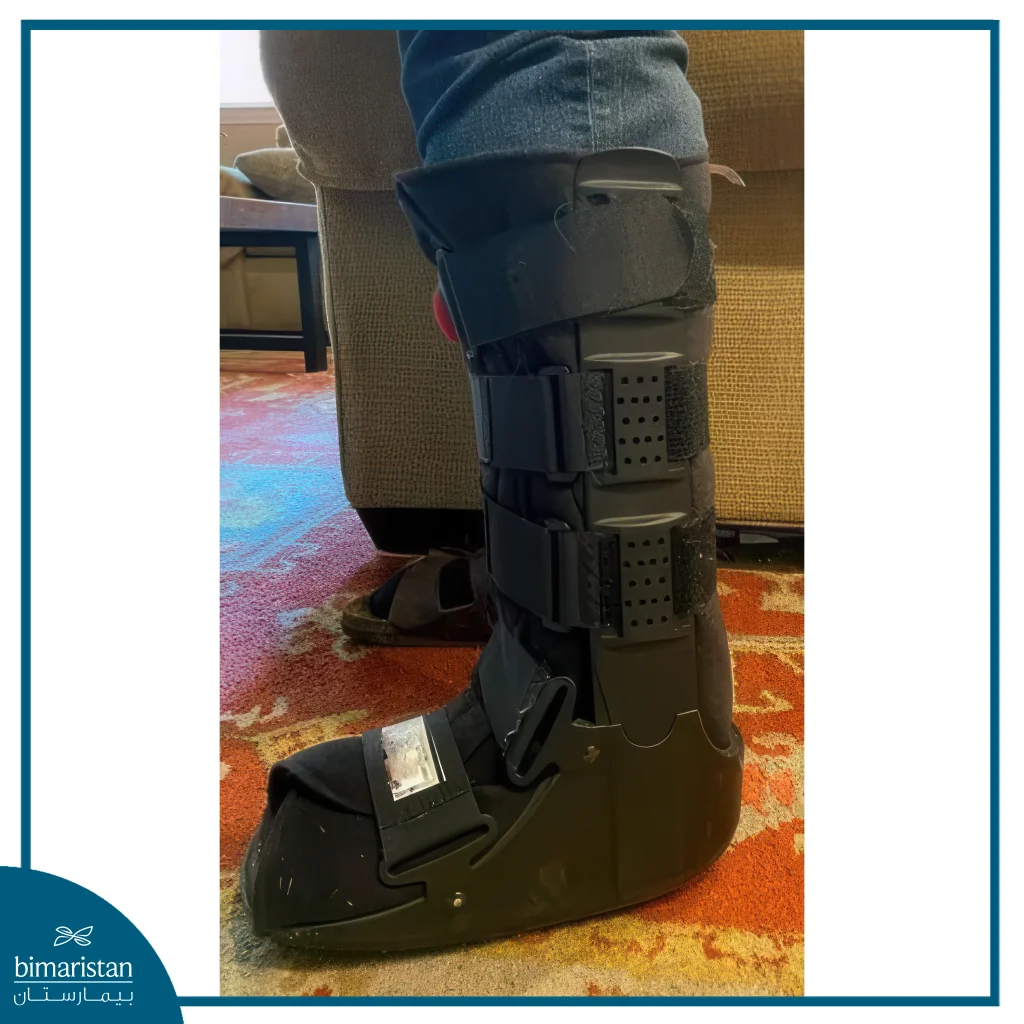
- Immobilization: Fractures may require immobilization using splints or specialized medical shoes to support the foot and stabilize the bone. Some cases may require special footwear or temporary flexible tube bandaging.
- Physical therapy: For some fractures, physical therapy exercises can help enhance muscle flexibility and strength in the surrounding foot area.
Surgical treatment
In displaced unstable fractures or complicated cases, surgical intervention may be necessary, involving:
- Realignment: Surgical repositioning of displaced bones using screws or metal plates.
- Replacement of damaged bone: In cases where repair is ineffective, surgery may involve removing damaged parts and using bone grafts.
Complications of improper treatment
Without correct diagnosis and treatment, complications may occur, including:
- Worsening of stress fracture: Continued repetitive pressure may lead to full-thickness fractures.
- Arthritis: Particularly in the big toe joint following first metatarsal fractures.
- Foot deformity: Improper healing leading to deformities and difficulty wearing regular footwear.
In conclusion, metatarsal fractures are among the most common foot fractures, especially among athletes and long-distance runners. Symptoms are usually distinct and easily diagnosed through clinical examination and X-rays. Most metatarsal fractures can be treated conservatively without surgery, but advanced cases may require surgical intervention to ensure complete healing.
In this context, Bimaristan Turkish Hospital is considered a leading choice for treating such injuries, thanks to its extensive experience and high efficiency in managing metatarsal fractures. With modern medical equipment and specialized medical staff, the team at Bimaristan provides accurate diagnoses and optimal treatment in accordance with the latest medical standards, contributing to a swift and safe recovery for patients.
References:
- Metatarsal Fracture DR. COURTNEY GRIMSRUD CU ORTHOPEDICS – FOOT & ANKLE
- Fifth Metatarsal Fracture. THE SPORTS MEDICINE PATIENT ADVISOR
- Metatarsal fracture. Wirral Community Health and Care, NHS Foundation Trust
- Forefoot Fractures. Brian Weatherford, MD Illinois Bone and Joint Institute
- Metatarsal Fracture. Boston Children’s Hospital. Orthopedics & Sports Medicine