

Many people suffer from persistent shoulder mobility issues or chronic pain that resists conventional treatments. When discomfort begins to hinder even the simplest daily tasks, the need for effective, lasting solutions becomes urgent. This growing demand for advanced surgical options has brought reverse shoulder arthroplasty to the forefront as one of the most promising modern procedures worthy of attention.
What is reverse shoulder arthroplasty?
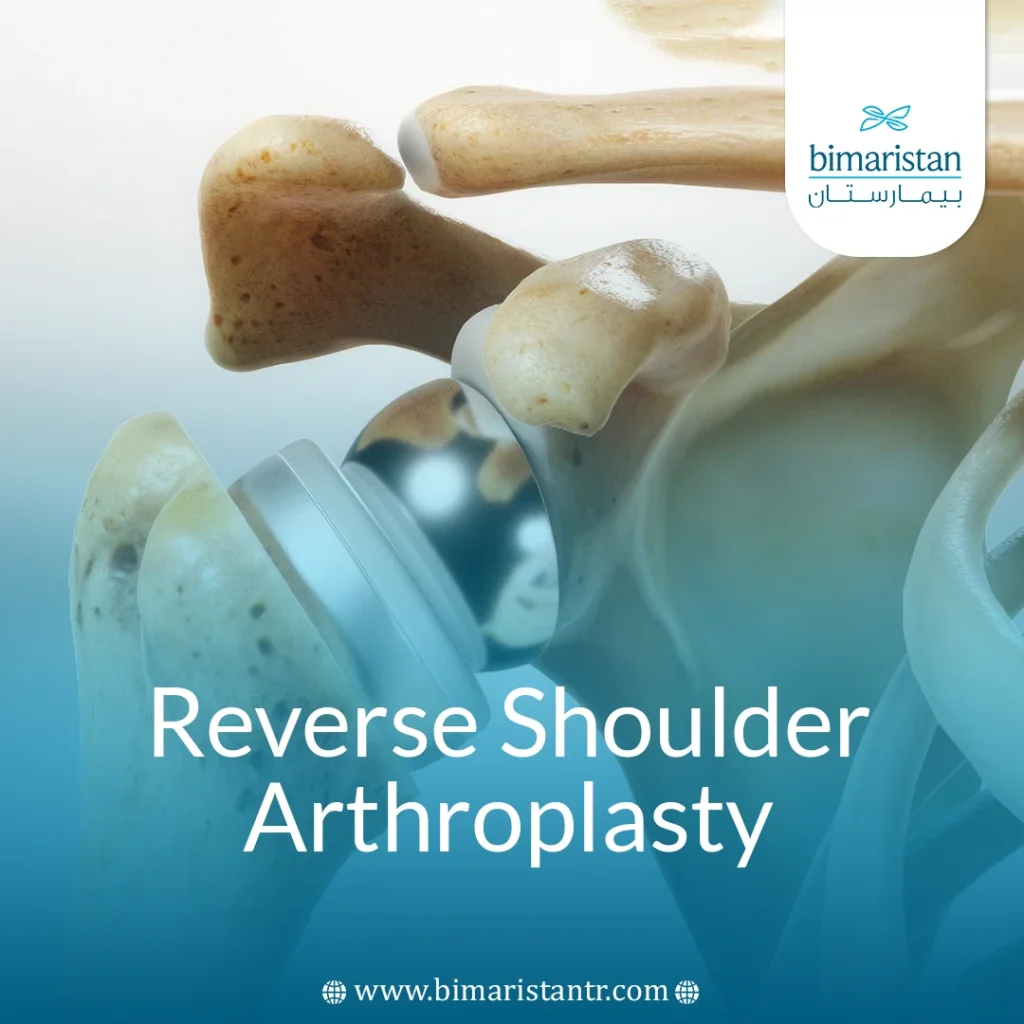
Reverse shoulder arthroplasty is a specialized form of total shoulder joint replacement, often referred to as reverse total shoulder replacement, where the damaged natural joint is removed and replaced with an artificial one made of metal or plastic.
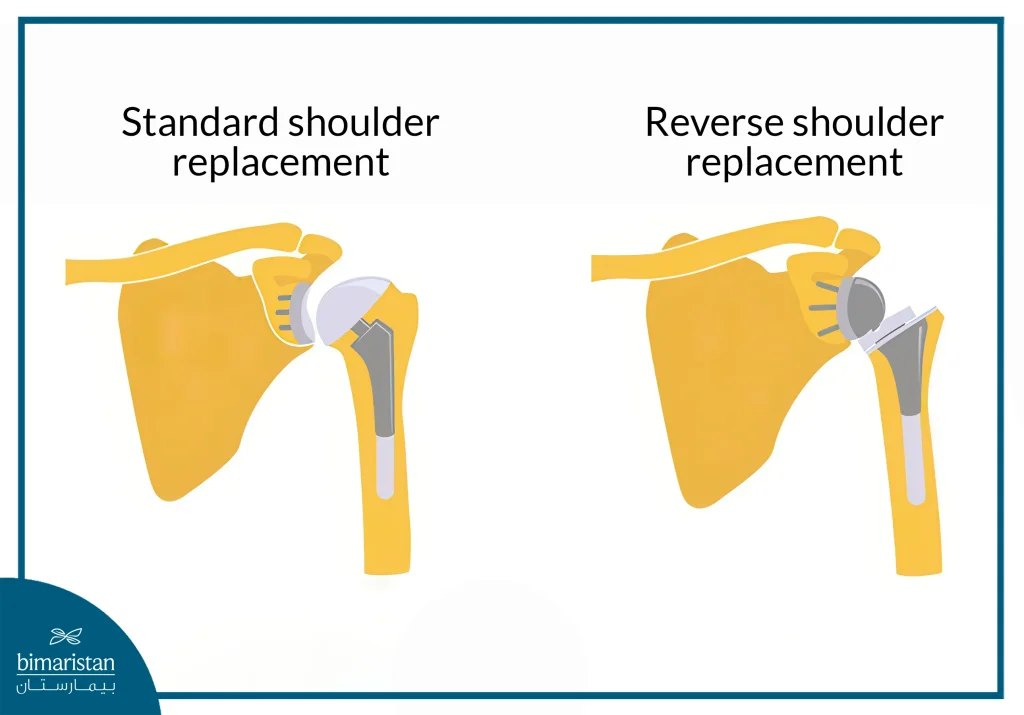
To grasp this procedure, it’s essential to understand shoulder joint anatomy: the joint is formed where the scapula meets the humerus, with the humeral head shaped like a ball that fits into a socket in the scapula. In reverse shoulder arthroplasty, this configuration is reversed; the ball component is fixed to the scapula, while the socket is placed atop the humerus, effectively inverting the joint’s natural structure.
When is a reverse joint used instead of a conventional joint?
The difference between the reverse artificial joint and the conventional shoulder joint is that, in the reverse artificial joint, as mentioned, the ball is placed in the scapula, which is the opposite of its natural location, while the socket is placed on the side of the arm and is supported by a metal rod inside the humerus. In contrast, in conventional surgery, the metal ball is fixed in the upper part of the humerus, and the new plastic socket is fixed in the scapula, which more closely follows the natural human anatomy.
Reasons for reverse shoulder arthroplasty
Your doctor may recommend a reverse shoulder arthroplasty in several situations, including:
- Complete rotator cuff tear: If all of the rotator cuff tendons are torn and the patient is unable to raise the arm enough to perform daily tasks, a reverse artificial joint may help restore movement and function. Often, a protrusion in the front of the shoulder appears when trying to raise the arm; in this case, this is known as anterior superior migration or subluxation. In this case, the patient may not experience pain, but the inability to raise the arm has a negative impact on their quality of life.
- Previously failed shoulder replacement surgery: Reverse shoulder arthroplasty may be recommended for patients who have previously undergone a conventional replacement due to osteoarthritis, fractures, or other conditions, and are still experiencing symptoms such as pain or loss of motion. In such cases, the surgery requires the removal of the conventional artificial joint first.
- Fracture of the shoulder joint: You may need a reverse shoulder arthroplasty in some fractures, especially those close to where the head of the humerus connects to the trunk of the bone.
- The presence of a tumor in the shoulder joint: A reverse shoulder arthroplasty may be necessary if there is a tumor in the proximal part of the humerus that involves the shaft of the bone or the head of the humerus itself.
- Shoulder arthropathy due to rotator cuff tear
- Severe shoulder pain with difficulty lifting the arm away from the body or over the head
- Chronic dislocation of the shoulder joint
Your doctor may recommend this procedure if nonsurgical treatments, such as rest, medications, cortisone injections, or physical therapy, have not relieved your shoulder pain.
Reverse shoulder arthroplasty surgery steps
A few days before the operation, the patient needs several tests and examinations to make sure they are ready for the operation, such as:
- Physical examination to make sure the patient is fit for surgery
- Electrocardiogram (EKG) to check heart health
- Imaging tests such as a shoulder X-ray, magnetic resonance imaging (MRI), or computed tomography (CT) scan
- Blood tests
The doctor needs to be aware of all medications and supplements the patient is taking. They may advise the patient to stop some of these medications before the surgery. The doctor will also provide instructions on when to stop eating and drinking prior to the procedure. Typically, patients are instructed to refrain from eating and drinking for eight hours prior to the operation.
What happens during reverse shoulder arthroplasty surgery?
Initially, the patient is given general anesthesia, and during the procedure, the surgeon will:
- Make a surgical incision in the skin around the shoulder
- Remove damaged cartilage and bone from the shoulder joint
- Insert shoulder artificial joint
- Attach the metal ball to the scapula and insert the socket into the upper end of the humerus (the humeral implant is made of metal with a plastic cup at the end that connects to the ball in the scapula)
- Realign the shoulder joint and perform suturing of the incision.
Reverse shoulder arthroplasty usually takes one to two hours, depending on the extent of damage to the shoulder joint and the surrounding muscles and tissues.
Recovery and rehabilitation after reverse shoulder arthroplasty surgery
Full recovery from reverse shoulder arthroplasty typically takes around 6 months. During the initial weeks post-surgery, the patient must keep the arm in a resting position. After this period, the doctor may recommend specific exercises and movements to help the patient gradually regain shoulder function. To manage pain, the doctor might prescribe a combination of pain-relieving medications, NSAIDs, and paracetamol.
After a few weeks, physical therapy becomes essential. The physiotherapist will introduce targeted exercises and stretches to strengthen the shoulder muscles and restore range of motion. Patients are generally advised to avoid strenuous activities, such as aerobics and weightlifting, for several months. Activity levels can be gradually increased once the surgeon gives their approval.
Benefits of reverse shoulder arthroplasty surgery
Reverse shoulder arthroplasty has many benefits. Reverse shoulder arthroplasty can significantly reduce pain and stiffness in the shoulder. Many people are able to use their shoulders more effectively after surgery, with increased range of motion. Reverse shoulder joint replacement provides an option for individuals who are not considered suitable candidates for conventional replacement, helping to alleviate severe pain and symptoms.
How long does a reverse shoulder joint last?
Reverse shoulder arthroplasty is typically long-lasting, with artificial joints lasting at least 15 years. Many patients who undergo this procedure live with the prosthesis for the rest of their lives.
Complications and risks after reverse shoulder arthroplasty surgery
Any surgical procedure carries risks and complications, and some of these risks can be effectively managed if detected and treated promptly. Some of the complications include the following:
- Infections that require wound washing in the operating room and may be serious enough to require corrective surgery, including removal of the artificial joint
- Nerve and blood vessel injuries that also require corrective surgery
- Fractures that require surgical stabilization
- Stiffness or instability of the joint that requires additional exercises or surgery
- Artificial joint loosening
- Failure to stabilize tendons or muscles
- Blood clots
- pain
- Joint dislocation
Reverse shoulder arthroplasty surgery cost
In general, the cost of shoulder replacement in Turkey is significantly lower compared to European countries and the United States, as patients receive high-quality medical care at competitive prices. The cost of reverse shoulder arthroplasty in Turkey ranges from $7,000 to $12,000. It may vary based on several factors, such as the location of the medical center in Turkey and the doctor’s experience. In comparison, the cost of this operation in Europe and the United States may reach $30,000.
In conclusion, reverse shoulder arthroplasty is an effective surgical option for patients with severe rotator cuff tears or complications of a previous joint replacement. With medical advances and the increasing experience of surgical teams, it is possible to restore a significant amount of shoulder function and significantly reduce pain. However, accurate diagnosis, proper selection of the surgical candidate, and careful post-operative follow-up remain critical elements in achieving the best results.
Sources:
- American Academy of Orthopaedic Surgeons. (n.d.). Reverse total shoulder replacement. Ortholnfo. Retrieved July 5, 2025
- Gordon, E., & Craig, E. (2021). Reverse shoulder arthroplasty. In StatPearls. Retrieved July 5, 2025