The treatment of enlarged adenoids in children is an important medical topic that many parents are looking for, as this issue is common among children, especially at preschool age. Enlarged adenoids can cause airway obstruction, difficulty breathing, chronic snoring, or frequent ear and sinus infections. These symptoms not only affect a child’s sleep comfort but can also affect their physical development and overall health.
Adenoidectomy is one of the most common and effective procedures to treat this issue, as it is performed safely in advanced medical centers. In Turkey in particular, these operations are widely popular due to the presence of expert medical staff and modern technologies that ensure high success rates and a quick recovery for children.
What are nasal adenoids?
Nasal adenoids are masses of lymphatic tissue located at the back of the nasal passage and at the top of the throat. Everyone is born with nasal adenoids, and they are larger when a child is between 3 and 5 years old. They begin to shrink when a child reaches 5 to 8 years of age. They usually disappear completely by adolescence.
Along with the tonsils, the adenoids keep the body healthy by trapping harmful bacteria and viruses that we inhale or swallow. They are part of the immune system and help fight infections, but they become less important as children get older and the body develops other ways to fight germs. Nasal adenoids typically begin to shrink in children after about 5 years of age and often disappear completely by adolescence.
Causes of enlarged adenoids in children
Adenoid hypertrophy is a common condition in children, usually as a natural reaction of the immune system against microbes. Although in most cases the enlargement goes away after recovery, some children remain chronically enlarged, causing multiple health issues. The most common causes:
- Viral or bacterial infections: Entry of microbes through the nose leads to an immune response and enlargement of the lymphatic tissue.
- Allergies: Chronic nasal allergies may contribute to persistent swelling.
- Chronic sinusitis: Repeated infections cause the appendages to remain inflamed.
- Frequent colds: Children who get frequent colds and flu are more likely to be infected.
Symptoms of enlarged adenoids
Symptoms of enlarged appendages are most pronounced on the upper respiratory tract and are often more bothersome at night. Common symptoms:
- Nasal congestion and snoring
- Difficulty swallowing and sore throat
- Enlarged lymph nodes in the neck
- Sleep apnea and sleep disorders
- Persistent runny nose and chronic congestion
- Recurrent ear infections and temporary hearing loss
- Breathing through the mouth leads to dry lips and bad breath
Complications of enlarged adenoids
Some parents may think that snoring in children is normal, but it can actually be a sign of serious issues associated with enlarged adenoids. The most dangerous complications:
- Chronic snoring leads to uncomfortable sleep and lack of oxygen
- Recurring hearing issues due to middle ear infections and fluid buildup
- Poor academic performance and delayed mental and physical development are often attributed to sleep disorders
- Hyperactivity and difficulty concentrating
- Facial changes due to chronic mouth breathing
- Bedwetting in older children
- In advanced cases, heart failure occurs due to frequent sleep apnea
The impact of enlarged adenoids on a child’s health
When nasal polyps become persistently enlarged, they affect more than one vital system in a child’s body. These complications may be annoying at first but can develop into serious issues if left untreated. Here are the most important effects:
- Misaligned jaw and teeth development: The result of constantly breathing through the mouth instead of the nose.
- Recurrent middle ear infections: Due to blockage of the auditory canal and fluid buildup inside the ear → Hearing loss and speech issues.
- Sleep apnea: Enlarged appendages may block the upper airway and cause seconds of pauses in breathing during sleep.
- Developmental and cognitive disorders: Lack of oxygen during sleep leads to poor concentration and hyperactivity.
- A reservoir of infection: The tissue of the appendages may become a favorable environment for bacteria, increasing respiratory infections.
Diagnosis of enlarged adenoids
Diagnosis is based on clinical examination and ancillary tests, and aims to determine the severity of hyperinflation and how it affects breathing, hearing, and sleep. Diagnostic methods are as follows:
- Review the child’s medical history and symptoms
- Ear, Nose, Throat and Neck Examination
- X-rays to assess the size of nasal polyps
- Nasal endoscope to see directly into the nasal passages
- Blood tests if a bacterial or viral infection is suspected
- Acute sleep test to monitor breathing and oxygen levels
How to treat enlarged adenoids in children
Treatment of enlarged adenoids in children depends on the severity of the symptoms and their impact on breathing, sleep, ear health, and overall development of the child. Options range from non-surgical treatment, surgery, and modern techniques, and each option has its own advantages and disadvantages.
Non-surgical treatment for enlarged adenoids in children
Non-surgical treatment for pediatric adenoid hyperplasia is the first choice in mild to moderate cases, aiming to reduce swelling and improve breathing without the need for surgery.
- Drugs
- Steroid nasal sprays: reduce inflammation and help shrink the adenoids, which improves breathing and relieves snoring.
- Antihistamines: Used in cases of chronic allergies to reduce swelling caused by an allergic reaction.
- Antibiotics: When there is a recurring bacterial infection, they help to get rid of the inflammation.
- Home and supportive remedies
- Saline nasal rinse to relieve congestion and clear nasal passages.
- Inhaling steam helps to moisturize the passages and reduce irritation.
- Humidify the air and avoid irritants such as smoke and dust.
- Observation therapy: If the symptoms are mild and do not affect the child’s sleep or health, the doctor may just follow up periodically, especially since adenoids begin to shrink naturally after the age of seven.
- Allergic and supportive therapy
- Controlling allergens such as dust, pet dander, and smoke.
- Use saline sprays or antihistamines to reduce swelling and inflammation.
Advantages of non-surgical treatment for pediatric adenoid hyperplasia: Less invasive, safe, reproducible, suitable for children with mild symptoms.
Disadvantages: May be inadequate in severe cases or when there is complete airway obstruction.
Surgical treatment for enlarged adenoids in children
In some cases, when the adenoids become too large and interfere with a child’s breathing or sleep or cause ear issues, the doctor may suggest surgical removal of the adenoids.
Adenoidectomy is a common surgical procedure performed on children to remove nasal adenoids, which are small masses of tissue located behind the nose in the upper airway. Despite their role in protecting a child from infection, adenoids can swell and enlarge, causing multiple health issues. The procedure is relatively simple, usually done through the mouth without any external incision, and the child is discharged from the hospital the same day or after just one night. After surgery, most children experience much better breathing and less snoring, and recurrent ear infections gradually disappear.
Surgery is very safe and has a high success rate, making it an effective solution for children whose condition does not improve with medication or other treatments.
Pre-op instructions
- Fasting from food and drink several hours before surgery as recommended by your doctor
- Stopping certain medications such as blood thinners if the child is taking them
- Performing necessary tests such as blood tests or scans to make sure the child is safe
- Prepare the child psychologically with a simple explanation of what will happen to minimize anxiety
What happens during the surgical treatment of pediatric adenoid hyperplasia?
The procedure is performed under general anesthesia, and the surgeon removes the adenoids through the mouth without any external incisions or scars. The procedure usually takes only about 20-30 minutes. The child often goes home the same day after being stabilized. It can be combined with tonsillectomy or the placement of ventilation tubes in the ear if there are recurring middle ear issues.
- Administering general anesthesia to ensure the child’s comfort and safety
- Opening the mouth with a small instrument to access the location of the adenoids
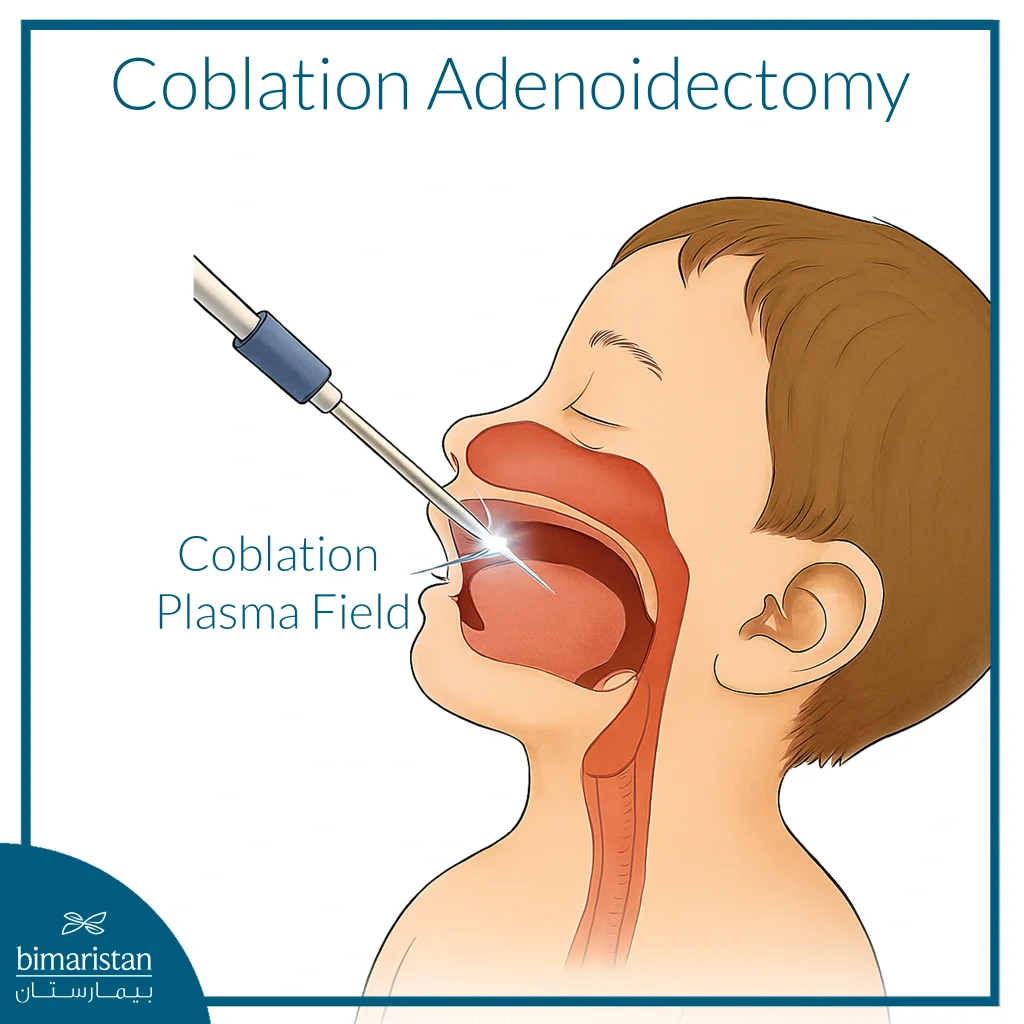
- Removing overgrown tissue either by direct cutting or using modern tools such as electrocautery or radiofrequency
- Controlling any potential bleeding (usually very minor)
- Move the child to the recovery room until he or she is fully awake
Instructions after surgical treatment of pediatric adenoid hyperplasia:
- The child may have a slight sore throat or temporary nasal blockage for a few days
- It is advisable to give the child mild painkillers prescribed by the doctor
- Offer soft, cold foods such as yogurt and ice cream to ease discomfort
- Rest at home for the first 3-5 days
- See a doctor immediately if signs such as heavy bleeding, high fever, or difficulty breathing occur
Pediatric adenoid hyperplasia surgery is a common and very safe procedure for children. The rate of serious complications is very low, often limited to minor bleeding or infections that can be controlled. Most children return to normal activity within a week.
Bottom line: Nasal adenoidectomy is a safe and effective surgical procedure that significantly improves a child’s quality of life by improving breathing and sleep, and prevents long-term complications such as ear infections and developmental difficulties.

Alternatives to traditional surgery for pediatric adenoid hyperplasia
Surgical treatment is no longer the only option for dealing with enlarged adenoids in children, as new technologies have emerged that provide effective and less invasive alternatives, most notably lasers and radiofrequency.
Laser therapy for enlarged adenoids in children
Laser treatment is one of the latest medical techniques in dealing with enlarged adenoids in children. The laser removes the enlarged tissue with high precision, minimizing intraoperative bleeding and significantly reducing postoperative pain. Scientific studies1 have proven that this technique helps improve breathing and sleep in children with a very low complication rate, making it a safe and effective option in many cases.
Radiofrequency as an alternative to surgery
Radiofrequency Coblation is an advanced alternative to the surgical treatment of pediatric adenoid hyperplasia that uses low energy to break up tissue without damaging the surrounding healthy tissue. This method significantly reduces post-operative pain and speeds up the recovery period, allowing the child to return to normal activity quickly. Radiofrequency is an ideal option, especially for children who have not responded to drug treatments, with excellent short-term results according to PubMed.
These alternatives are more comfortable for the child, with a short recovery period and a quick return to daily activities, but they carry a risk of re-enlargement if the tissue is not completely removed, and require sophisticated equipment and specialized medical expertise.
In short, if you are looking for modern and safe ways to treat enlarged adenoids in children other than traditional surgery, lasers and radiofrequency are two of the most prominent options currently available.
Tips for parents after surgical treatment of enlarged adenoids in children
The success of the treatment is only complete if you continue to care for the child after the operation. Some of the most important tips are:
- Caring for your child after the operation: Monitor your child’s behavior and make sure he or she is well rested for the first few days.
- Appropriate diet: Soft, cold foods such as yogurt and ice cream are preferred to ease discomfort, and avoid hard or spicy foods in the early days.
- Regular medical follow-up: Post-operative follow-up appointments are essential to ensure full recovery and no complications.
Cost of pediatric adenoid hyperplasia treatment
The cost of pediatric adenoid hyperplasia treatment varies from country to country and is influenced by several factors, such as:
- Type of hospital (public or private)
- Surgeon and medical center experience
- The technology used in the process (conventional, thermal, radio frequency)
Average cost of treatment for enlarged adenoids in children
| Country | Average cost |
|---|---|
| Turkey | 1500 – 3000 USD |
| Europe | 4000 – 6000 USD |
| United States | May exceed 7000 USD |
Finally, the treatment of enlarged adenoids in children depends on the severity of symptoms and the degree of impact on the child’s daily life, as the options usually start with drug treatment and lifestyle changes, while surgery or modern techniques such as laser and radiofrequency are resorted to in cases that do not respond to medication or are associated with serious complications. Thanks to medical development in Turkey, adenoidectomy and its treatments are performed with the highest safety standards and using the latest equipment, ensuring the child’s comfort and a quick return to normal life.
If you are looking for the best care for your child, Bimarestan Medical Center in Turkey offers accurate consultations and advanced treatment options under the supervision of the most skilled otolaryngologists.
Sources:
- Ida JB, Worley NK, Amedee RG. Gold laser adenoidectomy: long-term safety and efficacy results. Int J Pediatr Otorhinolaryngol. 2009 Jun;73(6):829-31.
- Calvo-Henriquez C, RuedaFernandez-Rueda M, Garcia-Lliberos A, Maldonado-Alvarado B, Mota-Rojas X, Maniaci A, Iannella G, Jimenez-Huerta I. Coblator adenoidectomy in pediatric patients: a state-of-the-art review. Eur Arch Otorhinolaryngol. 2023 Oct;280(10):4339-4349
- Abd El Rahman, Ali Abd Allah; El Shehaly, Ayman Abd El Aziz; Dawood, Yehia M.; El Sharkawy, Mohammed A.; Shalaby, Ibrahim T. Comparative study between radiofrequency coblation and traditional adenoidectomy. Al-Azhar Assiut Medical Journal 16(2):p 211-218, Apr-Jun 2018
- Ahmad Z, Krüger K, Lautermann J, Lippert B, Tenenbaum T, Tigges M, Tisch M. Adenoid hypertrophy-diagnosis and treatment: the new S2k guideline. HNO. 2023 Aug;71(Suppl 1):67-72
- KidsHealth. (n.d.). Adenoids